三只松鼠坚果礼盒

Search documents
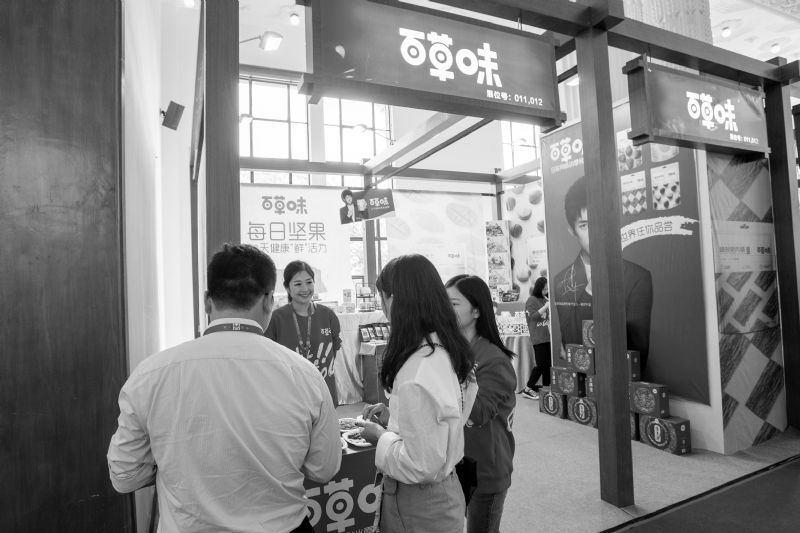
百草味“坚果礼盒”坚果重量不足20% 被指误导消费者侵犯消费者知情权
Chang Jiang Shang Bao· 2026-02-06 00:09
Core Viewpoint - The controversy surrounding the "Baicaowei Nut Gift Box" highlights misleading marketing practices in the nut gift box market, where the actual nut content is significantly lower than advertised, raising concerns about consumer deception [4][10]. Group 1: Product Misrepresentation - A consumer discovered that the "Baicaowei Nut Gift Box," advertised as weighing 958 grams, contained only 33 grams of actual nuts, with 660 grams being beverages and other snacks [4][6]. - In another example, the "Longyun Dongtou Nut Gift Box" from Baicaowei, weighing 1.265 kilograms, had only 240 grams of nuts, making up less than 20% of the total weight [6][9]. - The packaging of these products often emphasizes the presence of nuts while including a significant amount of non-nut items, misleading consumers about the actual contents [3][12]. Group 2: Regulatory and Legal Perspectives - Legal experts suggest that proving fraud in these cases is challenging, as Baicaowei did not explicitly claim that the gift box contained only nuts, making regulatory action difficult [10][13]. - The market supervision department has been alerted to the issue, but enforcement may be limited due to the ambiguity in product descriptions [5][13]. - Some brands, like "Liangpinpuzi," have adopted clearer labeling practices by including terms like "snack" in their product names to avoid consumer confusion [14]. Group 3: Industry Trends and Consumer Behavior - The nut gift box market is experiencing a sales peak as the Spring Festival approaches, leading brands to enhance product weight with non-nut items to create a more appealing gift [3][13]. - The practice of including beverages and cheaper snacks in gift boxes is common, as brands aim to present attractive offerings for gifting purposes [13]. - Consumer awareness is crucial, as many may not scrutinize the contents of these gift boxes, leading to potential misunderstandings about product value [13].

多次封禁后又复出的头部主播“太原老葛”,涉虚假宣传、价格欺诈入选市监总局公布十大案例
Xin Lang Cai Jing· 2026-01-27 15:51
Core Viewpoint - The prominent live-streaming host "Taiyuan Lao Ge" has faced multiple penalties from various authorities over the past decade for issues related to false advertising and price fraud, culminating in significant legal actions against his associated company, Shanxi Lao Ge Trading Co., Ltd. [1][10] Group 1: Background and History - "Taiyuan Lao Ge," whose real name is Ge Liang, gained fame through collaborations with other internet celebrities and has been involved in various controversies since 2013 [2]. - The host's popularity peaked with over 9.9 million followers on a live-streaming platform, but he has been penalized multiple times for illegal activities, including hosting unapproved large events and creating false narratives during live broadcasts [2][6]. Group 2: Legal Issues and Penalties - In January 2026, Shanxi Lao Ge Trading Co., Ltd. was implicated in a major case of false advertising and price fraud, which was highlighted by the State Administration for Market Regulation as one of the top ten significant cases of 2025 [1][10]. - The company faced administrative penalties totaling 5.6 million yuan for misleading promotional practices and was also fined 1.2051 million yuan for tax-related violations, including failure to withhold personal income tax [9][10]. Group 3: Allegations of Fraud - A businesswoman, Wang Cui, reported that she incurred losses exceeding 10 million yuan due to fraudulent practices associated with "Taiyuan Lao Ge," including inflated sales figures and excessive returns from customers [3][4]. - Evidence presented indicated that out of 28.11 million yuan in sales during four live-streaming sessions, 19.11 million yuan were attributed to fake orders, leading to significant financial losses for the involved merchants [3][4]. Group 4: Industry Impact - The controversies surrounding "Taiyuan Lao Ge" reflect broader issues within the live-streaming e-commerce industry, including rampant false advertising and unethical marketing practices that have prompted regulatory scrutiny [8][10]. - The case has drawn attention to the need for stricter regulations in the live-streaming sector to combat unfair competition and protect consumer rights [10].
探店北京区域“胖改”店
虎嗅APP· 2026-01-23 13:53
Core Viewpoint - The article discusses the transformation of traditional supermarkets in Beijing, particularly focusing on the "胖改" (Fat Reform) initiative, which aims to enhance the shopping experience but has led to mixed consumer responses regarding pricing and product availability [5][25]. Group 1: Consumer Experience - Consumers have reported a decline in foot traffic and interest in supermarkets post-reform, with many expressing dissatisfaction over increased prices and a lack of everyday products [6][7][25]. - The transformation has made stores appear cleaner and more organized, but this has not translated into higher customer satisfaction, especially among price-sensitive shoppers [6][9][25]. - Observations indicate that during peak shopping times, such as holidays, the customer turnout has significantly decreased compared to pre-reform levels [7][19]. Group 2: Pricing and Competition - The article highlights that the average prices of products in reformed stores have increased, which has alienated budget-conscious consumers [26][28]. - Comparisons with e-commerce platforms reveal that many products are available at significantly lower prices online, leading consumers to prefer online shopping over physical stores [12][30]. - The competition from membership-based stores like Sam's Club is intensifying, putting additional pressure on traditional supermarkets to justify their pricing strategies [26][28]. Group 3: Operational Challenges - The reform has led to increased operational costs, particularly in labor, as stores have expanded their workforce and raised employee salaries significantly [29][30]. - Despite some positive metrics, such as increased sales and customer return rates, the long-term sustainability of these reforms remains uncertain due to rising costs and the challenge of maintaining service quality across different locations [28][30]. - The article emphasizes the need for traditional supermarkets to balance quality and pricing while navigating the complexities of supply chain management and organizational culture [30][31].


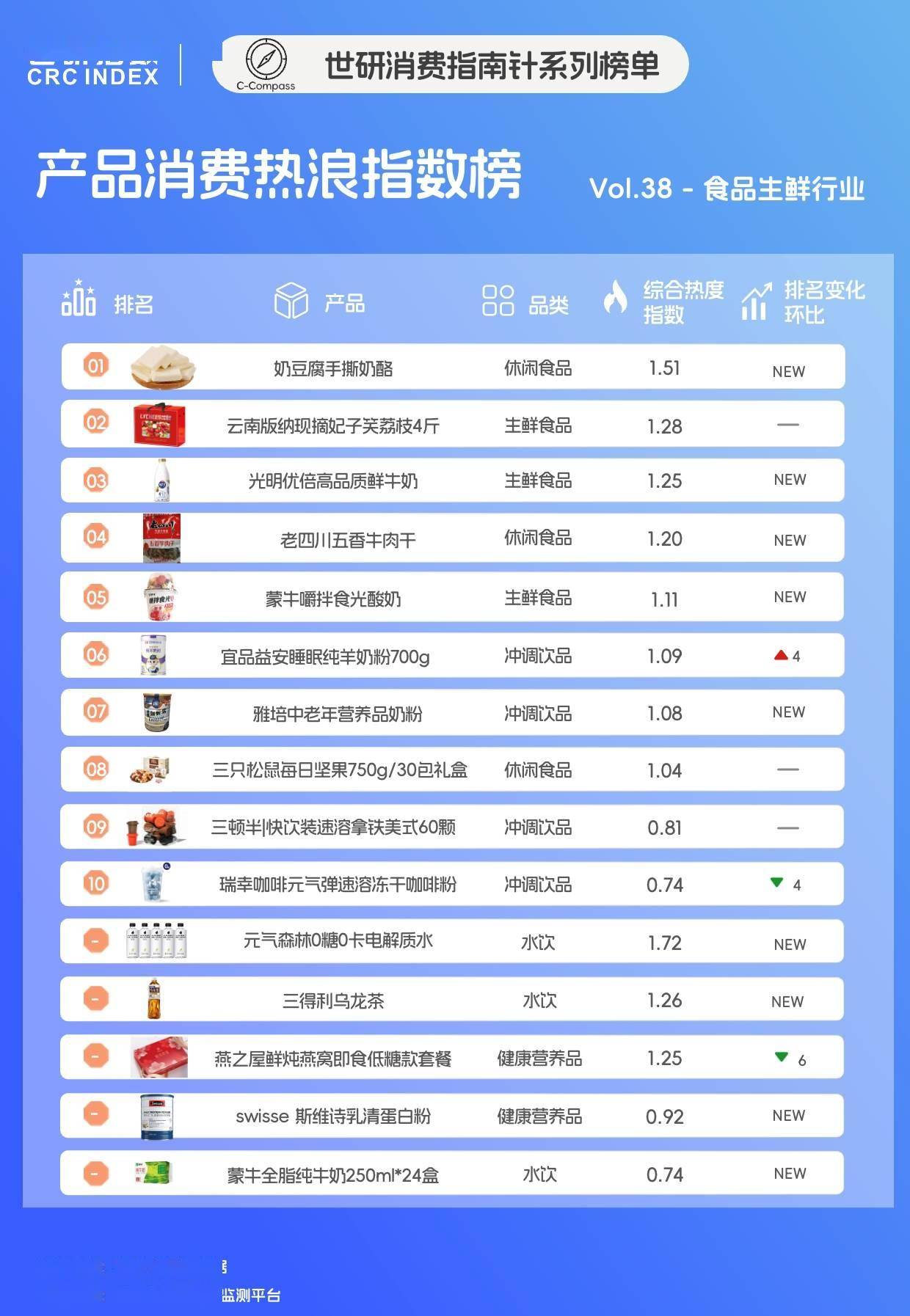
3月食品生鲜排名来袭,职场亚健康焦虑推动滋补品类增长|世研消费指数
Sou Hu Cai Jing· 2025-05-16 11:05
Core Insights - The report highlights the rising popularity of functional and health-oriented food products driven by workplace health needs and an aging population, leading to innovative product developments in the nutritional supplement category [4] - The leisure food sector is experiencing a transformation towards emotional consumption, with products leveraging regional symbols and nostalgia to meet consumer demands [5] Group 1: Product Rankings - The top three products in the consumption heat index are: 1. Hand-pulled cheese (1.51) 2. Freshly picked lychee from Yunnan (1.28) 3. High-quality fresh milk from Guangming (1.25) [2][3] - New entries in the index include various products such as hand-pulled cheese, lychee, and high-quality fresh milk, indicating a trend towards innovative food offerings [2][3] Group 2: Health and Nutrition Trends - The demand for health supplements is increasing, with products like Yanzhi's low-sugar bird's nest and Swisse's whey protein powder being tailored for specific consumer needs, such as office settings and personalized nutrition [4] - Abbott's senior nutrition powder combines 18 essential nutrients to address comprehensive health needs, targeting the elderly demographic [4] Group 3: Leisure Food Innovations - Leisure food products are evolving to cater to emotional consumption, with brands like Hand-pulled cheese and Old Sichuan beef jerky using cultural elements to enhance consumer connection [5] - The rise in water beverage sales is noted, with brands like Yuanqi Forest and Suntory innovating to meet the hydration needs of active consumers [5] Group 4: Index Overview - The report is part of the CRCINDEX series, which includes various consumption indices aimed at tracking market trends and providing insights for businesses [6][7]