
三星折叠屏手机

Search documents
三星电子新任命他为联席CEO!他是谁?
Zhong Guo Qi Che Bao Wang· 2025-11-24 03:42
Core Viewpoint - Samsung Electronics has appointed Lee Tae-won as co-CEO and head of the mobile experience division, marking a return to a co-CEO leadership structure after nearly eight months. This change comes alongside a significant 80% year-on-year increase in operating profit for its semiconductor business, including automotive chips, raising industry interest in the company's future prospects [3][6]. Leadership Transition - Lee Tae-won has been with Samsung since 1997, starting as a research engineer in the mobile communications division. His rise through the ranks has been marked by significant contributions to technology and business strategy, particularly in the competitive smartphone market [4]. - In 2018, he took charge of Samsung's smartphone business, where he successfully optimized the production model for mid-range devices, allowing the company to focus on high-end product development and maintain its position as the largest Android smartphone manufacturer [4][5]. Innovations and Product Development - Under Lee's leadership, Samsung has ventured into the foldable smartphone market, which has become a key growth area. His efforts have transformed foldable phones from concepts into popular market products, contributing to new profit streams for the company [5]. - Lee's recent appointment as co-CEO follows a period of acting leadership where he demonstrated strong management skills and innovation, including the development of Samsung's first tri-fold smartphone, set to launch by the end of the year [5]. Automotive Business Growth - Samsung's automotive chip business has been on the rise, driven by the industry's shift towards smart and connected vehicles. The company has expanded its product offerings to include processors and image sensors, creating a comprehensive automotive chip portfolio [6][7]. - Samsung's chip business is crucial to its overall strategy, with significant advancements in chip design and manufacturing capabilities. The company has secured orders for advanced driving chips from Hyundai and is also producing chips for Nvidia, enhancing its market presence [6][7]. Competitive Advantage and Future Outlook - The appointment of Lee Tae-won signifies Samsung's entry into a dual-driven era of "end devices + chips." The company aims to strengthen its position in high-value automotive electronics, leveraging its technological advantages in chip design and system integration [8]. - As the automotive industry increasingly embraces smart and electric technologies, demand for automotive electronics is expected to grow, positioning Samsung for greater market share and commercial success [8][9]. - Lee's experience in mobile business is anticipated to provide valuable insights for chip product development, fostering an ecosystem where hardware and services work together to enhance user experience [8].


Mini LED话语权之战:TCL如何用8年成为关键先生
3 6 Ke· 2025-11-22 14:19
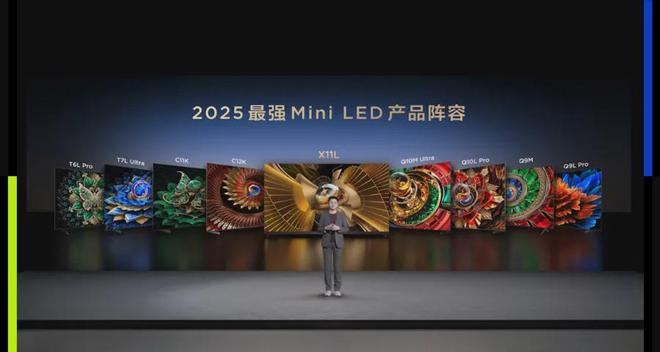
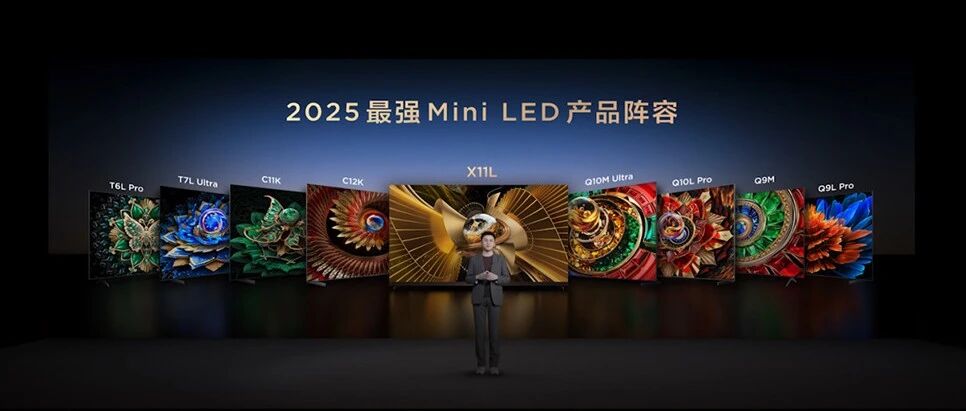
Core Viewpoint - TCL has successfully positioned itself as a leader in the display industry by focusing on Mini LED technology, diverging from the industry's trend towards OLED, and has developed a flagship product, the X11L SQD-Mini LED, which showcases significant technological advancements [2][4][42]. Group 1: TCL's Strategic Decision - In contrast to the industry's enthusiasm for OLED, TCL chose to deepen its investment in Mini LED technology, believing it to be superior in terms of technical limits, cost control, and overall performance [4][11]. - The decision to pursue Mini LED was made in 2017, amidst a strong industry focus on OLED, marking a significant divergence from prevailing trends [8][14]. - TCL's commitment to Mini LED involved a long-term exploration of technology, requiring collaboration with the entire supply chain to develop from scratch [5][12]. Group 2: Technological Advancements - TCL's Mini LED technology aims to achieve perfect black levels and infinite contrast ratios, which are traditionally associated with OLED, while maintaining the cost and longevity advantages of LCD [11][17]. - The X11L SQD-Mini LED features 20,736 backlight zones, setting a new industry standard for backlight partitioning and significantly enhancing contrast and brightness [21][42]. - TCL has set an ambitious target of achieving 10,000 nits of peak brightness, which surpasses current flagship mobile devices and aims to deliver an unparalleled viewing experience [23][25]. Group 3: Industry Impact - TCL's advancements in Mini LED technology have positioned it as a leader in the global market, with projections indicating it will be the top seller of Mini LED TVs in 2024 [21][22]. - The successful launch of the X11L SQD-Mini LED signifies a shift in the display technology landscape, marking TCL's transition from a follower to a leader in the high-end television market [42][43]. - The company's journey reflects a broader narrative of the Chinese display industry evolving from dependency on foreign technology to establishing its own technological pathways and innovations [43].

Mini LED话语权之战:TCL如何用8年成为关键先生
36氪· 2025-11-22 13:35
Core Viewpoint - TCL has successfully positioned its SQD X11L Mini LED television as a market leader by choosing to focus on Mini LED technology instead of following the OLED trend, demonstrating a long-term vision and commitment to innovation [6][20][61]. Group 1: Historical Context and Decision Making - The journey began at the 2017 CES, where OLED technology was highly praised, leading many companies to pursue it, while TCL opted to continue developing LCD technology with a focus on Mini LED [4][6][7]. - TCL's decision to invest in Mini LED was seen as a challenging yet correct path, as it allowed the company to leverage existing LCD supply chains and avoid the pitfalls associated with OLED technology [20][17]. - The internal debate at TCL regarding the future direction highlighted the contrast between the established OLED path and the uncertain Mini LED route, with the latter requiring significant R&D investment [12][13][14]. Group 2: Technical Development and Breakthroughs - TCL faced three major challenges in developing Mini LED technology: achieving extreme contrast, brightness, and color accuracy [22][24]. - The company established the Pangu Laboratory to address these challenges, focusing on system-level solutions and optimizing the entire production process from materials to final products [27][29]. - TCL's Mini LED technology achieved a significant milestone with the release of the X11G Max, featuring 20,736 backlight zones, which set a new industry standard [29][60]. Group 3: Industry Impact and Future Prospects - The launch of the X11L SQD-Mini LED television marked a pivotal moment for TCL, showcasing its ability to lead in display technology and shift the narrative from following to leading in the industry [61][62]. - The advancements made by TCL not only highlight the company's technical capabilities but also signify a broader transformation within the Chinese display industry, moving towards self-sufficiency and innovation [61][62]. - Looking ahead, TCL is poised to continue exploring new technologies and solutions, with a structured R&D roadmap in place to guide future developments [63].
高价引流 现场压价!爱回收创始人开号半年 评论区沦陷了
Xin Lang Ke Ji· 2025-11-12 10:46
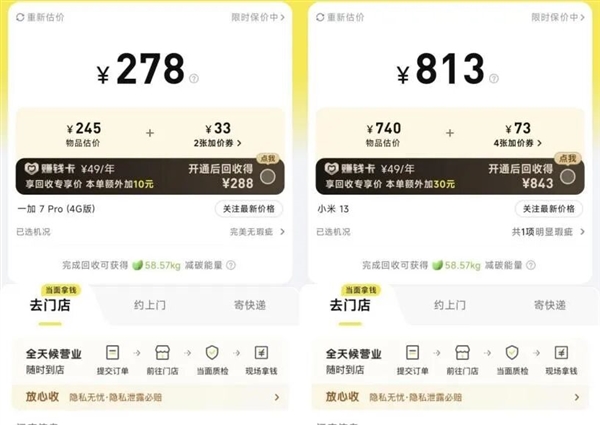
Core Viewpoint - The article highlights the ongoing controversy surrounding the pricing practices of the company "Aihuishou," particularly the discrepancy between online estimated prices and the lower prices offered in physical stores, leading to widespread consumer dissatisfaction [1][2][3]. Pricing Discrepancies - Consumers have reported significant differences between online valuations and in-store offers, with some cases showing reductions of nearly 50% from the initial online estimate [2][3]. - For example, a phone estimated at 5060 yuan online was offered at approximately 4500 yuan in-store, while another case saw a drop from 2560 yuan to 1300 yuan, representing a 49.84% decrease [1][2]. - Common reasons cited for these price reductions include claims of "screen damage" and "scratches," which consumers often dispute as being unnoticeable [5][7]. Consumer Complaints - The company has faced over 20,000 complaints on the Black Cat Complaints platform, primarily related to malicious price reductions and poor after-sales service [9]. - Many consumers express frustration over the inconsistency between online and offline pricing, with reports of being charged significantly more for repurchasing previously sold items [7][10]. Business Model and Financial Performance - Aihuishou's parent company, Wanwu Xingsheng, reported a revenue of 4.99 billion yuan for Q2 2025, a 32.2% year-on-year increase, with projections for Q3 revenue between 5.05 billion and 5.15 billion yuan [10]. - Despite this growth, the company has faced cumulative losses exceeding 4 billion yuan over seven years, with a notable loss of 246.8 million yuan in 2022 [10]. Market Competition and Challenges - The company is experiencing increased competition from other platforms, leading to a decline in its market position as consumers opt for direct peer-to-peer sales to avoid price reductions [10][17]. - Analysts suggest that the company's reliance on high online estimates to attract customers, followed by in-store price reductions, may not be sustainable in the long term [17].

中国三星助力提振消费 让科技惠及生活 “人工智能+”为消费添新色
Ren Min Ri Bao· 2025-07-27 22:13
Group 1 - The core viewpoint of the articles emphasizes the integration of AI technology in consumer electronics, enhancing user experience and driving consumption [1][2][3] - Samsung is actively investing in AI and green technology, with 11 R&D centers established in China and over 5,000 researchers focusing on innovations across the entire supply chain [1][2] - The company is promoting green low-carbon products, utilizing AI for energy management in home appliances, which aligns with national goals for carbon neutrality [2] Group 2 - Following the issuance of the "Consumption Promotion Special Action Plan," Samsung has expanded its trade-in subsidy program to include tablets and home appliances, providing consumers with economic benefits [3] - The company has introduced a "cross-brand recycling + smart valuation" model in collaboration with third-party platforms, facilitating the recycling of old devices and reducing electronic waste [3]