
专利保险

Search documents
南京:对高新技术等企业参保的科技项目研发费用损失保险等给予最高10万元补贴
Jin Rong Jie· 2026-01-26 10:09
Core Insights - The Nanjing municipal government has issued policies to accelerate the cultivation of new productive forces and promote high-quality development, with a focus on supporting financial innovation in the region [1] Group 1: Financial Innovation Support - The policies aim to deepen the construction of the Sci-Tech Financial Reform Pilot Zone and create the Zijin Mountain International Sci-Tech Fund District [1] - Initiatives include promoting innovative credit loans and pilot programs for mergers and acquisitions in technology enterprises [1] - There is a push for the layout of digital RMB professional service companies and financial infrastructure [1] Group 2: Subsidies and Financial Support - High-tech enterprises and specialized innovative enterprises can receive subsidies of up to 100,000 yuan for R&D expense loss insurance and patent insurance [1] - New technology innovation bonds issued by tech companies, financial institutions, and equity investment institutions can receive interest subsidies of up to 400,000 yuan [1] - The government is implementing a system of enterprise listing service specialists to help companies grow through multi-level capital markets [1] Group 3: Insurance and Risk Management - The policies include financial support for export credit insurance, with a maximum subsidy of 5 million yuan for companies insuring short-term export credit, import prepayment insurance, specific contract insurance, export seller credit insurance, and overseas investment insurance [1] - Companies participating in the municipal small and medium-sized enterprise export credit insurance platform can receive up to 100% premium subsidies [1]
协同创新科技金融
Jing Ji Ri Bao· 2025-12-28 22:03
Core Viewpoint - The recent Central Economic Work Conference emphasizes the need for innovative technology financial services, focusing on aligning financial services with the needs of technology enterprises and achieving a balance between returns and risks [2] Group 1: Human Capital Value - One of the challenges in providing financial services to technology enterprises is accurately assessing their growth potential, including evaluating debt repayment capacity and credit risk [3] - Financial institutions are exploring ways to leverage human capital value, assessing enterprise growth based on talent growth potential [4] - Zhejiang Commercial Bank has developed a technology financial service system based on a "Talent Bank," providing comprehensive financial services to over 35,000 technology enterprises with a financing balance exceeding 470 billion yuan by the end of November 2025 [4] Group 2: Intellectual Property Innovation - Another challenge is transforming intellectual property (IP) into assets, as IP is a key indicator of a technology enterprise's strength [6] - The National Financial Supervision Administration plans to conduct comprehensive pilot projects for IP financial ecosystems to address issues like pledge registration and evaluation [6] - Shanghai has initiated innovative IP applications, including IP service trusts and IP asset-backed securities (ABS), to enhance the commercialization of IP [7] Group 3: Comprehensive Service Ecosystem - A significant challenge is coordinating multiple stakeholders to create a comprehensive service ecosystem for technology enterprises [10] - The Shanghai Financial Regulatory Bureau has guided local banks to implement online, paperless processing for patent pledges, improving service efficiency [10] - To address the challenges of IP value assessment, the banking sector in Shanghai has established a financial promotion group to enhance internal evaluation mechanisms and improve the accuracy of IP value assessments [11]

书写“科技金融”大文章,险企赋能低空经济|广东金融大讲堂
2 1 Shi Ji Jing Ji Bao Dao· 2025-11-28 07:37
Core Insights - The article discusses the collaboration between China People's Property Insurance Company (CPIC) Guangzhou Branch and EHang in the low-altitude economy sector, highlighting the integration of technology finance to support this emerging market. Group 1: Industry Trends and Opportunities - The low-altitude economy is gaining traction as a focal point for technology finance to empower the real economy, driven by national strategic policies like the "National Comprehensive Three-Dimensional Transportation Network Planning Outline" [2][3] - CPIC has conducted extensive market research and identified increasing demand for risk protection and financial support in areas such as drone logistics and low-altitude tourism [2][3] Group 2: Collaboration and Innovation - The partnership with EHang, a leader in the eVTOL (electric vertical takeoff and landing) sector, resulted in the first specialized insurance project for low-altitude aircraft, marking a significant step in integrating insurance with low-altitude innovation [6][7] - The first insurance policy was signed in July 2024, providing risk coverage for EHang's EH-216S unmanned passenger aircraft, which enhances investor confidence in low-altitude transportation projects [7][8] Group 3: Future Plans and Product Development - CPIC and EHang plan to expand their collaboration by developing a comprehensive insurance service system that covers all stages of the low-altitude economy, including research, production, and operation [9][10] - Future innovations will include the development of specialized insurance products for various low-altitude applications, such as drone logistics and low-altitude tourism, utilizing advanced technologies like AI and blockchain for risk assessment and claims processing [11][12] Group 4: Ecosystem Building and Policy Support - CPIC aims to build a robust low-altitude economy ecosystem by providing comprehensive risk protection and linking various stakeholders, including government, industry associations, and financial institutions [13][14] - The company is actively involved in policy advocacy to enhance the regulatory framework for low-altitude economy and technology finance, suggesting measures like insurance subsidies and risk-sharing mechanisms to stimulate industry growth [17][18]

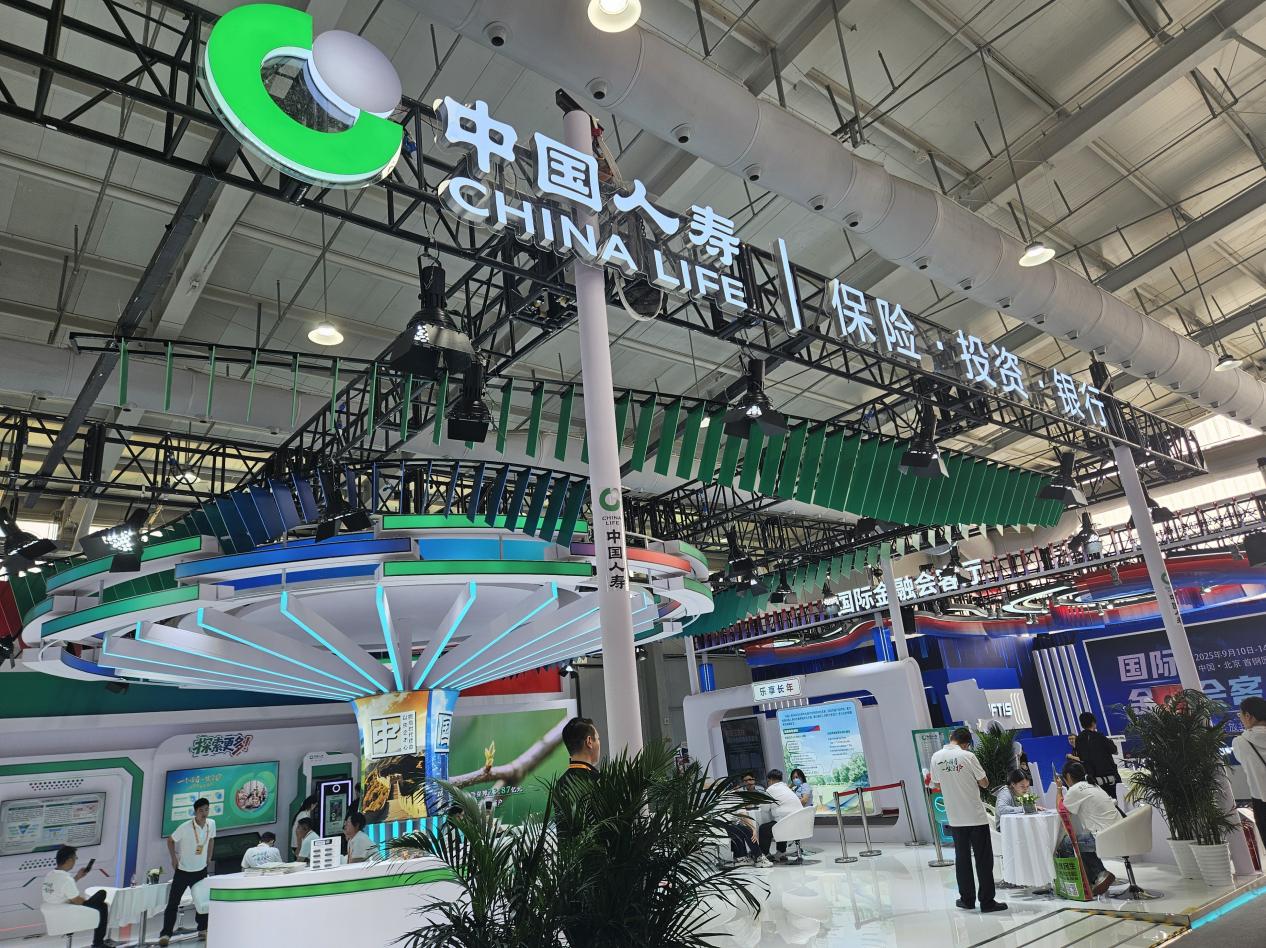
"守护之树"在服贸会扎根 中国人寿全周期服务润泽万家
Zhong Guo Jing Ji Wang· 2025-09-13 06:38
Core Viewpoint - The China Life Insurance Company showcased its commitment to providing comprehensive financial and insurance services at the 2025 China International Service Trade Fair, emphasizing its focus on customer needs and lifecycle protection [1][10]. Group 1: Technology and Digital Finance - China Life is enhancing its technology insurance system, participating in various insurance pilot programs, and launching investment funds aimed at technology enterprises [4]. - The company is advancing digital finance by leveraging AI, big data, and cloud computing to improve product innovation, service optimization, and operational efficiency [4]. Group 2: Green Finance - China Life is committed to green development, offering innovative insurance solutions such as environmental pollution liability insurance and biodiversity protection insurance [4]. - The company integrates green investments into its operations, focusing on supporting clean energy and low-carbon industries [4]. Group 3: Inclusive Finance - China Life is expanding insurance coverage for small and micro enterprises, rural areas, and specific demographic groups, providing over 35 trillion yuan in agricultural risk protection by the end of 2024 [6]. - The company has supported over 2,700 small enterprises through loan guarantee insurance and has launched an asset-backed plan for advanced manufacturing [6]. Group 4: Pension Finance - China Life is developing a unique pension finance ecosystem, managing over 60 billion yuan in basic pension insurance funds and serving 200,000 clients in personal pension business [6]. - The company has opened over 3 million personal pension accounts, contributing to the construction of the third pillar of pension support [6]. Group 5: Interactive Experience - The exhibition features interactive areas such as the "Guoshou Health Competition" game zone, allowing visitors to engage with health management concepts [6]. - Attendees can also experience the convenience of the life insurance app through a simulated operation area [6].

《保险理论与实践》2025年第8辑目录
Sou Hu Cai Jing· 2025-08-09 00:39
Group 1 - The article discusses the significant opportunities and challenges faced by commercial health insurance in China due to the multi-dimensional drivers of healthcare reform and high-quality development in the medical and pharmaceutical industries [1] - It identifies the "adverse selection" problem in the personal commercial health insurance market as the root cause of high operational costs, low service efficiency, weak cost control, and limited coverage [1] - The article compares the development experiences of seven typical countries or regions, highlighting that a prosperous commercial health insurance market relies on various forms of government support [1] Group 2 - It emphasizes that a reasonable tax incentive policy and a shared payment model between employers and employees are crucial for the sustainable development of commercial health insurance [1] - The article proposes establishing a shared, account-based funding model to leverage corporate or institutional funding, thereby expanding the coverage and funding scale of commercial supplementary health insurance [1] - It suggests reforming the second pillar of enterprise group supplementary health insurance to provide new theoretical guidance and practical paradigms for the high-quality collaborative development of healthcare, pharmaceuticals, and insurance [1] Group 3 - The article analyzes Australia's high coverage policy for commercial health insurance, which includes various incentives and penalties to maintain coverage rates [3] - It notes that these policies have prevented the Australian commercial health insurance market from falling into a "death spiral," offering valuable insights for the sustainable development of China's health insurance initiatives [3] Group 4 - The article on Mexico's dual healthcare system highlights the disparities in funding and benefits between formal and informal employment populations, leading to sustainability issues [5] - It discusses the failure of the new INSABI system due to funding shortages and centralized management, resulting in a significant drop in coverage rates [5] - The article suggests measures to optimize and integrate the healthcare system, such as including family members of formal employees in the formal healthcare system and implementing regionally differentiated payment mechanisms [5] Group 5 - The article on poultry insurance emphasizes the importance of developing the poultry industry and adjusting breeding structures in China [6] - It identifies a mismatch between the current poultry insurance offerings and the actual risk management needs of poultry farmers [6] - Recommendations include enhancing government support, improving the poultry insurance service system, and aligning insurance products with industry development needs [6] Group 6 - The article on weather index insurance in Zhuhai discusses its role in supporting local aquaculture and stabilizing farmer incomes [7] - It identifies various risks faced by underwriting institutions, including natural disaster unpredictability and basis risk due to mismatches between weather indices and actual losses [7] - The article recommends strengthening meteorological monitoring systems and optimizing insurance product designs to mitigate these risks [7] Group 7 - The article on patent insurance highlights its significance in protecting intellectual property and supporting technological innovation [8] - It identifies challenges such as insufficient recognition of demand and a lack of market mechanisms that hinder the development of patent insurance [8] - Recommendations include building a comprehensive patent risk management platform and enhancing public awareness of patent insurance [8] Group 8 - The article on motor vehicle insurance fraud analyzes the increasing prevalence of fraud in the insurance industry, which disrupts market order and harms economic interests [10] - It identifies systemic issues such as ineffective underwriting processes and lack of supervision in claims handling [10] - The article proposes a multi-faceted approach to combat fraud, including legal reforms, technology integration, and public education [10] Group 9 - The article on exemption clauses in insurance contracts discusses their role in defining the insurer's liability and the disputes that arise from their complexity [11] - It emphasizes the need for clear understanding and application of these clauses to reduce market instability [11] - The article suggests establishing uniform standards for interpreting exemption clauses, especially in the context of internet insurance [11] Group 10 - The article on illegal "agent refund" practices highlights the systemic gaps in the insurance sales process that allow such issues to persist [12] - It calls for a comprehensive regulatory framework to protect consumer interests and enhance the integrity of the insurance market [12] - Recommendations include balancing consumer data protection with its utilization and expanding the obligations of insurance companies during sales [12]
“左手科技右手金融” 中国人寿构建科创企业成长加速器
Jing Ji Ri Bao· 2025-07-23 15:59
Core Viewpoint - The article emphasizes the need for high-level technological self-reliance and strong financial support for innovation, as outlined in the recent policy measures issued by multiple government departments, including the Ministry of Science and Technology and the People's Bank of China [1][3]. Financial Support for Technological Innovation - China Life Insurance actively responds to the policy by leveraging its comprehensive financial services across insurance, investment, and banking sectors to support technological innovation [1][3]. - The insurance sector has seen a significant increase in coverage for strategic emerging industries, with a year-on-year growth of over 181% in insurance coverage for specialized "little giant" enterprises [3]. - The banking sector has provided substantial loans, with Guangfa Bank's loans to technology enterprises exceeding 253.5 billion yuan [3]. Insurance Product Innovation - China Life has developed over 200 technology insurance products, including the first "Laboratory All-Risk Insurance" in the country, to provide comprehensive risk coverage for research and development activities [5][7]. - The company has introduced various innovative insurance products aimed at protecting intellectual property and providing financial support for technology enterprises [5][7]. Credit Support for Technology Enterprises - Guangfa Bank has tailored financial products to meet the unique needs of technology enterprises, particularly those in the early and growth stages, by offering small, short-term loans without collateral [8][10]. - The bank has successfully provided credit support to high-growth technology companies, such as an 8 million yuan credit line to a unicorn company before it became profitable [10][11]. Investment Strategies - China Life is focusing on strategic investments in emerging industries, utilizing diverse financial tools such as equity investments and asset securitization to support technological innovation [13][14]. - The company has established a 5 billion yuan investment plan to support technology innovation, which has mobilized over 80 billion yuan in social capital for technology enterprises [14][16]. Future Outlook - China Life aims to continue enhancing its financial products and services to foster innovation in the technology sector, contributing to the national strategy for technological self-reliance [17].

潍坊金融监管分局多点发力助力写就科技金融大文章
Qi Lu Wan Bao Wang· 2025-06-11 04:46
Core Viewpoint - The recent joint policy initiative by multiple government departments aims to accelerate the development of a technology finance system to support high-level technological self-reliance and innovation in China [1] Group 1: Policy Initiatives - The policy encourages financial institutions to increase support for technological innovation and to adjust internal loan mechanisms based on the characteristics of project financing in the technology sector [1] - It emphasizes the importance of a collaborative approach among financial regulators, technology departments, and banks to enhance the integration of technology and finance [3] Group 2: Financial Products and Innovations - Shouguang Rural Commercial Bank has developed a "Technology Innovation Points Loan" product, quantifying innovation metrics to provide a loan of 9 million yuan at a reduced interest rate of 3.41% [1] - China CITIC Bank has implemented a "Credit Card Approval Model" for technology enterprises, allowing for credit limits up to 30 million yuan, with a maximum term of one year [2] - Everbright Bank has launched the "Technology E-Loan" product, utilizing big data models to assess credit limits for technology companies through an entirely online process [2] Group 3: Risk Management and Support - The policy encourages the establishment of risk-sharing mechanisms to enhance the risk mitigation capabilities of banks, such as collaboration between banks and local technology departments to cover loan losses [7] - The integration of insurance products with banking services is being promoted to create a multi-layered financial risk protection system for technology enterprises [7] Group 4: Tailored Financial Services - Financial institutions are advised to provide comprehensive, multi-faceted financial services tailored to the unique needs of technology enterprises, enhancing their access to credit [5] - Postal Savings Bank has initiated a specialized financial division to better serve technology companies, establishing a structured approach to client engagement [5]
中国人寿财险锻造新质生产力谱就科技金融大文章
Qi Lu Wan Bao· 2025-06-06 08:17
Group 1 - The insurance industry is focusing on enhancing technology-driven financial services to support the development of new productive forces in the digital economy era [2][3][20] - The "Implementation Plan" aims to optimize technology insurance services and guide insurance companies to develop products that cover the entire process of technological innovation [4][16] - China Life Property & Casualty Insurance has established specialized teams and over 60 subsidiaries to enhance its technology insurance capabilities, providing risk coverage for over 130,000 technology enterprises [3][4] Group 2 - The company has launched innovative insurance products, such as the "Laboratory All-Risk Insurance," which covers risks from pre-laboratory activities to post-incident claims [4][8] - Collaborations with local governments and technology parks are being pursued to create a comprehensive technology insurance ecosystem, focusing on sectors like health and integrated circuits [5][6] - The company has developed over 60 specialized main insurance products and more than 200 supplementary products in areas such as intellectual property and cybersecurity [6][12] Group 3 - The company is actively addressing cybersecurity risks by offering comprehensive solutions that include pre-assessment, monitoring, and claims management [9][11] - Partnerships with various organizations aim to enhance the knowledge and protection of intellectual property, including the introduction of commercial secret insurance [12][13] - The company is committed to supporting the financing needs of technology enterprises through various investment forms, with a focus on sectors like power batteries and semiconductors [17][18]
国新办发布会介绍科技金融政策有关情况:实现科技和金融“双向奔赴”
Jing Ji Ri Bao· 2025-05-22 22:00
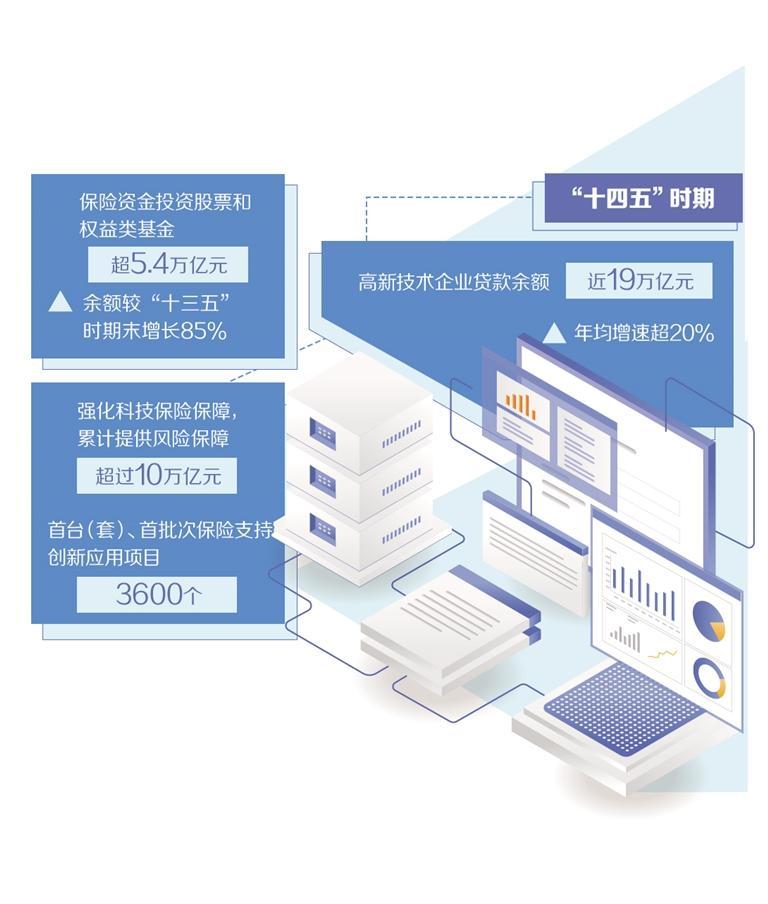
Group 1 - The core viewpoint of the news is the introduction of a set of policies aimed at enhancing financial support for high-level technological self-reliance and innovation in China, involving multiple government departments [1][2] - The policies focus on seven areas including venture capital, monetary credit, and capital markets, proposing 15 specific measures to support technology-driven enterprises [1] - A key initiative is the establishment of a "National Venture Capital Guidance Fund" to encourage early, small, long-term investments in hard technology [1][2] Group 2 - The introduction of a "Technology Board" in the bond market aims to increase support for technology innovation bonds issued by tech enterprises and venture capital institutions, with nearly 100 institutions already issuing bonds exceeding 250 billion yuan [2] - The People's Bank of China plans to promote an "innovation points system" to optimize the evaluation of tech SMEs, facilitating targeted financial support [2] - The China Securities Regulatory Commission has introduced several policies since 2024 to address the financing difficulties faced by tech enterprises in capital markets, enhancing the policy framework for supporting technological innovation [2][3] Group 3 - Financial institutions are encouraged to provide tailored services for tech enterprises, including "loans + external direct investment" and patent insurance, with a significant increase in loans to high-tech enterprises reaching 17.7 trillion yuan, a 20% year-on-year growth [3] - The insurance sector has provided approximately 9 trillion yuan in technology insurance coverage and invested over 600 billion yuan in tech enterprises, highlighting its role as a stabilizer for innovation [3]
金融监管总局:构建“345”科技金融服务体系 推进科技创新和产业创新深度融合
Xin Hua Cai Jing· 2025-05-22 13:06
Core Viewpoint - The Financial Regulatory Administration is building a technology finance system that aligns with technological innovation, summarized as the "345" technology finance service system, aimed at facilitating the flow of financial resources into technological innovation at lower costs and faster speeds [1][2]. Group 1: Policy and Product Supply System - The "3" in the "345" system refers to the policy system, product supply system, and professional organization system. The product supply system includes targeted services such as "loan + external direct investment," intellectual property pledge financing, and patent insurance tailored for technology enterprises [1]. - As of the end of Q1, the loan balance for high-tech enterprises in the banking sector reached 17.7 trillion yuan, reflecting a year-on-year growth of 20%, significantly outpacing the average growth rate of all loans [1]. Group 2: Pilot Projects - The "4" represents four pilot projects designed to provide technology enterprises with more long-term and patient capital support. The first pilot is the equity investment pilot for financial asset investment companies, which has expanded from Shanghai to 18 cities and provinces, with signed intention amounts exceeding 380 billion yuan [2]. - The second pilot involves the long-term investment reform of insurance funds, with a total of 2.22 billion yuan allocated across three batches [2]. - The third pilot allows banks in 18 cities to extend the term of merger loans from 7 years to 10 years and increase the loan-to-merger fund ratio from 60% to 80%, with all pilot banks fully operational [2]. - The fourth pilot focuses on the comprehensive trial of intellectual property finance, addressing challenges in registration, evaluation, and disposal of intellectual property [2]. Group 3: Financial Institutions Collaboration - The "5" signifies the collaboration of five types of financial institutions to leverage their respective service advantages. The system promotes a complementary relationship between direct and indirect financing, as well as between policy-based and commercial finance [2]. - Policy banks are enhancing service quality to provide medium to long-term, low-interest financing support for technological innovation, while commercial banks have consistently increased both loan balances and the number of clients in this sector [2]. - Insurance institutions are improving their product systems to cover the entire lifecycle of technology enterprises, while asset management institutions and financial asset investment companies are increasing equity investments, focusing on early, small, long-term, and hard technology investments [2].