专用光量子计算机

Search documents
创新动能拉满!解锁朝阳新质生产力发展密码
Bei Jing Ri Bao Ke Hu Duan· 2026-01-26 03:10
Core Viewpoint - The development of new quality productivity is an inherent requirement and important focus for promoting high-quality development in Chaoyang District, leveraging technological innovation to build a modern industrial system and stimulate new regional development momentum [1] Group 1: Industry Development - Chaoyang District has implemented action plans for Internet 3.0 (metaverse), digital healthcare, artificial intelligence, data elements, and intelligent robotics, enhancing the development capabilities of the digital economy core area [2] - The district has established a robust cluster of leading industries, with over 700 artificial intelligence companies and more than 1,000 enterprises in the industrial internet sector, supported by major internet platforms like Alibaba and Meituan [3][4] - The digital economy computing power center has been completed, achieving a computing capacity of 1000 PFlops, and the first AIGC audiovisual industry innovation center has been established [3] Group 2: Technology Innovation and Transformation - Chaoyang District is enhancing its technology innovation capabilities by establishing a technology innovation development belt and launching various innovation centers, resulting in over 200 technology innovation enterprises [7] - The district has invested over 1.6 billion yuan in technology industry funding during the 14th Five-Year Plan period, supporting more than 2,500 enterprises [9] - A financial service team comprising nearly 200 partners has been formed to provide credit support exceeding 12 billion yuan for technology-based SMEs [9] Group 3: Application and Internationalization - The district is actively constructing diverse application scenarios, including the establishment of the Internet 3.0 application scenario research institute and various metaverse benchmark application cases [13] - Chaoyang has been recognized as the first "International Technology Organization Headquarters Cluster," attracting 15 international technology organizations and hosting over 100 international exchange activities [14] - The district has established international technology service stations in 12 countries and regions, covering over 20 countries [13] Group 4: Reform and Innovation - Chaoyang District is enhancing its technology park construction and reforming its management structure to support sustainable development in technology innovation and new quality productivity [16][18] - The district is focusing on improving the quality of park development, with plans to integrate large areas into national and municipal high-tech zones [19] - The district aims to build a highland for the transformation of cutting-edge technology achievements and international cooperation by 2025 [21] Group 5: Performance Metrics - By the first ten months of 2025, the combined GDP contribution of information services, technology services, and industrial added value reached 27.7%, an increase of 6.3 percentage points from the end of the 13th Five-Year Plan [22] - The district has established 23 specialized industrial parks, with 9 recognized by municipal departments, and has a significant number of national high-tech enterprises and specialized small and medium-sized enterprises [22]

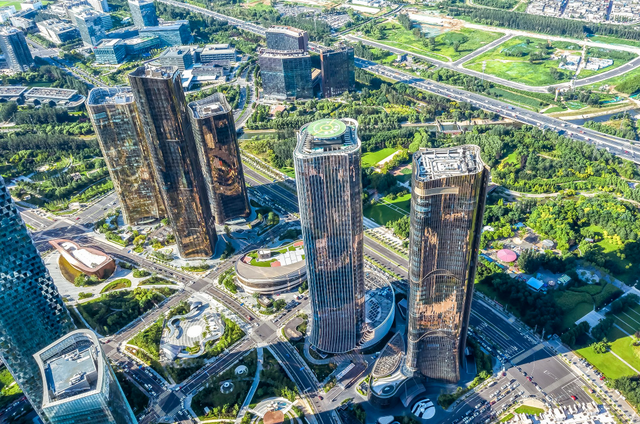
开局即冲刺!南山“科技+金融”双轮驱动新质生产力 |南山半月谈
Sou Hu Cai Jing· 2026-01-12 11:44
Core Viewpoint - The article highlights the vibrant synergy between technology and finance in Nanshan, Shenzhen, showcasing significant developments in the AI and biotechnology sectors, which align with national strategies for innovation and productivity enhancement [1][14]. Group 1: Capital Market Activity - In early January, Nanshan's technology finance sector experienced a surge in activity, marked by significant listings and financing events, including the IPO of AI data leader Xunce Technology, which raised HKD 1.08 billion [3]. - Another notable financing event involved Jindu Biotechnology, which secured a substantial investment from leading institutions, indicating strong capital inflow into Nanshan's future industries [3]. Group 2: Project Incubation and Support - The "X-Day" event on January 9 showcased six promising projects, emphasizing the role of platforms in accelerating incubation and connecting startups with investors [5]. - The "Six Ones" policy in Nanshan supports young entrepreneurs by providing essential resources, fostering a high-density talent and information environment conducive to rapid innovation [5]. Group 3: Industrial Collaboration and Ecosystem - The "Shenzhen Robot Valley" is rapidly forming a trillion-yuan industrial cluster, with companies like Yuejiang Technology achieving mass production of humanoid robots and securing global orders [7]. - Nanshan is also a national pilot zone for low-altitude economy development, attracting key enterprises and establishing a comprehensive industrial chain from R&D to operational scenarios [7]. Group 4: Capital Ecosystem and Investment Philosophy - Nanshan has developed a multi-faceted capital ecosystem, including a CNY 50.45 billion fund aimed at early-stage projects, ensuring seamless capital support throughout the lifecycle of hard tech companies [8]. - The investment philosophy in Nanshan emphasizes patience and long-term innovation over immediate financial returns, fostering a supportive environment for early-stage hard tech investments [10]. Group 5: Government and Market Interaction - The government in Nanshan adopts a "no interference" approach, providing timely support when needed while allowing businesses to focus on growth, exemplified by the establishment of a dedicated quantum computing facility [10]. - The market mechanism in Nanshan facilitates efficient collaboration between academic institutions and industry, enhancing the conversion of technological achievements into marketable products [12]. Group 6: Systematic Innovation Framework - Nanshan's innovative framework includes a unique fault-tolerance mechanism for government funds, shifting focus from short-term returns to long-term innovation effectiveness, thereby encouraging investment in early-stage hard tech [12]. - This systematic approach positions Nanshan as a model for regional implementation of national strategies, particularly in emerging sectors like AI, synthetic biology, and low-altitude economy [14].
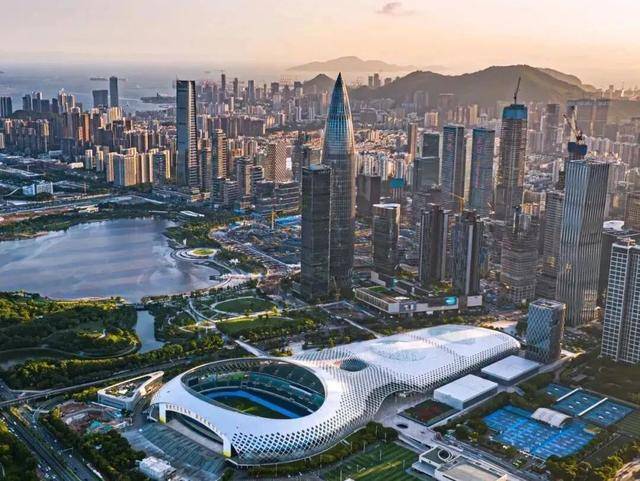
中国首个规模化专用光量子计算机制造工厂落地深圳
Zhong Guo Jing Ji Wang· 2025-11-26 07:03
Core Insights - The inauguration of China's first large-scale dedicated optical quantum computer manufacturing facility marks a significant step in the country's quantum technology development, transitioning from laboratory principles to industrial applications [1][2] - The facility, covering approximately 5,000 square meters, is capable of producing dozens of dedicated optical quantum computers annually, filling a global manufacturing gap in this field [1][3] Group 1: Technological Advancements - The team has made continuous breakthroughs in key technologies such as coherent light sources, low-loss optical paths, and high-speed measurement and control, establishing a fully autonomous optical quantum computing engineering system [2] - The successful implementation of this manufacturing facility is a physical manifestation of these technological capabilities, emphasizing that the real value lies in practical applications [2] Group 2: Collaborative Efforts - The company has engaged in deep collaborations with various partners, including Guangzhou National Laboratory, China Mobile, and Ping An Group, to validate the efficiency and quality advantages of optical quantum computers in different scenarios [2] - The supportive business environment in Shenzhen, characterized by innovation and efficiency, has encouraged the company to establish its primary manufacturing base there [2] Group 3: Manufacturing Process - The facility integrates research and development, manufacturing, and testing, aiming for engineering, standardization, and large-scale production of optical quantum computers [3] - It features a clean production area designed to maintain quantum state stability, supported by a five-layer guarantee system including personnel purification and air cleanliness [3] - The manufacturing process consists of seven major processes, 223 procedures, and over 1,000 operational steps, ensuring a highly integrated and precise assembly line for quantum computing [3]
马斯克:特斯拉AI5芯片即将完成流片,已着手研发AI6芯片;中国首个规模化专用光量子计算机制造工厂落地深圳南山丨智能制造日报
创业邦· 2025-11-25 05:08
Group 1 - Tesla is nearing the completion of the AI5 chip and has begun development on the AI6 chip, with a goal to release a new AI chip every 12 months, expecting to surpass the total production of all other AI chips combined [2] - The average capacity utilization rate of major global wafer fabs is projected to be around 86% in Q3 2025, reflecting a year-on-year increase of approximately 6 percentage points, with optimistic recovery trends expected to reach over 90% by 2026 [2] - Media reports indicate that MediaTek and other companies are considering integrating Intel's EMIB advanced packaging into their ASIC chip designs due to ongoing tight supply of TSMC's CoWoS advanced packaging [2] - The first large-scale dedicated optical quantum computer manufacturing plant in China has been established in Shenzhen, marking a significant step from experimental validation to engineering mass production, with plans for annual production capacity of several dozen dedicated optical quantum computers [2]