东鹏PLUS

Search documents
刚刚,东鹏饮料在港交所上市!
Sou Hu Cai Jing· 2026-02-03 03:08
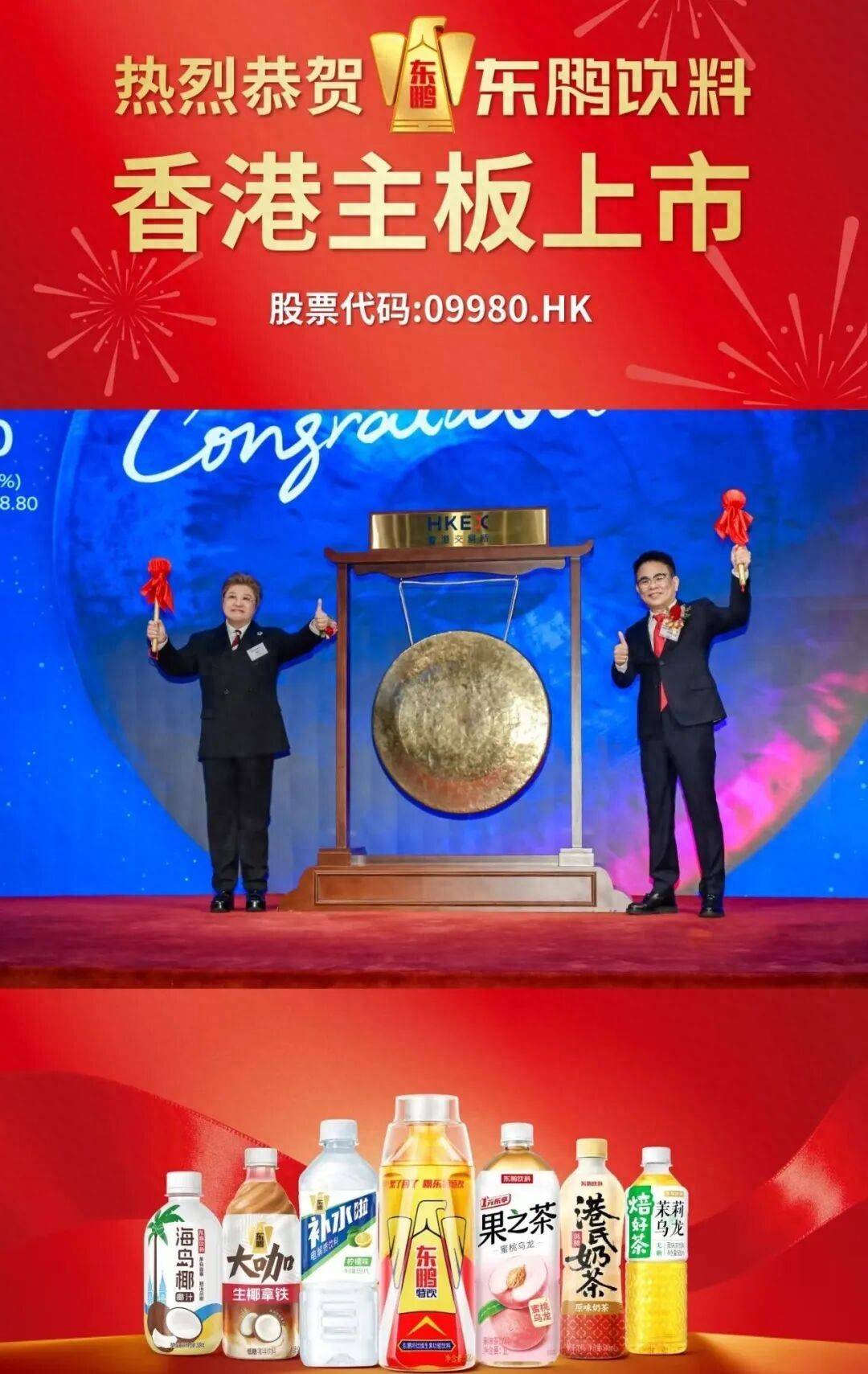
Core Viewpoint - Dongpeng Beverage has successfully completed its IPO on the Hong Kong Stock Exchange, marking it as the largest IPO in the Asian beverage sector in recent years, with a market capitalization exceeding HKD 139 billion, indicating strong market recognition of its strategic shift and penetration into lower-tier markets [3][11]. Group 1: Company Strategy and Market Position - Dongpeng Beverage transitioned from being perceived as a copycat of Red Bull to a market leader by targeting the underserved lower-tier market, particularly focusing on truck drivers and manufacturing workers who require energy drinks but are deterred by higher prices [4][5]. - The company has seen significant revenue growth, with projections indicating an increase from CNY 28 billion in 2017 to CNY 158 billion by 2024, alongside a net profit of CNY 33 billion and a gross margin exceeding 70% [5][6]. - Dongpeng's product strategy has evolved from relying on a single product to a multi-category approach, introducing six new product lines alongside its flagship Dongpeng Special Drink, which is crucial for sustaining long-term capital value [6][7]. Group 2: Financial Performance and Projections - The company anticipates entering the "200 billion club" in 2025, with projected revenues between CNY 207.6 billion and CNY 211.2 billion, reflecting a year-on-year growth of 31.07% to 33.34%, and a net profit forecast of CNY 43.4 billion to CNY 45.9 billion, marking a growth of 30.46% to 37.97% [8][10]. - Dongpeng's new product "Dongpeng Supplement" has quickly become the leading brand in China's electrolyte drink market, achieving sales of CNY 14.93 billion in the first half of 2025, which is equivalent to its total sales for 2024 [6][8]. Group 3: Market Dynamics and Competitive Landscape - The IPO comes at a pivotal moment for the Chinese functional beverage industry, which is undergoing a transformation towards health and scene-based consumption, necessitating both Dongpeng and Red Bull to adapt to these changes [11][12]. - Dongpeng's dual listing strategy aims to leverage both A-share and H-share markets to enhance capital operations, allowing for resource synergy and risk hedging, which is expected to facilitate its expansion into international markets [9][10]. - The competitive landscape is intensifying, with Dongpeng facing pressures from both international brands and local competitors, necessitating a focus on innovation and product diversification to maintain its market position [12].


东鹏饮料赴港上市启全球化新程 出海能否与红牛分庭抗礼?
Sou Hu Cai Jing· 2026-01-29 09:53
Core Viewpoint - Dongpeng Beverage is initiating its Hong Kong IPO to raise over HKD 10 billion, marking a significant step in its global expansion strategy following its A-share listing in 2021 [1][3]. Group 1: IPO and Global Strategy - The Hong Kong listing is not merely for capital expansion but serves as a strategic platform for global outreach, addressing development shortcomings [3][4]. - Dongpeng plans to issue approximately 40.89 million H-shares at a price not exceeding HKD 248, aiming to raise around HKD 101.4 billion, with part of the funds allocated for overseas market expansion [3][4]. - The involvement of 16 notable cornerstone investors, including Qatar Investment Authority and Temasek, enhances Dongpeng's international credibility and supports its overseas market endeavors [3][4]. Group 2: Globalization Progress - Dongpeng has already established a presence in over 30 countries, with successful operations in subsidiaries in Indonesia and Vietnam, creating a multi-faceted overseas strategy [5]. - The company is focusing on Southeast Asia and the Middle East, where consumer habits align closely with those in China, and has seen promising results despite challenges like high local taxes [5]. - Dongpeng employs various international expansion models, including agency, wholly-owned, joint ventures, and franchising, while maintaining 14 production bases in China to support overseas exports [5]. Group 3: Competitive Landscape - Red Bull dominates the global functional beverage market, presenting significant challenges for Dongpeng, which is still in the early stages of international expansion [6]. - Dongpeng's brand recognition is limited compared to Red Bull, necessitating substantial investment in brand promotion to enhance its market presence [6]. - Red Bull's established global production and operational systems create a competitive edge that Dongpeng must overcome to improve operational efficiency [6]. Group 4: Opportunities and Challenges - Dongpeng's competitive advantage lies in its cost-effective pricing strategy, which appeals to emerging markets, allowing it to penetrate mid-to-low-end segments [7]. - The functional beverage sector in emerging markets is growing rapidly, providing Dongpeng with opportunities to gain market share through localized operations and flexible expansion strategies [7]. - To succeed, Dongpeng must increase R&D investment, enhance product innovation, strengthen brand recognition, and improve its global operational framework [7].
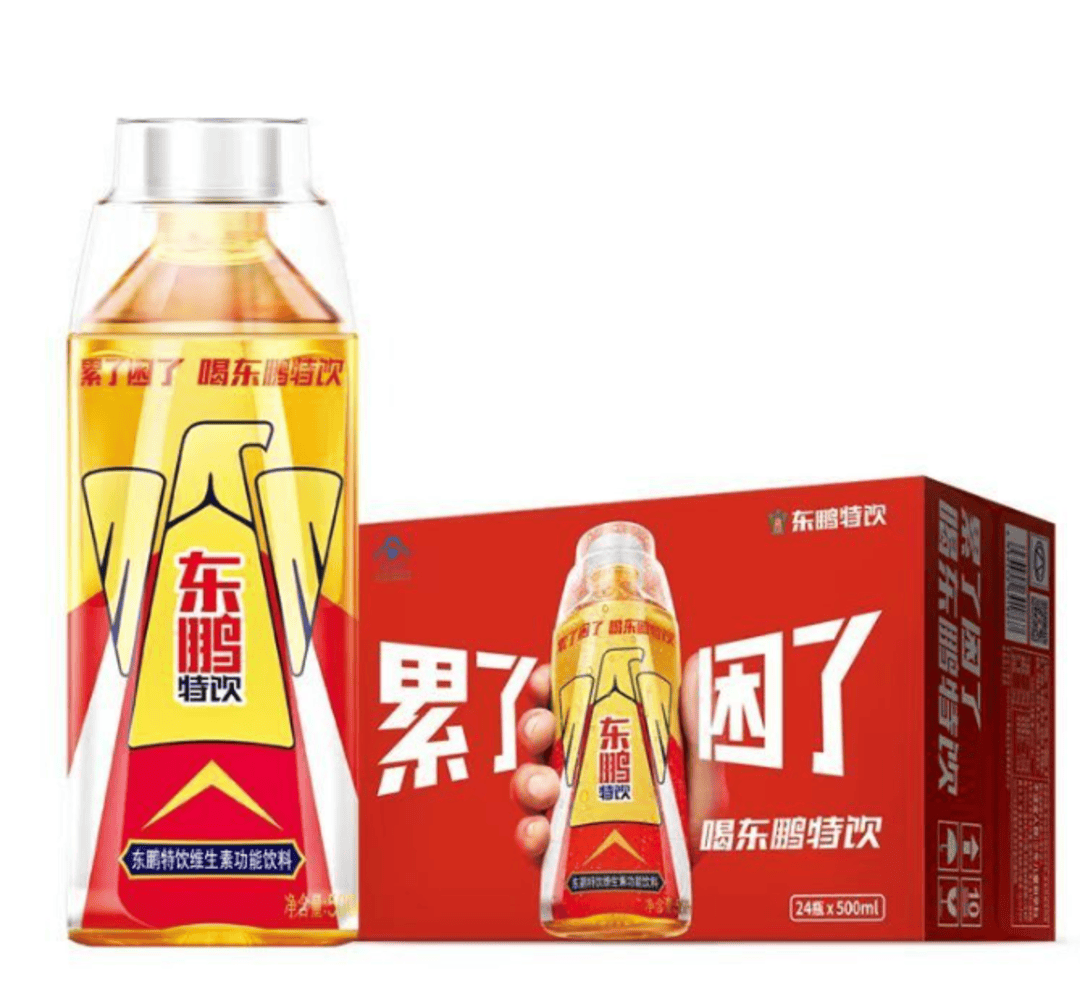
“低价之王”东鹏特饮:销量狂奔为何换不来利润增长
Sou Hu Cai Jing· 2025-05-20 05:21
Core Insights - The Chinese functional beverage market is highly competitive, with Eastroc Beverage once holding a strong position but now facing challenges due to market shifts and increased competition [1][3] - In 2024, Eastroc Beverage reported a revenue of 15.839 billion RMB, reflecting a year-on-year growth of 40.63%, indicating strong growth momentum [1] - However, the company is struggling with over-reliance on a single product line, declining channel benefits, and a hollow brand value, with over 80% of its revenue coming from its core energy drink business [3][4] Market Dynamics - The competitive landscape has shifted, with Red Bull maintaining its high-end position through brand premium and sports marketing, while new entrants like "Alien" and "Battle Horse" are gaining traction through targeted marketing strategies [3][7] - Eastroc's traditional focus on a 500ml bottle format has limited its ability to innovate and adapt to changing consumer preferences [3] Financial Performance - Eastroc's revenue growth of 9.8% in 2024 masks deeper issues, as its net profit margin plummeted from 15.2% in 2021 to 7.4% in 2024, and gross margin fell from 49.3% to 41.8% [4] - The company's low-price strategy has become a double-edged sword, restricting its attempts to move into higher-end markets [4][11] Innovation and R&D - Eastroc's R&D investment is significantly below industry averages, with a rate of only 1.2% in 2024, compared to over 3% for competitors like Yuanqi Forest and Alien [4][8] - The company's innovation efforts have been criticized as superficial, merely rebranding existing products without substantial improvements [5][11] Distribution and Marketing - Eastroc's reliance on offline channels, which accounted for 87% of revenue in 2021, is declining, with a growth rate of only 4.3% in 2024, while online sales remain low at 13% [5] - The company's digital marketing efforts are lacking, with minimal engagement on platforms like Douyin and Kuaishou, contrasting sharply with competitors who leverage social media effectively [5][10] Strategic Challenges - Eastroc's management structure, dominated by family control, has led to strategic inertia and missed opportunities for innovation and market adaptation [8][12] - The company's marketing strategies have failed to resonate with younger consumers, who perceive its advertising as outdated and disconnected from current trends [10] Future Outlook - The company faces a critical juncture, needing to redefine its strategy to align with evolving consumer demands and market dynamics [11][12] - Eastroc must address key questions regarding its pricing strategy, R&D investment, and organizational governance to avoid becoming obsolete in the competitive landscape [12]