主动债券开放型基金

Search documents
主动债券开放型基金三季报分析
Haitong Securities International· 2025-10-30 04:32
Report Industry Investment Rating There is no information about the report industry investment rating in the provided content. Core Viewpoints - In Q3 2025, the pure - bond positions of active bond funds decreased, and the equity positions also declined overall; both leverage and duration decreased, shifting to a defensive stance [1]. - The bond market fluctuated and declined in Q3 2025, with the long - end rising more than the short - end. The main bond indices generally fell, while the CSI Convertible Bond Index rose [2][5]. Summary by Directory 2025 Q3 Market Review - The bond market fluctuated and declined in Q3 2025, with the long - end rising more than the short - end. In July, the bond market was affected by the stock - bond seesaw and other factors; in August, it was suppressed by the rising stock market; in September, it continued to decline due to the tightening of capital [5]. - The ChinaBond Aggregate Net Price Index fell 1.60%, the ChinaBond Financial Bond Aggregate Net Price Index fell 1.22%, the ChinaBond Corporate Bond Aggregate Net Price Index fell 0.94%, and the CSI Convertible Bond Index rose 9.43% [2][5]. Asset Allocation 1. Asset Allocation by Category - The pure - bond and equity positions of all types of bond funds decreased. The pure - bond position of partial - bond funds decreased the most, followed by pure - bond and quasi - bond funds. The equity positions of all types of bond funds decreased slightly (within 1 percentage point) [3][11]. - As of September 30, 2025, the pure - bond position of active bond - open funds (old) was 102.92%, down 5.94 percentage points from the end of Q2; the deposit position was 1.03%, down 0.16 percentage points; the other asset position was 0.46%, down 0.22 percentage points. The equity position of option - containing active bond - open funds was 18.10%, up 1.89 percentage points [11][13]. 2. Asset Allocation by Type - The positions of interest - rate bonds and credit bonds in pure - bond products decreased. The interest - rate bond position of pure - bond and quasi - bond funds at the end of Q3 was 44.53%, down 2.33 percentage points from the end of the previous quarter; the credit bond position was 64.55%, down 1.13 percentage points [3][17]. - Among interest - rate bonds, the positions of treasury bonds, policy - bank bonds, and inter - bank certificates of deposit all decreased. Among credit bonds, except for short - term commercial paper, the positions of other types decreased, with the largest decline in financial bonds (excluding policy - bank bonds) [17][18]. Leverage Ratio - As of September 30, 2025, the overall leverage ratio of active bond funds (old) was 112.84%, down 0.88 percentage points from the end of the previous quarter, reaching a seven - year low [3][23]. Bond Selection - The high - grade credit bond position of active bond funds was about 47.36%, down 3.41 percentage points from the end of the previous quarter; the low - grade credit bond position was about 15.75%, up 1.10 percentage points. Institutions increased coupon income through appropriate credit downgrading [24]. - The pre - leverage duration of the top - holding bonds of active bond funds was 3.24 years, shortened by 0.88 years from the end of the previous quarter; the post - leverage duration was 3.33 years, shortened by 1.14 years. Institutions shortened the duration for defense [24].
主动债券开放型基金二季报分析
GUOTAI HAITONG SECURITIES· 2025-07-22 13:23
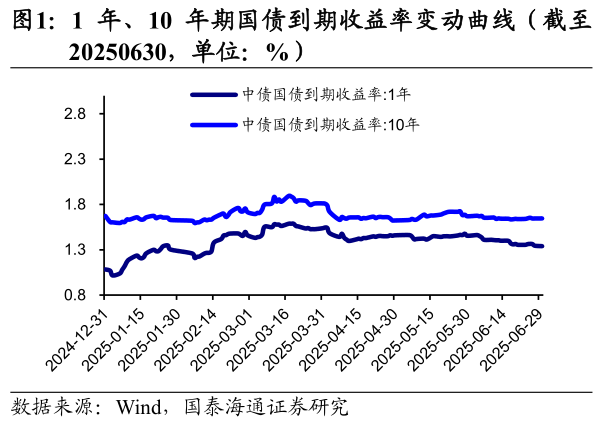
Report Industry Investment Rating - Not mentioned in the provided content Core Viewpoints of the Report - In Q2 2025, the pure - bond positions of active bond funds increased, while the equity positions decreased overall; both the leverage ratio and duration increased [1] - The bond market showed low - volatility fluctuations in Q2 2025, with short - term performance outperforming long - term performance. There was a double - bull market in stocks and bonds, and different types of active bond funds had different operation ideas in pure - bond positions, but all reduced equity positions to varying degrees [4] Summary by Relevant Catalogs 2025 Q2 Market Review - The bond market had low - volatility fluctuations in Q2 2025, with short - term performance better than long - term performance. In April, affected by the "reciprocal tariff" executive order, the bond market rose, then fluctuated due to factors like the game of monetary easing expectations and changing tariff policies. In May, the bond market entered a transition period under capital constraints, and the spread compression market gradually evolved. In June, with the central bank's support, the capital market was loose, and the bond market rose, with short - term performance stronger. The ChinaBond Aggregate Net Price Index rose 0.90%, the ChinaBond Financial Bond Aggregate Net Price Index rose 0.53%, the ChinaBond Corporate Bond Aggregate Net Price Index rose 0.01%, and the CSI Convertible Bond Index rose 3.77% [4][8] Asset Allocation: Pure - Bond Positions Increase Overall, Equity Positions Decrease Overall - As of June 30, 2025, the equity positions of active bond open - end funds (old) were 4.70%, a decrease of 0.31 percentage points from the end of Q1; the pure - bond positions were 109.03%, an increase of 2.88 percentage points; the deposit positions were 1.14%, a decrease of 0.15 percentage points; and other asset positions were 0.70%, an increase of 0.22 percentage points [10] - In Q2 2025, there was a double - bull market in stocks and bonds. Different types of active bond funds had different ideas in pure - bond positions, and all reduced equity positions to varying degrees. The equity positions of convertible - bond bond funds decreased significantly, followed by partial - debt bond funds. Except for convertible - bond bond funds, the pure - bond positions of other types of active bond funds increased significantly [4][12] Category Asset Allocation: Interest - Rate Bond and Credit - Bond Positions of Pure - Bond Products Increase - As of June 30, 2025, the interest - rate bond positions of active bond open - end funds (old) were 43.42%, an increase of 1.99 percentage points from the end of the previous quarter; the credit - bond positions were 65.61%, an increase of 0.89 percentage points. For pure - bond bond and quasi - bond bond products, the interest - rate bond positions at the end of Q2 were 46.81%, an increase of 1.89 percentage points, and the credit - bond positions were 65.85%, an increase of 0.72 percentage points [17] - Within interest - rate bonds, the treasury bond positions at the end of Q2 were 9.05%, an increase of 2.12 percentage points; the policy - financial bond positions were 32.04%, a decrease of 0.05 percentage points; and the inter - bank certificate of deposit positions were 2.33%, a decrease of 0.08 percentage points. Within credit bonds, the short - term financing positions were 2.56%, a decrease of 0.41 percentage points; the medium - term note positions were 22.35%, a decrease of 0.28 percentage points; the corporate bond positions were 10.09%, a decrease of 0.42 percentage points; and the financial bond (excluding policy - financial bonds) positions were 28.09%, an increase of 2.85 percentage points. Institutions generally increased financial bonds to increase returns [18] Leverage Ratio: Recovery - As of June 30, 2025, the overall leverage ratio of active bond funds (old) was 116.76%, an increase of 2.31 percentage points from the end of the previous quarter. In Q2, the capital market was loose, and institutions increased leverage to increase returns [20] Individual Bond Selection: Lengthen Duration, Increase Allocation of High - Grade Credit Bonds - As of the end of Q2, the positions of high - grade credit bonds in active bond funds were about 51.19%, an increase of 1.16 percentage points from the end of the previous quarter; the positions of low - grade credit bonds were about 14.42%, a decrease of 0.28 percentage points. Institutions increased the allocation of high - grade credit bonds considering both coupon and liquidity [23] - As of the end of Q2, the pre - leverage duration of the top - holding bonds in active bond funds was 4.13 years, a lengthening of 0.90 years from the end of the previous quarter; the post - leverage duration was 4.49 years, a lengthening of 1.07 years. Institutions chose to lengthen duration waiting for interest - rate strengthening [23]
国泰海通:主动债基纯债仓位上行 权益仓位整体下降
智通财经网· 2025-07-22 12:25
Core Insights - The report from Guotai Junan indicates that as of June 30, 2025, the equity position of actively managed bond open-end funds (old) is 4.70%, a decrease of 0.31 percentage points from the end of the first quarter [1] - The pure bond position is 109.03%, an increase of 2.88 percentage points from the previous quarter [1] - The overall market for the second quarter of 2025 saw a bullish trend in both stocks and bonds, with varying strategies among different types of actively managed bond funds regarding their pure bond positions [1][2] Market Overview - In Q2 2025, the bond market experienced low volatility and oscillation, with short-term bonds outperforming long-term ones [1] - The market was influenced by factors such as administrative orders on "reciprocal tariffs," monetary easing expectations, and the Lujiazui Financial Forum, leading to a general increase in bond prices [1] - Major indices showed positive performance, with the China Bond Total Net Price Index rising by 0.90% and the China Convertible Bond Index increasing by 3.77% [1] Fund Positioning - As of Q2 2025, the overall equity position of actively managed bond open-end funds is 4.68%, with a pure bond position of 108.89% [2] - The leverage ratio for these funds stands at 116.67%, indicating a slight increase [2] - The report highlights a significant increase in pure bond positions across various fund types, while equity positions have generally decreased [1][2] Asset Allocation - The allocation to pure bonds has increased, while equity positions have decreased across the board [2] - Within pure bond assets, the allocation to interest rate bonds is 43.45%, and credit bonds is 65.45% [2] - The report notes that institutions are increasing their allocation to interest rate bonds due to a downward trend in interest rates [12] Credit Bond Analysis - The allocation to high-grade credit bonds is approximately 51.19%, reflecting an increase, while low-grade credit bonds have decreased to about 14.42% [20] - The duration of high-grade credit bonds has been extended, indicating a strategic shift towards longer durations in anticipation of favorable interest rate movements [20] Leverage and Duration - The overall leverage ratio for actively managed bond funds has increased to 116.76%, suggesting a trend towards leveraging for enhanced returns [17] - The weighted average duration of the funds has also been extended, with pre-leverage duration at 4.13 years and post-leverage duration at 4.49 years [20]


国泰海通|基金评价:主动债券开放型基金二季报分析:纯债仓位整体上行,杠杆久期双升
国泰海通证券研究· 2025-07-22 09:54
Core Insights - The report indicates that in Q2 2025, the pure bond positions of active bond funds increased while equity positions decreased overall [1][2] - The leverage duration for active bond funds has risen, reflecting a strategic shift in asset allocation [2][3] Market Review - The bond market experienced low volatility and oscillation, with short-term bonds outperforming long-term ones. In April, the market rose due to reduced investor risk appetite influenced by "reciprocal tariffs," followed by fluctuations due to monetary easing expectations and changing tariff policies. By June, the market saw an overall increase, supported by a loose funding environment and the potential for restarting government bond trading [1] - Key indices showed positive performance: the China Bond Total Net Price Index rose by 0.90%, the China Bond Financial Bond Total Net Price Index increased by 0.53%, and the China Bond Corporate Bond Total Net Price Index saw a slight rise of 0.01% [1] Asset Allocation - There was an overall increase in pure bond positions and a decrease in equity positions among active bond funds. Specifically, convertible bond funds saw a significant reduction in equity positions, while other types of active bond funds increased their pure bond positions [1] - For pure bond products, the allocation to interest rate bonds and credit bonds increased, with interest rate bonds rising to 46.81% and credit bonds decreasing to 65.85% [2] Leverage and Duration - The leverage ratio for active bond funds rose to 116.76%, an increase of 2.31 percentage points from the previous quarter, indicating a strategy to enhance returns amid a loose funding environment [2] - The duration of high-grade credit bonds increased to approximately 51.19%, while low-grade credit bonds decreased to about 14.42%. The overall duration of key holdings also lengthened, with pre-leverage duration at 4.13 years and post-leverage duration at 4.49 years [3]