
二次电池

Search documents
万润新能公布国际专利申请:“一种碳包覆氟磷酸钒钠正极材料及其制备方法、正极极片和二次电池”
Sou Hu Cai Jing· 2026-02-27 21:56
Group 1 - Wanrun New Energy (688275) has filed an international patent application for a sodium vanadium phosphate cathode material and its preparation method, with the application number PCT/CN2024/114002 and an international publication date of February 26, 2026 [1] - The company has announced a total of 2 international patent applications this year, representing a 100% increase compared to the same period last year [1] - In the first half of 2025, the company invested 128 million yuan in research and development, which is a decrease of 10.92% year-on-year [1]


韩联社:韩国唯一保持领先的技术,被中国反超
Xin Lang Cai Jing· 2026-02-23 09:21
Core Insights - The technology gap between South Korea and China in key scientific and technological fields is widening from 2022 to 2024, particularly in strategic technologies like secondary battery technology, where China has overtaken South Korea [1] Group 1: Technology Assessment - According to the draft report submitted by the South Korean Ministry of Science and ICT, the technology gap between South Korea and the United States is projected to be 2.8 years in 2024, down from 3.2 years, indicating a reduction of 0.4 years [1] - The gap between China and the United States is estimated at 2.1 years, with South Korea and China having a difference of 0.7 years [1] - In 2022, South Korea was leading in secondary battery technology by 0.9 years, but by 2024, China has taken the lead, creating a technology gap of 0.2 years between the two countries [1]
韩媒:韩国“唯一领先战略技术”,也被中国反超了
Di Yi Cai Jing Zi Xun· 2026-02-22 11:04
Core Insights - The technology gap between South Korea and China in 11 key areas has widened from 2022 to 2024, with South Korea losing its lead in secondary battery technology to China [2] Group 1: Technology Assessment - The South Korean Ministry of Science and ICT reported that the technology gap between South Korea and the United States has decreased from 3.2 years to 2.8 years, a reduction of 0.4 years [2] - In comparison to China, South Korea was first surpassed in technology in 2022 by 0.2 years, and this gap has now expanded by an additional 0.5 years by 2024 [2] Group 2: Secondary Battery Technology - In 2022, South Korea held the top position in secondary battery technology with a lead of 0.9 years, but by 2024, China has overtaken South Korea, creating a technology gap of 0.2 years [2]

韩国“唯一领先战略技术”被中国反超
Guan Cha Zhe Wang· 2026-02-22 10:31
Core Insights - The technology gap between South Korea and China in key strategic sectors is widening, particularly in the secondary battery sector where China has overtaken South Korea [1][3] - South Korea's overall technology level is assessed at 82.8% compared to the United States, with a significant gap of 2.8 years behind the U.S. and 0.7 years behind China [3] Group 1: Technology Assessment - In the secondary battery sector, South Korea was leading by 0.9 years in 2022 but has now fallen behind China by 0.2 years in 2024 [1] - South Korea ranks second in the semiconductor and display sectors but is now lagging behind the U.S. by 0.7 years and China by 0.8 years [3] - The report evaluates 136 core technologies across 11 sectors, analyzing papers and patents from South Korea, China, Japan, Europe, and the U.S. [1] Group 2: Market Dynamics - The global market share of South Korean electric vehicle batteries has decreased from 35% in 2020 to 23% in 2023, with projections to drop further to 16% by October 2025 [5] - Despite a growing global electric vehicle market, the growth rate is expected to decline significantly from 25%-28% to around 15% by 2025 [4] - South Korean battery companies are facing intense competition from Chinese firms like CATL and BYD, which have a substantial lead in revenue and market share [5] Group 3: Domestic Market Disparities - The domestic market for South Korean secondary batteries is only about 2% of China's, with the energy storage market at just 1% of China's [6] - South Korean companies have over 90% of their production facilities located overseas, while Chinese companies like CATL and BYD have about 97% of their capacity concentrated domestically [6] - The market share of South Korean companies in Europe has dropped from over 60% in 2022 to below 40% recently due to strong competition from Chinese firms [6] Group 4: Material Dependency - South Korean battery manufacturers are heavily reliant on China for core materials that constitute 60% of the cost of secondary batteries [7] - Chinese companies dominate the global supply of four key materials used in battery production, holding an 80% market share [7]

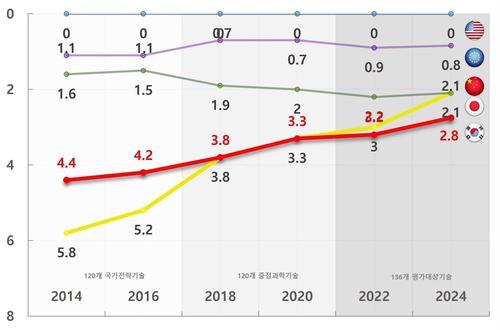
韩媒称韩国“唯一领先战略技术”二次电池,被中国反超
Guan Cha Zhe Wang· 2026-02-22 10:27
Core Insights - The technology gap between South Korea and China in key strategic sectors is widening, particularly in the secondary battery field, where China has overtaken South Korea as of 2024 [1][3] - South Korea's overall technology level is assessed at 82.8% compared to the United States, with a significant gap of 2.8 years, while the gap with China has increased to 0.7 years [3] Group 1: Technology Assessment - In the secondary battery sector, South Korea was leading by 0.9 years in 2022 but has fallen behind China by 0.2 years in 2024 [1] - The evaluation covered 136 core technologies across 11 sectors, analyzing papers and patents from South Korea, China, Japan, Europe, and the United States [1] - South Korea's semiconductor and display sectors have also seen a decline, with a lag of 0.7 years behind the U.S. and 0.8 years behind China as of 2024 [3] Group 2: Market Dynamics - The global market share of South Korean electric vehicle battery manufacturers has decreased from 35% in 2020 to 23% in 2023, with projections of further decline to 16% by October 2025 [5] - Despite the growth in global electric vehicle sales, the growth rate is expected to drop significantly from 25%-28% to around 15% by 2025 [4] - South Korean battery companies are facing intense competition from Chinese firms like CATL and BYD, which have a substantial market presence [5] Group 3: Domestic Market Disparities - The domestic market for South Korean secondary batteries is only about 2% of China's, with the energy storage market at approximately 1% [6] - South Korean companies have over 90% of their production facilities located overseas, while Chinese firms like CATL and BYD have about 97% of their capacity concentrated domestically [6] - The market share of South Korean companies in Europe has dropped from over 60% in 2022 to below 40% recently due to strong competition from Chinese firms [6] Group 4: Material Dependency - South Korean battery manufacturers are heavily reliant on China for core materials that constitute 60% of secondary battery costs, with Chinese companies controlling around 80% of the global market for these materials [7]

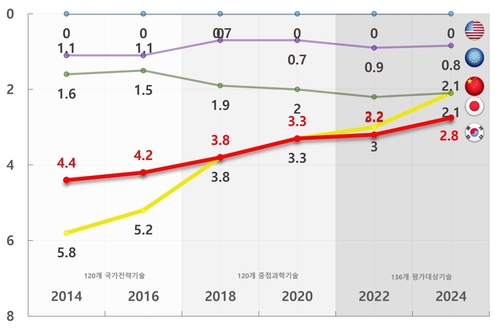
韩媒:韩国“唯一保持领先的技术”,也被中国反超了
Huan Qiu Wang· 2026-02-22 07:44
Core Insights - The technology gap between South Korea and China in 11 key areas is widening, with South Korea's once-leading secondary battery technology now surpassed by China [1][2] - As of 2024, the technology gap between South Korea and the US is 2.8 years, while the gap between China and the US is 2.1 years, indicating a narrowing gap for South Korea but an expanding gap with China [1] - The assessment of 136 core technologies shows that South Korea's overall technology level is at 82.8%, compared to 86.8% for China and 93.8% for the EU, with the US at 100% [1] Technology Assessment - In the evaluation of 50 strategic technologies, South Korea's gap with the US has decreased from 3 years in 2022 to 2.6 years in 2024, while China's gap has narrowed by 0.8 years during the same period [2] - South Korea was previously leading in the secondary battery sector by 0.9 years in 2022, but by 2024, China has taken the lead with a 0.2-year advantage [2] - In the semiconductor and display sectors, South Korea is lagging behind the US by 0.7 years and China by 0.8 years, with technology levels at 91.2% for South Korea and 91.5% for China [2]
韩媒发现:韩国“唯一保持领先的技术”,也被中国反超了
Xin Lang Cai Jing· 2026-02-22 07:35
Core Insights - South Korea's technology level in secondary battery technology, previously a leading area, has been surpassed by China, indicating a significant shift in technological leadership [1][2] Group 1: Technology Assessment - The 2024 technology level assessment shows that South Korea's gap with the United States has decreased from 3.2 years to 2.8 years, while China's gap with the U.S. is 2.1 years, resulting in a 0.7-year gap between South Korea and China [1] - The assessment covered 136 core technologies across 11 fields, with South Korea's overall technology level at 82.8%, compared to the U.S. at 100%, the EU at 93.8%, China at 86.8%, and Japan at 86.2% [1] Group 2: Strategic Technologies - In the evaluation of 50 national strategic technologies, South Korea's gap with the U.S. has narrowed from 3 years in 2022 to 2.6 years in 2024, while China's gap has reduced by 0.8 years, indicating a rapid catch-up [2] - In the secondary battery sector, South Korea was leading by 0.9 years in 2022, but by 2024, China has taken the lead with a 0.2-year advantage over South Korea [2]
比亚迪公布国际专利申请:“石墨材料、石墨材料的制备方法、负极、二次电池和用电设备”
Sou Hu Cai Jing· 2026-02-07 21:53
Core Viewpoint - BYD has filed an international patent application for a new graphite material and its preparation method, indicating a strong focus on innovation and R&D in the battery sector [1] Group 1: Patent Information - The patent is titled "Graphite Material, Preparation Method of Graphite Material, Negative Electrode, Secondary Battery, and Electric Equipment" with application number PCT/CN2025/075564, published internationally on February 5, 2026 [1] - This year, BYD has announced a total of 262 international patent applications, representing a significant increase of 495.45% compared to the same period last year [1] Group 2: R&D Investment - In the first half of 2025, BYD invested 29.596 billion yuan in research and development, which is a year-on-year increase of 50.84% [1]
宁德时代公布国际专利申请:“正极材料及其制备方法、二次电池、用电装置”
Sou Hu Cai Jing· 2026-02-06 22:59
Core Viewpoint - CATL has filed an international patent application for a new cathode material and its preparation method, indicating ongoing innovation in battery technology [1] Group 1: Patent Information - The patent is titled "Cathode Material and Its Preparation Method, Secondary Battery, and Power Device" with application number PCT/CN2025/097732, published internationally on February 5, 2026 [1] - This marks CATL's commitment to advancing its technology portfolio in the battery sector [1] Group 2: Research and Development - In 2023, CATL has announced a total of 186 international patent applications, representing an increase of 18.47% compared to the same period last year [1] - The company invested 10.095 billion yuan in research and development in the first half of 2025, reflecting a year-on-year increase of 17.48% [1]
去年韩国专利申请量超26万件 位居世界第四
Shang Wu Bu Wang Zhan· 2026-02-02 09:00
Core Insights - South Korea's patent applications reached 267,997 in the previous year, marking a 5.9% increase, making it the fourth country to surpass 260,000 annual patent applications after Japan, the United States, and China [1] Group 1: Patent Application Growth - The information technology and communication sector, including artificial intelligence, saw a significant increase of 21.1% in patent applications, totaling 27,033 [1] - The secondary battery sector experienced a growth of 14.4%, with 10,624 patent applications filed [1] Group 2: International Patent Submissions - South Korean companies increased their overseas patent submissions by 17.6%, reaching a total of 67,025 [1]