增量资金

Search documents
短期股指以区间震荡为主
Bao Cheng Qi Huo· 2026-03-09 01:33
1. Report Industry Investment Rating - No relevant information provided 2. Core Viewpoints - Short - term stock index is mainly in range - bound oscillation. Last week, the stock index showed a trend of bottoming out and rebounding. The outbreak of the US - Iran conflict led to a rapid increase in geopolitical risks, and the risk appetite of the stock market declined under pressure, causing the stock index to quickly correct. As the impact of the Middle East geopolitical crisis is gradually digested by the market, the stock index trend returns to its own fundamentals. With the convening of the Two Sessions, the policy support for aggregate demand and the expectation of supporting technological innovation are relatively clear, and the trend of continuous net inflow of incremental funds into the stock market remains unchanged, which constitutes the core logic for the medium - and long - term upward movement of the stock index. However, with the implementation of the policy benefits in the government work report of the Two Sessions, the approaching of the listed company earnings report disclosure season, and the uncertainty of the Middle East geopolitical risks, the stock index will mainly oscillate in a range in the short term [3][9][41] - For ETF options and stock index options, maintain a bull spread. Considering that the medium - and long - term upward logic of the stock index still exists, and the weakening of short - term upward momentum increases the difficulty of timing, one can adhere to the bull spread or ratio spread with a moderately bullish idea [4][42] 3. Summary by Directory 3.1 Market Review 3.1.1 Stock Index Trends - Last week, the stock index showed a trend of bottoming out and rebounding. The US - Iran conflict led to a rapid increase in geopolitical risks, and the stock index quickly corrected. As the impact of the Middle East geopolitical crisis is digested, the stock index returns to its fundamentals. The policy support during the Two Sessions and the continuous net inflow of funds are the core for the medium - and long - term upward movement of the stock index. In the short term, due to policy implementation, approaching earnings season, and geopolitical uncertainties, the stock index will oscillate in a range [9] 3.1.2 Futures Basis and Monthly Spread of Stock Index Futures - The basis of the four stock index futures varieties has rebounded, indicating a decline in market optimism. The inter - quarterly spread between the current quarter and the next quarter of stock index futures has also rebounded, suggesting that market optimism has weakened and the uncertainty risk of the far - month contracts has increased [19] 3.2 Option Indicators 3.2.1 PCR Index - The report provides multiple figures related to the PCR index of different ETF options and stock index options, including the PCR of 50ETF options, 300ETF options, and stock index options of CSI 1000, etc., but does not provide specific analysis of these data [27] 3.2.2 At - the - money Implied Volatility - The report presents the at - the - money implied volatility of various options, such as 50ETF options, 300ETF options, and stock index options, but no specific analysis of these data is given [34] 3.2.3 At - the - money Implied Volatility Cone - The report shows the at - the - money implied volatility cone of different options, including 50ETF options, 300ETF options, and stock index options, but no specific analysis of these data is provided [39] 3.3 Conclusion - The conclusion is consistent with the core viewpoints. Short - term stock index is in range - bound oscillation, and for ETF options and stock index options, a bull spread should be maintained [41][42]
长假后宜关注增量资金新动向
Bei Jing Shang Bao· 2026-02-23 16:26
Group 1 - The core viewpoint is that after the Spring Festival holiday, A-shares are expected to see a return of conservative funds that had exited the market to avoid uncertainties, leading to potential investment opportunities in safe and growth-oriented sectors [1] - The inflow and outflow of funds around the holiday reflect a dynamic adjustment of risk premiums, with returning funds likely to focus on safer and more reliable investment directions based on macroeconomic information and industry fundamentals [1] - The current market environment indicates that the sources of incremental funds mainly include cash that was liquidated before the holiday and new funds entering the market after the holiday [1] Group 2 - Stocks that attract funds typically have characteristics such as being within a reasonable valuation range and having strong defensive attributes, which are preferred by risk-averse investors [2] - High industry growth potential is crucial, as merely low valuations are insufficient for sustained price increases; incremental funds are more inclined to seek growth sectors aligned with future economic transformation, such as domestic consumption and technology manufacturing [2] - Historical data suggests a high probability of market gains in the week following the Spring Festival, reflecting investor optimism about economic development in the new year [2] Group 3 - There is uncertainty regarding the return of incremental funds; if the speed and scale of this return do not meet expectations, investors should be cautious and consider slowing their investment pace [3]
侃股:长假后宜关注增量资金新动向
Bei Jing Shang Bao· 2026-02-23 12:25
Group 1 - The core viewpoint is that after the Spring Festival holiday, A-shares are expected to see a return of conservative funds that had exited the market to avoid uncertainty, which will lead to new investment opportunities focusing on safety and growth [1] - The inflow and outflow of funds around the holiday is essentially a dynamic adjustment of risk premiums, with returning funds likely to choose safer and more reliable investment directions based on macroeconomic information and industry fundamentals [1] - The sources of new funds in the current market environment include cash that was liquidated before the holiday and new capital entering the market after the holiday, with public funds likely to buy more stocks post-holiday [1] Group 2 - Stocks that attract funds typically have characteristics such as being within a reasonable valuation range and having strong defensive attributes, which are preferred by risk-averse investors [2] - High industry growth prospects are also crucial, as merely low valuations are insufficient for sustained price increases; new funds tend to seek growth sectors aligned with future economic transformation, such as domestic consumption and technology manufacturing [2] - Historical data indicates a high probability of market gains in the first week after the Spring Festival, reflecting investor optimism about economic development, although structural trends rather than broad market rallies are expected [2] Group 3 - There is uncertainty regarding the return of incremental funds; if the speed and scale of fund inflow do not meet expectations, investors should be cautious and consider slowing their investment pace [3]
恐慌抛售过后,“鲸鱼”逢低扫货吹响比特币触底反弹号角
Zhi Tong Cai Jing· 2026-02-11 02:45
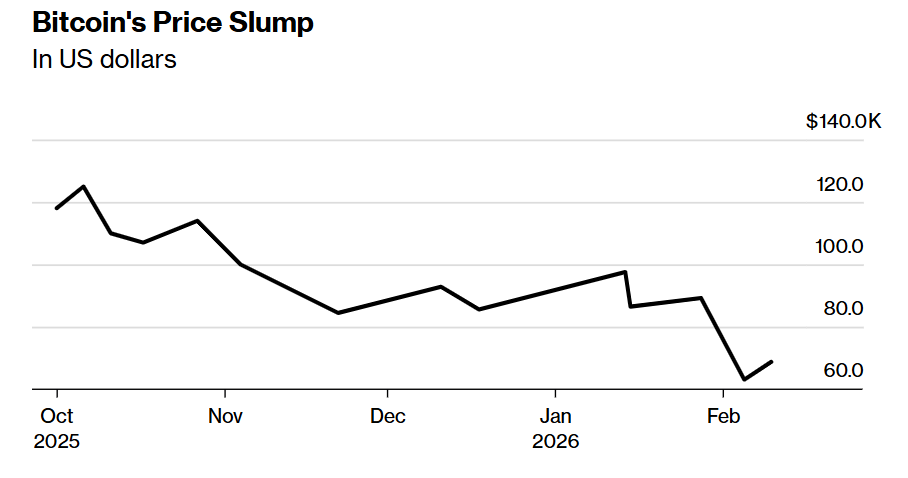
Core Viewpoint - Bitcoin (BTC-USD) is currently hovering around $69,000, with analysts suggesting it may be nearing a bottom after recent sell-offs, potentially setting the stage for a short-term rebound and a more constructive upward trajectory in the future [1][7]. Group 1: Market Sentiment and Analysis - A senior analyst from Compass Point believes the cryptocurrency market is in a bottoming phase following a record panic sell-off, with realized losses reaching approximately $10 billion, the second-highest since June 2022 [2][3]. - Cantor Fitzgerald indicates that the recent market pressure may have laid the groundwork for a short-term rebound, suggesting that the current price action resembles a "washout" rather than the beginning of a long-term decline [8][9]. - The significant sell-off has led to a liquidity crisis in the cryptocurrency market, with Bitcoin's value dropping about 45% from its all-time high of over $126,000 in October [3]. Group 2: Whale Activity and Market Dynamics - "Bitcoin whales," or large holders, have reportedly accumulated approximately 53,000 BTC over the past week, which has helped stabilize prices despite a broader trend of net selling among large holders [10][11]. - Despite the recent accumulation by whales, the overall demand remains narrow, leading analysts to question whether this activity signifies a return of bullish sentiment or merely a damage control measure [10][12]. - The market's current dynamics suggest that while there is potential for a short-term rebound, the long-term upward trend will require significant new demand and liquidity to validate [13][15]. Group 3: Future Outlook and Conditions - Analysts emphasize that the next phase of Bitcoin's price movement will depend on the return of new demand and liquidity, with macroeconomic factors such as potential easing from the Federal Reserve playing a crucial role [9][14]. - The overall sentiment indicates that while the probability of a short-term rebound is increasing, the mid-term trend remains in a "proof of concept" phase, requiring broader participation and sustained inflows from institutional investors [15].

宝城期货股指期货早报(2026年2月10日)-20260210
Bao Cheng Qi Huo· 2026-02-10 01:29
Group 1: Report Investment Rating - No information about the report's industry investment rating is provided in the given content. Group 2: Core Viewpoints - The short - term view of the stock market is cautiously optimistic, and the stock index will mainly fluctuate and consolidate in the range [1][5]. - The intraday view of IF, IH, IC, and IM is bullish, and the medium - term view is oscillatory, with a reference view of oscillatory consolidation [5]. - The short - term, medium - term, and intraday views of IH2603 are oscillatory, oscillatory, and bullish respectively, with a view of oscillatory consolidation [1]. Group 3: Summary by Related Catalogs Variety Viewpoint Reference - Financial Futures Stock Index Sector - For IH2603, the short - term is oscillatory, the medium - term is oscillatory, the intraday is bullish, and the view is oscillatory consolidation. The core logic is that the risk preference of the stock market is cautiously optimistic [1]. Main Variety Price Market Driving Logic - Financial Futures Stock Index Sector - The intraday view of IF, IH, IC, and IM is bullish, and the medium - term view is oscillatory, with a reference view of oscillatory consolidation. The core logic is that the stock indexes oscillated and rose yesterday, the trading volume of the Shanghai, Shenzhen, and Beijing stock markets was 2270.2 billion yuan, an increase of 106.7 billion yuan from the previous day. With the stop - fall and rebound of silver, market sentiment has improved, and the operation logic of the stock index has returned to its own fundamentals. The positive expectations of the policy side and the continuous net inflow of incremental funds into the stock market remain unchanged, which constitute the core logic of the medium - and long - term upward movement of the stock index. However, in the short term, macroeconomic indicators have weakened, the pressure of "weak reality" has increased, and the capital side has become cautious approaching the long holiday, so the upward momentum of the stock index is expected to be insufficient [5].
宝城期货股指期货早报(2026年2月5日)-20260205
Bao Cheng Qi Huo· 2026-02-05 01:16
Group 1: Report Industry Investment Rating - No relevant information provided Group 2: Core Viewpoints of the Report - The short - term risk preference of the stock market is cautiously optimistic, and the stock index will mainly fluctuate and consolidate. In the long - term, the logic of the upward movement of the stock index is relatively solid due to favorable policy expectations and the continuous net inflow of incremental funds. In the short - term, due to the weakening of macro - economic indicators, the "weak reality" pressure appears, and the willingness of the capital side to take profits and leave the market has increased, resulting in a decrease in trading volume. [1][5] Group 3: Summary by Related Catalogs 1. Variety Viewpoint Reference - Financial Futures Stock Index Sector - For IH2603, the short - term view is "oscillation", the medium - term view is "oscillation", the intraday view is "bullish", and the reference view is "oscillation and consolidation". The core logic is that the risk preference of the stock market is cautiously optimistic. [1] 2. Price and Market Driving Logic of Main Varieties - Financial Futures Stock Index Sector - The varieties include IF, IH, IC, and IM. The intraday view is "bullish", the medium - term view is "oscillation", and the reference view is "oscillation and consolidation". The core logic is that the stock indexes oscillated and consolidated yesterday. The trading volume of the Shanghai, Shenzhen, and Beijing stock markets was 2503.3 billion yuan, a decrease of 62.4 billion yuan from the previous day. In the long - term, the upward logic of the stock index is solid. In the short - term, there is "weak reality" pressure, and the capital side has a stronger willingness to take profits and leave the market. As the sentiment in the commodity market recovers, the risk preference of the stock market returns to its fundamental logic. [5]
中信建投:预计市场短期面临情绪降温和指数回调压力
Mei Ri Jing Ji Xin Wen· 2026-02-02 00:31
Group 1 - The core viewpoint of the article indicates that due to significant fluctuations in international precious metal prices and large-scale sell-offs of broad-based ETFs in the A-share market, liquidity pressure has led to a noticeable decline in the sentiment index, signaling a right-side selling opportunity and testing the limits of exuberance [1] - The report anticipates that the market will face short-term pressure from a cooling sentiment and index correction, particularly with the seasonal effect of heightened risk aversion before the Spring Festival [1] - Despite the anticipated adjustments, the overall adjustment space for the full A-index is expected to be limited, with a potential stabilization before the Spring Festival and the emergence of a new upward trend post-holiday [1] Group 2 - The company is optimistic about the continuation of the spring market, expecting ample incremental capital in the first quarter, as the sell-off of broad-based ETFs gradually concludes, leading to a significant improvement in market liquidity [1] - Recent favorable policies, such as the new strategic investment system regulations and the introduction of national capacity electricity pricing policies, along with the emergence of highlights in AI large models, are seen as catalysts for the industry [1] - Historically, February has shown a higher winning rate and better profit effects, supporting the positive outlook for the upcoming market performance [1]

兴业证券:充裕的增量资金有望继续推动春季行情向纵深演绎
Jin Rong Jie· 2026-02-01 15:05
Core Viewpoint - The recent rise in A-shares is primarily driven by favorable domestic fundamentals, supportive policies, and ample liquidity, despite benefiting from global liquidity easing [1] Group 1: Market Dynamics - The core logic supporting the spring market rally remains unchanged, with a favorable domestic economic environment and policies underpinning market risk appetite [1] - The current market environment is characterized by abundant liquidity, which allows for a positive response from capital towards various macro and industrial narratives, enhancing the profit-making effect [1] Group 2: Sector Performance - This week has seen a rotation among technology, price-increasing chains, and consumer sectors, indicating that capital is actively seeking and exploring underpriced segments [1] - There are still numerous catalysts from fundamentals, policies, and industrial levels that are expected to continue driving the spring market rally [1]

2025 年资金面回顾及 2026 年展望:资金情绪分化,等待新一轮共振
Xinda Securities· 2026-01-27 08:36
Overview - The funding sentiment has shown a divergence, with a continuous improvement in the funding environment throughout 2025. The net inflow of funds accounted for 6.8% of the free float market value, an increase of 0.3 percentage points compared to 2024. The net inflow of funds (considering half of dividends) accounted for 4.6% of the free float market value, up by 0.6 percentage points from 2024 [4][11][12]. Group 1: 2025 Funding Environment - Various types of funds, including trading funds, high-net-worth investors, insurance funds, and industrial capital, have shown a strong inflow, leading to a robust funding environment [4][12]. - The leverage funds have seen a significant increase in inflow speed, and private equity funds have surged due to improved regulatory policies and increased demand from high-net-worth investors [12][13]. - The scale of company dividends has reached a historical high, and share buybacks have remained at elevated levels, supporting a strong supply-demand balance in the stock market [12][13]. Group 2: 2026 Funding Outlook - The incremental funding for 2026 is expected to remain promising, with potential structural changes. Resident funds are anticipated to have new inflow channels, continuing the trend of "deposit migration" [12][13]. - Long-term funds, including social security funds and enterprise annuities, are expected to provide a "ballast" effect as their equity positions are currently low [12][13]. - Foreign capital is expected to improve its return speed, with an increase in passive allocation funds to Chinese assets anticipated in 2026 [12][13]. Group 3: Monthly Trends - In December 2025, the net inflow of funds accelerated, primarily due to increased net inflow into ETFs and high dividend payouts from listed companies. The number of new accounts also saw a month-on-month increase [21][22]. - In January 2026, the activity of trading funds significantly increased, with a rapid growth in financing balances, while broad-based ETFs experienced substantial net outflows [21][22]. - The net inflow of thematic and industry ETFs, which are favored by resident funds, maintained a positive trend [21][22]. Group 4: Resident and Institutional Funds - In December 2025, the number of new accounts at the Shanghai Stock Exchange reached 2.5967 million, a month-on-month increase of 215,300 accounts [25]. - The financing balance increased by 167.8 billion yuan from January 1 to January 20, 2026, indicating a high level of inflow [21][24]. - The net inflow of private equity funds has also shown a significant increase, with the management scale reaching 70,383.54 billion yuan by November 2025 [24].
读研报 | 理解增量资金,别总盯着总量
中泰证券资管· 2026-01-20 11:33
Core Viewpoint - The article discusses the importance of incremental capital as a market confidence indicator and a key factor in assessing market trends, highlighting the challenges in accurately predicting its inflow [1] Group 1: Incremental Capital Estimates - Different research reports provide varying estimates for incremental capital inflow in 2026, with projections ranging from 1.6 trillion to 3 trillion yuan, indicating significant discrepancies [1] - The analysis suggests that understanding the sources and types of capital is more practical than merely estimating total amounts [1] Group 2: 2025 Incremental Capital Breakdown - According to the Guosen Securities strategy report, the incremental capital for 2025 is divided into two phases: the first half sees retail investors transferring 240 billion yuan, foreign capital returning approximately 100 billion yuan, and long-term investments from insurance funds amounting to about 420 billion yuan [2] - The second half of 2025 is expected to see significant inflows from private equity and leveraged trading, with an estimated 700 billion yuan entering the market since July and around 400 billion yuan from private equity funds [2] - The sectors attracting the most capital in the first half include technology and dividend stocks, while the second half sees inflows into non-ferrous metals, electronics, and new energy sectors [2] Group 3: 2026 Main Sources of Incremental Capital - The Huatai Securities strategy report identifies three main sources of incremental capital for 2026: high-risk preference retail funds, medium-low risk preference retail funds, and long-term capital [4] - High-risk preference funds include retail, financing, and private equity funds, while medium-low risk funds consist of maturing fixed deposits with an estimated 8% allocated to non-monetary asset management products [4] - The Huaxin Securities report anticipates public funds, wealth management funds, and insurance funds as the top three sources of incremental capital [4] Group 4: Market Outlook - The article suggests that if a slow bull market becomes the prevailing trend, the main sources of incremental capital will likely be insurance and absolute return-focused funds, indicating potential investment opportunities [5]