
信澳优势行业A

Search documents
首批浮动费率基金业绩分化悬殊:华商致远回报A涨59%领跑,广发价值稳进A跌8%垫底,安信、银华旗下产品落后
Xin Lang Cai Jing· 2025-12-17 07:59
Core Insights - The first batch of floating fee rate funds has shown significant performance differentiation, highlighting the varying capabilities of fund managers in terms of positioning, sector allocation, and market judgment [1][9] Performance Overview - As of December 16, 2025, out of 26 funds, 19 achieved positive returns while 7 reported negative returns. The top performer, Huashang Zhiyuan Return A, delivered a remarkable return of 58.90%, followed by Xin'ao Advantage Industry A at 36.86% and E Fund Growth Progress A at 34.98% [2][10] - Other notable performers include Jiashi Growth Win A and Invesco Great Wall Growth, both exceeding 23% returns. Conversely, funds like Guangfa Value Steady A and Yinhua Growth Smart A reported negative returns of -8.32% and -3.35%, respectively [2][10] - The overall distribution of fund returns is characterized by a "middle large, both ends small" pattern, with most funds yielding between -0.1% and 7% [2][10] Fund Size and Performance Relationship - Notably, high-performing funds are not exclusively large. Huashang Zhiyuan Return A, with a size of 2.838 billion yuan, is the largest, while Jiashi Growth Win A, with a size of 406 million yuan, achieved a return of 32.88%, demonstrating the agility of smaller funds in volatile markets [2][10] Investment Strategies - Top-performing funds tend to focus on high-growth sectors. For instance, Huashang Zhiyuan Return A has concentrated holdings in AI computing-related stocks, with significant contributions from stocks like Zhongji Xuchuang and Shijia Photon, which saw increases of 45.39% and 40.17% over the past three months [3][11] - Xin'ao Advantage Industry A has a high concentration in semiconductor storage, with key stocks like Demingli and Jiangbolong rising by 55.43% and 119.02%, respectively. However, this strategy also led to volatility, as some holdings experienced declines of 13% to 21% [5][13] - E Fund Growth Progress A adopts a more balanced approach, diversifying across sectors such as optical communication and consumer electronics, successfully capturing gains from leading stocks [6][15] Underperforming Funds - Underperforming funds often remain focused on traditional industries or deviate from market trends. Guangfa Value Steady A has a significant allocation to liquor stocks, which have generally declined over 10% in the past three months, contrasting sharply with the strong performance of technology sectors [7][16] - Yinhua Growth Smart A is heavily invested in the real estate sector and certain pharmaceutical stocks, with some holdings experiencing declines as steep as 44.58%, indicating a lack of timely adjustments to market shifts [8][17] Conclusion - The short-term performance of the first batch of floating fee rate funds reflects a collision of different investment strategies and market styles in 2025. Funds aligned with the technology growth narrative performed strongly, while those focused on traditional value or balanced strategies lagged behind [9][17]


首批26只浮动费率基金首战告捷,最高收益率65%,但业绩分化严重!
市值风云· 2025-12-16 10:12
Core Viewpoint - The first batch of floating rate funds has shown a trend of performance differentiation, with 22 out of 26 funds achieving positive returns, indicating a successful initial operation period [3][4]. Performance Overview - As of mid-December, 84.6% of the first batch of 26 floating rate funds achieved positive returns, with notable performances from several funds [4]. - The top-performing fund, Huashang Zhiyuan Return A (024459.OF), achieved a return rate of 65.1%, while the lowest-performing fund, Guangfa Value Steady A (024448.OF), recorded a return of -5.96% [5][6]. - The performance gap between the highest and lowest returning funds exceeds 70 percentage points, highlighting significant differentiation in fund performance [8]. Fund Size and Performance Correlation - There is a clear positive correlation between fund size and performance, with larger funds often attracting more capital due to their superior returns [7]. - Huashang Zhiyuan Return A, with a size of 2.838 billion, is the largest fund in this batch, reflecting investor recognition of its outstanding performance [7]. Return Attribution Analysis - The performance differentiation among the funds is attributed to investment strategies, industry allocation, and stock selection capabilities [9]. - Huashang Zhiyuan Return A's success is linked to its manager's strategic focus on the technology sector, particularly in AI computing [9]. - The second-ranked fund, Xin'ao Advantage Industry A (024473.OF), capitalized on structural opportunities in the new energy and high-end manufacturing sectors [11]. Investment Strategy Insights - Funds with conservative value investment strategies, such as Guangfa Value Steady A, underperformed due to a misalignment with the market's growth-oriented trends [14]. - The top-performing funds predominantly focused on sectors like technology and AI, which were key drivers of market performance during the reporting period [14]. Fee Mechanism Impact - The floating fee structure aligns the interests of fund managers and investors, linking management fees to performance outcomes [20][21]. - Under this model, funds that exceed performance benchmarks may see management fees increase, while underperforming funds face fee reductions, incentivizing managers to focus on performance [22]. Selection of Floating Rate Funds - Investors are encouraged to understand the investment strategies and backgrounds of fund managers rather than relying solely on past performance or brand reputation [23]. - The selection process should involve assessing the manager's investment philosophy and ability to navigate market trends effectively [24][26]. Future Outlook - The initial success of the first batch of floating rate funds sets a positive precedent, but the long-term effectiveness of this fee structure in enhancing value for investors remains to be seen [26]. - As more floating rate funds are introduced, a broader range of products catering to different risk-return profiles is expected to emerge, providing investors with more options [26].
成立以来业绩居前的新型浮动费率基金
Zhong Guo Zheng Quan Bao· 2025-09-23 20:16
Core Insights - The article presents the performance returns of various investment products since their inception, highlighting the top performers in the market [1]. Performance Summary - Huashang Zhiyuan Return A achieved a return of 42.72% since inception [1] - Invesco Great Wall Growth Partner recorded a return of 42.41% [1] - Jiashi Growth Win A reported a return of 40.27% [1] - Xin'ao Advantage Industry A had a return of 34.84% [1] - E Fund Growth Progress A achieved a return of 29.23% [1] - Wanjia New Opportunities Share A reported a return of 19.98% [1] - Huashan Competitive Advantage A had a return of 18.83% [1] - ICBC Hongyu Return recorded a return of 14.48% [1] - Yinhua Growth Smart Select A achieved a return of 14.22% [1] - Fortune Balanced Allocation A reported a return of 10.74% [1]
多只基金收益率一周狂飙近10%
Sou Hu Cai Jing· 2025-08-21 03:38
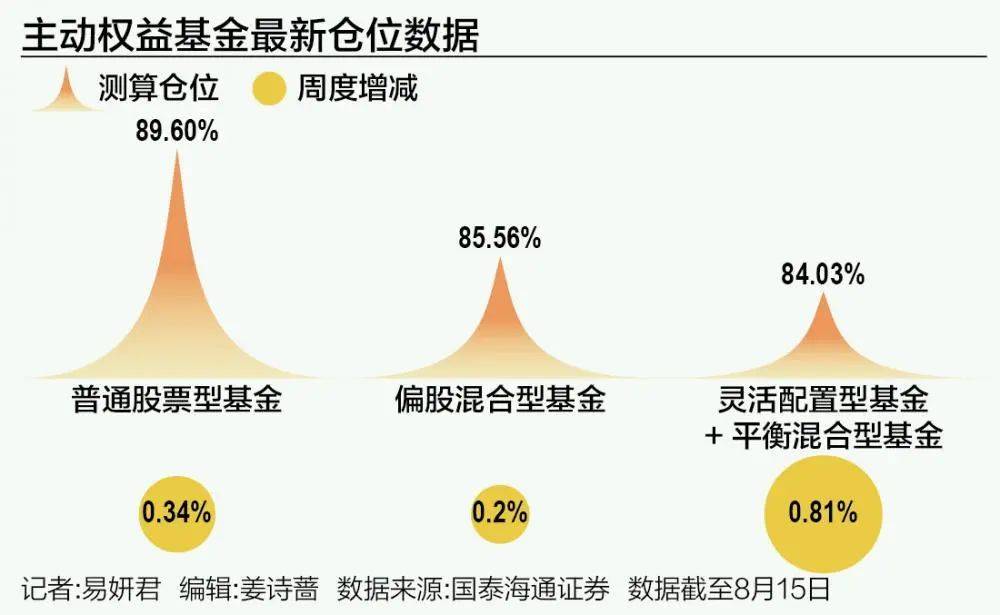
Core Viewpoint - The A-share market has seen a significant upward trend, with the Shanghai Composite Index breaking through key levels of 3500, 3600, and 3700 points, prompting newly established active equity funds to accelerate their investment strategies and achieve substantial net value increases [1][3]. Group 1: Fund Performance - Several newly established active equity funds have reported impressive returns, with some achieving over 9% in a single week from August 11 to August 15 [1][4]. - The Wind data indicates that the mixed equity fund index rose by 9.89% in the past month, with over 30% of mixed equity funds outperforming the average with returns exceeding 10% [3][4]. - Notably, 28 mixed equity funds recorded returns over 25% in the last month, including funds like Guotai Ruiyin New Energy and Xinao Performance-Driven [3]. Group 2: Investment Strategies - Fund managers are likely employing rapid investment strategies, heavily focusing on sectors such as computing power, chips, and semiconductors, aligning with market hotspots [4][5]. - The overall position of active equity funds has slightly increased, with a reported stock position of 85.84% as of August 15, 2025, indicating a growing optimism towards the technology sector [7]. - Recent weeks have seen funds increasing their holdings in technology, new energy, and financial sectors while reducing exposure to weaker sectors like military and traditional consumer goods [8]. Group 3: Market Outlook - The focus on technology and financial sectors is expected to remain high, with analysts suggesting that low-valuation financial sectors may see recovery as the market transitions to a "slow bull" phase [9]. - The demand for AI computing power and the acceleration of domestic replacements in the chip sector are anticipated to drive growth, making these areas attractive for investment [9][10]. - Analysts recommend a balanced investment approach to mitigate potential volatility and rapid market rotations, particularly in sectors like AI applications and advanced semiconductor processes [10].
多只基金收益率一周狂飙近10%
21世纪经济报道· 2025-08-21 03:29
Core Viewpoint - The recent surge in A-shares has led to a rapid increase in the net value of newly established active equity funds, indicating a strong bullish sentiment among fund managers towards technology sectors such as computing power, chips, and semiconductors [1][3][4]. Group 1: Performance of Newly Established Funds - Several newly established active equity funds have shown significant returns, with funds like Xinao Advantage Industry A and China Merchants Technology Smart A achieving returns over 9% in a week [1][4]. - As of August 15, the Wande Mixed Equity Fund Index rose by 9.89% in the past month, with over 30% of mixed equity funds outperforming the average return of their peers [3][4]. - A total of 28 mixed equity funds recorded returns exceeding 25% in the last month, showcasing the effectiveness of their rapid investment strategies [3][4]. Group 2: Fund Manager Strategies - Fund managers are likely employing aggressive building strategies, heavily investing in popular sectors, which has resulted in a rapid increase in net values during the building phase [4][5]. - The strategy of quick building allows funds to capitalize on market momentum, but it also carries risks if market conditions change unexpectedly [5][6]. Group 3: Sector Allocation Trends - Active equity funds are increasing their allocation to technology, new energy, and financial sectors while reducing exposure to underperforming sectors like military, manufacturing, and consumer goods [7][8]. - The focus on technology and new energy sectors is driven by sustained industry growth and supportive policies, particularly in AI computing power and semiconductors [8][9]. Group 4: Future Outlook - The public funds are expected to maintain a high interest in technology, finance, and "anti-involution" sectors, with analysts suggesting that low-valuation financial sectors may see recovery [8][9]. - There is a recommendation for balanced allocation strategies to mitigate potential volatility and rapid market rotations, especially in crowded trades like AI and innovative pharmaceuticals [9].

沪指连捷 谁在入场?次新基金布局路径曝光
2 1 Shi Ji Jing Ji Bao Dao· 2025-08-20 15:01
Core Viewpoint - The A-share market has seen a significant upward trend, with the Shanghai Composite Index breaking through key levels of 3500, 3600, and 3700 points in recent weeks [1][3]. Group 1: Fund Performance and Strategies - Newly established active equity funds have accelerated their investment pace, with some funds achieving returns exceeding 9% in a short period [2][6]. - The Wind data indicates that several newly launched funds, such as Xinao Advantage Industry A and China Merchants Technology Smart A, have reported weekly returns of 9.14% and 9.06%, respectively [9][7]. - Over 30% of mixed equity funds outperformed their peers, with 28 funds achieving returns over 25% in the past month [5][4]. Group 2: Market Trends and Sector Allocation - Active equity funds have increased their overall positions, particularly in the technology sector, reflecting a positive sentiment towards this area [12][13]. - The allocation to technology, new energy, and financial sectors has increased, while traditional sectors like military and consumer goods have seen reductions [12][13]. - The current stock position of active equity funds is at 85.84%, with a slight weekly increase, indicating a bullish market outlook [12]. Group 3: Future Outlook and Recommendations - The focus on technology and financial sectors is expected to remain high, with analysts suggesting that low-valuation financial stocks may see recovery [14][15]. - There is a recommendation for balanced allocation strategies to mitigate potential market volatility, especially in crowded sectors like AI and innovative pharmaceuticals [15][10]. - The ongoing trends in AI and semiconductor industries are anticipated to attract further investment, supported by favorable policies and market conditions [14][15].
沪指连捷,谁在入场?次新基金布局路径曝光
2 1 Shi Ji Jing Ji Bao Dao· 2025-08-20 13:17
Group 1 - The A-share market has been on an upward trend, with the Shanghai Composite Index breaking through key levels of 3500, 3600, and 3700 points in recent weeks [1][3] - Newly established active equity funds have accelerated their investment pace, with significant net value fluctuations observed in a short period [2][6] - Several newly launched mixed equity funds have reported returns exceeding 9% in the week from August 11 to August 15, indicating a strong performance during their initial investment phase [2][7] Group 2 - As of August 15, the mixed equity fund index has risen by 9.89% over the past month, with over 30% of these funds outperforming their peers with returns above 10% [4][5] - Notably, 28 mixed equity funds have achieved returns exceeding 25% in the last month, showcasing strong performance in the current market environment [5] - The rapid increase in net value of funds in their investment phase suggests that fund managers are likely employing aggressive investment strategies focused on hot sectors like computing power, chips, and semiconductors [9][12] Group 3 - Active equity funds have slightly increased their overall positions, particularly in the technology sector, reflecting a positive sentiment towards this investment area [12][13] - Recent data indicates that the stock positions of active equity funds have reached 85.84%, with a weekly increase of 0.39%, indicating a strong commitment to equity investments [12] - Fund managers are adjusting their portfolios to focus on sectors with strong growth potential, such as technology and new energy, while reducing exposure to underperforming sectors like traditional consumer goods [12][14] Group 4 - The outlook for public funds remains optimistic regarding technology, finance, and cyclical sectors, with analysts highlighting the potential for recovery in undervalued financial stocks [14][15] - The demand for AI computing power and the acceleration of domestic replacements in the semiconductor industry are expected to drive further investment in these sectors [14][15] - Analysts recommend a balanced investment approach to navigate potential market volatility and rapid sector rotations, emphasizing the importance of strategic asset allocation [15]