儿童餐牛肉酱

Search documents
南财V快评:傲慢的逃避不如真诚的改正
Xin Lang Cai Jing· 2026-01-17 06:25
西贝这125天的风波,本来三天就能平息,但因为自杀式的公关,逐渐演变成关闭102家门店、亏损超5 亿的生存危机,当事双方还在互撕,危机造成的伤害还在持续蔓延。 我们不站队,就单纯聊聊危机公关这事儿,首先是要放下"技术正确"的执念, 当罗永浩第一次质疑西贝使用预制菜时,贾总第一反应是搬出国家标准,强调"中央厨房预制≠料理包预 制"。但从消费者视角看,大家真正关心的不是术语定义,而是知情权与价值匹配度,是不是符合国标 不重要,关键是预制且贵,你看三块钱的雪王柠檬水,我们就没有任何不爽,它都没嫌我穷,我们有什 么资格质疑人家不健康,对不对,所以遭遇质疑时,先共情而非辩解。比如邀请罗永浩参观下冷链工 厂,免费请他吃一顿,或者干脆不回应,三五天就过去了,互联网热点那么多,这点事儿很快就没人记 得了。 你非得搞"对抗式公关",起诉威胁、创始人直接指责对方"网络黑社会",就将消费者质疑升级为情绪对 抗。危机公关的核心是"降温"而非"点火"。西贝后来发布的《7岁的毛毛》煽情文章,试图用极端案例 证明口碑,反而被批"情感绑架"。消费者需要的是实实在在的改进,而非自我感动的叙事。你看西贝后 续承诺"儿童餐牛肉酱改为门店现炒""烤 ...
不再“狂撒代金券”之后 西贝的生意怎么样了?
Xin Jing Bao· 2026-01-04 14:15
Core Insights - The article discusses the transformation of Xibei, a restaurant chain, following a public relations crisis that began in September 2025, leading to a significant shift in its operational and pricing strategies [1][3][4]. Group 1: Company Response to Crisis - Xibei experienced a drastic decline in daily revenue, with losses reaching 200,000 to 300,000 yuan per day during the crisis, prompting a halt in expansion and a focus on core operational issues [3][4]. - The company initiated a comprehensive reform over 113 days, addressing menu preparation, pricing, service transparency, and employee welfare, marking a systemic restructuring rather than a mere emergency response [4][5]. - Xibei implemented a significant price reduction of nearly 20% on over 30 menu items, lowering the average customer spending from 92 yuan to 75 yuan, which helped improve customer traffic by approximately 5% compared to the previous year [6][8]. Group 2: Operational Changes - The restaurant chain shifted its food preparation process to enhance freshness, with key dishes being made on-site rather than pre-prepared, including the transition of lamb skewers to be freshly cut and grilled [5][6]. - Xibei introduced a dual transparency mechanism with "open kitchens" and live streaming of kitchen operations, ensuring that customers can see food preparation processes, thereby enhancing trust [7][9]. Group 3: Industry Impact - The crisis catalyzed the development of national standards for pre-prepared foods, addressing long-standing issues of information asymmetry in the industry [3][9]. - The incident led to a broader industry consensus on the importance of transparency, with practices like kitchen live streaming becoming standard among chain restaurants [9][10]. - The public's perception of pre-prepared foods shifted from fear to a more rational understanding, emphasizing the need for clear labeling and transparency in food sourcing and preparation [9][10].
不再“狂撒代金券”之后,西贝的生意怎么样了?
Bei Ke Cai Jing· 2026-01-04 12:13
Core Viewpoint - The article discusses the transformation of Xibei, a restaurant chain, following a public relations crisis, highlighting its efforts to rebuild trust and improve customer experience through significant operational changes and price adjustments [1][6][26]. Group 1: Company Response to Crisis - Xibei experienced a significant drop in customer traffic and revenue during the crisis, with daily sales decreasing by 1 million yuan on September 10 and 11, and losses escalating to 200,000-300,000 yuan by September 12 [14]. - In response, Xibei initiated a comprehensive reform over 113 days, focusing on improving food preparation processes, pricing strategies, and employee welfare [1][16]. - The company implemented a "systematic restructuring" of its business model, emphasizing the return of core cooking processes to the stores and enhancing transparency in food preparation [16][20]. Group 2: Customer Engagement and Pricing Strategy - Xibei reduced prices on over 30 dishes by nearly 20%, lowering the average customer spending from 92 yuan to 75 yuan, which was a shift from a profit-driven pricing model to one based on customer perception [17][18]. - The adjustments led to a 5% increase in overall customer traffic compared to the previous year, indicating a positive market response to the new pricing strategy [19]. - The company emphasized the importance of customer feedback in setting prices, aiming to align with consumer expectations and enhance perceived value [18]. Group 3: Transparency and Food Safety - Xibei introduced a dual mechanism of "open kitchen" and "live streaming" in all stores to enhance transparency, with each location equipped with six cameras covering all operational areas [20]. - The company also upgraded its food safety protocols, undergoing over 80 inspections by government authorities without any violations reported, which helped maintain customer trust during the crisis [24]. - A new "food safety officer" role was established in each store, with incentives for employees to ensure compliance with safety standards, further reinforcing the commitment to food safety [24]. Group 4: Industry Impact and Future Outlook - The crisis prompted the development of national standards for pre-prepared food, addressing long-standing issues of transparency and consumer rights in the restaurant industry [15][26]. - The incident catalyzed a broader industry shift towards transparency, with practices like kitchen live streaming and ingredient traceability becoming standard among chain restaurants [26]. - As Xibei continues its transformation, the restaurant industry is expected to evolve towards healthier and more mature practices, driven by consumer demand for quality and transparency [27].

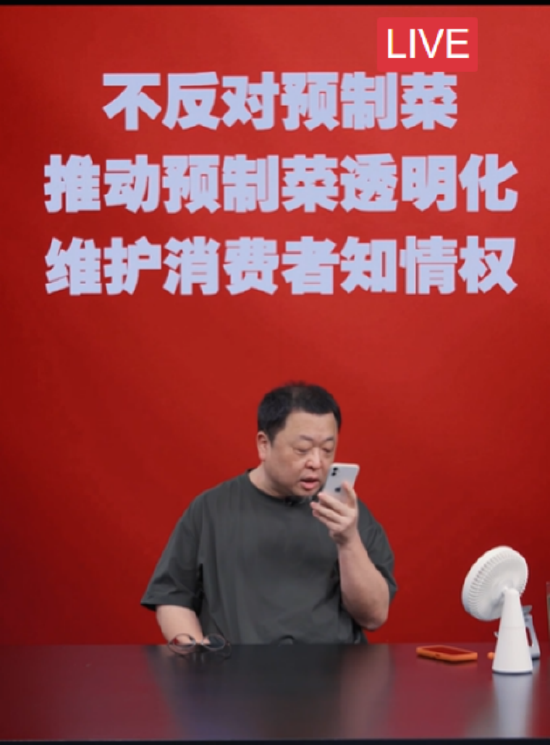
罗永浩:吃海鲈鱼时感觉很腥,料包上写的保质期18个月
Xin Lang Ke Ji· 2025-09-12 13:03
Group 1 - The core viewpoint of the article revolves around Luo Yonghao's criticism of Xibei's pre-prepared dishes, emphasizing a lack of transparency in the industry [1] - Luo Yonghao showcased various images during a live stream, highlighting the long shelf lives of Xibei's products, such as boneless yellow flower fish fillet and children's beef sauce with a shelf life of 9 months, lamb chops with 24 months, and chicken with 9 months [1] - Luo expressed skepticism about the freshness of Xibei's seafood, particularly the sea bass, which he found to be fishy, and pointed out that the packaging included multiple additives, raising questions about the product's freshness [1] Group 2 - Luo Yonghao's approach to addressing the issue differs from past confrontations, as he relies on media reports rather than visiting stores himself [1] - The public relations team of Xibei claimed that the sea bass was fresh, contradicting Luo's experience and observations [1] - Luo's argument suggests that if the food is indeed fresh, it should not taste poorly, indicating a potential quality issue within the pre-prepared food sector [1]