烤串

Search documents
平远古镇赶大集 潮汕英歌舞新春
Xin Lang Cai Jing· 2026-02-23 22:47
Core Viewpoint - The article highlights the vibrant atmosphere and cultural significance of the "Fuma Market and New Year Temple Fair" held in Pingyuan Ancient Town, attracting numerous visitors and showcasing local traditions and cuisine [2][3][4]. Group 1: Event Description - The "Fuma Market and New Year Temple Fair" took place on February 23, coinciding with the seventh day of the Lunar New Year, featuring a lively environment filled with traditional decorations and sounds [2]. - The event included various activities such as food stalls, performances, and children's entertainment, creating a festive atmosphere for both locals and tourists [3][4]. Group 2: Cultural Significance - The performance of Chaozhou Yingge, a national intangible cultural heritage, was a highlight of the event, showcasing a blend of drama, dance, and martial arts, and reflecting the cultural heritage of the Chaozhou people [2][3]. - The event served as a platform for cultural exchange, allowing visitors to experience local traditions and engage with the community [3]. Group 3: Visitor Experience - Attendees enjoyed a variety of local delicacies, including Zhi Jin fried potatoes and rice tofu, with long queues at food stalls indicating high demand [2]. - Families participated in various activities, such as rides and games, enhancing the overall experience and creating memorable moments [3][4].


回西安过年,轻食者的高碳水挑战
Jing Ji Guan Cha Wang· 2026-02-18 12:49
Core Viewpoint - The article explores the relationship between food, memory, and identity, particularly focusing on the author's experiences with traditional dishes in Xi'an, highlighting the emotional and cultural significance of these foods. Group 1: Food and Cultural Identity - The author reflects on the nostalgic connection to traditional foods like meat sandwiches and cold noodles, which evoke memories of childhood and home [3][4][19]. - The description of local delicacies such as "肉夹馍" (meat sandwich) and "凉皮" (cold noodles) emphasizes their unique preparation methods and cultural importance in Xi'an [3][8][16]. Group 2: Personal Experience with Food - The author recounts the struggle between maintaining a healthy diet and indulging in local cuisine during the festive season, illustrating the tension between dietary goals and cultural practices [14][15]. - The experience of eating various local dishes, such as "羊肉泡馍" (lamb soup with bread) and "炸串夹馍" (fried skewers in bread), highlights the sensory pleasure and emotional comfort derived from these foods [5][11][19]. Group 3: Impact of Environment on Eating Habits - The article describes the vibrant street food culture in Xi'an, where local vendors offer a variety of traditional snacks that are integral to the community's daily life [6][8][9]. - The author notes the contrast between the structured eating habits developed in Beijing and the more relaxed, indulgent approach to food in Xi'an, suggesting a deeper connection to the local culture [17][19].

锅圈20260210
2026-02-11 05:58
Summary of the Conference Call for Guoquan Industry and Company Overview - The conference call discusses Guoquan, a company specializing in the retail of prepared food products, particularly in rural and township markets in China. The company leverages a low-price strategy and offers unique products like skewers and crayfish to meet consumer demand in these areas [2][4]. Key Points and Arguments Competitive Advantages - Guoquan has a significant competitive edge in the township market due to its efficient supply chain and product offerings. The company provides low-priced products and unique prepared food items that are scarce in these markets, thus attracting consumers [4][6]. - The company’s strategy includes sourcing directly from manufacturers to reduce costs and improve supply efficiency, allowing for lower prices that draw customers into stores [4][6]. Store Expansion Potential - Based on census data, there are over 30,000 townships in China, with approximately 20,000 having populations over 10,000, indicating a theoretical potential for 10,000 to 20,000 new stores. Guoquan aims to open at least 8,000 stores, which is considered a conservative estimate [7][8]. - The company plans to open 5,000 new stores, with 3,000 being remodeled stores that have shown significant revenue increases [2][13]. New Store Formats and Innovations - Guoquan is testing a new store format called "small stir-fry stores," which aims to provide home-cooked meal options at competitive prices. The initial investment is around 210,000 yuan, with a shorter payback period compared to traditional stores [14][15]. - The company is also launching a camping store project, with the first store expected to generate monthly sales of 500,000 to 600,000 yuan during peak seasons, achieving a gross margin of 50% [18]. Financial Performance and Projections - The introduction of new product categories has led to a significant increase in sales, with new items contributing approximately 30% to total revenue and slightly higher gross margins than existing products [10][12]. - Guoquan estimates that with the opening of 10,000 new small stir-fry stores, it could achieve around 1 billion yuan in profit, corresponding to a market valuation of 15 to 20 times earnings, suggesting a potential market cap of 150 to 200 billion yuan [22]. Management and Supply Chain Strengths - The company demonstrates strong execution and management capabilities, with a focus on integrating supply chains through its subsidiaries, which enhances overall operational efficiency [21]. Other Important Insights - The remodeling store strategy has proven effective in urban areas, indicating potential for similar success in rural markets [9][13]. - The company is actively exploring new business lines, including community group buying and agricultural products, which could serve as future growth drivers [22]. - Guoquan's pricing strategy for the small stir-fry stores aims to match home-cooked meal costs while minimizing food waste, appealing to a broad customer base [15][16]. This comprehensive overview highlights Guoquan's strategic positioning, growth potential, and operational strengths within the prepared food retail industry in China.
(新春走基层)云南砚山年货街上的“小买卖”与“大年味”
Zhong Guo Xin Wen Wang· 2026-02-10 09:25
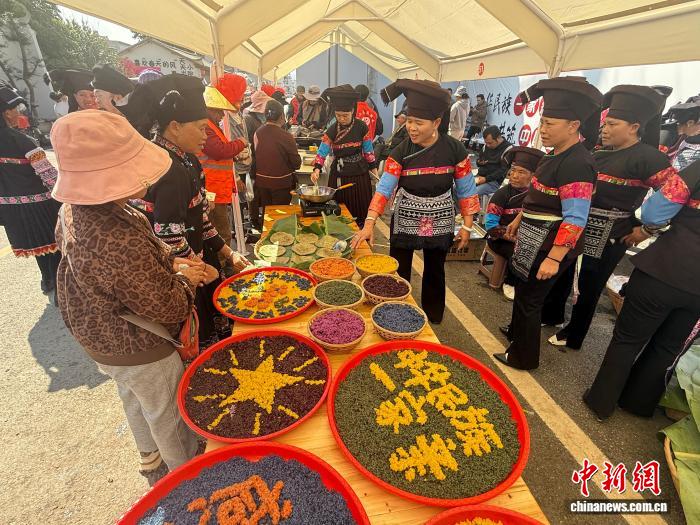
Core Viewpoint - The article highlights the vibrant atmosphere of the New Year market in Yunnan's Yanshan County, showcasing local entrepreneurship and cultural traditions as residents engage in small businesses during the festive season [1]. Group 1: Local Business Activities - Local vendor Ma Zunzhen reported selling over 1,000 handmade items in a single morning, indicating a strong demand for her colorful knitted hats and ornaments [1][3]. - The market features a variety of ethnic snacks, such as five-color flower rice and fried rice cakes, attracting a diverse crowd of shoppers [3]. - Vendor Chen Zhiqiang transitioned from working in an electronics factory in Guangdong to running a barbecue stall in his hometown, experiencing a significant increase in business during the market [4]. Group 2: Economic and Infrastructure Development - The Yanshan County Government's 2026 work report indicates that the industrial output value increased from 5.02 billion to over 60.15 billion yuan during the 14th Five-Year Plan period [4]. - The county created 53 supportive workshops and 34 local employment workshops, generating 3,502 urban jobs and facilitating the transfer of 166,000 rural laborers, with 68,000 finding employment close to home [4]. - Improvements in urban and rural infrastructure, including drainage system upgrades and old community renovations, are expected to raise per capita disposable income for urban and rural residents to 46,918 yuan and 19,067 yuan, respectively, achieving 1.3 times and 1.5 times the levels at the end of the 13th Five-Year Plan [4].
烧烤店里的特殊年夜饭
Xin Lang Cai Jing· 2026-02-09 23:28
Core Viewpoint - The article highlights a community initiative in Yujia Village, Jiaxing County, where local residents organized a special New Year's Eve dinner for delivery riders and couriers, showcasing the spirit of community and gratitude towards these essential workers [1][4]. Group 1: Community Engagement - The event was organized to express appreciation for over 30 delivery riders from platforms like JD, Taobao, and SF Express, who chose to stay in the village during the New Year [2][3]. - The village committee, led by Secretary Qi Jianqiong, emphasized the importance of these riders, noting that they make up over 80% of the village's population, which is over 7,000 new residents [4]. Group 2: Local Business Involvement - Local business owners, including the barbecue shop owner Dong Chen and a snack shop owner, actively participated in preparing the meal, demonstrating a strong sense of community support [1][4]. - The meal included various dishes such as barbecued chicken wings, dumplings, and spring rolls, reflecting the local culinary culture and the effort to create a festive atmosphere [3][4]. Group 3: Emotional Impact - Riders expressed feelings of warmth and belonging, with one rider noting that the meal made him feel at home despite not returning to his family for the holiday [3][5]. - The initiative fostered a sense of unity and mutual support among residents and workers, reinforcing the idea that they are all part of one family in the village [5].
进入“20元时代”,中式米饭快餐没有退路
虎嗅APP· 2026-02-01 09:08
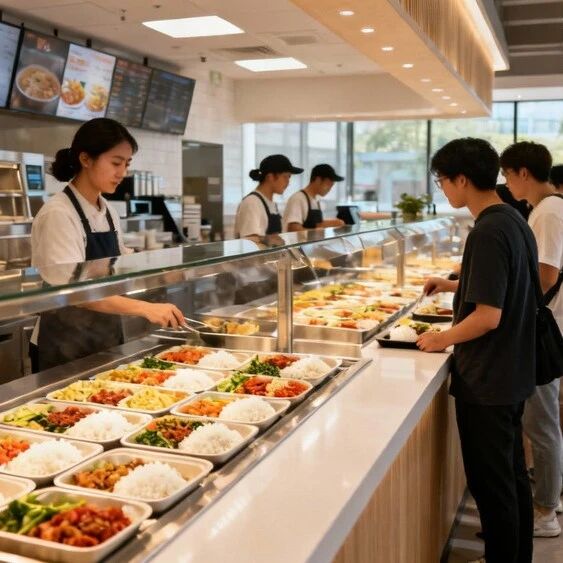
Core Viewpoint - The Chinese rice fast food industry is undergoing a significant paradigm shift in 2026, characterized by intense competition and a focus on profitability amidst rising costs and consumer rationality [4][6]. Group 1: Industry Challenges - The primary challenge for Chinese rice fast food brands remains profitability, with industry leaders like Chaoyixing reporting a mere 0.7 yuan profit on a 10 yuan meal [7]. - Rising costs for ingredients, labor, and rent, combined with a return to rational consumer spending, are squeezing profit margins, leading to a "thin profit" environment [8][9]. - The average consumer spending in the rice fast food sector has decreased from 29.7 yuan in 2022 to 27.5 yuan in 2025, with current average spending around 24 yuan [15]. Group 2: Competitive Strategies - Brands are shifting towards "all-day, all-customer, all-capable" models to attract a wider customer base and enhance profitability [5][10]. - Successful adaptations include diversifying product offerings and optimizing store formats, such as self-service models and expanded menu items to cater to different meal times and customer preferences [10][11]. - The introduction of new product lines, like "DIY" options, has proven effective in attracting both existing and new customers, as seen with brands like Yuyou and Laoxiangji [12]. Group 3: Pricing Dynamics - The industry is entering a "20 yuan era," with aggressive price reductions becoming a norm as brands compete for market share [13][14]. - Major brands have implemented significant price cuts, with Dami Xiansheng reducing its pricing from 4.6 yuan to 3.28 yuan per two [16]. - The trend indicates that if average spending exceeds 25 yuan, customer acquisition and retention will become increasingly difficult [17]. Group 4: Expansion and Market Dynamics - The market for Chinese rice fast food is projected to reach 277 billion yuan in 2024, with a potential to exceed 300 billion yuan in 2025, driven by ongoing consumer demand [21]. - While some brands are rapidly expanding, others are slowing down their growth due to the challenges of scaling operations effectively [23][25]. - Successful expansion requires a robust organizational structure and supply chain management, as evidenced by the struggles of brands like Nanchengxiang and Chaoyixing in new markets [25][26]. Group 5: Future Outlook - The next decade for the Chinese rice fast food industry will focus on a multi-faceted approach that emphasizes freshness, transparency, intelligence, low pricing, and health [27]. - Brands that can balance cost management with quality and customer experience will likely thrive in this competitive landscape [28][29].
进入“20元时代”,中式米饭快餐没有退路
3 6 Ke· 2026-01-28 13:09
Core Insights - The competition logic in the Chinese rice fast food sector is undergoing significant changes, with a shift towards a "paradigm shift" in 2026, emphasizing profitability amidst rising costs and intense competition [2][4][10] - The industry is moving towards a model that focuses on maximizing store efficiency and profitability rather than rapid expansion [5][9] Group 1: Market Dynamics - The market is experiencing fierce competition with both established brands and new entrants, leading to a scenario where profitability is increasingly difficult to achieve [2][4] - The average consumer spending in the Chinese rice fast food sector has decreased, with figures showing a drop from 29.7 yuan in 2022 to 27.5 yuan by August 2025 [10][11] - The current mainstream price range for Chinese rice fast food is between 20 to 25 yuan, indicating a trend towards lower pricing [10][11] Group 2: Business Strategies - Brands are adopting a "full-time, full-customer, all-capable store" model to attract a wider customer base and enhance profitability [3][7] - Innovations such as self-service models and diverse product offerings are being implemented to cater to different consumer needs and maximize store utilization [8][9] - The introduction of technology, such as smart cooking machines, is being leveraged to reduce labor costs and improve food quality [18] Group 3: Expansion Challenges - The expansion of Chinese rice fast food brands is entering a "deep water zone," with a projected market size of 2.77 trillion yuan in 2024, growing at 10.1% [19] - While some brands are rapidly expanding, others are slowing down due to the challenges of scaling operations effectively [20][21] - Successful expansion requires a robust organizational capability and a deep understanding of local market dynamics, as evidenced by the varied experiences of different brands [22][23] Group 4: Future Outlook - The next decade for Chinese rice fast food will focus on a multi-faceted approach that includes freshness, transparency, intelligence, low pricing, and health [24] - Brands that can maintain a balance between cost and quality while adapting to consumer demands will likely survive and thrive in this competitive landscape [24]
2026年,餐饮行业进入“宽多多”时代
3 6 Ke· 2026-01-26 05:45
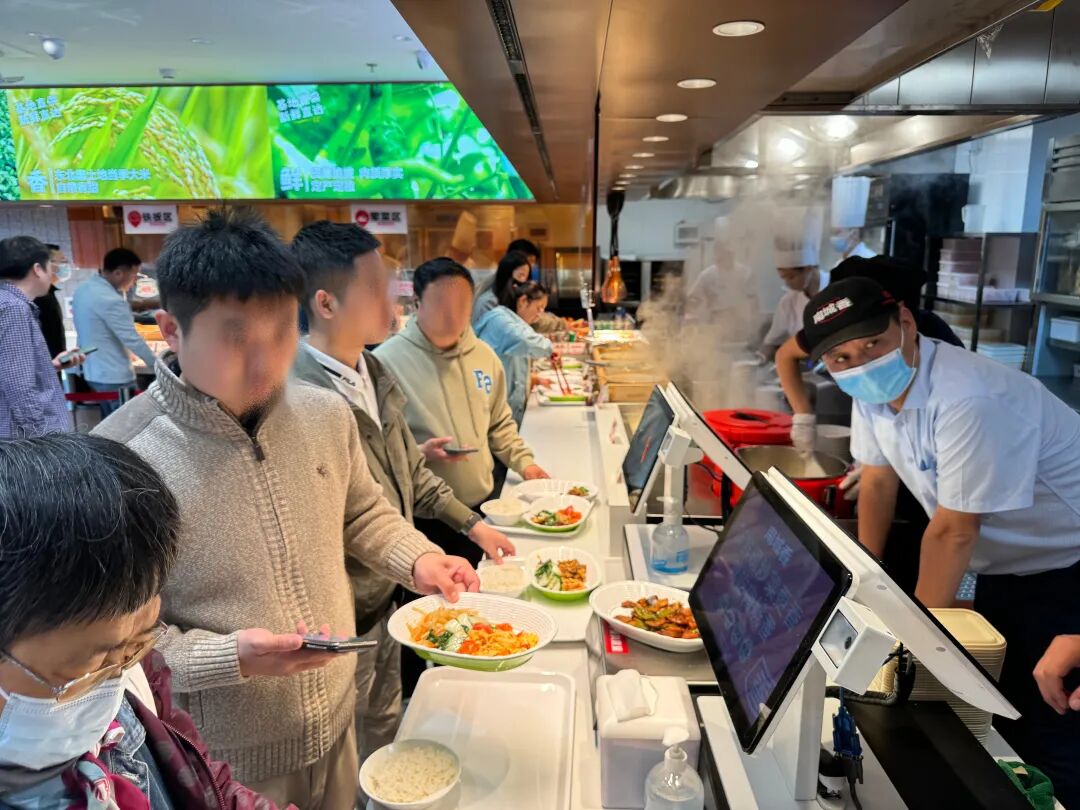
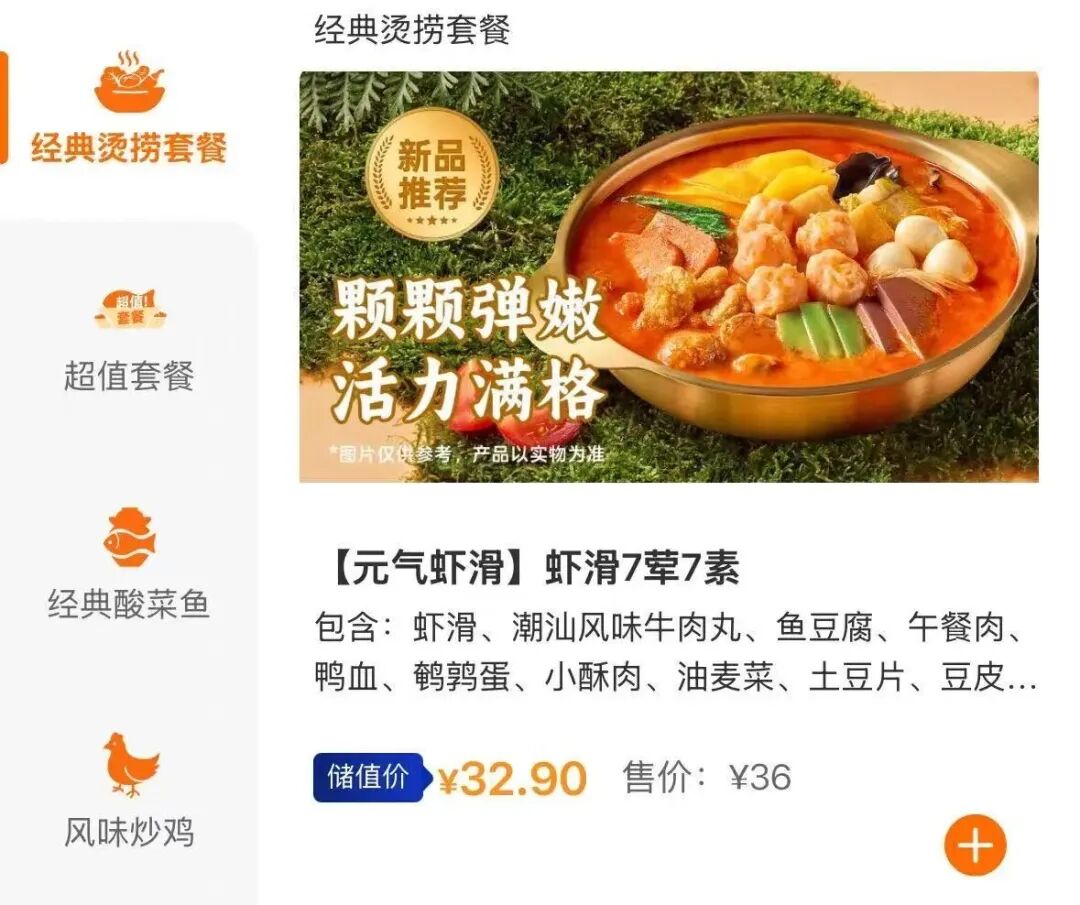
Core Viewpoint - The fast food brand "Fish You Together" is transitioning from a single product model focused on "sauerkraut fish" to a dual-line strategy by introducing the "Hot Pot" series across its 2,600 stores, aiming to fill gaps in meal times and adapt to the evolving rice fast food market [1][9]. Group 1: Company Strategy - "Fish You Together" has launched the "Hot Pot" series as a strategic new product for 2025, with a focus on expanding its product line and operational hours [1][9]. - The brand is implementing two differentiated rollout strategies based on store conditions: a lightweight "Hot Pot set meal" for stores without open ingredient displays and a semi-self-service model for those equipped with ingredient showcases [5][6]. - The new "Hot Pot" offerings include nearly 100 fresh ingredients and various soup bases, aiming to enhance customer experience and operational efficiency [6][8]. Group 2: Market Trends - The rice fast food sector is witnessing a shift towards a "wider" model, with brands expanding their offerings to include more categories and longer operating hours to maximize space and efficiency amid rising costs [9][10]. - Competitors like "Nancheng Xiang" and "Yonghe Dawang" are also diversifying their menus and extending their operational hours to attract a broader customer base [10][11]. - The market for rice fast food is projected to grow, with an estimated 880,000 stores by May 2025 and a market size of 277 billion yuan in 2024, reflecting a 10.2% year-on-year increase [10][13]. Group 3: Operational Challenges - The expansion of product lines introduces complexities in supply chain management, requiring brands to enhance their operational capabilities to handle increased inventory and logistics demands [14][16]. - The introduction of diverse offerings may blur brand identity, necessitating clear differentiation to avoid market confusion and maintain competitive advantages [16].
南财V快评:傲慢的逃避不如真诚的改正
Xin Lang Cai Jing· 2026-01-17 06:25
Core Viewpoint - The crisis faced by Xibei has escalated from a manageable situation to a significant survival crisis, resulting in the closure of 102 stores and losses exceeding 500 million yuan due to ineffective public relations strategies [1][2] Group 1: Crisis Management - The initial response to criticism regarding the use of pre-prepared dishes was defensive, focusing on technical definitions rather than addressing consumer concerns about value and transparency [1] - Effective crisis management should prioritize de-escalation rather than confrontation, as seen in the negative impact of aggressive public relations tactics [2] - The company's later commitments to improve product quality, such as switching to freshly prepared children's meals, are more effective in rebuilding trust than emotional narratives [2] Group 2: Leadership and Communication - The founder's personal reactions overshadowed the company's unified public relations strategy, highlighting the need for established crisis management protocols to guide responses [2] - A mature company should view crises as opportunities for self-improvement, emphasizing transparency and sincerity in addressing consumer concerns [2] - Consumers are more likely to accept genuine corrections rather than arrogant avoidance, underscoring the importance of humility in corporate communication [2]
陈晓卿:中国人在“吃”上最有创造力的时代|我们的四分之一世纪
经济观察报· 2025-12-26 08:22
Core Insights - The past 25 years have been a highly creative period for Chinese cuisine, with many well-known dishes emerging in the last four decades, reflecting the dynamic nature of food culture in China [1][5] - The documentary director Chen Xiaoqing has focused on the relationship between food and the people who create and enjoy it, highlighting various societal roles from factory workers to local chefs [5][3] Group 1: Evolution of Chinese Cuisine - Many popular dishes, such as spicy stir-fried meat with peppers and various regional specialties, have been developed through grassroots culinary innovation and competition in the market [5][9] - The food consumption in China has dramatically increased from 370 billion yuan in 2000 to over 5.5 trillion yuan in 2024, indicating a significant growth in the food industry [9][10] - The creativity in Chinese cuisine continues, with new dishes emerging every couple of years, particularly in regions like Hunan and Jiangxi [10] Group 2: Impact of Migration and Globalization - Migration has played a crucial role in spreading culinary techniques and preferences across different regions, creating a rich tapestry of flavors and dishes [8][12] - Chen Xiaoqing's documentaries often explore the connections between Chinese food and international cuisines, emphasizing the importance of a global perspective in understanding food culture [12][13] - The documentary series "Flavorful Origins" has successfully showcased regional Chinese cuisines on international platforms like Netflix, despite facing challenges in the current geopolitical climate [15] Group 3: Changing Perspectives on Food - Over the last quarter-century, three significant changes have occurred in Chinese dining: improved food quality, increased health consciousness, and a lack of consensus on food preferences due to the internet [16] - The rise of social media has led to diverse opinions on food, with some viewing certain dishes as extravagant while others see them as wasteful [16] - Chen Xiaoqing emphasizes the need for careful consideration in documentary filmmaking about food, given the varied perceptions and cultural sensitivities surrounding culinary practices [16][24]