先进复合材料

Search documents
佳力奇(301586.SZ):公司先进复合材料产品已广泛应用于航空航天领域
Ge Long Hui· 2026-01-21 01:48
Core Viewpoint - The company, Jialiqi (301586.SZ), has successfully applied its advanced composite materials in the aerospace sector and aims to expand the application of its products to more fields [1] Group 1: Company Developments - Jialiqi's advanced composite materials are widely used in the aerospace industry [1] - The company is committed to monitoring the development trends of advanced composite materials and expanding their applications [1]
佳力奇:公司先进复合材料产品已广泛应用于歼击机、运输机等重点型号装备
Zheng Quan Ri Bao· 2026-01-14 09:41
Group 1 - The company, Jialiqi, has advanced composite materials that are widely used in key military equipment such as fighter jets, transport aircraft, drones, trainer aircraft, target aircraft, and missiles [2] - The company emphasizes its commitment to comply with legal regulations and disclosure obligations regarding business operations and collaborations [2]

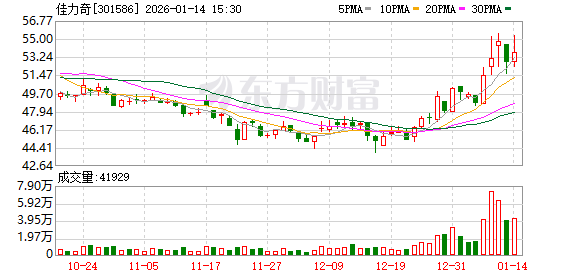
佳力奇:先进复合材料应用场景广泛
Zheng Quan Ri Bao· 2026-01-09 12:12
Group 1 - The company, Jialiqi, is focusing on advanced composite materials with a wide range of application scenarios [2] - The company will closely monitor and actively research industry development trends to explore new market opportunities [2] - The company aims to deliver good performance to reward its investors [2]
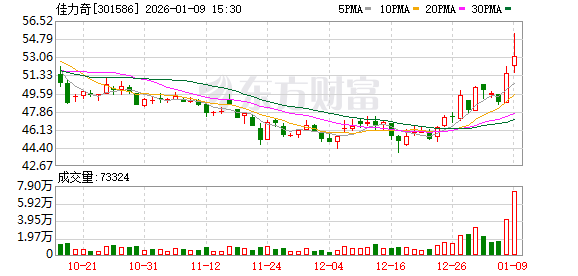
佳力奇:公司产品可应用于航空、航天等领域
Zheng Quan Ri Bao Wang· 2026-01-09 11:13
Group 1 - The core viewpoint of the article is that the company, Jialiqi (301586), is focused on expanding its applications of advanced composite materials across various industries, including aerospace, automotive, and rail transportation [1] - The company emphasizes a research and development-oriented approach to continuously expand product applications and explore new market opportunities [1] - The goal is to enhance the company's business scale and profitability through the development of existing technologies into other advanced composite material applications [1]
南京聚隆:主要从事高性能高分子新材料、先进复合材料的研发、生产制造和销售
Zheng Quan Ri Bao Wang· 2026-01-07 07:48
Core Viewpoint - Nanjing Julong (300644) is engaged in the research, production, and sales of high-performance polymer new materials and advanced composite materials, with applications across various industries [1] Group 1: Company Overview - The company specializes in high-performance polymer new materials and advanced composite materials [1] - Its products are widely used in sectors such as automotive, new energy vehicles, high-speed rail and rail transportation, communications and electronics, aerospace and low-altitude economy, medical health, and environmental construction engineering [1]
范波在常熟调研促进民营经济高质量发展工作
Xin Lang Cai Jing· 2025-12-04 11:25
Core Points - The article emphasizes the importance of promoting high-quality development of the private economy in Suzhou, aligning with the spirit of the 20th Central Committee's Fourth Plenary Session and Xi Jinping's important discussions on private economic development [1][6] - The focus is on creating a first-class business environment to stimulate the vitality of business entities and continuously develop and strengthen the private economy [1][6] Company Insights - Bosideng Group, a globally recognized brand in the down jacket sector, is encouraged to deepen its market expansion, green development, and non-public enterprise party building, while leveraging local industrial resources and innovation elements [2][8] - Jiangsu Henrui Fraunhofer New Materials R&D Co., Ltd. is highlighted for its focus on automotive lightweight materials, with encouragement to strengthen collaborative innovation and accelerate the application of research results [2][8] - Zhengli New Energy Company, which specializes in lithium-ion power, energy storage, and aviation batteries, is urged to optimize its industrial layout and actively participate in the development of Suzhou's new energy industry [2][10] Policy and Development Initiatives - The article discusses the need for local governments to prioritize the healthy development of private enterprises and implement policies to promote the private economy [5][10] - It mentions the "Three Services" special action aimed at addressing practical issues such as financing, land use, and talent acquisition for enterprises [5][10] - The overall goal is to assist companies in overcoming challenges, achieving breakthroughs in new technologies, creating new products, and expanding into new markets for high-quality development [5][10]

2026年新材料十大趋势
材料汇· 2025-12-02 14:49
Group 1 - The article highlights that the materials science sector is driving unprecedented industrial transformation and innovation, with a focus on sustainability, intelligent materials, and advanced manufacturing techniques by 2026 [2][31] - It outlines ten core trends in the materials field, including sustainable materials, smart materials, nanotechnology, lightweight materials, materials informatics, advanced composites, two-dimensional materials, surface engineering, and digitalization in materials management [2][31] Group 2 - Sustainable materials are increasingly adopted across various industries to reduce carbon footprints and waste, with the global sustainable materials market projected to grow from approximately $333.31 billion in 2024 to about $1,073.73 billion by 2034, reflecting a compound annual growth rate (CAGR) of 12.41% [4] - Smart materials are being developed with programmable characteristics that respond to external stimuli, with the piezoelectric smart materials market expected to grow at a CAGR of 15.63%, reaching $39.49 billion from 2024 to 2028 [6][7] - The global nanomaterials market is estimated at $22.6 billion in 2024, with a projected CAGR of 14.3%, reaching $98.3 billion by 2035 [9][10] - The additive manufacturing market is expected to reach $6.92 billion by 2029, driven by innovations in 3D printing technologies [14] - The lightweight materials market is projected to reach $276.4 billion by 2030, with a CAGR of 8.3% from 2023 to 2030 [17] - The materials informatics market is expected to grow from $154.78 million in 2024 to $705.21 million by 2034, with a CAGR of 16.4% [19][21] - The advanced composites market is projected to reach $168.6 billion by 2027, with a CAGR of 8.2% from 2022 to 2027 [23] - The graphene market is expected to grow from $26.89 million in 2023 to $270 million by 2030, with a CAGR of 38.9% [25] - The surface engineering market is projected to grow from $25.46 billion in 2023 to $46.22 billion by 2030, with a CAGR of 8.89% [27] - The digitalization of materials management is being driven by Industry 4.0, enhancing the efficiency and connectivity of material handling and processing [29]

用二十年迎接一场阳谋,中国炼油反内卷开始行动
Sou Hu Cai Jing· 2025-09-16 14:20
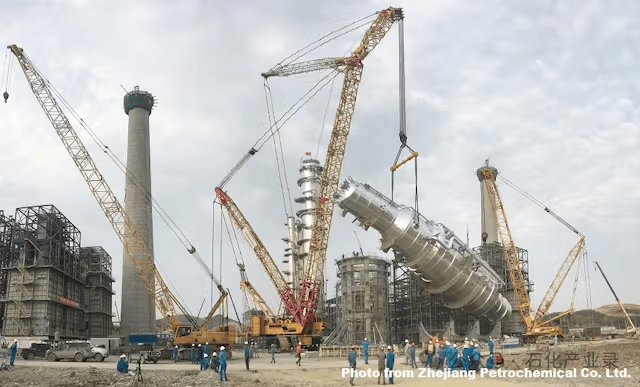
Core Insights - The Chinese refining industry is undergoing a significant transformation driven by government policies aimed at addressing overcapacity and outdated facilities, marking a shift from expansion to consolidation and upgrading [4][19] Group 1: Industry Background - The Zhoushan Green Petrochemical Base project was launched in June 2015, marking the beginning of a new era for private refining in China, supported by the government's decision to allow private refineries to use imported crude oil [2] - The refining capacity in China expanded rapidly from 2005 to 2015, with an increase of 420 million tons per year, leading to a significant rise in the number of local refineries [8] - The industry faced a crisis in 2014 when international oil prices plummeted, resulting in a drastic reduction in refining margins and exacerbating overcapacity issues [8] Group 2: Current Regulatory Environment - A recent notice from five ministries in China calls for a comprehensive assessment of aging petrochemical facilities, particularly those over 20 years old, as part of a strategy to address overcapacity and declining profitability [4][10] - The focus is on outdated equipment that consumes more energy and has lower yields, with many facilities facing resistance to closure due to their economic impact on local communities [10] Group 3: Industry Trends and Shifts - The refining sector is experiencing a shift towards high-end chemical products, with major companies like Rongsheng Petrochemical and Hengli Petrochemical investing in new materials and technologies [17] - The industry is moving towards a more concentrated market structure as state-owned enterprises plan to shut down outdated capacities while investing in new materials [19] - Foreign companies are also recognizing opportunities in China's high-end chemical market, with BASF investing significantly in integrated facilities [19] Group 4: Future Outlook - The transformation of the refining industry is expected to reshape the value chain, with a focus on high-performance polymers and advanced materials becoming the new industry keywords [19] - The government's push for industrial upgrading is seen as a critical step in moving away from traditional refining towards more sustainable and innovative chemical production [19]