光伏瓦

Search documents
京东方A:公司加速钙钛矿技术示范应用
Zheng Quan Ri Bao Zhi Sheng· 2026-01-06 09:11
Core Viewpoint - The company is accelerating the demonstration application of perovskite technology, establishing itself as a leader in the integration of photovoltaic technology in building applications. Group 1: Perovskite Technology Application - The company has established the world's first perovskite BIPV (Building Integrated Photovoltaics) application project, known as the Zero Carbon House [1] - It has received the first and only certification for perovskite technology from the National Building Photovoltaic Evaluation Label and the "Energy Storage Application Award" from the Asian Photovoltaic Association [1] - The company has successfully implemented several demonstration projects for perovskite BIPV and developed standardized products such as photovoltaic tiles and photovoltaic roofs [1] Group 2: Collaboration and Innovation - In the consumer electronics sector, the company is collaborating with leading firms to advance the development of innovative products like photovoltaic price tags and autonomous vehicles [1] - This collaboration significantly expands the application scenarios for perovskite technology [1]

京东方A接待20家机构调研,包括淡水泉(北京)投资管理、天风证券、百年保险资管、华泰证券资管等
Jin Rong Jie· 2026-01-06 02:16
Core Viewpoint - BOE Technology Group (京东方A) has significant advantages in the perovskite solar cell sector, leveraging its long-term experience in the display industry to enhance perovskite research and production capabilities, achieving a record time of 38 days from the setup of its pilot line to the first sample output [1][3]. Group 1: Advantages of Perovskite Technology - Perovskite solar cells offer lower theoretical costs, simplified processes, and lower fabrication temperatures compared to traditional silicon solar cells [4]. - They possess flexible, impact-resistant, and anti-cracking properties, making them more reliable during transportation and application [4]. Group 2: Application and Development - The company has accelerated the demonstration of perovskite technology, launching the world's first perovskite BIPV (Building-Integrated Photovoltaics) project, "Zero Carbon House," which received national certification and the "Energy Storage Application Award" [2][5]. - Collaborations with leading consumer electronics companies are underway to develop innovative products such as photovoltaic price tags and autonomous vehicles [5]. Group 3: Project Progress and Efficiency - The company is developing rigid, flexible, and stacked component technology in parallel, achieving industry-leading efficiency levels across its three research platforms [6][7]. - Rigid components have reached a steady-state efficiency of 27.37%, while flexible components have achieved efficiencies of 21.39% in experimental lines and 16.6% in pilot lines, with the latter being the largest and highest power flexible components in the industry [7]. Group 4: Focus Areas and Future Plans - The company is concentrating on improving the efficiency and lifespan of perovskite cells, with plans to establish outdoor verification stations to assess stability under various environmental conditions [8]. - Future plans include increasing R&D investment to enhance conversion efficiency, stability, and lifespan, while accelerating the transition from pilot line technology to large-scale production to reduce costs [8].

量产效率22%,钙钛矿产业化取得突破性进展
Zhong Guo Neng Yuan Wang· 2025-11-27 08:42
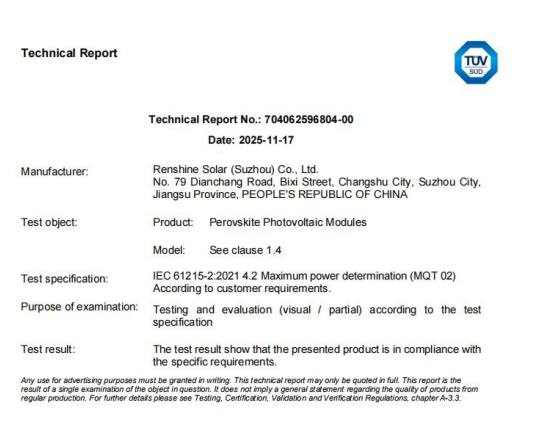
Core Insights - Renshine Solar (Suzhou) Co., Ltd. has achieved a stable efficiency of over 22% for its perovskite photovoltaic modules, marking a significant milestone in the commercialization of perovskite solar technology, comparable to traditional silicon photovoltaics [1][4] Industry Development - The theoretical photoelectric conversion efficiency of perovskite materials can reach 45%, with production costs being one-tenth of silicon [2][3] - China is leading the global development of perovskite photovoltaics, with notable research efficiencies achieved by institutions such as the Chinese Academy of Sciences and Renshine Solar [3] - The perovskite technology is recognized in national planning documents as a key direction for development, receiving strong policy support [2][3] Market Trends - The perovskite industry is experiencing rapid technological advancements, with Renshine Solar's 22% efficiency being a critical performance threshold for full commercialization [4] - Perovskite modules exhibit over 10% higher actual power generation efficiency compared to silicon under the same conversion efficiency, with Renshine Solar's modules achieving over 24% actual power generation efficiency [4] - The market for perovskite applications is diversifying, with products like photovoltaic tiles and flexible outdoor power sources being developed to meet various customer needs [5] Investment and Ecosystem - The perovskite industry ecosystem is becoming increasingly robust, with various companies investing in R&D and production capabilities [6] - The Ministry of Industry and Information Technology of China has emphasized support for the industrialization of perovskite materials, indicating a commitment to advancing high-efficiency photovoltaic technologies [6] - The global market for perovskite photovoltaic modules is projected to reach approximately 20 GW by 2030, with a market space of around 20 billion yuan, reflecting a compound annual growth rate (CAGR) of 243% from 2025 to 2030 [5][6]

光伏可以这么美?在这里沉浸式体验“建筑光伏零碳美学”
Ke Ji Ri Bao· 2025-11-13 02:27
Core Insights - The article highlights a transformative approach to photovoltaic (PV) technology, showcasing its integration into architectural aesthetics and functionality, particularly at the "Building Photovoltaic Zero Carbon Aesthetics" exhibition in Beijing [1][2]. Group 1: Exhibition Overview - The 22nd China International Housing Industry and Building Industrialization Products and Equipment Expo took place from November 6 to 9, featuring a dedicated area for "Building Photovoltaic Zero Carbon Aesthetics" [1]. - The exhibition included three main sections: colorful photovoltaic curtain wall aesthetics, practical photovoltaic tiles, and innovative technology, demonstrating advancements in building-integrated photovoltaics (BIPV) [1][2]. Group 2: Colorful Photovoltaic Curtain Walls - Colorful photovoltaic technology addresses the aesthetic and efficiency imbalance in traditional PV systems, offering products that are visually appealing and efficient [2]. - Various types of colorful photovoltaic curtain walls were showcased, including pure color, stone-like, and aluminum-like designs, enhancing the visual appeal of buildings [2]. - Notable products included Yingchen and Jiasheng's series that blend traditional Chinese architectural elements with modern PV technology, and Longyan Energy's "Yicai" colored photovoltaic materials that maintain color durability for over 20 years with minimal impact on efficiency [2]. Group 3: Practical Photovoltaic Tiles - The practical photovoltaic tile section presented tiles that combine solar energy generation with traditional roofing functions, effectively replacing conventional tiles [3]. - A significant project highlighted was the "Zero Carbon Small House" in Anhui, which integrates PV technology into various building elements, achieving a total installed capacity of 108.6 kW and an expected annual generation of 107,100 kWh [3]. Group 4: Innovative Technologies - The innovative technology section focused on emerging technologies in the PV industry, showcasing advancements that transition buildings from energy consumers to energy producers [5]. - Examples included the world's first "dragon scale" PV roof at the Wuxi Symphony Hall, featuring a capacity of 1,240 kW, and various innovative PV products designed for architectural integration [5]. Group 5: Industry Growth and Future Prospects - The article notes that since the introduction of the "dual carbon" goals, the installed capacity of building photovoltaics has rapidly increased, reaching 365 million kW by the end of 2024, accounting for 41.2% of the total PV capacity in China [6]. - The ongoing development of innovative technologies and engineering cases is expected to further enhance the role of building photovoltaics in optimizing energy structures and promoting low-carbon transitions [6].
“成色”足、“动能”强!区域协调发展跨域聚力 织密“发展经纬”绘就融合新图景
Yang Shi Wang· 2025-10-19 09:26
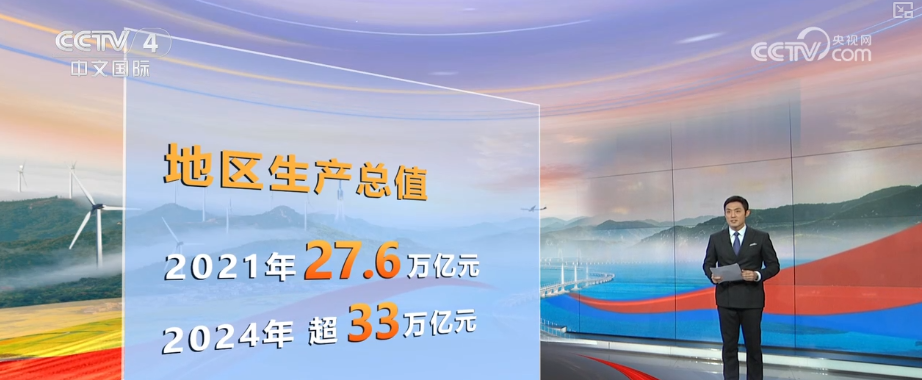
Group 1 - The core viewpoint emphasizes the importance of regional coordination in China's development, highlighting significant strategies like the integration of the Yangtze River Delta and the Greater Bay Area [1] - The Yangtze River Delta's GDP is projected to rise from 27.6 trillion yuan in 2021 to over 33 trillion yuan by 2024, supported by nine cities with GDP exceeding 1 trillion yuan and a strong manufacturing base [3] - The establishment of the Fangting Water Institute symbolizes the integration efforts, allowing for seamless cross-regional interactions and improved administrative efficiency [10][11] Group 2 - The Beijing-Tianjin-Hebei region has seen substantial progress, with over 12,000 collaborative projects and improved public service integration, enhancing the region's cohesiveness [18] - The automotive industry in the Tianjin Wuqing area exemplifies the benefits of regional collaboration, with production capacity expected to double by 2025 [24][28] - The Chengdu-Chongqing economic circle has experienced a significant economic boost, with its total economic output increasing from 6.3 trillion yuan to 8.7 trillion yuan over five years [39] Group 3 - The Greater Bay Area has improved its transportation infrastructure, with new cross-river channels enhancing connectivity and facilitating economic integration [41][44] - The completion of the Shenzhen-Zhongshan Bridge has significantly reduced travel time across the Pearl River Delta, demonstrating the impact of infrastructure on regional development [44] - The cultural and economic integration efforts in the Greater Bay Area have led to increased tourism and local economic growth, with traditional arts like the Yingge dance gaining international recognition [53][56]
直击上海光伏展:BC技术风靡行业,储能企业势头强劲
Hua Xia Shi Bao· 2025-06-14 01:44
Core Insights - The 18th International Solar Photovoltaic Exhibition in Shanghai showcased a significant increase in the presence of energy storage companies, indicating a growing trend towards integrated solar and storage solutions [1] - Major industry players like TCL Zhonghuan, JinkoSolar, and Tongwei showcased BC technology products, although most are still in the preparation stage for mass production [2][3] - The exhibition highlighted the trend of solar storage integration, with many companies presenting differentiated solar-storage solutions [6] Group 1: Technology and Product Innovations - BC technology products were prominently featured by industry giants, with TCL Zhonghuan planning to start mass production in Q3, while only a few companies like Longi Green Energy and Aiko Solar have achieved this [2] - TOPCon technology remains the mainstream product, accounting for over 70% of the global market, while BC technology is primarily targeted at price-insensitive regions like Northern and Western Europe [3] - New solar products such as solar tiles and flexible modules were introduced, with companies like Trina Solar and LONGi showcasing innovations that cater to aesthetic and functional needs [4][5] Group 2: Market Trends and Competition - The solar storage market is becoming increasingly competitive, with many solar companies diversifying into storage to improve profitability, as standalone solar products have been unprofitable [6] - Companies are exploring overseas markets due to saturation in the domestic market, with many reporting that international sales are more profitable [8][9] - The demand for storage solutions is rising, particularly in overseas markets, with companies like Suzhou Guding noting that 60% of their orders now come from abroad [8] Group 3: Challenges and Future Outlook - The solar industry is facing intense competition, leading to price wars that have affected profitability across the board, particularly in the component sector [10][11] - The solar glass industry is struggling with many companies operating at breakeven due to price pressures from the component market [11] - Despite the challenges, the overall demand for solar and storage solutions continues to grow, with companies adapting to market conditions and exploring new opportunities [7][10]





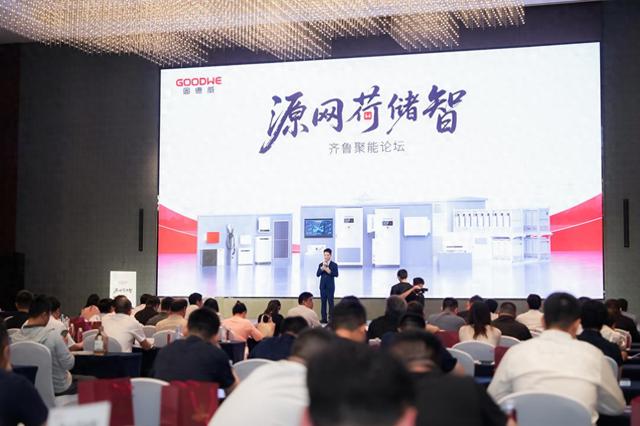
“源网荷储智”:固德威能源转型的企业破局尝试
Xin Hua She· 2025-05-23 05:28
Core Insights - The forum held on May 20 in Jinan focused on energy transformation, highlighting the advancements in energy management systems and the integration of renewable energy sources [1][6]. Group 1: Technological Advancements - The ESA261kWh energy storage system introduced by the company features a power output of 125kW and a capacity of 261kWh, with a size 30% smaller than competitors, showcasing its role as the "nerve center" of energy management [6]. - The AI algorithms integrated into the system can predict photovoltaic output and load fluctuations 15 minutes in advance, enabling coordinated dispatch of multiple storage units [6]. - The company emphasizes that it is not merely selling hardware but building the infrastructure for an energy internet [6]. Group 2: Market Dynamics - The energy storage sector is transitioning from "price speculation" to "value reconstruction," with data indicating a more than 25% decline in storage profitability following optimized time-of-use pricing in Jiangsu and Hubei [8]. - The company’s "光储直柔" system has increased the green electricity self-sufficiency rate from 20% to 75% in a food processing plant, reducing electricity costs by 40% [8]. - The path for photovoltaic companies to transition to energy storage is becoming clearer, with a proposed "three-step" strategy focusing on technology integration, scenario innovation, and data-driven ecological collaboration [8]. Group 3: Collaborative Ecosystem - Collaborations with financial and technological partners are reshaping the energy ecosystem, combining technical expertise, capital, and practical applications [9]. - The integration of resources from city investment companies, financial institutions, and the company is driving the transformation of industrial enterprises towards energy storage solutions [9]. - The company's WE platform has reached its 1000th commercial user, indicating the formation of a new energy ecosystem where users act as both consumers and regulators of energy [9]. Group 4: Future Directions - The company emphasizes the importance of building adaptive capabilities in response to market fluctuations, which is reflected in the design of its commercial energy storage systems and virtual power plant pricing models [10]. - The underlying logic of energy transition involves both technological innovation and ecological collaboration, aiming for a system that enhances efficiency, optimizes costs, and improves ecological outcomes [10][11].