
光热装备

Search documents
五年间 甘肃经济增速连续16季度跑赢全国 综合实力实现快速跃升
Zhong Guo Fa Zhan Wang· 2026-01-28 13:19
Core Insights - Gansu Province has shown significant economic growth over the past five years, with a GDP reaching 1.36975 trillion yuan, representing a 33.6% increase compared to the end of the 13th Five-Year Plan [1] Economic Performance - Gansu's economic growth rate has exceeded the national average for 16 consecutive quarters since 2022 [1] - The added value of industrial enterprises above designated size has ranked in the top ten nationally for 30 consecutive months, with the number of such enterprises increasing from 1,832 to 3,382 [1] Industrial Development - Industrial investment has maintained double-digit growth for 54 months, contributing 36.1% to the province's economic growth [1] - The new energy sector has experienced rapid development, with total installed capacity reaching 80.416 million kilowatts, a 2.4-fold increase, and the establishment of a complete manufacturing industry chain for photovoltaic, wind, and thermal power [1] Infrastructure and Technology - The "Green Electricity from Gansu" initiative is expanding, with the operation of the "Gansu Electricity to Shandong" project and the commencement of the "Gansu Electricity to Zhejiang" project [1] - The data center cluster in Qingyang has rapidly developed, achieving a computing power scale of 114,000 P, contributing to the emergence of a "green computing power new city" in the Loess Plateau [1] Strategic Direction - Gansu is actively transforming from an old industrial base to a new one, focusing on quality and strength in its economic development [1]
2025新能源发展大会在甘肃敦煌举办
Zhong Guo Jing Ji Wang· 2025-12-18 06:11
Core Insights - The 2025 New Energy Development Conference was held in Dunhuang, Gansu, focusing on the achievements and future opportunities in the new energy sector during the 14th Five-Year Plan period [1][2] - Gansu province has made significant progress in both traditional industry upgrades and the development of new energy sectors, with a focus on creating a comprehensive industrial chain [1] Group 1: Industry Development - Gansu's new materials industry is projected to reach a value of 130.5 billion yuan by 2024, while the new energy and new energy equipment manufacturing industry is expected to reach 83 billion yuan [1] - The province's installed capacity of new energy reached 77.62 million kilowatts, accounting for 64.1% of the total installed capacity, achieving its 14th Five-Year Plan goals ahead of schedule [1] - Gansu's new energy installed capacity is expected to exceed 80 million kilowatts by the end of this year, which is 3.4 times that of the end of the 13th Five-Year Plan [3] Group 2: Policy and Strategic Initiatives - The province has implemented a series of policy improvements and major project constructions, resulting in five key transformations in the energy sector [2] - These transformations include the shift of new energy from a supplementary power source to a main power source, and the evolution of the equipment manufacturing industry from a fragmented approach to a clustered model [2] - Gansu aims to establish itself as a significant base for new energy and new energy equipment manufacturing in China, with ongoing efforts to enhance resource regulation and grid connectivity [2]
甘肃酒泉:从“追风逐日”到“全链智造”
Zhong Guo Xin Wen Wang· 2025-11-18 07:37
Core Insights - Gansu Jiuquan has added 22.81 million kilowatts of new energy grid-connected capacity since the start of the 14th Five-Year Plan, surpassing the total installed capacity of the previous decade [1] - Jiuquan has become the largest onshore wind power equipment manufacturing base in China, with an annual production capacity of 20 million kilowatts for wind power equipment [1][3] - The city aims to achieve a total new energy installed capacity of 40 million kilowatts by the end of this year, with significant growth in solar thermal capacity expected [3][4] New Energy Development - Jiuquan is a key area for China's "Shagao Desert" large-scale wind and solar power base, with new installations equivalent to a 10 million kilowatt wind power base and a 10 million kilowatt solar power base [3] - The new energy installed capacity is expected to exceed 40 million kilowatts by the end of the year, with solar thermal capacity projected to double to 720,000 kilowatts [3][4] - The city has also developed new paths for energy consumption, including off-grid hydrogen production and green microgrids, with local consumption expected to reach 12.5 billion kilowatt-hours in 2024, more than double the 2020 figure [3] Equipment Manufacturing - Jiuquan's equipment manufacturing sector is a critical support for its new energy industry, focusing on the "wind-solar-thermal-storage-hydrogen-grid" industrial chain [4] - The city has attracted 58 leading enterprises, including Goldwind Technology and Chint Group, achieving local supply chain integration for wind power equipment [5] - The output value of Jiuquan's new energy equipment manufacturing industry has surpassed 30 billion yuan, reflecting a 5.5-fold increase since the end of the 13th Five-Year Plan [5] Future Plans - Jiuquan plans to continue expanding its new energy industry, targeting an installed capacity of 80 million kilowatts by the end of the 15th Five-Year Plan, with aspirations to exceed 100 million kilowatts [5]

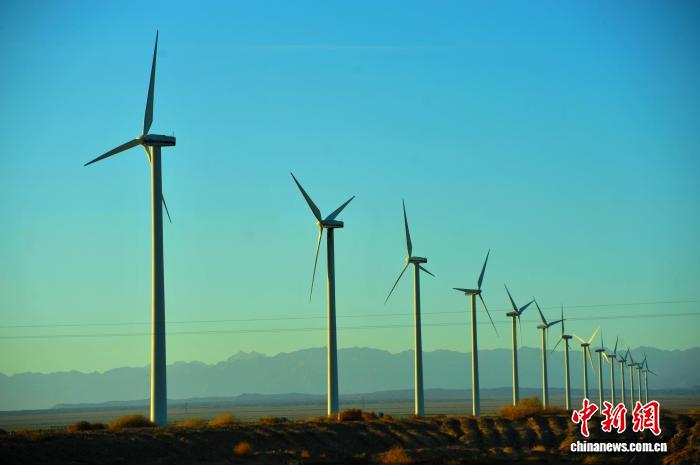
产业增绿能源向新生态共赢 “十四五”我国绿色转型发展成效卓著
Zhong Guo Chan Ye Jing Ji Xin Xi Wang· 2025-10-13 01:25
Core Viewpoint - The article highlights China's commitment to green development during the "14th Five-Year Plan" period, emphasizing the transition to a circular economy, the rise of clean energy, and the promotion of green consumption as essential components of achieving ecological sustainability and carbon neutrality goals [1][2][8]. Green Energy Development - During the "14th Five-Year Plan," China has made significant strides in green energy, with clean energy sources like wind and solar becoming major contributors to the energy mix, surpassing coal in installed capacity [2][3]. - The country has established the world's largest clean power generation system, with one-third of global power generation capacity, and aims to increase the share of green electricity further [2][3]. Circular Economy Initiatives - The construction of a circular economy system has accelerated, focusing on resource recycling in industrial sectors and urban "waste-free" initiatives, enhancing resource efficiency and injecting green momentum into economic development [4][5]. - Significant advancements in manufacturing green products have been noted, with steel and cement industries achieving world-leading energy consumption levels and substantial recycling of materials [4][5]. Green Consumption Trends - The "14th Five-Year Plan" has seen a rise in green lifestyles, with the number of new energy vehicles reaching 31.4 million by the end of 2024, a fivefold increase from the end of the "13th Five-Year Plan" [7]. - The second-hand market has flourished, with daily transactions of idle goods exceeding 1 billion yuan, indicating a shift towards circular consumption practices [7][8]. Policy and Institutional Support - Policies have been implemented to support recycling and green initiatives, such as guidelines for establishing recycling points and promoting waste sorting, which have led to high participation rates in waste management [5][6]. - The establishment of regulations, such as the "Waste-Free City Construction Regulations" in Shanghai, has encouraged public engagement in sustainable practices, achieving a stable waste sorting compliance rate of over 95% [6].