风电装备

Search documents
油价大涨的影响和机遇
泽平宏观· 2026-03-22 16:27
Group 1 - The article discusses the impact of rising oil prices due to the US-Iran conflict, highlighting that oil is a critical component of modern industry and daily life, affecting transportation and chemical raw materials, thereby increasing living costs [3] - Oil price increases will lead to higher transportation costs, with crude oil accounting for 70-80% of refined oil production costs; a 10% rise in international oil prices theoretically raises refined oil production costs by 7-8% [6][7] - The article notes that Brent crude oil prices surged from $70 per barrel at the end of February to over $111 per barrel by March 20, leading to significant increases in fuel surcharges by airlines and domestic fuel prices [7][10] Group 2 - The article emphasizes the global focus on energy security, particularly in Europe and Asia, where countries like Japan and South Korea are heavily reliant on Middle Eastern oil, while China has diversified its oil import sources [12][13] - China is positioned to benefit from the energy crisis, with its renewable energy sector expected to see significant growth; it has established a leading position in wind, solar, and battery industries, contributing to global supply chains [13] - The influx of international funds, particularly from the Middle East, into Chinese assets is noted, with Hong Kong becoming a financial safe haven amid geopolitical tensions [14][15] Group 3 - The article outlines the transmission of rising oil prices to agricultural sectors, particularly fertilizers and pesticides, with costs expected to rise due to increased energy and chemical raw material prices [16][18] - Long-term bonds and gold are identified as negatively impacted assets due to rising oil prices, which are expected to increase inflationary pressures and alter interest rate expectations [20][22] - Despite short-term market fluctuations due to the oil crisis, the long-term trends in AI and advanced manufacturing are expected to remain unaffected, driven by technological advancements and policy support [24]


盐城射阳港首迎光伏玻璃高附加值货种,新能源物流布局再添新翼
Xin Lang Cai Jing· 2026-02-14 06:11
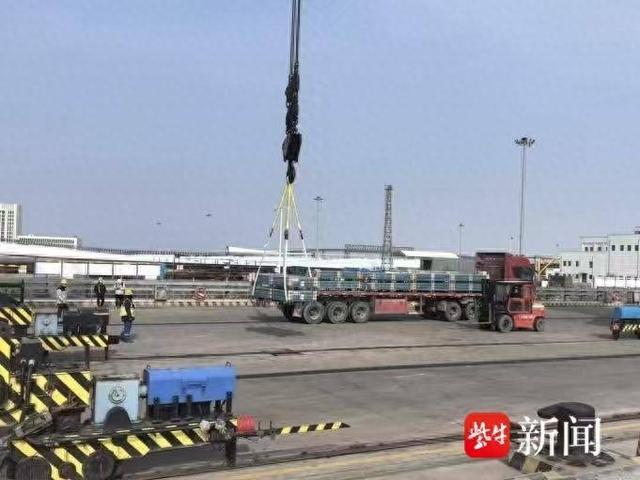
Core Insights - The successful unloading of 2,400 pieces of photovoltaic glass at Sheyang Port marks the beginning of handling high-value precision cargo in the region [1][3] - The operation demonstrated the port's capability in managing delicate cargo, achieving a 100% integrity rate for the goods unloaded [3][5] Group 1: Operational Excellence - The unloading process involved meticulous planning and execution, with a focus on stability and precision throughout the entire operation [3] - Specialized training for personnel was conducted to ensure the safe handling of the fragile photovoltaic glass, including the use of soft padding on lifting equipment to minimize vibrations [3][5] - The operation was completed efficiently, with all cargo unloaded by 3 PM the same day, showcasing the port's operational efficiency [3] Group 2: Strategic Development - Sheyang Port is positioned as a key hub for wind power equipment imports and exports, with a target cargo throughput of 17.1 million tons by 2025, of which 85% will be wind power equipment [5] - The introduction of photovoltaic glass diversifies the port's cargo offerings, enhancing its role in the renewable energy supply chain [5][7] - The port has established a comprehensive green energy supply system, with significant installed capacities in both onshore and offshore wind power, as well as solar energy [5][7] Group 3: Infrastructure and Efficiency - Recent upgrades to port infrastructure, including a 35,000-ton terminal and heavy lifting equipment, have improved operational capabilities and efficiency [7] - The implementation of streamlined customs processes has reduced clearance times from three days to one, significantly enhancing logistics efficiency [7] - The port achieved a breakthrough in foreign trade in 2023, with projected foreign cargo throughput of 195,100 tons in 2024, indicating growing market competitiveness [7]
宁波能源联合设立风电装备公司,投资深远海风电母港项目
Jing Ji Guan Cha Wang· 2026-02-14 05:35
Group 1 - The core point of the article is that Ningbo Energy's board has agreed to jointly establish Zhejiang Ningbo Zhuhai Wind Mother Port Equipment Development Co., Ltd. with Zhejiang Marine Wind Power Development Co., Ltd., Riyue Heavy Industry Co., Ltd., and Ningbo Oriental Cable, to invest in the construction of the Xiangshan base project for deep-sea wind power in Zhejiang [1] - The establishment of this joint venture is seen as a significant development in the energy sector, particularly in the context of offshore wind power projects in East China [1] - The article highlights that policies in the power industry, such as the approval of ultra-high voltage projects and the increase in green electricity trading volume, may serve as catalysts for the sector [1]


新视野丨坚持“双碳”引领 推动全面绿色转型
Zhong Yang Ji Wei Guo Jia Jian Wei Wang Zhan· 2026-02-09 23:59
Group 1 - The core viewpoint emphasizes that green development is essential for high-quality growth, with a strong commitment from the government towards achieving carbon neutrality and ecological civilization [2][3][5] - The "dual carbon" goals are seen as a necessary strategy for transforming the economy and addressing resource and environmental constraints, reflecting a shift from high-speed to high-quality development [3][4][6] - The global consensus on climate change necessitates a green low-carbon transition, which is crucial for enhancing China's competitiveness in international markets and aligning with global economic trends [4][6][10] Group 2 - The transition to a green economy is aimed at achieving higher quality, sustainable, and resilient development, integrating ecological considerations into all aspects of economic and social development [5][6][11] - Key areas for transformation include the clean energy system, industrial structure upgrades, and technological innovation, which are vital for reducing carbon emissions and enhancing economic stability [8][9][10] - The establishment of a comprehensive green low-carbon policy framework and the promotion of green finance are essential for supporting this transition, with significant growth in green loans and bonds observed [11][12] Group 3 - The importance of public participation in the green transition is highlighted, with initiatives like carbon credit systems encouraging individual contributions to sustainability [12] - Regional differences in resources and industrial bases necessitate tailored approaches to green transformation, with eastern regions leading in innovation and western regions focusing on clean energy development [12]
省人大代表,省商务厅党组书记、厅长司勇:江苏打出新年消费提振“组合拳”
Yang Zi Wan Bao Wang· 2026-02-04 23:12
Group 1 - Jiangsu's consumption market will see significant changes in 2026, including the introduction of 400 provincial-level flagship stores and the creation of 600 "Su Super Second Scene" locations to boost consumer engagement [1][4] - The government plans to implement a "policy + activity" approach to stimulate consumption, with over 3,000 "One City, One Feature" events scheduled throughout the year [2][3] - A focus on enhancing the supply of local products will include over 100 "Su Products" carnivals and 400 supply-demand matchmaking events, aiming to improve consumer access to "Su-branded" goods [2][3] Group 2 - Jiangsu aims to attract 400 provincial-level flagship stores and develop 10 flagship store clusters, emphasizing the importance of the "first store economy" [3] - The province will establish a service mechanism for flagship store attraction and promote innovative consumption scenarios, including the development of the "Su Products e-Procurement" online platform [3] - The government will also enhance international consumption by adding over 200 tax refund stores for inbound tourists [3][4] Group 3 - The year 2026 has been designated as the "Year of Breakthrough in Service Consumption," focusing on key sectors such as transportation, home services, and entertainment [4] - The "Su Super" league will continue to expand, with plans for over 100 "Su Super" carnival events and an increase in participating merchants for nighttime consumption activities [4] - The government will promote local culinary experiences through the "Hundred Counties, Thousand Flavors" initiative, integrating it with sports events to drive consumer activity [4] Group 4 - Jiangsu is developing a three-year action plan for live e-commerce, aiming to cultivate around 30 "brand live streaming rooms" and establish 10 quality live streaming bases [5] - The "Star Plan" will organize over 1,200 training sessions to support the healthy and specialized development of live e-commerce, targeting over 70,000 participants [5] Group 5 - In response to new foreign trade dynamics, Jiangsu is enhancing its foreign trade strategy with a focus on new entities, markets, models, channels, and products [7] - The "Jiangsu Quality Products Go Global" initiative will continue, with 419 overseas exhibitions planned for 2026, over 60% of which will target emerging markets [7] - The province will support specialized and innovative "little giant" enterprises in expanding international markets, particularly in sectors like robotics and green technology [7]
天顺风能“陆转海”阵痛:预亏超1.9亿元、6家子公司停产
Zhong Guo Jing Ying Bao· 2026-01-30 07:03
Core Viewpoint - TianShun Wind Power (002531.SZ) is facing significant financial challenges, with a projected net loss of 190 million to 250 million yuan for 2025, marking a year-on-year decline of 192.94% to 222.29% as the company shifts its focus from onshore to offshore wind power [2][3]. Financial Performance - In 2022, TianShun Wind Power reported revenue of 6.738 billion yuan, a decrease of 17.49% year-on-year, and a net profit of 628 million yuan, down 52.03% year-on-year [3]. - The company experienced a revenue increase in 2023, reaching 7.727 billion yuan, a growth of 14.67% year-on-year, with a net profit of 795 million yuan, up 26.53% year-on-year, attributed to the strategic shift towards offshore wind power [3]. - However, in 2024, revenue fell to 4.860 billion yuan, a decline of 37.10% year-on-year, and net profit plummeted to 204 million yuan, down 74.29% year-on-year [3]. Strategic Shift - The company is actively pursuing a "land-to-sea" strategic transformation, which involves reducing its onshore wind power equipment business and consolidating its operations [4]. - Six wholly-owned subsidiaries will cease operations as part of this strategy to optimize resource allocation and focus on offshore wind power [5][6]. Market Context - The onshore wind power market is becoming increasingly competitive, while the offshore wind power market presents significant growth potential, with over 300 million kilowatts of planned capacity in China [6]. - The global offshore wind power market is also expected to grow rapidly, with annual installations projected to exceed 30 million kilowatts by 2030 [6]. Industry Challenges - Despite the potential profitability of offshore wind projects, the industry is currently facing short-term challenges, including a lack of fully realized construction scale and increased competition that may lead to price wars [7]. - The annual installation capacity has stabilized between 4 to 7 GW following a peak in 2021, indicating a need for further growth to meet market demands [7].

江苏外贸聚焦“五新”加速跑
Xin Hua Ri Bao· 2026-01-28 22:51
Group 1 - The core focus of the meeting is to promote foreign trade innovation development with "Five New" initiatives by 2026 [1] - In 2025, the province's foreign trade scale ranked second nationally for 23 consecutive years, with a total import and export value of 5.95 trillion yuan, a year-on-year growth of 6%, exceeding the national average by 2.2 percentage points [1] - The market layout has been optimized, with imports and exports to countries involved in the "Belt and Road" initiative accounting for over half for the first time, becoming a core engine for foreign trade growth [1] Group 2 - The meeting included a special training session on new business formats, featuring six industry experts sharing insights on platform operations, AI applications, and practical cases to empower enterprises for international expansion [2] - Suhao Holdings Group announced plans to accelerate the operationalization of the "Central Asia Jiangsu Center" in Astana [2] - The "Market Procurement" platform has established a full-process closed loop of "market procurement + customs clearance + collection + tax exemption," serving 46,000 small and micro enterprises for compliant and efficient international trade [2]
五年间 甘肃经济增速连续16季度跑赢全国 综合实力实现快速跃升
Zhong Guo Fa Zhan Wang· 2026-01-28 13:19
Core Insights - Gansu Province has shown significant economic growth over the past five years, with a GDP reaching 1.36975 trillion yuan, representing a 33.6% increase compared to the end of the 13th Five-Year Plan [1] Economic Performance - Gansu's economic growth rate has exceeded the national average for 16 consecutive quarters since 2022 [1] - The added value of industrial enterprises above designated size has ranked in the top ten nationally for 30 consecutive months, with the number of such enterprises increasing from 1,832 to 3,382 [1] Industrial Development - Industrial investment has maintained double-digit growth for 54 months, contributing 36.1% to the province's economic growth [1] - The new energy sector has experienced rapid development, with total installed capacity reaching 80.416 million kilowatts, a 2.4-fold increase, and the establishment of a complete manufacturing industry chain for photovoltaic, wind, and thermal power [1] Infrastructure and Technology - The "Green Electricity from Gansu" initiative is expanding, with the operation of the "Gansu Electricity to Shandong" project and the commencement of the "Gansu Electricity to Zhejiang" project [1] - The data center cluster in Qingyang has rapidly developed, achieving a computing power scale of 114,000 P, contributing to the emergence of a "green computing power new city" in the Loess Plateau [1] Strategic Direction - Gansu is actively transforming from an old industrial base to a new one, focusing on quality and strength in its economic development [1]
理查德·布莱克:中国引领全球清洁能源革命
Ren Min Ri Bao· 2026-01-18 05:53
Core Insights - China is reshaping its energy future and the global energy landscape, leading the clean energy revolution by reducing the costs of core clean energy equipment, creating more opportunities for energy transition in other countries, especially in the Global South [1] - The application of the "Lerner's Law" is evident in the significant cost reductions of wind turbines (approximately 60% over the past decade) and solar photovoltaic systems (about 90%), which have led to exponential growth in their adoption [1] Group 1 - In 2024, 81% of China's new electricity demand will be met by clean power, significantly higher than the 52% average from the previous five years [2] - Seven provinces in China have over 25% of their electricity sourced from wind and solar energy [2] - Clean energy investment in China reached $625 billion in 2024, accounting for about one-third of global investment [2] Group 2 - By the first half of 2025, clean energy is expected to meet all of China's new electricity demand, with renewable energy installations growing by 47.7% year-on-year [2] - China currently supplies over 80% of the world's photovoltaic components and 70% of wind power equipment [2] - The export volume of China's photovoltaic components increased from 66.6 GW in 2019 to nearly 240 GW in 2024 [2] Group 3 - In 2023, over 60% of emerging economies in Asia, Africa, and Latin America had solar power contributing more than the total electricity consumption compared to the U.S. [3] - The experience of China demonstrates that a highly industrialized nation can achieve energy transition, provided that the government implements coherent and consistent policies [3] - Countries are urged to seize the current momentum of energy transition and leverage declining clean energy prices to build a cleaner and more resilient future [3]
能源强国建设“大家谈”︱建设能源强国支撑经济社会发展全面绿色转型
国家能源局· 2026-01-17 10:33
Core Viewpoint - The article emphasizes the importance of building an energy powerhouse as a strategic foundation for achieving socialist modernization and carbon neutrality goals in China, highlighting the energy sector's critical role in national security and economic development [3][4]. Group 1: Building an Energy Powerhouse - Building an energy powerhouse is essential for achieving carbon peak and carbon neutrality goals, with a focus on increasing electrification and green electricity supply [4]. - The energy sector is a significant contributor to GDP, with the clean energy industry accounting for over 10% of GDP, necessitating a robust industrial and supply chain [4]. - The transition to a new energy system is crucial for the comprehensive green transformation of the economy and society, driven by the third energy revolution and advancements in artificial intelligence [4]. Group 2: New Energy System as a Driving Force - A new energy system is vital for ensuring national energy security, given China's resource endowment of "rich coal, poor oil, and little gas," and the high dependence on oil and gas imports [5]. - China has significant potential for wind and solar energy, with exploitable capacities exceeding 100 billion kilowatts and 400 billion kilowatts, respectively, which can meet future electricity demands [5]. - The cost of renewable energy has significantly decreased, with onshore wind power costs dropping over 60% and solar power costs falling by 80% in the past decade, making renewables more economically viable than coal [5]. Group 3: Climate Change Response - The new energy system is a necessary response to climate change, with China's commitment to reducing greenhouse gas emissions by 7%-10% from peak levels by 2035 [6]. - The energy sector accounts for over 80% of national carbon emissions, with the power industry being the main battlefield for carbon reduction efforts [6]. Group 4: Development Pathways for Energy Powerhouse - The 14th Five-Year Plan is a critical period for accelerating the construction of a new energy system, focusing on reforms, technological innovation, green consumption, and overall exports [8]. - Recommendations include deepening electricity market reforms, enhancing technological innovation in the energy sector, and promoting green low-carbon consumption models [9][10].