八界

Search documents
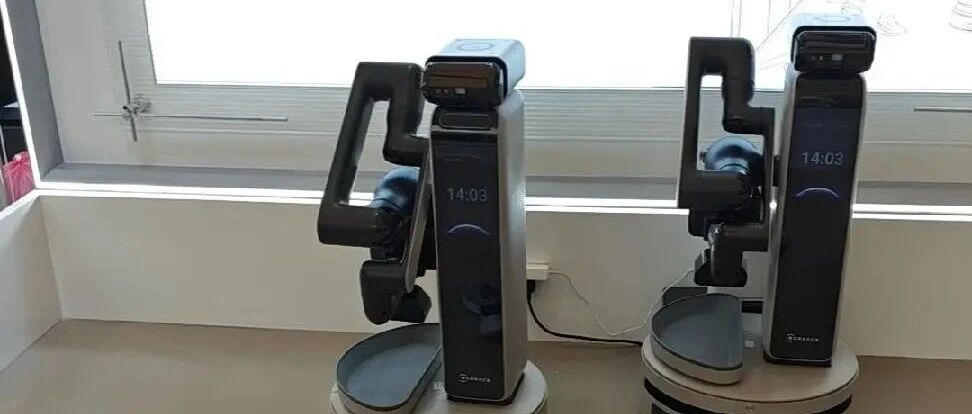
AWE 2026:科沃斯“八界”的亮相,展现具身智能未来商业图景
Cai Jing Wang· 2026-03-16 11:29
Core Insights - The rapid growth of AI large model technology is driving a new wave of technological upgrades in the consumer electronics industry, with AI becoming a fundamental logic throughout the industry chain [1] - The AWE2026 showcased various AI-enabled products, marking a significant paradigm shift where devices evolve from merely executing commands to actively understanding and perceiving [1] - Ecovacs' performance at AWE2026 is particularly noteworthy, presenting a comprehensive matrix of home service robots that cover cleaning, management, and companionship, indicating a clear path for the commercialization of embodied intelligence [1] Industry Overview - The global service robot market is at a critical turning point, transitioning from "functional tools" to "intelligent services," with the Chinese embodied intelligence market expected to grow to 915 billion yuan by 2025 and surpass 1 trillion yuan in 2026 [2] - There is a growing demand for "full-scene, proactive intelligent services," with embodied intelligence recognized as a core technological direction to fill this gap [2] - The "Bajie" robot, equipped with OpenClaw, represents a significant breakthrough in the commercialization of embodied intelligence, capable of performing intricate tasks and engaging in real-life interactions with users [2][3] Product Development - Ecovacs' product matrix showcases a strategic evolution from tools to companions, with the "Mao Tuan Er" robot extending embodied intelligence into emotional companionship, providing a stable and warm presence for users unable to keep real pets [4][5] - The flagship cleaning robot, "Deebot X12," utilizes advanced cleaning technologies to achieve deep cleaning and comprehensive coverage, while the "Deebot T90 PRO" addresses battery life concerns for larger homes [5] - The "Window Cleaning W3" robot completes the service loop by transitioning from a single function to a full-service solution, addressing the last pain points in window cleaning [5] Technological Foundation - Ecovacs' strategic upgrade to a full-scene robot company is supported by a dual-driven research and development model, combining external investments and internal research [6][7] - The company has built a comprehensive technology system over 20 years, covering perception, decision-making, and execution, which supports the development of embodied intelligence technologies [6] - Strategic investments in AI chips, collaborative robotics, and partnerships with cloud services enhance Ecovacs' technological capabilities and support the development of embodied intelligence products [6][7] Industry Implications - Ecovacs' transition from a cleaning robot brand to an explorer of full-scene home service robots sets a clear benchmark for the industry, emphasizing that the core value of embodied intelligence lies in solving user pain points [8] - The company's comprehensive layout model demonstrates that the future direction of service robots is to cover all family scene needs rather than being limited to a single application [8] - The inclusion of embodied intelligence in national strategic plans highlights its significance as a key driver for future productivity and competitive advantages, positioning Ecovacs as a major player in the global market [8]

2026 AWE观察:机器人公司来了家电展,家电公司都在做机器人
经济观察报· 2026-03-15 04:06
Core Insights - The 2026 AWE showcased a significant shift towards robotics and AI in the home appliance sector, with major brands like Haier, Midea, and TCL prominently featuring these technologies [2][4][10] - A new standard for smart home interoperability was introduced, aiming to unify communication between devices from different brands, addressing a major pain point in the industry [3][14][15] Group 1: Robotics and AI Innovations - The AWE featured over 60 robot models from various companies, indicating a growing trend of traditional appliance manufacturers entering the robotics space [2][5] - Notable products included the "Eight Realms" robot from Ecovacs, which integrates AI capabilities for task planning, and Haier's "Havva" series of household service robots [4][5] - AI is being integrated into traditional appliances, such as TCL's flagship TV that uses AI for automatic picture adjustments and air conditioners that monitor sleep patterns [10][12] Group 2: Industry Standards and Interoperability - The GIIC alliance announced the OneConnect standard, which aims to facilitate device interoperability across different brands, addressing the current lack of cross-brand communication [14][15] - The standard includes specifications for device access, control interfaces, and safety requirements, covering nearly 200 product categories [16][15] - The push for these standards is driven by both government initiatives and the recognition among companies that collaboration is essential for industry growth [18][19] Group 3: Market Trends and Future Directions - The home appliance industry is at a transformative point, with AI becoming a core driver of innovation, as highlighted by industry leaders during the AWE [19] - The focus is shifting from merely adding smart features to creating products that address consumer pain points and enhance value [10][19] - The establishment of the OneConnect standard is expected to lead to a more cohesive smart home ecosystem, enhancing user experience and driving market growth [17][18]





AWE专题:从生态协同到跨界融合
Huafu Securities· 2026-03-14 13:19
Investment Rating - The industry rating is "Outperform the Market" [5][55] Core Insights - The 2026 AWE highlights a significant shift in the consumer electronics and home appliance industry, moving from linear upgrades of individual product features to systemic competition centered around spatial experience and ecological collaboration [2][3][12] - The competition is evolving into an "experience competition" phase, where brands that can create cohesive aesthetic experiences and intelligent interactivity are likely to build new competitive advantages and achieve higher brand premiums [3][13] - Cross-industry integration is accelerating, with the boundaries between consumer electronics, automotive, robotics, and energy becoming increasingly blurred, leading to the formation of a unified ecosystem of "people-vehicles-home-devices-robots" [3][20][24] Summary by Sections 1. Market Data - The home appliance sector saw a weekly increase of 0.6%, with specific segments like white goods, black goods, small appliances, and kitchen appliances rising by 1.2%, 0.7%, 0.7%, and 2.0% respectively [4][11] - Raw material prices showed a mixed trend, with LME copper decreasing by 0.4% and LME aluminum increasing by 4.0% [4][11] 2. 2026 AWE Highlights - The AWE 2026 event marks a clear transition in the industry focus from product display to spatial expression, emphasizing the creation of immersive living environments rather than merely showcasing individual products [12][13] - Brands are increasingly focusing on creating cohesive atmospheres in their displays, reflecting a shift in competitive logic from product-centric to experience-centric [13][15] 3. Cross-Industry Integration - The AWE 2026 showcased a trend of cross-industry integration, with consumer electronics expanding into areas such as smart mobility, embodied intelligence, and energy management [20][24] - Companies like Huawei and Tesla are demonstrating how automotive technology is being integrated into smart home ecosystems, indicating a shift in narrative from product sales to ecosystem connectivity [20][24] 4. Emerging Technologies - Smart glasses are transitioning from niche hardware to becoming integral to the ecosystem, focusing on real-world applications such as navigation and lifestyle services [28][29] - The integration of AI and robotics into home appliances is transforming them from passive tools to active participants in household tasks, enhancing the overall user experience [20][24]
全球首款手机龙虾秒光!OpenClaw创始人称愿与百度共同开发龙虾;特斯拉AWE展出即将发布的第三代机器人丨智能制造日报
创业邦· 2026-03-13 04:11
Group 1 - The world's first mobile lobster application "Red Hand Operator" was launched by Baidu, leading to a surge in downloads and a resource shortage in the system backend, prompting Baidu Smart Cloud to expedite resource allocation to ensure user experience [2] - Tesla showcased its upcoming third-generation humanoid robot at the AWE 2026, with plans for mass production starting at the end of 2026, targeting a long-term production capacity of 1 million units [2] Group 2 - Ecovacs presented two new products at AWE 2026, including the AI bionic robot "Mao Tuan Er," which is designed for companionship and is priced at 3999 yuan, and the "Bajie" household service robot, which upgrades storage space from two-dimensional to three-dimensional [4][5] - SmartSens announced the launch of a new 12-megapixel AI glasses application CMOS image sensor, SC1220IOT, which is currently in the sample acceptance stage and is expected to achieve mass production in Q2 2026 [5]