
北京地铁17号线

Search documents
地铁新线分流效应初步显现
Bei Jing Wan Bao· 2025-12-29 07:26
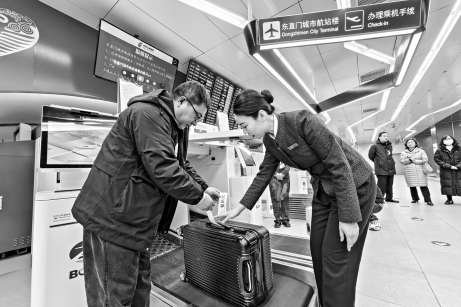
Core Insights - The newly opened Beijing Metro Line 18 has successfully handled its first morning rush hour, with a manageable flow of passengers and positive feedback on its convenience [1][2] Group 1: Line 18 Performance - Line 18 spans approximately 19.8 kilometers and includes 11 stations, connecting major residential areas and the Zhongguancun Software Park, serving as a diversion line for commuters [2] - During the morning peak from 8 AM to 10 AM, the overall congestion level of Line 18 remained at a comfortable "green" level, indicating efficient passenger flow [2] - The line's peak characteristics are evident, with significant outbound traffic at stations near major tech companies, while residential areas see more inbound traffic [2][3] Group 2: Line 17 Performance - On the first working day after the opening of the new section of Line 17, the total entry and exit volume reached 66,200 passengers during the morning peak [4] - The highest interchange volume occurred at Yong'anli Station, with 11,000 transfers between Line 17 and Line 1, facilitating commuter travel [4] - The operational schedule for Line 17 includes a minimum interval of 6 minutes during peak hours, ensuring efficient service [5] Group 3: Airport Line Developments - The East Dongzhimen Station of the Airport Line has introduced a luggage check-in service, allowing passengers to check in and drop off luggage before heading to the airport [8][9] - This service aims to enhance the travel experience by providing seamless connectivity from the subway to the airport, thereby alleviating ground traffic pressure [8][9] - The implementation includes self-service check-in kiosks and dedicated luggage elevators, ensuring a smooth transportation process for travelers [9]

17号线三座新站开通首日探访,永安里站两线换乘仅需3分钟
Bei Jing Ri Bao Ke Hu Duan· 2025-12-27 02:59
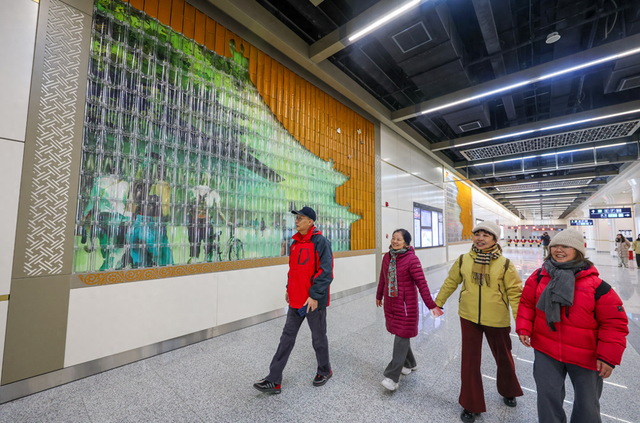
Core Insights - The opening of the new section of Line 17, including three stations (Dongdaqiao, Yong'anli, and Panjiayuan West), enhances public transportation connectivity in Beijing, allowing for efficient transfers to other lines [1][3] Group 1: Operational Details - The new stations opened for trial operation on December 27, with Yong'anli station allowing a transfer to Line 1 in just 3 minutes, and Dongdaqiao station facilitating a transfer to Line 6 in 4 minutes [1][3] - The average daily passenger volume for Line 17 is projected to be 331,000, with a minimum train interval of 6 minutes during peak hours and 8 minutes during off-peak times [6] Group 2: User Experience - Passengers have reported significant time savings; for example, a commuter noted a reduction in travel time from 25 minutes to 20 minutes by using Line 17 [3] - The design of Panjiayuan West station features a unique structure with platforms stacked at different levels, and it includes comprehensive information displays to assist passengers [4][3] Group 3: Aesthetic and Cultural Aspects - The new stations are designed with cultural elements, such as murals and traditional art, enhancing the aesthetic experience for passengers [6]
本市轨道交通运营里程超900公里
Bei Jing Wan Bao· 2025-12-22 06:52
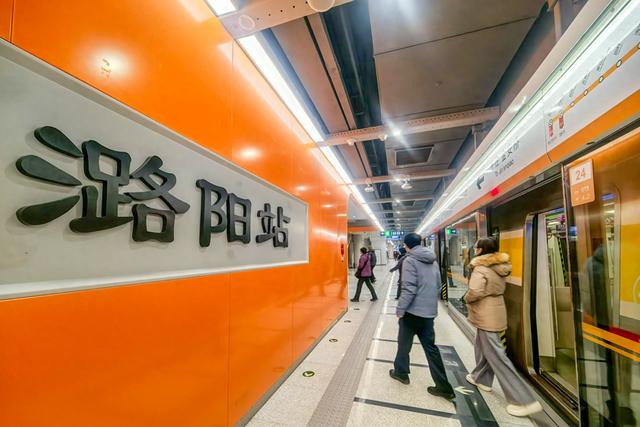
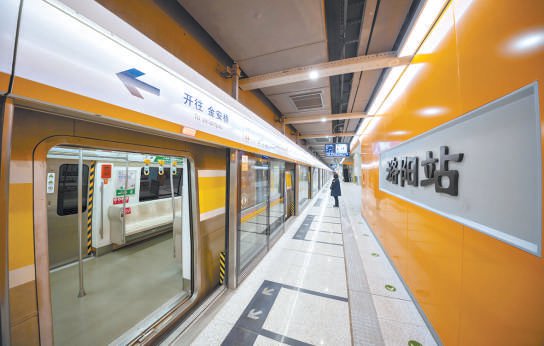
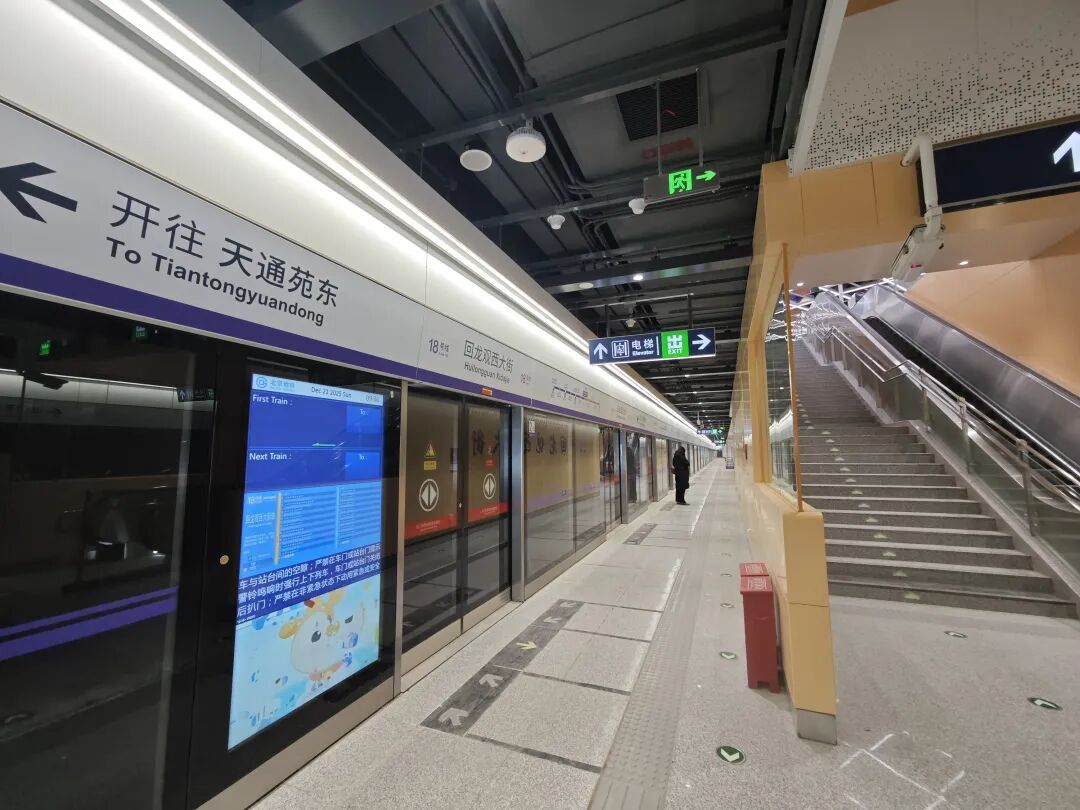
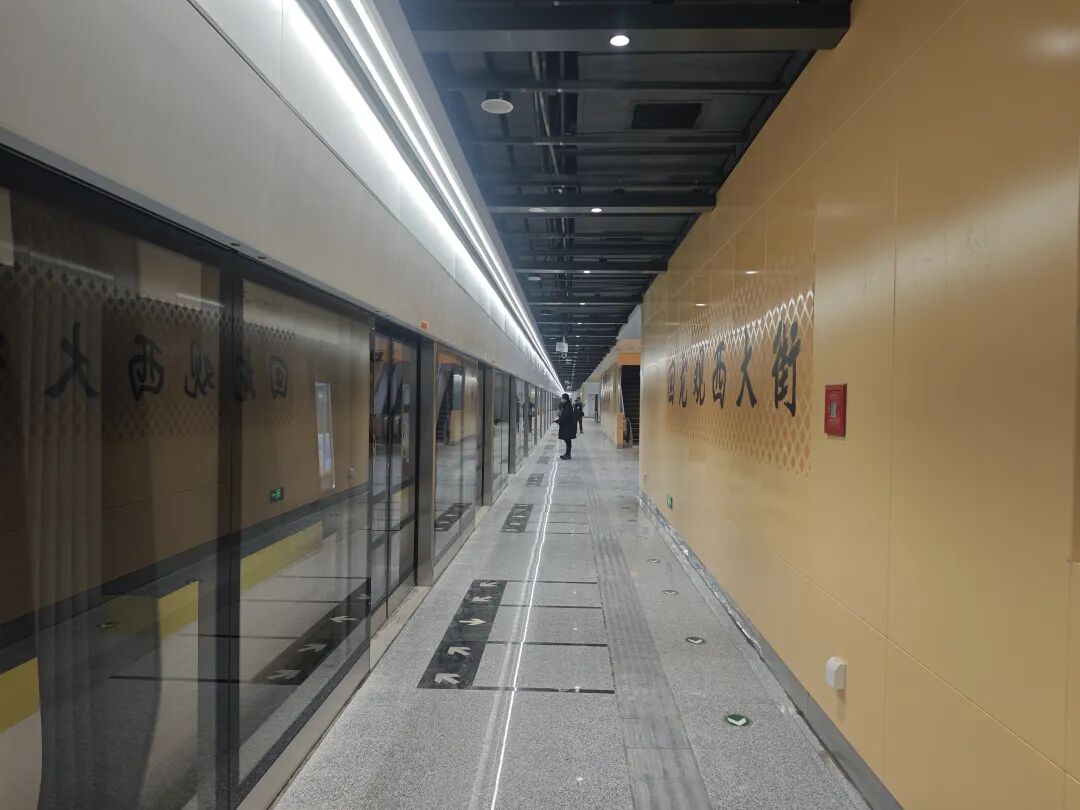
Core Insights - Beijing's upcoming subway lines, including the 17th line mid-section, 18th line, and the southern extension of the 6th line, will add approximately 30.1 kilometers to the city's rail network, bringing the total operational mileage to 909 kilometers, enhancing the overall capacity and service level of the capital's transportation system [2][3][5] Group 1: New Subway Lines - The 17th line mid-section, spanning about 8.2 kilometers with 4 stations, will connect the southern and northern parts of the city, allowing a travel time of 66 minutes from the southern terminus to the northern terminus [2][5] - The 18th line, approximately 19.8 kilometers long, will serve as a key east-west route in the northern region, featuring 11 stations, including 4 transfer stations, with a travel time of just over 30 minutes from end to end [3][5] - The southern extension of the 6th line will extend about 2.1 kilometers to the newly constructed Luyang Station, significantly improving the connection between the urban sub-center and the central city [3][5] Group 2: Station Design and Aesthetics - The 17th line mid-section will incorporate a "Science and Innovation Future" theme, with stations reflecting local cultural elements, such as the new Chinese style at Yong'anli Station [3][4] - The 18th line will feature a "Light and Shadow Tunnel" design theme, emphasizing a bright and warm waiting atmosphere, with the unique design of the first large-span column-free station in Beijing at the Longguan West Street Station [4][5] - The Luyang Station on the 6th line will utilize a "bare concrete" design, enhancing construction efficiency and environmental performance while showcasing a minimalist aesthetic [4][5] Group 3: Engineering Innovations - The construction of the 17th line mid-section faced complex conditions, including integration with existing infrastructure and minimizing environmental impact during construction [5][6] - The 18th line will employ advanced monitoring and dynamic adjustment systems to ensure safety while crossing critical infrastructure, and it will be a demonstration line for smart construction practices [5][6] - The 6th line southern extension successfully completed track connections and signal system upgrades without disrupting existing operations, highlighting the project's technical challenges [6]
北京这三条地铁新线完成建设,即将开通
3 6 Ke· 2025-12-22 02:37
Core Viewpoint - Beijing's subway system is set to expand with the completion of three new lines, enhancing the overall transportation network and increasing the total operational mileage to 909 kilometers. Group 1: New Subway Lines - The 17th line (Worker's Stadium to Shilihe) and the southern extension of the 6th line are ready for initial operation, along with the 18th line, which is part of the 13th line expansion project [1][4]. - The total length of the new lines is approximately 30.1 kilometers, with all necessary operational tasks completed [1][14]. Group 2: Key Stations and Features - The 18th line features 11 stations, all of which are ready for operation, including key transfer points at Malianwa Station (with Line 16), Huoying Station (with Line 8), Tiantongyuan Station (with Line 5), and Tiantongyuan East Station (with Line 17) [6][4]. - The Huoying Station on the 18th line is notable for being Beijing's first large-span column-free station, with a hall span of 18 meters, providing a spacious and clear transfer area [3]. Group 3: Operational Efficiency - The travel time on the 18th line from Tiantongyuan East Station to Malianwa Station is approximately 30 minutes [4]. - The 17th line's mid-section, which will open this year, spans about 7.2 kilometers and includes four stations: Dongdachang Station, Yong'anli Station, Guangqumenwai Station, and Panjiayuan West Station [14].
快播:北京地铁17号线中段即将开通 届时17号线将实现全线贯通
Xin Jing Bao· 2025-12-19 02:37
Core Viewpoint - The Beijing-Kowloon Metro Company announced that the middle section of Metro Line 17 is scheduled to open by the end of this year, achieving full line connectivity and adopting a "fast train" model with a total travel time of only 66 minutes [1][4]. Group 1: Operational Highlights - The middle section of Line 17 will connect key functional areas such as Tiantongyuan, Taiyanggong, and Beijing Economic-Technological Development Area, enhancing traffic accessibility to mature areas like CBD and embassy districts [4]. - The line will allow transfers with 9 other metro lines, helping to alleviate passenger flow pressure on the northern section of Line 5 and the eastern section of Line 10 during peak times [4]. Group 2: Safety and Service Enhancements - The company has conducted over 980 functional tests on various equipment and facilities, including 5000 tests on platform doors, to ensure passenger safety and efficient station access [3]. - Each station on the middle section will feature customized services, such as multi-language translation machines at Yong'anli Station, catering to foreign tourists and diplomats [5]. Group 3: Passenger Experience Improvements - The new stations will include comfortable waiting seats with heated cushions, and clear visual guides for wheelchair users to enhance accessibility [7]. - All stations will be equipped with AEDs and prominently displayed directional signs to assist passengers in emergencies [7][8]. - Family-friendly facilities, including nursing rooms and accessible restrooms, will be available at each station to provide a safer and more convenient experience for families and individuals with disabilities [8].

北京地铁17号线中段年底通车 全线“大站快车”串联南北
Xin Jing Bao· 2025-12-18 08:08
Core Viewpoint - The Beijing Metro Line 17 is progressing towards the opening of its central section, with operations already commenced in the southern and northern segments in 2021 and 2023 respectively [1] Group 1 - The southern section of Metro Line 17 was opened in 2021 [1] - The northern section of Metro Line 17 was opened in 2023 [1] - The central section is scheduled to be operational by the end of the year [1]
17号线新站探访,月底全线贯通,66分钟亦庄到昌平
Bei Jing Ri Bao Ke Hu Duan· 2025-12-12 07:27
Core Viewpoint - The opening of the middle section of Beijing's Metro Line 17 at the end of this month will lead to the full connectivity of the line, significantly improving commuting efficiency across the city [1][3]. Group 1: Line Connectivity and Efficiency - The Line 17 will connect major residential and commercial areas, allowing travel from Yizhuang to Changping in just 66 minutes, enhancing commuting efficiency [3]. - The line operates on a "big station express" model, with a maximum speed of 100 km/h, effectively alleviating passenger pressure on existing lines such as Line 5 and Line 10 [3]. Group 2: Station Upgrades and Features - East Dajiao Station and Yong'anli Station will be upgraded to transfer stations, facilitating easy transfers to Line 6 and Line 1, respectively [4]. - The new stations feature modern designs, with Yong'anli Station showcasing a new Chinese style and cultural elements, while Panjiayuan West Station incorporates local cultural art [4][6]. Group 3: Passenger Services and Accessibility - All stations on Line 17 are equipped with mother-baby rooms, family-friendly accessible restrooms, and AEDs for emergency situations [6]. - Panjiayuan West Station and Yong'anli Station have optimized facilities for passengers with disabilities, including dual-sided elevators and multilingual translation devices for foreign passengers [6]. Group 4: Upcoming Developments - In addition to the opening of the middle section of Line 17, the 18th line and the southern extension of Line 6 are also set to open by the end of the year, indicating a significant expansion of the metro network [8].
年内开通,北京三条地铁新线模拟开通跑车
3 6 Ke· 2025-10-27 02:48
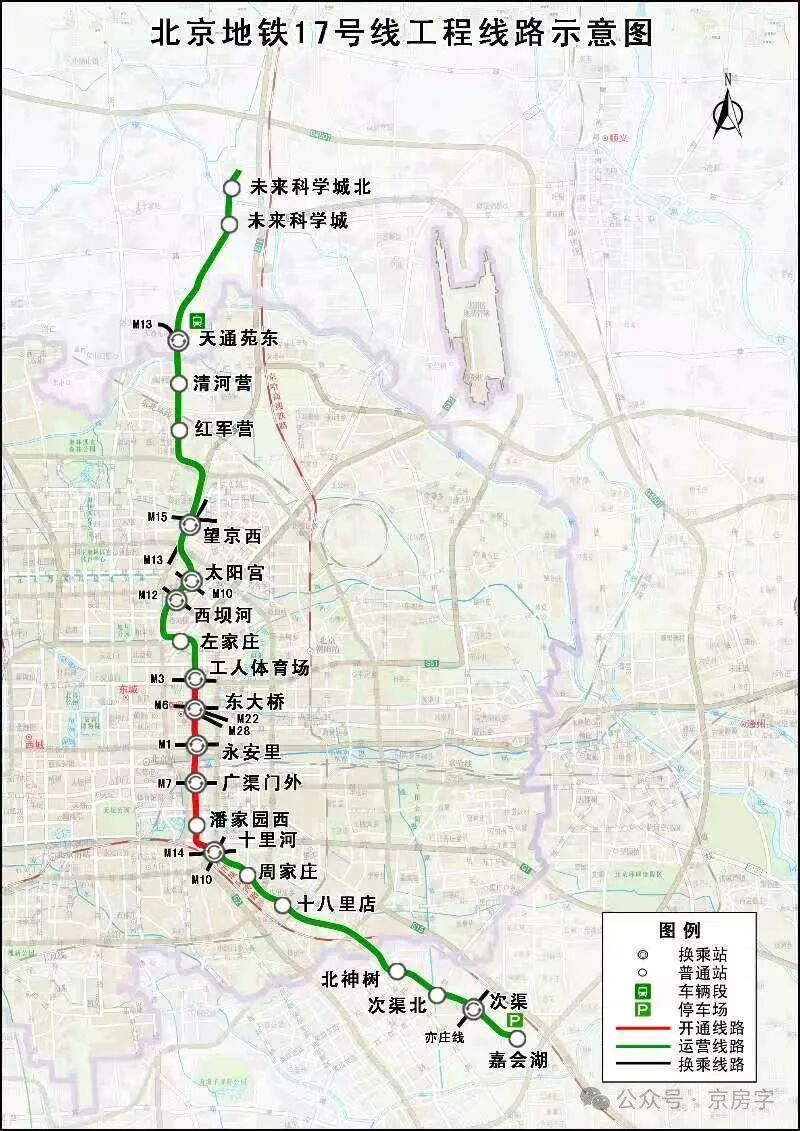
Core Points - Beijing's subway system is set to achieve initial operational conditions for three new lines: Line 17, the southern extension of Line 6, and Line 18, totaling approximately 30.1 kilometers [1][2] - The opening of these lines is anticipated within the year, with all three currently undergoing a phase known as "running the map," which simulates operational conditions [2] - The total operational mileage of Beijing's subway will exceed 900 kilometers upon the completion of these lines [1] Summary by Sections Line 18 - Line 18 will connect from Tiantongyuan East Station in Changping District to Maliandao Station in Haidian District, featuring 11 stations and multiple transfer points to other lines [11] - The line is expected to enhance transportation convenience for residents in key functional areas such as the "Huitian area" and Haidian [11] - The construction of the line's stations, including the Up Land Software Park and Maliandao Station, is progressing well, with an aim for them to open within the year [11] Line 17 - Line 17 runs from the Future Science City North Station in Changping to Jiahui Lake Station in Yizhuang, covering a total length of 49.7 kilometers with 21 stations [13] - The middle section, approximately 7.2 kilometers long, between Tiyuan Station and Gongren Sports Center Station, is planned to open this year [13][15] - Once operational, the line will provide direct access to key areas such as Future Science City, Wangjing, CBD, and Yizhuang, reducing travel time significantly [15] Line 6 - Line 6 is a major transit artery in Beijing, spanning approximately 53.2 kilometers with 35 stations, connecting various important districts [15][17] - The southern extension of Line 6 will add about 2.1 kilometers, with plans for further extensions [17] - This line plays a crucial role in enhancing connectivity across the city, facilitating easier access to business and administrative areas [15]
年底开通在望,北京三条地铁新线空载试运行
3 6 Ke· 2025-09-18 02:42
Core Points - Beijing's subway construction plan for this year includes the initial operation readiness of Line 17 and two segments of Line 6, as well as the expansion of Line 13 [1] - The recent progress report indicates that Line 17, Line 6 south extension, and Line 18 have entered a three-month trial operation phase, which is essential for testing and system calibration [2] - Line 17 will connect key areas such as Future Science City, Wangjing, CBD, and Yizhuang, with a travel time of 66 minutes from Jiahu Lake to Future Science City North Station [4] Group 1 - Line 17 spans 49.7 kilometers with 21 stations, including 11 transfer stations, and the section planned for this year is approximately 7.2 kilometers long [2][4] - The south extension of Line 6 will add 2.1 kilometers with one new station, Dongxiaoying South Station, and has the potential for further extension [5][7] - Line 18 is part of the previously split Line 13, connecting key functional areas and enhancing transportation convenience for residents [8][10] Group 2 - The trial operation phase involves comprehensive testing of vehicles, power supply, signaling, and communication systems, which is crucial for ensuring operational readiness [2] - The opening of Line 17's middle section may face delays due to construction sequencing, particularly at Guanqumenwai Station, which is likely to be skipped during initial operations [4]
北京地铁55年“进化史”:已开通29条线路,第30条将至
Xin Jing Bao· 2025-08-06 13:49
Core Points - By the end of 2024, Beijing will have 29 operational subway lines, totaling 879 kilometers in length and featuring 522 stations, including 98 transfer stations [1] - The first subway line, Line 1, was opened on October 1, 1969, and the network has expanded significantly over the past 55 years [1][2] - The 3rd and 12th subway lines are set to open on December 15, 2024, marking the addition of the 28th and 29th lines to the network [1][30][31] - The 18th line, a result of the expansion of Line 13, is expected to open by the end of this year, bringing the total to 30 lines [1] Summary by Line - **Line 1**: Opened on October 1, 1969, initially not open to the public until January 15, 1971, and officially operational on September 15, 1981 [2] - **Line 2**: Opened on September 20, 1984, as the first circular subway line in China [3] - **Line 13**: Opened its western section on September 28, 2002, and the eastern section on January 28, 2003 [4] - **Line 5**: Fully operational since October 7, 2007, serving as a major north-south transit line [6] - **Line 10**: Opened on July 19, 2008, and is currently the busiest line in the system [7] - **Capital Airport Line**: Opened on July 19, 2008, connecting the city to the international airport [9] - **Line 8**: Opened to the public on October 9, 2008, after initially serving the Olympics [10] - **Line 4**: Opened on September 28, 2009, and is operated by the MTR Corporation [11] - **Daxing Line**: Opened on December 30, 2010, and connects with Line 4 [12] - **Yizhuang Line**: Opened on December 30, 2010, with further extensions in subsequent years [13] - **Fangshan Line**: Opened its first section on December 30, 2010, with additional sections opened in later years [14] - **Changping Line**: Opened on December 30, 2010, and has seen multiple extensions since [15] - **Line 15**: Opened its first section on December 30, 2010, with further expansions in 2011 and 2014 [16] - **Line 9**: Opened its southern section on December 31, 2011, with further extensions in subsequent years [17] - **Line 6**: Opened on December 30, 2012, with additional sections opened in 2014 and 2018 [18] - **Line 14**: Opened its western section on May 5, 2013, with further expansions in the following years [19] - **Line 7**: Opened on December 28, 2014, and has been extended to serve new areas [20] - **Line 16**: Opened its northern section on December 31, 2016, with ongoing expansions planned [21] - **Xijiao Line**: Opened on December 30, 2017, connecting various parks and attractions [22] - **S1 Line**: Opened its first section on December 30, 2017, and completed the remaining section in 2021 [23] - **Yanqing Line**: Opened on December 30, 2017, as the first fully automated subway line in China [24] - **Daxing Airport Line**: Opened on September 26, 2019, serving the new airport [25] - **Yizhuang T1 Line**: Opened on December 31, 2020, with separate ticketing [26] - **Line 17**: Opened its southern section on December 31, 2021, with plans for full connectivity by 2025 [27] - **Line 19**: Opened its first section on December 31, 2021, with additional stations opened in July 2022 [28] - **Line 11**: Opened its western section on December 31, 2021, with further sections planned for December 2023 [29] - **Line 3**: Scheduled to open on December 15, 2024, completing its first phase [30] - **Line 12**: Also set to open on December 15, 2024, primarily running along the North Third Ring Road [31]