
医疗智能体

Search documents
中航证券:AI药物发现提速 国产医疗大模型彰显国际竞争力
Zhi Tong Cai Jing· 2026-02-25 03:53
Core Insights - The report from Zhonghang Securities highlights the ongoing integration of AI products and services in the healthcare sector, focusing on areas such as medical imaging, clinical decision support, precision medicine, health management, medical information technology, drug development, and medical robotics. AI is evolving from a "technical assistant" role to becoming a core driver of "value reshaping" and "efficiency revolution" in the medical industry, with its commercial value permeating from research to clinical, payment, and patient levels [1] International Developments - In the international arena, significant advancements are noted in AI medical imaging diagnostics and AI-assisted drug discovery. AI systems for abdominal CT multi-disease triage and fetal abnormal ultrasound imaging have received FDA approval, indicating a shift from single-disease assistance to comprehensive triage and decision support systems. Collaborations between pharmaceutical companies and AI tech firms are enhancing cancer early screening capabilities, potentially increasing cancer diagnosis rates and accessibility to treatment drugs. Additionally, AI imaging diagnostics for stroke have gained recognition at top academic conferences, reflecting the growing acceptance of AI technology in clinical and research communities [1] - In drug discovery, international pharmaceutical companies are partnering with AI tech firms to accelerate new drug development. The world's first fully AI-designed antibody drug, GB-0895, has entered Phase III clinical trials, marking a significant breakthrough from concept to clinical practice. Google has also launched two open-source AI models for medical applications, enhancing capabilities in multi-modal analysis and voice interaction [1] Domestic Developments - Domestically, the value of AI in early drug development is being clinically validated, with companies like InSilico Medicine receiving FDA approval for new drug applications via AI platforms. AI-assisted diagnosis is expanding into various medical scenarios, with recent approvals for AI software in cervical cell digital pathology and accelerated AI healthcare initiatives from leading in vitro diagnostic companies. The emergence of large AI models in China is also noteworthy, with local teams publishing evaluation standards in international journals, showcasing the competitive edge of Chinese medical AI models [2] - Significant advancements are being made in AI imaging, surgical robots, and brain-computer interfaces, with AI accelerating the development of medicine and drug research. Recent policies related to AI in healthcare are being actively discussed, focusing on the reliability and compliance of AI-assisted diagnosis and the use of medical data [2] Investment Opportunities - Key investment opportunities identified include: 1) AI drug development: companies like Crystal Technology, Hongbo Pharmaceutical, Chengdu XianDao, and InSilico Medicine 2) AI medical imaging and assisted diagnosis: companies such as United Imaging Healthcare and Wandong Medical 3) Medical information technology and smart hospitals: firms like Jiahe Meikang, Chuangye Huikang, Donghua Software, and Weining Health 4) Internet healthcare and health platforms: including JD Health, Alibaba Health, and Ping An Good Doctor 5) Precision medicine and AI-driven medical services: companies like Kingmed Diagnostics, Runda Medical, and Meinian Health 6) Technology/data platform enterprises: such as iFlytek Medical and Yidu Technology [4] AI Medical Core Themes - The core themes in AI healthcare investment revolve around addressing industry pain points. AI-assisted diagnosis enhances diagnostic efficiency and consistency, supporting grassroots healthcare with clear cost-reduction and efficiency benefits. In cancer early screening, companion diagnostics, and efficacy prediction, AI contributes to achieving precision medicine. The maturity of AI applications varies, with AI medical imaging evolving from single-disease assistance to multi-disease integration and comprehensive management. AI-assisted drug discovery is transitioning from early discovery to clinical validation, necessitating attention to platform technology validation and deep collaborations with top pharmaceutical companies [3] - The development of large medical AI models and multi-modal AI, capable of processing diverse medical data, is crucial. The focus should be on the accuracy of these models in specialized fields, their integration with existing hospital information systems, and their potential to build an ecosystem as foundational "medical intelligent agents" [3]


张亚勤院士:基础大模型最终不超过 10 个,十年后机器人比人多
Xin Lang Cai Jing· 2025-12-12 01:39
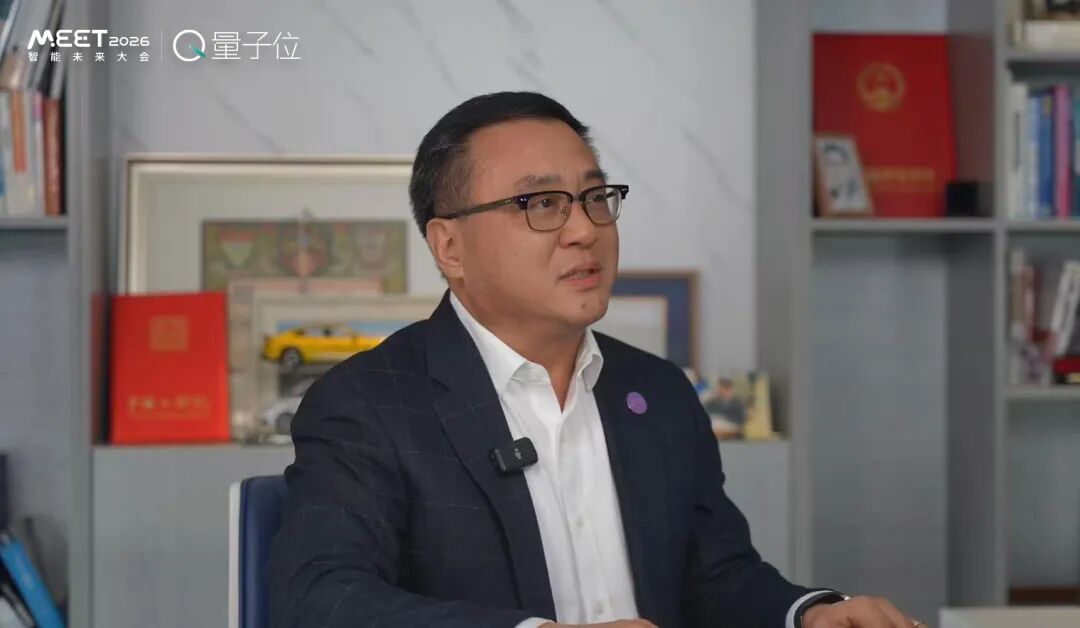
Core Insights - The new wave of artificial intelligence (AI) is characterized by the integration of information intelligence, physical intelligence, and biological intelligence, which is fundamentally a fusion of atoms, molecules, and bits [4][6][31] - The transition from discriminative AI to generative AI, and subsequently to agent-based paradigms, marks a significant evolution in AI capabilities [6][31] - The future battlefield for AI over the next 5-10 years is expected to be the "Internet of Agents," where foundational large models will consolidate globally to no more than ten, replacing most current SaaS and apps [3][30][42] AI Development Trends - Generative AI is evolving towards agent-based AI, with agents showing a doubling in task length and achieving over 50% accuracy, aligning closely with human performance [39] - The scaling law in the pre-training phase has slowed, while post-training and inference stages are gaining momentum, with inference costs decreasing by tenfold over the past year [39][42] - The shift from information intelligence to physical and biological intelligence is underway, with significant milestones in autonomous driving and robotics anticipated in the coming years [40][55] Industry Structure and Opportunities - The foundational large models are likened to operating systems in the AI era, with a projected global landscape of no more than ten major players, split between China and the US [42][55] - Open-source models are expected to dominate the ecosystem, with an estimated 80% of platforms being open-source, fostering broader innovation and application [42] - The emergence of intelligent agents is not just a technological advancement but also signifies the formation of new economic structures, impacting enterprise management and product development [45][52]


智能体将取代APP和SaaS,张亚勤院士发布这些AI洞见
Di Yi Cai Jing· 2025-12-10 05:56
Core Insights - The future will see more robots than humans within the next decade, with a significant shift towards intelligent agents replacing traditional SaaS and applications [1][4] - The new wave of artificial intelligence is characterized by the deep integration of information, physical, and biological intelligence, leading to a digital transformation across various domains [1][3] Group 1: Trends in AI Development - Generative AI is rapidly evolving into agent AI, with task complexity doubling in the past seven months and achieving over 50% accuracy, indicating alignment with human capabilities [3] - The scaling law's effectiveness is slowing during the pre-training phase, shifting focus to reasoning and agent-level intelligence in the post-training phase, with reasoning costs decreasing to one-tenth while agent computational demands have increased tenfold [3] - AI is transitioning from the information realm to the physical and biological worlds, exemplified by the anticipated 10% of new cars featuring autonomous driving capabilities by 2030 [3] Group 2: Robotics and Intelligent Agents - Robotics is viewed as the largest future market, with predictions that the number of robots will surpass humans within ten years, despite the current immaturity of humanoid robots [4] - Intelligent agents are expected to replace traditional SaaS services and applications, with examples such as a medical intelligent agent network simulating a hospital environment, achieving high diagnostic accuracy [4] - The goal of these intelligent agents is to assist rather than replace professionals, such as doctors, who may have dedicated intelligent assistants in the future [4] Group 3: Future Industry Landscape - The foundational large models will serve as the operating systems of the AI era, reshaping industry structures similar to how Windows and Android transformed their respective eras, with an anticipated industry scale 2-3 orders of magnitude larger than previous technological shifts [5] - It is predicted that there will be no more than ten foundational large models globally, with a split between the US and China, supplemented by a few other countries, leading to a dual-track development ecosystem of open-source and closed-source models [5] Group 4: Path to AGI - Achieving Artificial General Intelligence (AGI) will require new algorithmic frameworks, memory systems, and world models, with a potential paradigm shift in the next five years [6] - The comprehensive breakthrough in information, physical, and biological intelligence is expected to take 15 to 20 years to realize [6]
【投融资动态】紫荆智康天使轮融资,融资额近亿人民币,投资方为星连资本、英诺天使基金等
Sou Hu Cai Jing· 2025-11-12 11:30
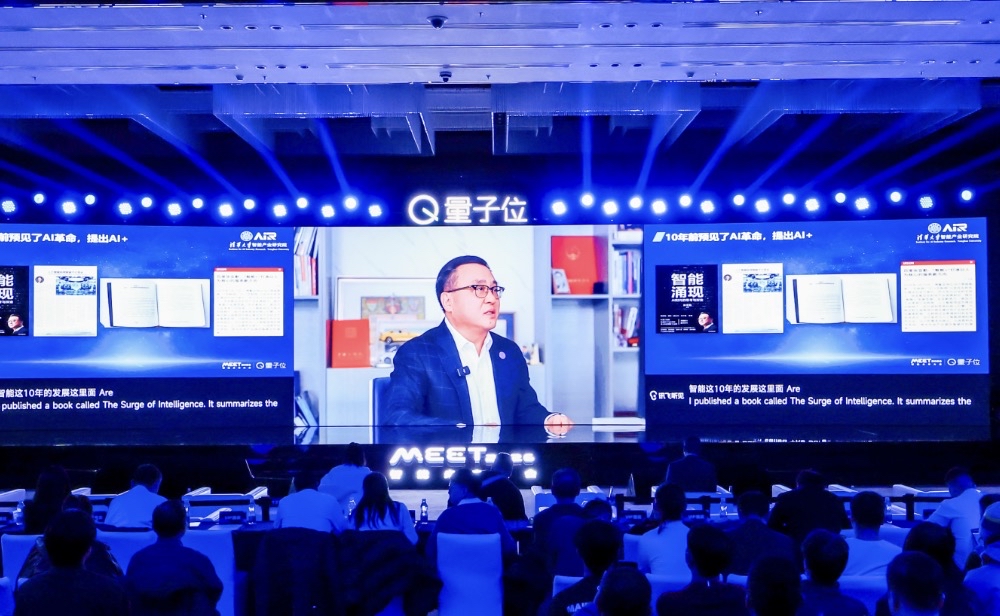
Core Insights - Wuxi Zijing Zhikang Technology Co., Ltd. has completed an angel round financing of nearly 100 million RMB, with participation from Xinglian Capital, Inno Angel Fund, and Shangshi Capital [1][2]. Company Overview - Zijing Zhikang was established in September 2024, with a core team from Tsinghua University's Intelligent Industry Research Institute, recognized as a leading global research team in medical intelligent algorithms [2]. - The company’s research work, Agent Hospital, establishes generative models for disease occurrence and development, providing a data flywheel for the evolution of medical intelligent agents [2]. - Agent Hospital has achieved top-level performance on the U.S. medical licensing examination dataset and has constructed medical intelligent agents across more than twenty departments, gaining significant attention from both academia and industry [2]. - The company aims to leverage cutting-edge large model intelligent technology to empower smart healthcare, offering convenient, affordable, and high-quality medical services to global users [2].

中康科技五大智能体亮相西普会,药店智能体与商用智能体备受关注
Ge Long Hui· 2025-08-21 01:56
Group 1 - The core theme of the event is "Medical Health Full-Scenario Intelligent Systems," showcasing five major industry intelligent systems by Zhongkang Technology [1] - The drugstore intelligent system and commercial intelligent system attracted significant attention with immersive experience zones, highlighting Zhongkang's leading position in the AI healthcare sector [1] Group 2 - Zhongkang Technology officially released a major upgrade plan for the Zhongkang Drugstore Intelligent System, focusing on five core intelligent systems for collaborative evolution [2] - The upgrade aims to transform the drugstore model from a simple medication provider to a "smart health steward," marking the entry of the pharmaceutical retail industry into an "algorithm-driven" era [2] - The full-chain AI decision-making system is constructed based on vast industry data, enhancing operational insights, member management, product improvement, staff empowerment, and disease management [2] Group 3 - Zhongkang Technology introduced a product matrix of commercial AI intelligent systems, including super individual intelligent systems, AI digital marketing growth platforms, and industrial marketing digital foundations [3] - The solutions empower pharmaceutical companies across marketing decision-making, sales execution, and terminal operations, achieving a sevenfold efficiency increase [3] - The complete value closed loop covers data governance, intelligent applications, and business implementation, redefining digital transformation standards in the pharmaceutical industry [3]
多模态医疗大模型加速落地,创新药支付模式拓展新空间
Xuan Gu Bao· 2025-08-13 14:46
Industry Insights - The Zhejiang Provincial Health Commission and other departments have launched an action plan to accelerate the high-quality development of "Artificial Intelligence + Healthcare," focusing on creating multimodal medical industry models and autonomous AI research frameworks [1] - The plan aims to develop specialized models and medical intelligent systems covering various areas such as medical services, health management, public health, and drug/device research [1] - Significant technology projects will be implemented in fields like AI data and applications, brain-computer interfaces, and new drug development, with an emphasis on interdisciplinary collaboration in medical AI research [1] Market Trends - The report from Founder Securities highlights that the "Artificial Intelligence +" initiative is driving revolutionary changes in the medical industry, with rapid deployment of high-end innovative devices like brain-computer interfaces and surgical robots [2] - The commercialization of non-invasive brain-computer interfaces is accelerating, particularly in medical rehabilitation and emotional management, indicating a broad market potential [2] - The AI healthcare sector is expected to see accelerated commercialization due to supportive policies, with AI applications in pathology diagnosis, imaging, and drug development being relatively mature [2] Company Developments - Sanbo Brain Science focuses on high-barrier technologies in neurosurgery, leveraging a "medical education research" system for technology transfer and expansion, positioning itself well in the private brain healthcare sector amid aging and precision medicine trends [3] - WuXi AppTec is centered on empowering the entire chain of innovative drugs with AI, benefiting from high technical barriers and global production capabilities, particularly in the context of GLP-1 and gene therapy trends [4]
《浙江省加快推动“人工智能+医疗健康”高质量发展行动计划(2025—2027年)》印发
Zheng Quan Shi Bao Wang· 2025-08-13 02:59
Core Viewpoint - The Zhejiang Provincial Health Commission and ten other departments have issued an action plan to accelerate the high-quality development of "Artificial Intelligence + Healthcare" from 2025 to 2027, focusing on data resource aggregation and the establishment of a robust health data management system [1] Group 1: Data Management and Standards - The plan emphasizes the need to develop and improve data security management and utilization systems in the healthcare sector [1] - It aims to establish a health data standard system to enhance the quality and capacity of health data [1] - The initiative includes the construction of a trustworthy data space for the healthcare industry and the development of data governance tools and intelligent engines [1] Group 2: AI Development and Research - The action plan outlines the creation of a provincial medical bioinformatics database and the sharing of high-quality industry datasets and corpora [1] - It aims to build a multi-modal medical industry large model and establish a fully autonomous AI research and development framework [1] - The plan encourages the development of specialized models and medical intelligent agents covering various areas such as medical services, health management, public health, and drug/device research [1] Group 3: Interdisciplinary Collaboration and Innovation - The initiative focuses on deploying major technological projects in fields like AI data and applications, brain-computer interfaces, and new drug development [1] - It promotes interdisciplinary collaboration among research institutions to generate globally influential research outcomes in medical AI [1]
医疗智能体,正火速蹿红
3 6 Ke· 2025-07-07 01:56
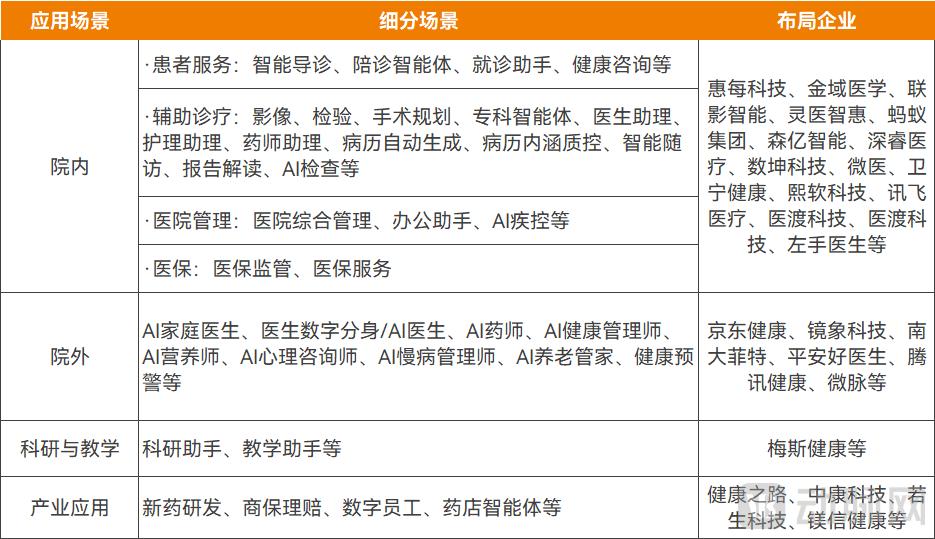
Core Insights - The emergence of medical AI agents marks a significant shift in the healthcare industry, transitioning from a focus on large models to intelligent agents that enhance service delivery and operational efficiency [1][2][3] Group 1: Development of Medical AI Agents - The relationship between large models and intelligent agents is characterized by a division of labor, where large models handle cognitive tasks while agents perform actions based on environmental inputs [2] - Medical AI agents are being deployed across various healthcare scenarios, including patient services, diagnostic assistance, hospital management, and even in research and education [3][4] Group 2: Application Scenarios and Key Players - In-hospital applications include patient services, diagnostic assistance, and hospital management, with companies like 惠每科技, 金域医学, and 微医 leading the charge [4] - Out-of-hospital applications feature AI family doctors and health management systems, with key players such as 京东健康 and 平安好医生 [4] - Specialized AI agents are emerging in fields like drug development and insurance claims, with companies like 健康之路 and 中康科技 involved [4] Group 3: Personalization and Specialization - The trend towards personalization in AI agents includes the creation of virtual personas and unique names to enhance user engagement and trust [5][6] - Specialized diagnostic agents are being developed to address specific medical conditions, such as the "腹痛诊疗智能Agent" for abdominal pain management [8][9] Group 4: Challenges and Future Directions - Current medical AI agents are primarily iterative upgrades and have not yet achieved breakthroughs in foundational models [12][14] - The development of specialized agents requires deep involvement from clinical experts to ensure effectiveness and relevance [15] - The advancement of foundational AI capabilities is crucial for the realization of fully functional medical AI agents [16]
推动大健康产业跃升,上海积极推动人工智能赋能生命健康领域
Zhong Guo Jing Ji Wang· 2025-06-03 02:01
Core Insights - The integration of artificial intelligence (AI) in healthcare is transforming the industry by enhancing service quality and efficiency across the entire medical service chain, from early screening to precision treatment and drug development [1] Group 1: AI in Healthcare - AI technology is being utilized to address pain points in primary healthcare, particularly in managing chronic diseases and elderly care, with Shanghai leading the implementation of AI-driven family doctor systems [2][3] - The launch of the "AI Family Doctor" by YaoYing Medical, in collaboration with the Shanghai Artificial Intelligence Laboratory, aims to provide comprehensive healthcare services tailored to individual family members' health profiles [2][3] - Shanghai Telecom and its partners have developed a clinical decision support system for family doctors, integrating AI with authoritative medical knowledge to enhance healthcare delivery [3] Group 2: AI Applications and Innovations - The AI Family Doctor has shown effectiveness in chronic disease management by monitoring key health indicators and providing timely alerts for patient intervention [4][5] - New features such as "shared health records" allow family members to manage health data collectively, promoting intergenerational health management [5] - The introduction of specialized AI models, such as the "CardioMind" for cardiac care, demonstrates the ongoing innovation in AI applications within the healthcare sector [5][6] Group 3: Future of AI in Healthcare - The rapid iteration of multimodal AI models is paving the way for smart hospital construction and clinical decision-making innovations, making AI integration a necessity in healthcare [6] - Future developments in AI healthcare applications are expected to focus on "digital therapeutics," utilizing AI-driven interventions to directly influence patient behavior and health outcomes [6] - The convergence of AI and the health industry is anticipated to create new business models and collaborative innovations across the healthcare ecosystem [6]
联影发布“元智”医疗大模型;广东省交通行业算力中心揭牌|数智早参
Mei Ri Jing Ji Xin Wen· 2025-04-10 00:01
Group 1 - The launch of the "Yuan Zhi" medical model by United Imaging on April 9, which includes over 10 medical AI applications covering various scenarios such as imaging diagnosis and patient services [1] - The "Yuan Zhi" medical imaging model is trained on tens of millions of medical imaging data and hundreds of thousands of finely annotated data, achieving over 95% accuracy in key tasks like complex lesion diagnosis and organ segmentation [1] - The challenges of data privacy, ethical review, and building trust between doctors and patients remain significant hurdles for the practical implementation of medical AI [1] Group 2 - The unveiling of the Guangdong Provincial Transportation Industry Computing Power Center on April 9, which is a key infrastructure for the digital transformation of the transportation sector in Guangdong [2] - The center is built according to national A-level data center standards, with a plan for 638 standard cabinets, and the initial phase has completed 324 cabinets to meet diverse computing needs [2] - The investment in high-standard resources is expected to enhance road network management efficiency and data-driven decision-making capabilities in the transportation industry [2] Group 3 - The upcoming AI training course for provincial officials in Zhejiang, featuring Wang Xingxing, the founder and CEO of Yushu Technology, who will discuss the current state and development trends of the robotics industry [3] - This initiative reflects the local government's emphasis on the strategic importance of the robotics industry and aims to facilitate better alignment between policy and market resources [3] - Continuous updates to the knowledge system in training programs are necessary to prevent disconnection between theoretical understanding and industry practice [3]
