
人工智能+医疗健康

Search documents
省政府召开“人工智能+医疗健康”推进工作专题会议深度赋能医疗卫生高质量发展 切实守护好人民群众健康福祉
Xin Hua Ri Bao· 2026-02-25 00:01
Group 1 - The provincial government is promoting the integration of artificial intelligence in the healthcare sector to meet the growing health service demands of the population [1][2] - The focus is on building high-quality data sets and facilitating data sharing across departments to enhance the efficiency of healthcare data collection throughout residents' lifecycles [2] - Emphasis is placed on developing specialized AI models for clinical applications and improving intelligent services for patient consultations [2][3] Group 2 - The implementation plan for "Artificial Intelligence + Healthcare" in Jiangsu Province will be refined, with clear annual work points and the establishment of expert pools [3] - Collaboration among local governments, universities, research institutions, and enterprises will be encouraged to foster innovation and entrepreneurship [3] - The meeting included presentations from various departments and medical institutions, highlighting ongoing projects and initiatives [3]
花旗研报:医渡科技AI技术及业务壁垒深厚 目标价上调至11港元
Zhi Tong Cai Jing· 2026-02-06 12:49
Core Viewpoint - Citigroup maintains a "Buy" rating for Yidu Tech (02158) and raises its target price to HKD 11, anticipating a potential upside of over 96% for the stock [1] Group 1: Company Positioning - Yidu Tech is positioned as a leading player in the domestic AI healthcare sector, leveraging favorable policies, deep industry experience, and a comprehensive product layout to secure a core position in the wave of AI infrastructure development in healthcare [1] - The company has embedded itself in national-level AI healthcare application pilot projects in regions like Beijing and Henan, enhancing operational efficiency in medical institutions and alleviating the burden on healthcare personnel through products like Doctor Copilot [1] Group 2: Policy and Market Opportunities - The macro policy push for "AI + Healthcare" in China provides a clear growth path for Yidu Tech, with plans to establish multiple national pilot bases by 2027 and achieve widespread AI technology coverage in secondary hospitals by 2030 [1] - The company's WeChat mini-program "Yidu Qianyu" demonstrates solid technical capabilities, ranking among the top tier in accuracy and traceability during scenario tests conducted by Citigroup, thus supporting both To-G (government and hospitals) and To-C (consumer) business models [1] Group 3: Financial Projections - Citigroup recognizes Yidu Tech's substantial accumulation in medical data governance and knowledge construction, attributing its unique advantage to the large-scale, high-quality data sourced from top hospitals [2] - The company's government and hospital-facing business segments show more predictable profitability, benefiting directly from increased AI budgets in hospitals and national project tenders [2] - Citigroup has adjusted its financial forecasts for Yidu Tech, expecting revenue from its big data platform to grow by 17% and 30% year-on-year in fiscal years 2026 and 2027, respectively, with a potential break-even point in fiscal year 2026 [2]
花旗研报:医渡科技(02158)AI技术及业务壁垒深厚 目标价上调至11港元
智通财经网· 2026-02-06 09:08
Core Viewpoint - Citigroup maintains a "Buy" rating for Yidu Tech (02158) and raises its target price to HKD 11, indicating a potential upside of over 96% for the stock [1] Group 1: Company Positioning - Yidu Tech is positioned as a leading player in the domestic AI healthcare sector, leveraging favorable policies, deep industry experience, and a comprehensive product layout to secure a core position in the wave of healthcare AI infrastructure development [1] - The company has embedded itself in national AI healthcare application pilot projects in regions like Beijing and Henan, enhancing operational efficiency in medical institutions through products like Doctor Copilot [1] Group 2: Policy and Market Opportunities - The macro policy push for "AI + Healthcare" in China provides a clear growth path for Yidu Tech, with plans to establish multiple national pilot bases by 2027 and achieve widespread AI technology coverage in secondary hospitals by 2030 [1] - The company's WeChat mini-program "Yidu Qianyu" demonstrates strong technical capabilities, ranking alongside top products in accuracy and traceability, thus supporting both To-G (government and hospitals) and To-C (consumer) business models [1] Group 3: Financial Projections - Citigroup recognizes Yidu Tech's substantial accumulation in medical data governance and knowledge construction, attributing unique advantages to the quality and authority of its data sourced from top hospitals [2] - The company's To-G business segment shows more predictable profitability compared to consumer applications, benefiting directly from increased hospital AI budgets and national project tenders [2] - Financial forecasts have been adjusted, with expectations for the big data platform revenue to grow by 17% and 30% year-on-year in fiscal years 2026 and 2027, respectively, with a potential break-even point in fiscal year 2026 [2]
花旗研报:医渡科技AI技术及业务壁垒深厚,目标价上调至11港元
Sou Hu Cai Jing· 2026-02-06 08:30
Core Viewpoint - Citigroup maintains a "Buy" rating for Yidu Tech and raises its target price to HKD 11, anticipating a potential upside of over 96% for the stock [1] Group 1: Company Positioning - Yidu Tech is positioned as a leading player in the domestic AI healthcare sector, leveraging favorable policies, deep industry experience, and a comprehensive product portfolio to secure a core position in the wave of healthcare AI infrastructure development [1] - The company has embedded itself in national AI healthcare application pilot projects in regions like Beijing and Henan, enhancing operational efficiency in medical institutions and alleviating the burden on healthcare personnel through products like Doctor Copilot [1] Group 2: Policy and Market Opportunities - The macro policy push for "AI + Healthcare" in China provides a clear growth path for Yidu Tech, with plans to establish multiple national pilot bases by 2027 and achieve widespread AI technology coverage in secondary hospitals by 2030 [1] - The company's WeChat mini-program "Yidu Qianyu" demonstrates solid technical capabilities, ranking alongside top products in accuracy and traceability, thus supporting both To-G (government and hospitals) and To-C (consumer) business models [1] Group 3: Financial Projections - Citigroup recognizes Yidu Tech's strong foundation in medical data governance and knowledge construction, attributing its unique advantage to the large scale and quality of data sourced from top hospitals [2] - The company's To-G business segment shows more predictable profitability compared to consumer applications, benefiting directly from increased hospital AI budgets and national project tenders [2] - Citigroup has adjusted its financial forecasts for Yidu Tech, projecting a 17% and 30% year-on-year growth in big data platform revenue for fiscal years 2026 and 2027, respectively, with a potential break-even point in fiscal year 2026 [2]
在家门口遇见“AI医生”,苏州基层医疗迈入智能时代
Yang Zi Wan Bao Wang· 2026-02-05 11:06
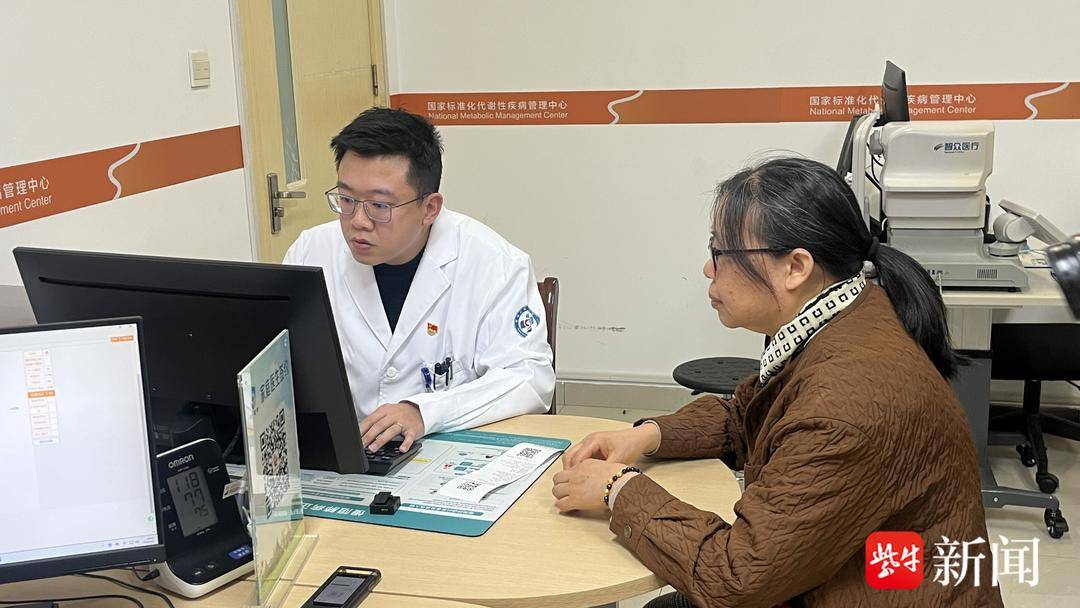
Core Insights - The integration of AI in community healthcare is transforming patient diagnosis and treatment processes, providing more accurate and convenient medical services at the grassroots level [1][8] - The AI general practitioner system is currently being piloted in Suzhou, enhancing the diagnostic capabilities of community hospitals and reducing the risk of misdiagnosis [5][7] Group 1: AI Implementation in Healthcare - Since October 2022, Suzhou has been testing AI general practitioner services in community health centers, allowing residents to receive precise medical care close to home [1][3] - The AI system assists doctors by providing real-time prompts and suggestions based on patient history and symptoms, improving the overall efficiency of consultations [3][5] Group 2: Pilot Program Results - As of now, the AI system has been utilized in 10 medical institutions across three regions in Suzhou, providing AI-assisted services for 14,597 cases with a diagnostic accuracy rate of 98.52% [5][7] - The program aims to expand to all grassroots health service centers in Suzhou by June 2026, based on ongoing feedback from healthcare professionals and patients [5][7] Group 3: Broader AI Healthcare Strategy - Suzhou's broader strategy includes the implementation of AI across various healthcare applications, covering clinical diagnosis, community services, and patient convenience [7][8] - Multiple healthcare institutions in Suzhou are exploring different AI applications, such as AI-driven triage systems and personal health assistants, to enhance patient management and reduce wait times [7][8]

孙建平:迎接智能新时代 共绘产业新蓝图
Di Yi Cai Jing· 2026-02-03 10:02
Core Insights - The integration of artificial intelligence with modern service industries, particularly in healthcare, is reshaping efficiency, innovation, and value chains [1][2] - The healthcare sector is identified as a critical area for this integration, presenting both significant potential and challenges [1] - The publication of the "2025 AI + Healthcare Industry Application Map" aims to provide a systematic overview and forward-looking insights into the industry ecosystem [1] Industry Trends - The focus is on how advanced technologies, especially AI, can deeply integrate with traditional service processes to enhance service levels, user experience, and create new business value [2] - In healthcare, AI is expected to transition from being a mere enabling tool to becoming a core component across the entire service chain, including prevention, diagnosis, treatment, rehabilitation, and health management [2] Collaborative Efforts - The Shanghai Modern Service Industry Association is committed to building an open and collaborative industry ecosystem, promoting the upgrade of services towards high-end, intelligent, and green directions [2] - The release of the application map is seen as a platform for communication and cooperation among various stakeholders, including government, industry, academia, research, healthcare, and investment sectors [2]
AI健康助手,正风起云涌
3 6 Ke· 2026-01-21 10:44
Core Insights - OpenAI and Anthropic have launched health features for general users and products for the healthcare industry, marking their entry into the healthcare sector [1] - ChatGPT has over 800 million users, with 25% submitting health-related queries weekly, and over 40 million daily consultations on health issues [1][7] - The Chinese government has released guidelines to promote AI in healthcare, leading to the emergence of AI health assistants [1][15] Group 1: Global Trends in Conversational AI Health Assistants - Conversational AI health assistants are becoming a new highlight in the domestic AI + healthcare landscape [2][3] - International users prefer general AI assistants for medical consultations, while specialized AI assistants are helping reduce the workload of doctors in Europe and the US [2][5][9] Group 2: Driving Factors and Challenges - Changes in interaction habits and advancements in AI capabilities are driving a new wave of healthcare service upgrades [15][16] - The competition in AI applications is intensifying, with healthcare being viewed as a new growth area [15][18] - Despite the promising outlook, conversational AI health assistants face numerous challenges [21] Group 3: Development Strategies for AI Health Assistants - There is a need to enhance data openness and innovation support to drive industry innovation through AI health assistants [27] - Industry self-regulation is essential, along with increased safety measures for AI health assistants [30][31] Group 4: Future Prospects - The potential for conversational AI health assistants to become a new entry point for traffic is increasing [33] - The demand for health management is rising, especially among the aging population and health-conscious younger generations [35][36] Group 5: Market Dynamics and Business Models - The pressure for commercial monetization is leading to strategic choices, with the healthcare market seen as a significant opportunity [19][23] - Various potential business models for AI health assistants are still in early exploration stages [23] Group 6: Regulatory and Ethical Considerations - The regulatory framework for AI health assistants is still unclear, necessitating adjustments to promote development [24] - There is a call for industry self-discipline to ensure sustainable AI transformation in healthcare [31][32]


全国首个!省级医保垂直大模型落地南京鼓楼
Xin Lang Cai Jing· 2026-01-16 16:01
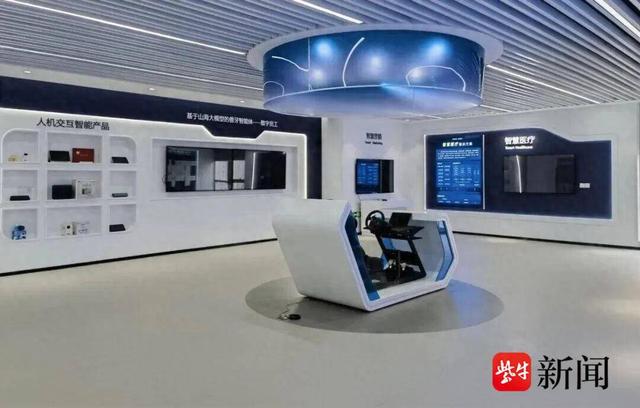
Core Insights - Jiangsu Province is focusing on the integration of artificial intelligence and healthcare to address pain points in medical insurance services through technological innovation [1][3] - The "Shanhai" large model developed by Yunzhisheng serves as the foundational technology for intelligent medical insurance processing, auditing, and decision-making [1][3] - The project is the first provincial-level vertical medical insurance large model initiative in China, with successful bids for both the large model and intelligent application projects [1][3] Company Developments - Yunzhisheng, a pioneer in the commercialization of general artificial intelligence (AGI), has positioned its "Shanhai" large model as a world-class capability in the medical field [3][5] - The company plans to launch the "Shanhai·ZhiYi Model 5.0" in December 2025, marking a significant advancement from "intelligent tools" to "clinical collaborators" [3][5] - The "Smart Medical Product Matrix" based on this model has been deployed in nearly 400 hospitals nationwide, with over 700 additional hospitals in the testing phase [3][5] Strategic Initiatives - Yunzhisheng is advancing three core projects: a foundational medical insurance large model, a high-quality medical knowledge base, and an intelligent management platform for application lifecycle management [5][8] - The company is also establishing the "Yunzhisheng Academy OPC Community" to focus on cutting-edge areas like AIGC, providing a dual-driven model of "technology empowerment + scene cultivation" [5][7] - Jiangsu Province aims to enhance collaboration between government and enterprises, optimize service guarantees, and foster an ecosystem for the digital health industry [8]
江苏推出“人工智能+”行动方案 “AI+医疗”已覆盖1.56亿人
Zhong Guo Fa Zhan Wang· 2026-01-15 02:13
Core Insights - Jiangsu Province has officially introduced the "Artificial Intelligence + Action Plan" to enhance healthcare services through AI integration [1] Group 1: Progress in AI and Healthcare - Jiangsu has established a leading national "digital base" with a unified health cloud that processes over 10 million health data interactions daily, covering a population of 156 million, with a total data volume of 155.7 billion records and a storage capacity of 31.5 PB [2] - The province has developed specialized "intelligent brains" with 21 high-quality disease-specific datasets and 13 vertical AI models in areas such as chronic disease management and medical imaging, exemplified by the "Medical Brain" model that aids in clinical decision-making and rapid risk prediction [2] - Multiple applications have been implemented to enhance patient services, including AI-assisted pre-diagnosis and report interpretation, significantly improving patient satisfaction [2] Group 2: Future Directions for AI in Healthcare - Jiangsu aims to strengthen its foundation by continuing to build high-quality datasets and promoting specialized vertical models [3] - The province plans to create platforms for data openness, testing, and result transformation to facilitate the development of innovative drugs and smart medical devices [4] - There is a focus on integrating AI into the entire healthcare chain, including clinical diagnosis, traditional Chinese medicine, and public health services [5] - The initiative will empower industries such as biomedicine and health robotics, fostering new models like personalized health management and smart elderly care [6] - The government emphasizes the goal of making healthcare more convenient, precise, and efficient for the public through technological advancements [8]

北京发布AI+医疗健康新政
Ren Min Ri Bao· 2026-01-12 20:23
Core Insights - Beijing's health commission has released two key documents outlining plans for the development of AI applications in the healthcare sector from 2026 to 2027, aiming to establish a supportive AI industry framework by 2027 [1][2] - The core principle of the policies is "demand-driven, scenario-based," focusing on enhancing clinical diagnosis, grassroots health, and health management, while encouraging collaboration between medical institutions and quality AI companies [1][2] Group 1: Policy Objectives - The goal is to create an AI industry support system that facilitates precise demand matching, efficient data flow, rapid technology transfer, and collaborative ecosystem development [1] - The policies prioritize high-frequency and high-value medical scenarios, aiming to improve diagnostic efficiency and optimize healthcare resource supply [1][2] Group 2: Data Utilization and Security - The implementation of these policies relies on effective data utilization, with plans to integrate electronic medical records and imaging data from secondary and tertiary medical institutions into a comprehensive health information platform by the end of 2026 [2] - A governance system for the entire data lifecycle will be established to ensure data security and privacy, while also supporting AI model training and validation [2] Group 3: Industry Collaboration and Ethical Standards - The AI ecosystem in healthcare requires collaboration between medical enterprises, integrating computing power, models, data, applications, and scenarios to build a diversified industry ecosystem [2] - The policies emphasize ethical standards and patient safety, prohibiting the complete replacement of medical professionals' judgment by AI [2] Group 4: Support and Infrastructure - The health commission plans to seek multi-channel funding support and focus on infrastructure development, application promotion, and talent cultivation to ensure the successful implementation of the policies [2] - Specific initiatives include the establishment of dedicated computing clusters for healthcare and creating online platforms for precise supply-demand matching [2] Group 5: Practical Applications and Industry Response - Several medical institutions in Beijing have already begun to benefit from AI technologies, with successful implementations in areas such as AI-assisted diagnosis and imaging [3] - Companies are optimistic about leveraging high-quality health data from the health commission to enhance the precision and efficiency of stem cell research and development [3] - The introduction of these policies is a strategic move to leverage Beijing's advantages in the AI industry chain and rich medical resources, aligning with the national "Artificial Intelligence +" strategy [3]