华为ADS智驾系统

Search documents
2026年智驾平权之车企智驾方案梳理
Soochow Securities· 2026-03-04 12:24
Investment Rating - The report maintains a positive outlook on the smart automotive sector, particularly emphasizing the L4 RoboX theme for 2026 [4] Core Insights - The report suggests a preference for B-end software companies over C-end hardware companies, recommending specific stocks in both H-shares and A-shares [4] - It highlights various downstream application perspectives, including Robotaxi and Robovan, and identifies key players and their business models [4] - The report also discusses upstream supply chain opportunities, including core suppliers and manufacturing partners [4] Summary by Sections Mainstream Automotive Companies' Smart Driving Technology Solutions - The report provides a comprehensive overview of the smart driving strategies of major automotive companies, detailing their partnerships and technology approaches [5][6][7][15][22][24][30][33] - Companies like BYD, Geely, Chery, and Great Wall are noted for their mixed strategies of self-research and external collaboration, with specific technology and supplier partnerships outlined [7][15][22][24][30][33] BYD's Smart Driving Strategy - BYD has shifted its smart driving approach from standard configuration to a pay-per-use model, emphasizing self-research while maintaining partnerships with algorithm companies [7][8] - The company has launched the "Tianshen Eye 5.0" system, which features advanced capabilities such as emergency steering and obstacle avoidance [12][13] Geely's Smart Driving Team Integration - Geely has completed the integration of its smart driving team under the "Qianli Zhijia" brand, focusing on enhancing its autonomous driving capabilities [15][17][19] - The company has established a structured approach to its smart driving solutions, offering multiple versions with varying hardware and software capabilities [19] Chery's Smart Driving Development - Chery has introduced the "Falcon Smart Driving" strategy, which includes multiple versions of its smart driving system, aiming for comprehensive coverage across various scenarios [22][23] - The company has also consolidated its smart driving R&D teams to enhance efficiency and innovation [22][23] Great Wall's Smart Driving Solutions - Great Wall has adopted a dual approach of self-research and external collaboration, with a focus on enhancing its computing power and algorithm capabilities [26][29] - The company has developed a tiered computing platform to support various levels of autonomous driving features [26][29] Changan's Smart Driving Framework - Changan has implemented a strategy that combines procurement from Huawei with its own smart driving research, aiming for a comprehensive autonomous driving solution [32][33] Other Companies' Strategies - The report also covers the smart driving strategies of other companies such as SAIC, GAC, and Leap Motor, highlighting their partnerships and technological advancements [33][36][38]



【汽车】国内首批L3级自动驾驶车型获准入许可,高阶智驾商业化或迎拐点——汽车和汽车零部件行业跟踪报告(倪昱婧/邢萍)
光大证券研究· 2025-12-17 23:04
Core Viewpoint - The approval of the first L3-level conditional autonomous driving models in China marks a significant step towards the commercialization of L3 autonomous driving technology [4][5]. Group 1: Approval of L3 Autonomous Driving Models - The Ministry of Industry and Information Technology officially announced the first batch of L3-level conditional autonomous driving models, including the Changan Deep Blue SL03 and the Arcfox Alpha S6, which are set to undergo road trials in designated areas of Chongqing and Beijing [4]. - The approval indicates a transition from testing to commercial application for L3 autonomous driving in China [4]. Group 2: Conditions and Limitations of Approval - The approved models have specific limitations: 1. Changan Deep Blue SL03 is designed for congested traffic environments with a maximum speed of 50 km/h, while Arcfox Alpha S6 can operate at up to 80 km/h [5]. 2. The operational areas are restricted to designated routes in Chongqing and Beijing [5]. 3. The usage is limited to specific companies, with Changan Deep Blue SL03 operated by Chongqing Changan Car Networking Technology Co., Ltd. and Arcfox Alpha S6 by Beijing Travel Automobile Service Co., Ltd. [5]. Group 3: Future Prospects and Market Opportunities - The approval process requires strict safety guarantees, suggesting that L3 autonomous driving may expand to more cities and vehicles in the future [5]. - The current focus on B-end applications is expected to gradually shift towards C-end as national legislation evolves [5]. - There is a significant difference between L3 and L2 driving systems, with L3 capable of handling all dynamic driving tasks under certain conditions, leading to increased demand for advanced components such as hands-free detection systems and driving assistance data recording systems [6].




【重磅深度】2025年主流车企城市NOA试驾报告—11月深圳篇
东吴汽车黄细里团队· 2025-12-17 14:11
Core Insights - 2025 is identified as a pivotal year for automotive intelligence, initiating a three-year cycle that will elevate domestic electrification penetration rates to over 50%-80%, leading to a restructuring of the automotive landscape [4][11] - Leading intelligent driving manufacturers have successfully implemented complex urban scenarios such as roundabouts and U-turns, enhancing high-level functionalities like parking from space to space and scene understanding, thereby improving the driving experience for passengers and safety personnel [4][11] Group 1: Intelligent Driving Experience Evaluation - A comprehensive evaluation was conducted on seven intelligent driving manufacturers, including AITO, Blue Mountain, Xiaopeng, Ideal, Tengshi, Xiaomi, and NIO, using both large sample concentrated road tests and small sample in-depth road tests, focusing on scene realization, takeover frequency, and comfort [5][11] - The report does not rank the intelligent capabilities of specific manufacturers due to subjective factors and real-world conditions affecting the evaluation [5][11] Group 2: Performance Trends - Compared to Q1, the performance gap among manufacturers in Q4 is narrowing, with the second-tier manufacturers improving their capabilities in urban scenarios like roundabouts and U-turns, and showing a significant reduction in takeover frequency [7][11] - The first-tier manufacturers are currently undergoing a foundational architecture transition, with tangible results expected to be validated through iterative improvements [7][11] Group 3: Specific Manufacturer Insights - In Shenzhen, the intelligent driving systems must handle complex scenarios such as roadside parking and narrow road navigation, with proactive understanding being more suitable [6][11] - Huawei and Xiaopeng lead in overall takeover frequency and performance across various scenarios, particularly excelling in challenging situations [6][11] - Wei brand Blue Mountain demonstrated strong capabilities in handling complex scenarios during large sample concentrated road tests [6][11] Group 4: Road Test Methodology - The concentrated road test involved nearly 50 participants testing various models along a standardized route, while the small sample in-depth tests were conducted by the same evaluators under similar conditions to ensure consistency [12][15] - The concentrated road test aimed to assess the overall performance, reliability, and efficiency of the intelligent driving systems under real-world conditions [41][12] Group 5: Technical Developments - The report highlights advancements in intelligent driving technologies, including the latest iterations of systems from manufacturers like Huawei, Xiaopeng, and NIO, showcasing improvements in perception and decision-making capabilities [19][20][27] - Each manufacturer has adopted different hardware and software solutions, with most having developed their own intelligent driving chips [36][36]
11月深圳篇:2025年主流车企城市NOA试驾报告
Soochow Securities· 2025-12-17 09:00
Investment Rating - The report does not provide specific investment recommendations for individual companies or suppliers in the smart driving sector [2][5][7]. Core Insights - 2025 marks a pivotal year for automotive intelligence, initiating a three-year cycle that will elevate the domestic electrification penetration rate to 50%-80%+ [2]. - Leading smart driving manufacturers have successfully implemented urban NOA (Navigation on Autopilot) experiences, enhancing complex scenario handling and passenger experience [2]. - The report evaluates the smart driving experiences of seven manufacturers through both large sample and small sample road tests, focusing on various dimensions such as scenario implementation and comfort [2][4]. - The performance gap among manufacturers is narrowing, with second-tier manufacturers improving their capabilities significantly compared to Q1 [2]. Summary by Sections Road Test Overview - The report includes both large sample concentrated road tests and small sample in-depth road tests to assess the smart driving capabilities of various models [4][28]. - The concentrated road test was conducted on a fixed route in Shenzhen, covering complex scenarios such as narrow passages and busy intersections [31][67]. Performance Evaluation - The average takeover frequency across the tests was noted, with specific scores assigned to each vehicle based on their performance in various driving scenarios [36][37]. - The report highlights that the Wanjie M7 achieved the highest overall evaluation score, with an average takeover frequency of 0.47, indicating excellent smart driving performance [36][37]. - The performance of the Wei brand Lanshan and Xiaopeng models was also noted, with average takeover frequencies of 1.83 and 2.40, respectively, showcasing their capabilities in complex scenarios [40][42]. Model-Specific Insights - The report details the specific smart driving versions tested, including Huawei ADS 4.0, Xiaopeng XOS 5.7.8, and others, along with their respective performance metrics [12][14][18][19]. - Each model's strengths and weaknesses in handling various driving scenarios were analyzed, with particular attention to their ability to manage complex urban environments [2][67]. Future Outlook - The report anticipates that the advancements in smart driving technology will continue to evolve, with manufacturers focusing on enhancing their systems to better handle complex driving conditions [2][22].




重组敏感时刻,长安汽车为何祭出“百万悬赏令”?
Nan Fang Du Shi Bao· 2025-05-11 02:25
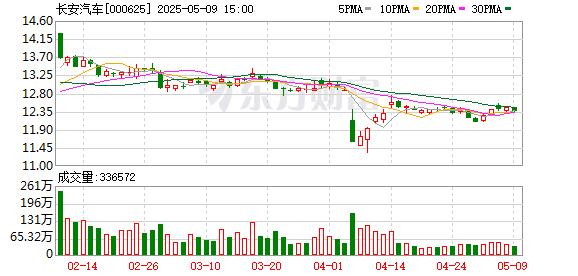
Core Viewpoint - The restructuring between Dongfeng Motor Group and Changan Automobile is a strategic integration led by the State-owned Assets Supervision and Administration Commission (SASAC), which aims to optimize resource allocation and enhance industry concentration, particularly in the electric vehicle sector [15][9][10]. Group 1: Restructuring Details - Changan Automobile has been accused of being merged as a secondary enterprise under Dongfeng Group, which it has vehemently denied, indicating that the restructuring is more complex than perceived [2][4]. - The restructuring plan is reportedly nearing completion, with both companies working together on integration matters [9][8]. - Changan's internal sources emphasize that the restructuring will not alter its existing brand strategy, technological direction, or global strategy [10][11]. Group 2: Financial Performance - Changan Automobile's sales figures for January to April 2025 reached 895,848 units, with a notable increase in net profit to 1.353 billion yuan, up 16.81% year-on-year, despite a revenue decline of 7.73% to 34.161 billion yuan [13][12]. - The company is facing cash flow pressures, with a net cash flow from operating activities of -3.501 billion yuan, a significant drop of 166.71% year-on-year, primarily due to increased payment obligations [13]. Group 3: Challenges Ahead - The merger faces several challenges, including differences in decision-making efficiency and corporate culture between the two companies, which could lead to internal friction and reduced operational efficiency [17][18]. - There are concerns regarding the potential dilution of Changan's core technology investments and the strategic positioning of joint brands, which may lead to dissatisfaction among foreign partners [7][16]. - The integration of technology and supply chains presents additional complexities, particularly in aligning procurement standards and addressing existing supplier relationships [18].

【太平洋科技-每日观点&资讯】(2025-04-01)
远峰电子· 2025-03-31 12:30
Market Overview - The main board led the gains with notable stocks such as Gongda Electronics (+10.03%), Xinyada (+10.01%), and Dazhihui (+9.99%) [1] - The ChiNext board saw significant increases with Hongjing Technology (+20.00%) and Saiyi Information (+19.99%) [1] - The Sci-Tech Innovation board was led by Changyang Technology (+15.11%) and Lexin Technology (+9.37%) [1] - Active sub-industries included SW Communication Application Value-Added Services (+1.37%) and SW Communication Engineering and Services (+1.05%) [1] Domestic News - TSMC announced the completion of structural engineering for its 2nm expansion project, with mass production expected in the second half of 2025 [1] - Hefei plans to establish a 10 billion yuan future industry fund to support the development of the smart robotics industry [1] - Longxin's 3C6000/D 2U dual-server features a 100% localization rate for core components, catering to general computing and large data centers [1] - BGI intends to acquire 100% of Chip and Semiconductor, enhancing its EDA solution capabilities [1] Company Announcements - Zhongkong Technology reported a total revenue of 9.139 billion yuan for 2024, a year-on-year increase of 6.02%, with a net profit of 1.117 billion yuan, up 1.38% [2] - Minexplosion Optoelectronics achieved a total revenue of 1.641 billion yuan in 2024, reflecting a 7.35% increase, with a net profit of 231 million yuan, up 0.17% [2] - Shanghai Beiling reported a total revenue of 2.819 billion yuan for 2024, a significant increase of 31.89%, with a net profit of 396 million yuan, up 756.82% [2] - Pufan Software's total revenue for 2024 reached 836 million yuan, a year-on-year growth of 11.6%, with a net profit of 121 million yuan, up 95.06% [2] International News - Toray Engineering launched large glass substrate packaging equipment capable of high-precision chip packaging [3] - Hanwha Semiconductor signed a supply agreement worth 21 billion KRW for thermal compression bonding machines with SK Hynix [3] - The Japanese government announced an additional subsidy of up to 802.5 billion yen for Rapidus, totaling 1.7 trillion yen in support for next-generation 2nm chip production [3] - Audi China is integrating Huawei's ADS intelligent driving system into its advanced vehicle platforms [3]

从“百舸争流”到“七雄争霸”,中国汽车业大整合催生全球竞争新秩序
Di Yi Cai Jing· 2025-03-30 13:56
Group 1: Strategic Restructuring in the Automotive Industry - The State-owned Assets Supervision and Administration Commission (SASAC) plans to strategically restructure central automotive enterprises to enhance industry concentration and create globally competitive automotive groups with core technologies [1] - The restructuring aims to consolidate R&D, manufacturing, and market resources among central enterprises, signaling a significant strategic adjustment in the context of the transition to new energy vehicles and global competition [1][4] - The automotive industry is shifting from a "single-player" approach to a "collaborative" model, with major mergers and alliances expected to reshape the competitive landscape [1][3] Group 2: Global Automotive Industry Dynamics - The global automotive industry has evolved through various phases, with significant consolidation leading to oligopolistic competition in regions like Europe, the U.S., and Japan [2] - Major automotive groups in Europe, such as Volkswagen and Daimler, have established technological barriers, while the U.S. "Big Three" dominate through scale [2] - The report highlights that the automotive industry is undergoing a deep restructuring driven by electrification and smart technology, with Chinese companies playing a crucial role in reshaping global competition [3][4] Group 3: Market Trends and Projections - The global automotive sales are projected to reach 90.6 million units in 2024, with China significantly influencing this market, accounting for approximately 34.7% of global sales [4] - Chinese automotive companies are transitioning from technology importers to exporters, establishing a full industry chain advantage in electrification and smart technology [4][10] - By 2035, China's automotive exports are expected to evolve into a model that includes new energy vehicles, smart solutions, and infrastructure, marking a shift from product output to industry rule output [4][9] Group 4: Competitive Landscape and Future Outlook - The automotive industry is witnessing a significant shift as traditional fuel vehicle production declines, leading to the closure and consolidation of several joint venture brands [7][8] - The report predicts that the future competitive landscape will consist of a "2+5" tier structure, with leading companies like BYD and Geely forming the top tier, while several others may be eliminated or merged [9] - The next two to three years are expected to see a dominant shift towards new energy vehicles in the Chinese market, necessitating strategic mergers and acquisitions to optimize production capacity [8][9]
对话2025最火具身智能团队:2个自动驾驶第一人带队,1.2亿美元天使融资震动江湖
量子位· 2025-03-26 10:29
Core Viewpoint - The article discusses the emergence of a new startup in the field of embodied intelligence, which has recently raised $120 million in angel funding, setting a record in China's embodied intelligence sector. The company, TARS, is led by a highly experienced team from the autonomous driving industry, aiming to create a reliable AI and robotics solution that integrates advanced technology into everyday life [2][3][7][12]. Group 1: Company Overview - TARS, founded by industry leaders Chen Yilun and Li Zhenyu, aims to build a trustworthy super embodied intelligence system that integrates AI into human production and life [12][18]. - The company has completed a record-breaking $120 million angel round financing, led by prominent venture capital firms, indicating strong market interest and confidence in its potential [3][7][8]. Group 2: Team and Expertise - The founding team is described as a "dream team" with extensive experience in the autonomous driving sector, which is crucial for the company's success in embodied intelligence [4][12]. - Key figures include Chen Yilun, a former CTO of Huawei's autonomous driving division, and Li Zhenyu, a senior vice president at Baidu, both of whom have significant achievements in their respective fields [11][16]. Group 3: Technology and Innovation - TARS is developing a core technology engine called AWE (AI World Engine), which is likened to a GPT model for embodied intelligence, focusing on human-centric data collection to enhance AI capabilities [15][37]. - The company emphasizes the importance of creating a complete data acquisition mechanism to ensure the reliability and effectiveness of its AI systems, distinguishing itself from competitors [39][45]. Group 4: Market Potential and Vision - The founders believe that embodied intelligence will be a key driver of global industrial upgrades in the next decade, positioning TARS to capitalize on this trend [12][51]. - The article highlights the growing interest and investment in embodied intelligence, suggesting it could be the next major technological wave following AI and autonomous driving [2][3].