阿维塔

Search documents
理想i6车主分享:顺路试驾后激情下单,空间大充电方便是优势
车fans· 2026-03-13 00:29
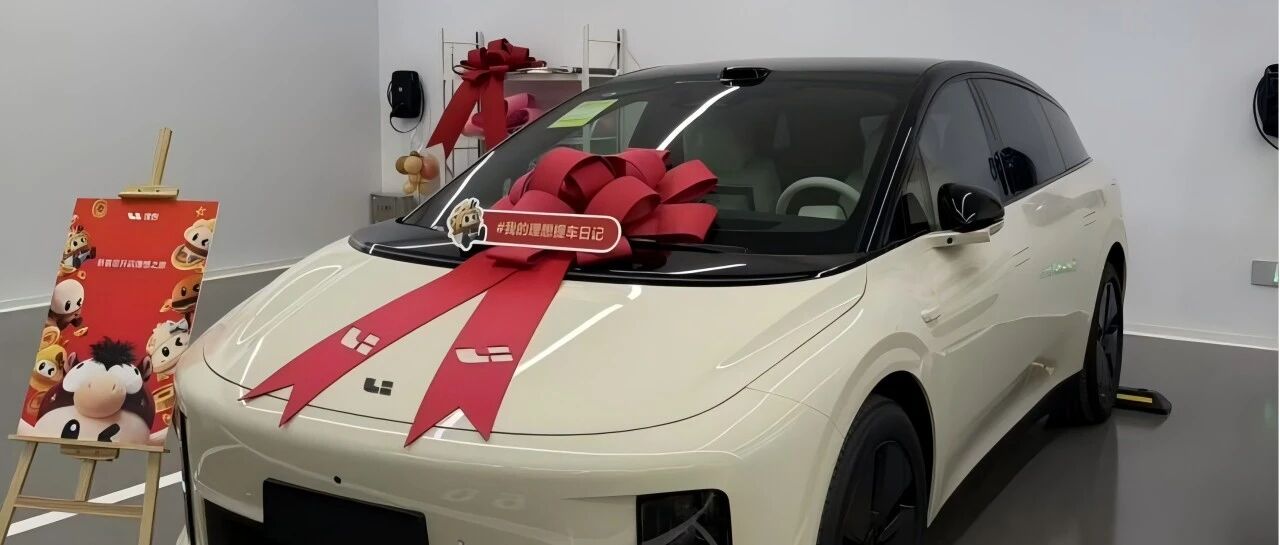
Core Viewpoint - The article presents a detailed account of a car owner's experience in purchasing the Li Auto i6, highlighting the decision-making process, dealership experience, and initial impressions of the vehicle. Purchase Details - The car owner, referred to as Xiao K, purchased the Li Auto i6 two-wheel drive version from the Li Auto retail center in Jinan, Shandong, on February 28, 2026, with a total cost of 251,320 yuan after discounts and fees [2][4]. - The base price of the two-wheel drive version was 239,800 yuan, with additional costs for color and insurance [4]. Comparison with Competitors - The owner compared the Li Auto i6 with competitors such as Avita, Xiaopeng, and the Zhiji LS6, ultimately favoring the i6 due to its superior interior quality and intelligent features [6][8]. - The decision-making process involved test-driving multiple vehicles, with the owner initially leaning towards the Zhiji LS6 before being swayed by the i6's performance and features during a spontaneous visit to the Li Auto retail center [8][9]. Dealership Experience - The sales experience was described as straightforward, with clear communication regarding the vehicle's features and charging capabilities [11][12]. - The owner appreciated the direct sales model of Li Auto, which minimized haggling over prices and included promotional offers such as cash discounts and additional features [12][14]. Delivery Experience - The delivery process faced delays, with the owner initially expecting to receive the vehicle by the end of January but ultimately experiencing a longer wait [14]. - The dealership provided a satisfactory delivery experience, including a small ceremony for new owners and thorough explanations of vehicle features [17]. Vehicle Impressions - Initial impressions of the Li Auto i6 included spaciousness, comfort, and a smooth operating system, with no significant issues reported so far [18]. - However, the owner noted some drawbacks, such as the manual closing of the front trunk and the lack of certain comfort features in the seating [19].


长安汽车(000625) - 2026年03月12日投资者关系活动记录表
2026-03-12 11:06
Group 1: Share Buyback Plan - The company announced a share buyback plan on March 3, 2026, with a total amount between RMB 1 billion and RMB 2 billion, including a minimum of RMB 700 million for A-shares and RMB 300 million for B-shares [1][2] - The buyback aims to reduce the company's registered capital and is subject to shareholder approval, with an implementation period of up to 12 months post-approval [2] Group 2: Sales Performance - In February 2026, the company sold 151,922 vehicles, a month-on-month increase of 12.8%, with 42,195 units being new energy vehicles and 64,876 units sold overseas [3] - The Changan brand saw significant growth, with Changan Inertia sales up 41.6% to approximately 59,700 units, and Changan Yidong series becoming the top-selling Chinese fuel sedan in 2025 [3] Group 3: Sales Targets - For the "14th Five-Year Plan," the company aims for cumulative sales of 40 million vehicles by 2028 and annual sales exceeding 5 million by 2030, with new energy vehicles making up over 60% and overseas sales over 35% [4] - The sales target for 2026 is set at 3.3 million vehicles, a year-on-year increase of 13.3%, with new energy vehicles targeted at 1.4 million units (up 26.2%) and overseas sales at 750,000 units (up 17.7%) [4] Group 4: Strategic Actions - The company plans to enhance core competitiveness through stronger product assurance and advanced technology empowerment, focusing on key models like A06, Q05, and L06 [5][6] - A total of 43 new models will be launched over the next three years, including 13 sedans, 20 SUVs, and 35 new energy vehicles [6] Group 5: Technological Development - The company will invest over 5% of its revenue annually in R&D during the "14th Five-Year Plan," aiming to introduce over 160 new technologies in AI, software, and battery fields [7] - Plans include the development of humanoid robots and flying cars, with a goal to achieve mass production of humanoid robots by 2028 and commercial flying cars by 2030 [7] Group 6: Robotics Business Strategy - The robotics strategy focuses on a "1+N+X" model, with humanoid robots as the main line, covering various applications from manufacturing to home use [8][9] - The company aims to integrate core technologies and develop multiple intelligent robot products for different commercial and technical scenarios [9]

非遗贺新春,长安中国年——重庆“巴渝非遗年俗文化展”举行
Zhong Guo Jin Rong Xin Xi Wang· 2026-02-14 06:48
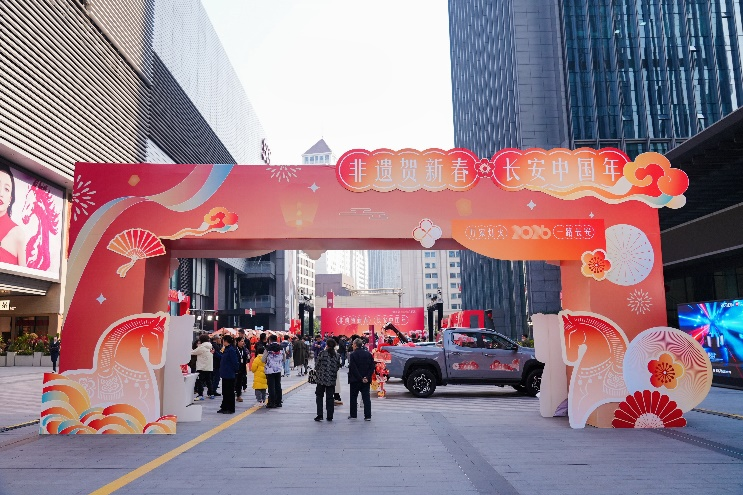
Group 1 - The event "2026 Year of the Horse Spring Festival Gala" and the "Bashu Intangible Cultural Heritage New Year Customs Cultural Performance" took place in Chongqing, showcasing local traditions and culture [1][3] - The performance featured national-level intangible cultural heritage artists, attracting over a thousand citizens who celebrated the event [3] - The event included a cultural experience area with traditional crafts such as sugar painting, wood carving, and paper art, appealing to both young and old attendees [3] Group 2 - Changan Automobile represented "Chongqing-made" products at the event, highlighting its achievements, including the production of the 30 millionth vehicle and obtaining the first domestic L3-level autonomous driving license [5] - During the Spring Festival, Changan Automobile will collaborate on a large drone show and display on major landmarks to send New Year blessings to global Chinese communities [5] - On February 16, Changan Qiyuan will participate in the CCTV Spring Festival Gala, further promoting the brand and celebrating the New Year with citizens [5]
长安汽车:回购计划开启强化信心,智能、电动化加速推进-20260212
Changjiang Securities· 2026-02-12 00:45
Investment Rating - The investment rating for the company is "Buy" and is maintained [5]. Core Insights - The company announced a share repurchase plan on February 4, 2026, intending to repurchase between 1 billion and 2 billion yuan using its own funds [3][9]. - The company's sales of self-owned new energy vehicles have significantly increased both year-on-year and quarter-on-quarter, driven by product structure optimization [9]. - The company is accelerating its transformation towards electric and intelligent vehicles, with rapid overseas expansion and continuous improvement in efficiency [9]. Summary by Relevant Sections Share Repurchase Plan - The repurchase plan includes a minimum of 700 million yuan and a maximum of 1.4 billion yuan for A shares, and a minimum of 300 million yuan and a maximum of 600 million yuan for B shares [9]. - The repurchase price cap is set at 150% of the average trading price over the 30 trading days prior to the board's approval of the repurchase plan [9]. Electric and Intelligent Transformation - The company has received the first official license plate for L3 level autonomous driving in the country, marking the beginning of the L3 era [9]. - The company is collaborating with Huawei on intelligent driving technologies and is developing humanoid robots, with a prototype expected to be released in 2026 [9]. Financial Performance and Projections - The company expects to achieve a net profit attributable to shareholders of 5.16 billion yuan in 2025 and 7.59 billion yuan in 2026, with corresponding P/E ratios of 21.5 and 14.7 [9]. - Revenue projections for the upcoming years are as follows: 159.73 billion yuan in 2024, 188.81 billion yuan in 2025, 204.06 billion yuan in 2026, and 229.06 billion yuan in 2027 [12].
长安汽车(000625):公司研究|点评报告|长安汽车(000625.SZ):长安汽车:回购计划开启强化信心,智能、电动化加速推进
Changjiang Securities· 2026-02-11 14:45
Investment Rating - The investment rating for the company is "Buy" and is maintained [8] Core Insights - The company announced a share repurchase plan on February 4, 2026, intending to repurchase between 1 billion and 2 billion yuan using its own funds, which is expected to enhance investor confidence [2][4] - The company's sales of self-owned new energy vehicles have significantly increased both year-on-year and quarter-on-quarter, driven by product structure optimization [2] - The company is accelerating its electric and intelligent transformation, with a strong focus on overseas expansion and continuous improvement in efficiency [6] - The expected net profit attributable to the parent company for 2025 and 2026 is projected to be 5.16 billion and 7.59 billion yuan, respectively, corresponding to a PE ratio of 21.5 and 14.7 times [6] Summary by Sections Share Repurchase Plan - The repurchase plan includes a minimum of 700 million yuan and a maximum of 1.4 billion yuan for A shares, and a minimum of 300 million yuan and a maximum of 600 million yuan for B shares [12] - The repurchase price will not exceed 150% of the average trading price over the 30 trading days prior to the board's approval of the repurchase plan [12] Electric and Intelligent Transformation - The company is advancing its electric and intelligent transformation, with a focus on enhancing cooperation with Huawei in smart driving technology [6] - The company has received the first official license plate for L3 level autonomous driving in the country, marking a significant milestone in its smart driving initiatives [12] Global Expansion - The company has accelerated its globalization strategy, having entered 117 countries and launched 41 models as of January 2026 [12] - The company is actively developing new products under multiple brands, including Changan, Deep Blue, and Avita, to capture market opportunities in the new energy vehicle sector [12]
重夺“汽车第一城”,西部重镇杀回来了
Mei Ri Jing Ji Xin Wen· 2026-01-19 13:10
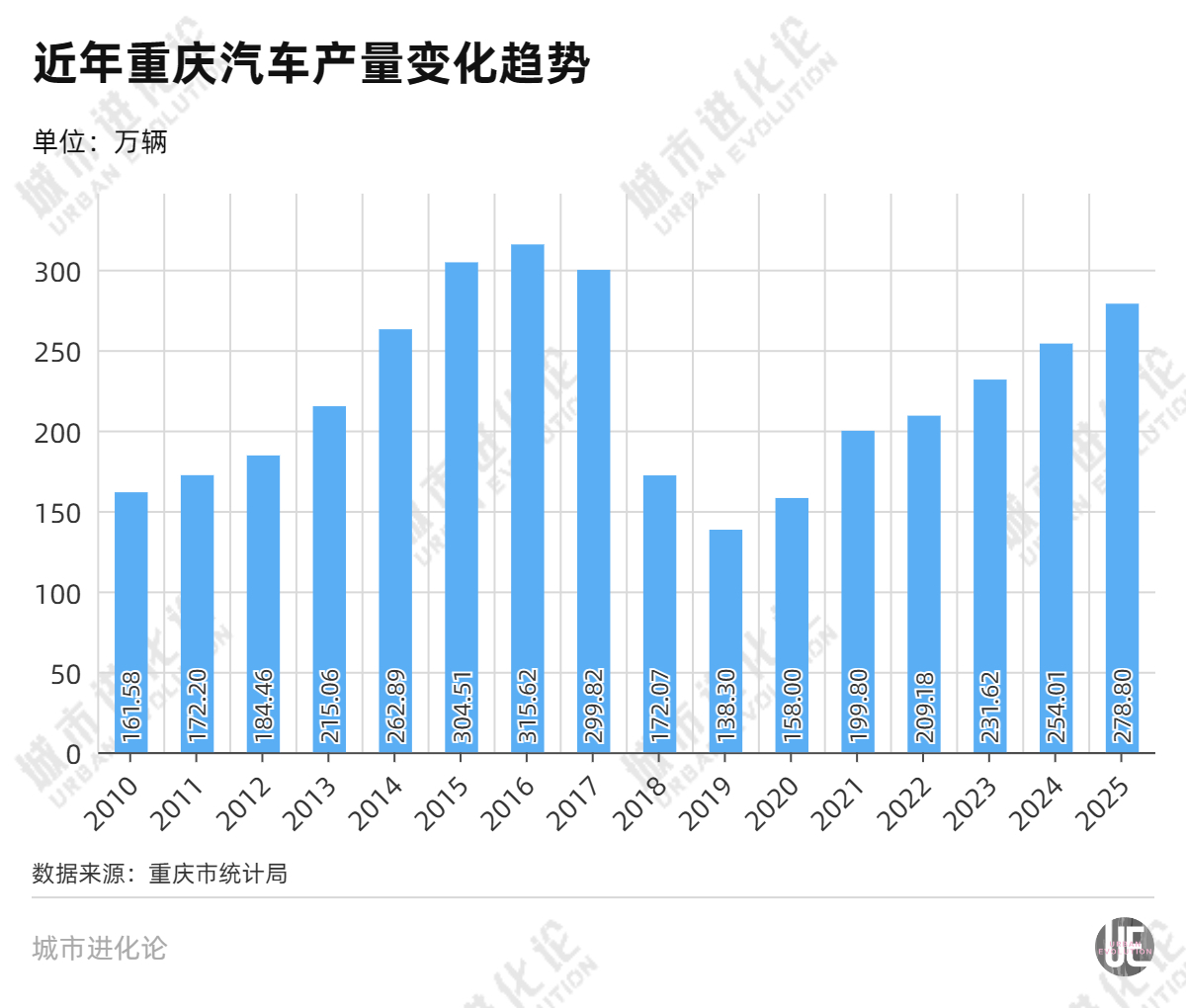
Core Insights - The competition for the title of "Automobile Capital" in China is intensifying, with Chongqing projected to produce 2.788 million vehicles in 2025, marking a 9.7% increase and solidifying its position as the top city in vehicle production [1] - Chongqing's automotive industry is experiencing a resurgence after a decade, with significant growth in new energy vehicles (NEVs), expected to reach 1.296 million units, a 36% increase [1] - The issuance of China's first L3-level autonomous driving license to Changan Automobile signifies a historic milestone in the large-scale application of intelligent driving technology, positioning Chongqing as a leader in this field [1] Industry Overview - The automotive industry in Chongqing aims to reclaim its status as a leader, having previously reached a peak production of 3.156 million vehicles in 2016 before experiencing a decline to 1.383 million in 2019 [2] - The shift in consumer preferences towards mid-to-high-end vehicles and the rise of NEVs have been pivotal in reshaping the automotive landscape [2] - Changan Automobile's strategic pivot towards electric vehicles, including the "Shangri-La" plan to cease traditional fuel vehicle production by 2025, reflects the industry's adaptation to market demands [3] Company Developments - Changan Automobile's collaboration with Huawei and CATL has led to the launch of new high-end NEV brands, contributing to a projected total vehicle sales of 2.913 million by 2025, with NEV sales expected to reach 1.11 million, a 51.1% increase [3] - Seres, another key player, has transitioned from traditional manufacturing to NEVs, achieving significant growth and profitability, with projected NEV sales of 472,300 units in 2025, a 10.63% increase [5] - The partnerships with Huawei have been crucial for both Changan and Seres, enabling them to leverage advanced technology and market positioning in the competitive NEV sector [6][9] Competitive Landscape - The automotive industry is entering a new competitive phase, with a consensus that the NEV market will see accelerated consolidation, leading to a "淘汰赛" (elimination round) among brands [10] - Chongqing's strategic initiatives, including the development of smart connected vehicles and the establishment of a comprehensive industrial ecosystem, are aimed at enhancing its competitive edge [12] - Other cities, such as Guangzhou, are also intensifying their efforts to reclaim leadership in the automotive sector, highlighting the competitive dynamics at play [13] Challenges and Opportunities - Despite its advancements, Chongqing faces challenges in AI and core technology competitiveness, ranking 14th nationally in AI industry strength, which may hinder its long-term leadership in intelligent driving [15] - The city is focusing on addressing its weaknesses in talent acquisition and technological infrastructure to maintain its position in the evolving automotive landscape [15]

重夺“汽车第一城”,西部大佬杀回来了
创业邦· 2026-01-17 01:36
Core Viewpoint - The competition for the title of "Automobile Capital" in China is intensifying, with Chongqing set to achieve a record automotive production of 2.788 million vehicles in 2025, marking a 9.7% increase, and a significant rise in new energy vehicle (NEV) production to 1.296 million units, up 36% [6][8]. Group 1: Historical Context and Challenges - Chongqing aimed to become "China's Detroit" in 2013, reaching a peak production of 3.156 million vehicles in 2016, but faced a decline starting in 2017, with production dropping to 1.383 million vehicles by 2019 [8][9]. - The decline was attributed to a mismatch between Chongqing's focus on mid-to-low-end vehicles and the market's shift towards mid-to-high-end preferences, alongside production capacity issues [8][9]. - The rise of NEVs began to disrupt the traditional automotive landscape, with national sales surpassing 100,000 units within three years after first exceeding 10,000 units in 2015 [9]. Group 2: Strategic Shifts and Collaborations - Changan Automobile, a leading player in Chongqing, announced a plan in 2017 to phase out traditional fuel vehicles by 2025, but initially struggled to keep pace with national NEV growth [9][10]. - A turning point occurred in 2021 when Changan partnered with Huawei and CATL to launch new high-end NEV brands, resulting in a significant increase in sales, with total vehicle sales reaching 2.913 million units and NEV sales up 51.1% to 1.11 million units [10][14]. - The collaboration with Huawei has been pivotal for both Changan and Seres, with Seres becoming the first company to benefit from Huawei's "Smart Selection" model, leading to increased competitiveness in the NEV market [13][14]. Group 3: Future Prospects and Competitive Landscape - The automotive industry is entering a new competitive phase, with Chongqing positioned to lead in NEVs and smart driving technologies, especially after receiving approval for L3-level autonomous driving vehicles [17][19]. - Chongqing's strategic focus on becoming a "Smart Connected New Energy Vehicle Capital" by 2024 aims to leverage its unique geographical features for testing smart vehicles [19][20]. - However, challenges remain, including a lack of competitiveness in AI technology and talent shortages, which could hinder Chongqing's ability to maintain its leading position in the next industrial competition [21][22].
长安汽车(000625) - 2026年01月16日投资者关系活动记录表
2026-01-16 10:38
Sales Performance - In 2025, Changan Automobile's total sales reached 2.913 million units, a year-on-year increase of 8.5%, marking a nine-year high [1] - New energy vehicle (NEV) sales exceeded 1.1 million units, up 51% year-on-year, with a compound annual growth rate (CAGR) of 97.3% during the 14th Five-Year Plan [1] - Overseas sales reached 637,000 units in 2025, an 18.9% increase, with a CAGR of 50.5% during the same period [1] - The sales target for 2026 is set at 3.3 million units, a 13.3% increase, with NEV sales projected at 1.4 million units (up 26.2%) and overseas sales at 750,000 units (up 17.7%) [5] Brand Development - During the 14th Five-Year Plan, Changan launched three smart NEV brands: Avita, Deep Blue, and Changan Qiyuan [2] - Avita has maintained over 10,000 units in monthly sales for 10 consecutive months, while Deep Blue surpassed 700,000 units in sales within three years [2] - A total of 24 NEV models were launched, including 6 from Avita, 6 from Deep Blue, and 7 from Changan Qiyuan [2] Technological Advancements - Changan's self-developed battery brand "Jinzhongzhao" has superior thermal insulation performance, outperforming the industry by 30% [2] - The company has introduced the world's first multi-in-one electric drive and a hybrid engine with a thermal efficiency of 44.39% [2] - The "Beidou Tianshu" intelligent safety plan has evolved to version 2.0, focusing on comprehensive safety across various dimensions [3] Global Expansion - Changan's global sales network expanded from 63 countries in 2020 to 117 countries by 2025 [4] - The company established 7 spare parts centers and 5 service engineering centers globally, covering over 100 countries [4] - The number of overseas models increased from 17 to 41 during the 14th Five-Year Plan, including 25 fuel vehicles and 16 NEVs [4] Future Goals - By 2028, Changan aims to achieve cumulative sales of 40 million units for Chinese brands and break through 5 million units in annual production and sales by 2030, with NEVs accounting for over 60% [5] - The company plans to launch 43 new models over the next three years, including 35 NEVs and 8 fuel-efficient vehicles [6] - Continuous investment of over 5% of revenue in R&D is planned, focusing on AI, software, and next-generation battery technologies [7]
278.8万辆!“汽车第一城”桂冠,时隔九年重回山城重庆
Jin Rong Jie· 2026-01-16 09:08
Core Insights - Chongqing has regained its title as "China's Automobile Capital" with a total vehicle production of 2.788 million units in 2025, marking a 9.7% year-on-year increase [1] - The city's new energy vehicle (NEV) production reached 1.296 million units, reflecting a significant 36% growth, contributing to an automotive industry cluster exceeding 800 billion yuan [1] Group 1: Statistical Reform and Industry Landscape - The competition for "Automobile Capital" serves as a barometer for the evolution of China's manufacturing landscape, with Chongqing previously holding the title from 2014 to 2016 before being overtaken by cities like Shenzhen [2] - The National Bureau of Statistics has implemented a "law production and actual production" reform, which counts production based on the physical location rather than the corporate headquarters, leading to a more accurate reflection of industrial distribution [2] - This reform has leveled the playing field for cities like Shenzhen, which have significant production capacity outside their headquarters, while benefiting Chongqing, which has a strong local manufacturing base [2] Group 2: Dual-Engine Growth - Chongqing's resurgence is attributed to a robust transformation in its automotive industry, driven by local brands such as Changan and Seres, which have become the backbone of the sector [3] - Changan has undergone a "third entrepreneurship," focusing on new energy and smart technology, while Seres has achieved breakthroughs in the high-end market with its AITO series [3] - The 36% growth in NEV production in Chongqing significantly outpaces the national average, supported by strategic investments in range-extended technology that address consumer concerns [3] Group 3: Systematic Advantages - Chongqing's leadership is a result of its systemic capabilities, moving beyond mere vehicle production to establishing a resilient "industrial forest" [4] - The city is building a modern manufacturing cluster worth over 800 billion yuan, with a local supply rate of 45%, encompassing a complete supply chain from chips to various components [4] - As a central hub for the new western land-sea corridor, Chongqing has transformed its geographical disadvantages into advantages for international trade, enhancing logistics efficiency [4] Group 4: National Landscape and Competition - The automotive industry in China is entering a multi-polar era, with total vehicle production expected to reach approximately 34.5 million units in 2025, maintaining its position as the world's largest market for 17 consecutive years [5] - Cities like Hefei, Shanghai, and Guangzhou are undergoing transformations, with Hefei emerging as a leader in NEVs, while others are focusing on smart and high-end manufacturing [5] - The competition is intensifying at both city and provincial levels, with Anhui surpassing Guangdong in production, showcasing the strength of the Yangtze River Delta region [5] Group 5: Future Outlook - Regaining the title of "Automobile Capital" marks a milestone for Chongqing, signaling a shift towards competition based on technological innovation, brand value, and supply chain management [6] - The city faces challenges in leveraging its scale and manufacturing heritage to build sustainable global brand influence and achieve breakthroughs in core technologies [6] - The statistical reform represents a shift towards valuing tangible manufacturing over virtual headquarters, guiding resources towards genuine manufacturing and innovation centers [6]
重夺“汽车第一城”,西部大佬杀回来了
Mei Ri Jing Ji Xin Wen· 2026-01-15 15:12
Group 1 - The core viewpoint of the article highlights the intense competition among cities for the title of "Automobile Capital," with Chongqing regaining its position as the leader in automobile production after a decade of decline [1][2][3] - Chongqing's automobile production is projected to reach 2.788 million units in 2025, marking a 9.7% increase, with new energy vehicles (NEVs) expected to account for 1.296 million units, a growth of 36% [1][2] - The issuance of the first L3-level autonomous driving license in China to Changan Automobile signifies a historic milestone for smart driving in the country, positioning Chongqing as a frontrunner in this field [2][11] Group 2 - The article discusses the historical context of Chongqing's automotive industry, noting its peak production of 3.156 million units in 2016, followed by a significant decline starting in 2017, where production fell to 1.383 million units by 2019 [5][6] - The resurgence of Chongqing's automotive sector is attributed to its focus on new energy vehicles, with Changan and Seres leading the charge through strategic partnerships, including collaborations with Huawei [7][10] - The competitive landscape is evolving, with predictions that the penetration rate of L3 and above autonomous vehicles will exceed 10% by 2030, indicating a shift towards smart electric vehicles as a new competitive arena [13][21] Group 3 - Chongqing aims to become a "smart connected new energy vehicle capital" by 2024, leveraging its unique geographical features as a testing ground for intelligent vehicles [14][17] - The article notes that while Chongqing is making strides, it faces challenges in AI competitiveness, ranking 14th nationally in AI industry strength, which could hinder its automotive ambitions [19][20] - The need for Chongqing to address its weaknesses in core technologies and talent retention is emphasized, as it seeks to maintain its leading position in the next round of industry competition [21]