
即食零食

Search documents
做强做优大豆全产业链
Jing Ji Ri Bao· 2026-01-22 21:59
Core Viewpoint - The article highlights the significant increase in soybean production in China, with a focus on the importance of high-quality development in the agricultural sector, particularly in the soybean industry, as a means to ensure food security and enhance the value chain of agricultural products [1][4]. Group 1: Soybean Production and Quality Improvement - In 2025, China's soybean production reached 478.6 billion jin, an increase of 6.1 billion jin from the previous year, with soybean yield at 418.1 billion jin, reflecting a growth of 1.3% [1]. - The "Four Good" integration approach aims to enhance soybean yield through improved farming practices, high-quality seed varieties, and advanced agricultural machinery [2][3]. - The promotion of high-oil, high-protein soybean varieties has led to an increase in planting area, with over 38 million mu dedicated to these varieties in 2025, up by more than 15 million mu since 2020 [1][2]. Group 2: Technological Advancements and Equipment - New agricultural equipment, such as a domestic instrument for rapid, non-destructive quality testing of grains, has been showcased, significantly reducing testing time from over four hours to about one minute [2]. - The integration of high-performance planting and harvesting machinery is being promoted to improve operational efficiency and soil fertility [2]. Group 3: Value Chain Enhancement - The expo demonstrated the entire value chain from soybean production to processing, showcasing innovative products like soybean ice cream and low-purine soybean products, which enhance consumer experience and reflect industry innovation [4][5]. - Companies like Shandong Yuwang Group are extending the soybean value chain by processing 600,000 tons of soybeans into various products, aiming for maximum value realization [5]. Group 4: Supply Chain Security and Financial Support - Efforts to enhance the safety of the soybean supply chain include increasing domestic production capacity and improving international market negotiation power [6]. - Financial institutions are providing support for the entire soybean industry chain, ensuring stable production and market confidence [6]. Group 5: Future Directions - Experts emphasize the need for continued efforts in breeding, processing, market expansion, and diversified imports to ensure the safety and high-quality development of the soybean industry [7].
以融合之笔,绘“清水鱼跃”新图
Xin Lang Cai Jing· 2026-01-20 17:50
Core Viewpoint - The proposal regarding the "Qing Shui Fish" industry emphasizes the need to shift from selling by weight to selling by quality and brand, which is crucial for strengthening local specialties and promoting rural revitalization [1] Group 1: Industry Overview - In 2024, the total aquatic product output in Quzhou City is projected to reach 84,500 tons, with a comprehensive output value of 3.5 billion yuan, where Qing Shui Fish plays a significant role [1] - The "Quzhou Qing Shui Fish Industry High-Quality Development Action Plan (2024-2027)" aims for a comprehensive output value of 5 billion yuan by 2027, with the fishery output value accounting for over 12% of the total agricultural output [1] Group 2: Current Challenges - The industry is characterized by being "large but not strong," with most products sold as live fish and a lack of high-value-added processing such as prepared dishes and snacks [2] - Despite having a regional brand, the market is flooded with inferior products, which undermines the brand reputation and the interests of fish farmers [2] - The integration of leisure fishing with tourism remains traditional, lacking diverse experiences [2] Group 3: Strategic Recommendations - Focus on "three chains" collaboration to enhance the quality of Qing Shui Fish: - Strengthen the "processing chain" by cultivating leading enterprises and supporting the development of processed products [2] - Establish a "standard chain" to ensure quality and brand integrity through a comprehensive quality standard and traceability system [2] - Develop a "fusion chain" to enhance experiential offerings in tourism, creating integrated experiences that go beyond just consuming fish [2] Group 4: Future Outlook - The integration of policy, capital, technology, and farmers' efforts is expected to elevate the "Qing Shui Fish" to new heights, contributing to the vision of common prosperity [3]
江苏农垦渔业科技有限公司的科技兴渔与强国品牌实践
Xin Lang Cai Jing· 2026-01-11 21:22
Core Viewpoint - The establishment of Jiangsu Nongken Fishery Technology Co., Ltd. marks a significant step towards building a modern fishery group with a full industry chain, emphasizing technological innovation as the driving force for new productive forces in the fishery sector [1][8]. Group 1: Seed Industry Revitalization - The company prioritizes "seedling revitalization" as a key strategy to address the long-standing cycle of "introduction-degeneration-reintroduction" in China's aquatic seed industry [1][2]. - Plans include an investment of nearly 10 million yuan to build factory-style aquaculture workshops and greenhouses, aiming to enhance the efficiency of seedling cultivation [2]. Group 2: Smart Empowerment - The company is implementing a "facility and intelligent" aquaculture revolution, investing 4.3 million yuan in a production control center and smart fishery platform to transition from traditional to data-driven fish farming [3]. - The goal is to reduce labor by over 20% per unit area by 2025, significantly improving labor productivity and resource utilization [3]. Group 3: Ecological Health and Sustainable Practices - The company explores sustainable development paths through ecological mixed farming models, such as "catfish with shrimp" and "shrimp with shrimp," to enhance internal ecological cycles and reduce pollution [4]. - A quality safety traceability platform is established, allowing consumers to track the origin and processing of products, ensuring transparency [5]. Group 4: Value Chain Enhancement - The company aims to transition from being a "fish producer" to a "food supplier" and "brand operator," focusing on high-value food transformation through collaboration with universities [5][6]. - A new product, "original flavor shrimp," achieved sales exceeding 1 million yuan shortly after launch, indicating strong market potential [5]. Group 5: Market Expansion - The company has established long-term strategic partnerships with national restaurant chains, securing annual orders of 11 million pounds of catfish, demonstrating a stable supply model [6]. - An integrated online and offline marketing network is being developed to enhance brand visibility and consumer trust [6]. Group 6: Governance and Talent Development - The company integrates political leadership into its governance, creating a modern management system with a focus on innovation and market expansion [7]. - Efforts are underway to address the shortage of high-level research talent through various recruitment and training initiatives [7]. Group 7: Future Outlook - The company aims to continue its evolution towards a modern fishery group, focusing on seedling development, smart aquaculture, and brand enhancement [8]. - The transition from "scale fishery" to "value fishery" reflects the company's commitment to food supply security and rural revitalization in the new era [8][9].
美股新股前瞻|收入高增净利润扭亏,健营国际(FIT.US)如何讲好运动营养品分销故事?
智通财经网· 2025-08-14 06:05
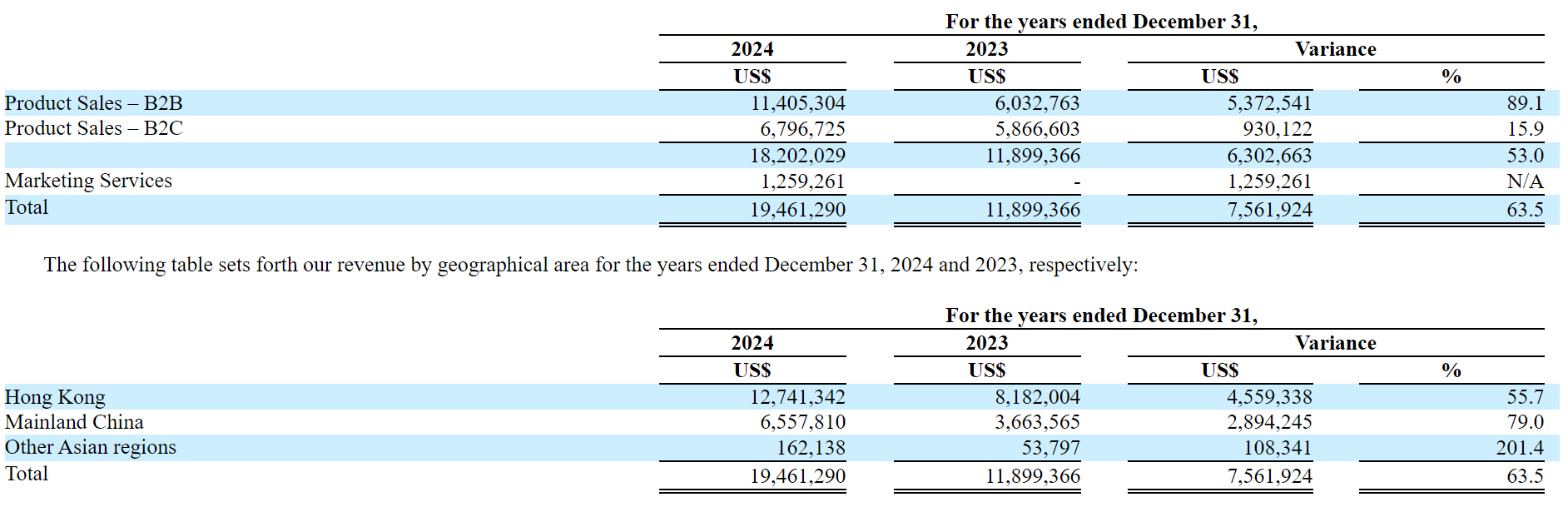
Core Viewpoint - Jianying International, a sports nutrition product distributor, is preparing for its IPO on NASDAQ under the code "FIT," aiming to raise between $8 million and $10 million by issuing 2 million shares priced between $4 and $5 each [1] Company Overview - Jianying International has been operating for over eight years, focusing on the distribution of sports nutrition products in Hong Kong, mainland China, and Malaysia, with a diverse range of SKUs available for customers [1] - As of December 31, 2024, the company has over 300 SKUs from more than 30 brands, primarily imported from the US and Europe [2] Market Presence - Hong Kong is the primary market for Jianying International, contributing 65.5% of revenue in 2024, followed by mainland China at 33.7% and Malaysia with a smaller share [2] - The company has established a multi-channel sales network, including gyms, supermarkets, convenience stores, and e-commerce platforms, with over 1,000 sales points across its markets [2][3] Sales Model - Jianying International employs a combined B2B and B2C sales model, distributing products to over 130 B2B clients and operating two online stores with over 9,000 registered members [3] - In 2023, B2C sales accounted for 49.3% of revenue, decreasing to 34.9% in 2024, indicating its importance as a sales channel [3] Revenue Structure - The majority of revenue comes from protein powder, which accounted for nearly 70% of total revenue in 2024 [4] - The company reported a total revenue of approximately $19.46 million in 2024, with significant growth driven by both B2B (up 89.1%) and B2C (up 15.9%) sales [5][4] Financial Performance - Jianying International achieved a gross profit margin of 31.7% in 2024, an increase of 5 percentage points from the previous year, leading to a gross profit of approximately $6.17 million [5][6] - The company turned a profit of $1.02 million in 2024, compared to a loss in the previous year, aided by a moderate increase in operating expenses [5] Industry Trends - The sports nutrition industry is experiencing rapid growth due to rising health awareness and increased participation in fitness activities, with a significant market expansion in China [7] - The market for sports nutrition products is becoming increasingly competitive, with both local and international brands entering the space [8] Challenges - Jianying International faces high customer concentration, with the top five clients accounting for 43.3% of revenue, which may pose risks related to revenue volatility and bargaining power [9]

618大促,即时零售是变量还是主角?
3 6 Ke· 2025-05-28 23:31
Core Insights - Instant retail is becoming a primary option in the order allocation game, shifting from a supplementary role to a front-line choice in user engagement [1] - The structure of major promotional events like 618 and Double 11 is undergoing significant changes, indicating that the evolution may just be beginning [1] User Mindset Shift - Users are increasingly prioritizing immediate delivery options over price, as demonstrated by a user choosing a product available for 30-minute delivery over a slightly cheaper option with a next-day delivery [2] - Instant retail is effectively capturing "on-the-spot orders" by leveraging local inventory and rapid delivery capabilities [2][8] Subsidy Model Changes - Traditional subsidy models are losing effectiveness, prompting platforms to seek new strategies to attract consumers during promotional events [3] - Platforms like Douyin are integrating subsidies with content marketing to lower user participation barriers, indicating a shift in promotional tactics [3] Local Fulfillment Strategies - Major platforms have accelerated their local fulfillment strategies ahead of the 618 event, with initiatives like Taobao's "Flash Purchase" and JD's "Instant Delivery" channel [8] - The early launch of these services reflects a strategic shift to position instant retail as a key driver of user engagement and order fulfillment [9] Limitations of Instant Retail - Instant retail is most effective for high-frequency, low-decision, standardized consumer goods, such as daily necessities, while struggling with complex SKU categories like fashion [10][11] - The model is not yet capable of efficiently covering high-cost items or those requiring complex logistics, such as furniture [10][11] Redefining Promotional Event Value - The timing of promotional strategies is shifting, with platforms launching subsidies and flash sales earlier, indicating a change in user purchasing behavior [15] - The significance of events like 618 is evolving from a single-day focus to a broader annual rhythm, integrating user engagement throughout the year [16][17]


