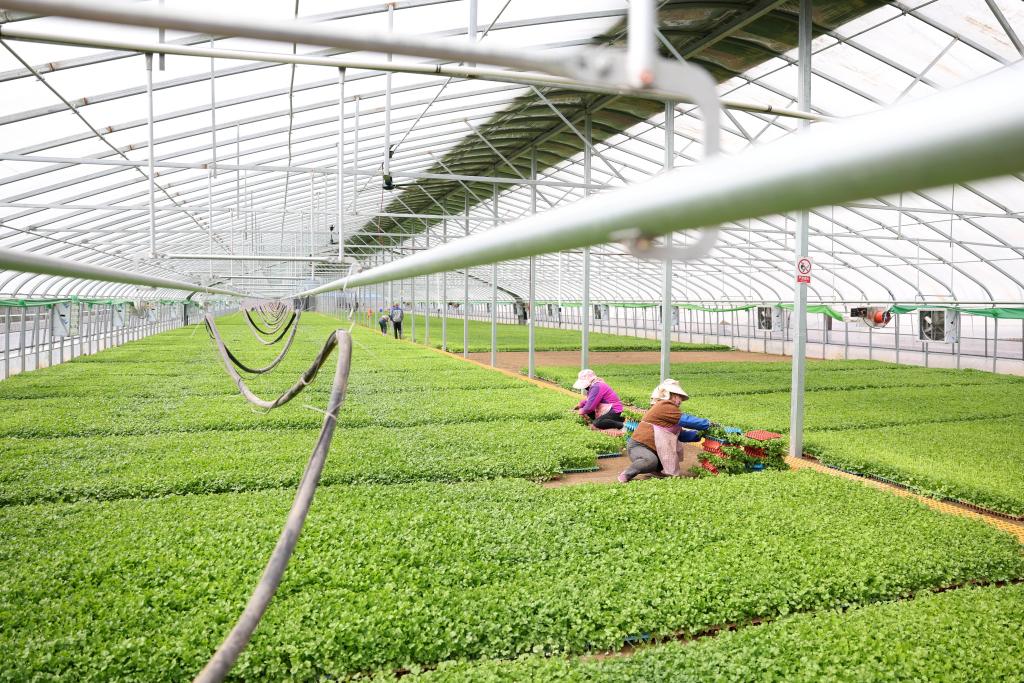
四良融合

Search documents
做强做优大豆全产业链
Jing Ji Ri Bao· 2026-01-22 21:59
Core Viewpoint - The article highlights the significant increase in soybean production in China, with a focus on the importance of high-quality development in the agricultural sector, particularly in the soybean industry, as a means to ensure food security and enhance the value chain of agricultural products [1][4]. Group 1: Soybean Production and Quality Improvement - In 2025, China's soybean production reached 478.6 billion jin, an increase of 6.1 billion jin from the previous year, with soybean yield at 418.1 billion jin, reflecting a growth of 1.3% [1]. - The "Four Good" integration approach aims to enhance soybean yield through improved farming practices, high-quality seed varieties, and advanced agricultural machinery [2][3]. - The promotion of high-oil, high-protein soybean varieties has led to an increase in planting area, with over 38 million mu dedicated to these varieties in 2025, up by more than 15 million mu since 2020 [1][2]. Group 2: Technological Advancements and Equipment - New agricultural equipment, such as a domestic instrument for rapid, non-destructive quality testing of grains, has been showcased, significantly reducing testing time from over four hours to about one minute [2]. - The integration of high-performance planting and harvesting machinery is being promoted to improve operational efficiency and soil fertility [2]. Group 3: Value Chain Enhancement - The expo demonstrated the entire value chain from soybean production to processing, showcasing innovative products like soybean ice cream and low-purine soybean products, which enhance consumer experience and reflect industry innovation [4][5]. - Companies like Shandong Yuwang Group are extending the soybean value chain by processing 600,000 tons of soybeans into various products, aiming for maximum value realization [5]. Group 4: Supply Chain Security and Financial Support - Efforts to enhance the safety of the soybean supply chain include increasing domestic production capacity and improving international market negotiation power [6]. - Financial institutions are providing support for the entire soybean industry chain, ensuring stable production and market confidence [6]. Group 5: Future Directions - Experts emphasize the need for continued efforts in breeding, processing, market expansion, and diversified imports to ensure the safety and high-quality development of the soybean industry [7].
再创新高!今年全国粮食产量同比增长1.2% 哪些努力支撑起好“丰”景?
Yang Shi Wang· 2025-12-12 04:07
Core Insights - The national grain production in China is projected to reach 14,297.5 billion jin in 2025, marking a 1.2% increase from the previous year, indicating a successful harvest [1][2] - The increase in grain production is supported by a rise in planting area and improved yield per unit area, with a notable increase of 134.8 million mu in planting area and a yield increase of 4.4 kg per mu, reflecting a 1.1% year-on-year growth [1][2] Group 1 - The grain planting area has increased for six consecutive years, with a significant rise of 3.3 million mu in high-yield crops like corn, laying a solid foundation for this year's harvest [4] - The implementation of strong agricultural policies, including minimum purchase prices for rice and wheat and subsidies for corn and soybeans, has stabilized farmers' expectations for grain production [2][4] - The focus on enhancing single crop yields has been a key highlight, with the number of counties involved in yield improvement actions increasing to 702, promoting a balanced increase in production [6] Group 2 - The integration of water and fertilizer management in grain production is expected to cover over 88 million mu by 2025, with specific strategies to increase plant density and improve crop varieties [8] - The resilience of grain production has been demonstrated this year despite severe weather challenges, with timely government interventions and financial support of over 6 billion yuan for disaster relief and crop management [10] - Future projections indicate that grain production will continue to achieve high levels, particularly in autumn crops, with significant contributions expected from the Northeast and Northwest regions, especially in corn [12]

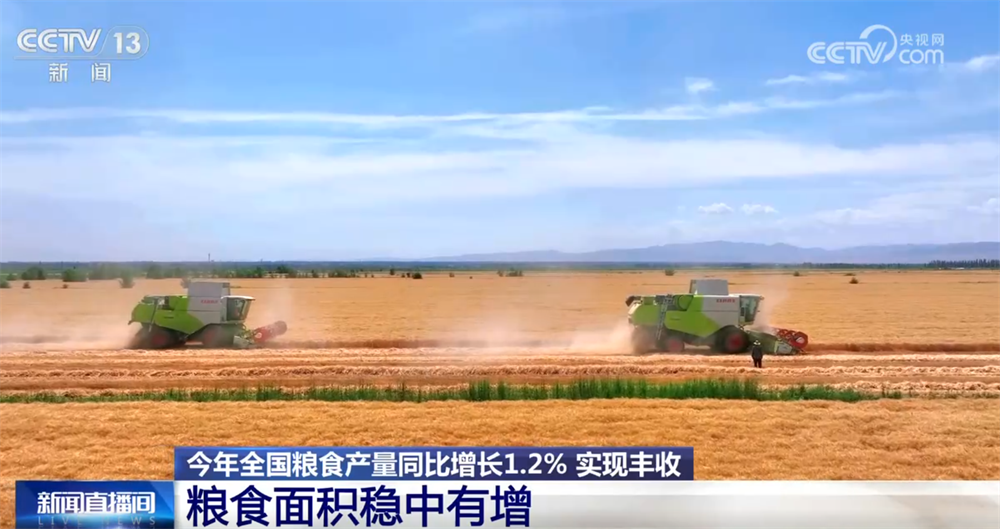
聊城“吨半粮”产能建设引领粮食单产稳步增长
Qi Lu Wan Bao· 2025-12-04 15:24
Core Viewpoint - The city of Liaocheng is enhancing its grain production capacity and ensuring food security through various initiatives and technological advancements during the 14th Five-Year Plan period [1][2][3] Group 1: Grain Production Capacity - Liaocheng, as one of Shandong Province's "three major granaries," is committed to stabilizing grain production responsibilities and enhancing the "ton-and-a-half grain" production capacity [1] - The city has constructed and upgraded 1.892 million acres of high-standard farmland since the beginning of the 14th Five-Year Plan, improving production conditions [1] - The grain yield per mu has increased from 465.72 kg in 2020 to 480.95 kg in 2024, a rise of 15.23 kg per mu, representing a growth of 3.27% [3] Group 2: Technological Support and Innovation - Liaocheng is collaborating with research institutions like China Agricultural University to cultivate and promote high-quality, high-yield wheat varieties [1] - The city has implemented a subsidy increase for high-performance agricultural machinery, including advanced seeders and harvesters, to enhance planting efficiency [1] - A new agricultural technology promotion service platform has been established, engaging over 20,000 agricultural technicians to implement key production techniques [1] Group 3: Disaster Prevention and Management - The city has developed a comprehensive agricultural natural disaster emergency plan to mitigate losses from natural disasters [2] - Coordination with meteorological and water resources departments has been strengthened to monitor weather changes and issue timely warnings [2] - Effective pest and disease control measures have been implemented, resulting in no occurrences of wheat rust disease this year due to timely interventions [2] Group 4: Organizational and Financial Support - The number of farmer cooperatives in the city has reached 15,600, with 5,830 family farms established to enhance agricultural organization [2] - The proportion of grain production management services has reached over 80%, indicating a significant increase in organized agricultural production [2] - A total of 114.4 million acres of "ton-and-a-half grain" production areas have been established, contributing to balanced grain production growth [2]
“十四五”以来四川省三大主粮合计增产21.3亿斤
Xin Hua Cai Jing· 2025-10-28 13:37
Core Insights - Sichuan Province has implemented two major actions since the "14th Five-Year Plan" to restore wheat area and enhance the quality and efficiency of regenerated rice, resulting in a total grain production increase of 2.13 billion kilograms [1][2] - The contribution rates of rice, corn, and wheat to the overall grain production increase are 3.3 billion kilograms, 1.16 billion kilograms, and 640 million kilograms respectively, with wheat being the main source of summer grain increase for three consecutive years [1] - The average yield per mu (Chinese unit of area) has increased by 5.7 kilograms due to the "Tianfu Granary" initiative, which focuses on precision agriculture across all stages of farming [1] Grain Production and Infrastructure - Major grain-producing cities and counties in Sichuan, such as Dazhou, Nanchong, Yibin, and Liangshan, have collectively increased grain production by 770 million kilograms, accounting for 36% of the province's total increase [2] - The 77 major grain-producing counties have achieved a total grain production of 59.14 billion kilograms, representing 81.4% of the province's total, with an increase of 1.75 billion kilograms, which is 81.8% of the overall increase [2] Oilseed Production - Since the "14th Five-Year Plan," Sichuan has increased its rapeseed area by 2.408 million mu, accounting for 13.1% of the national increase, and the rapeseed yield has risen by 1.14 billion kilograms, contributing 20.2% to the national total [2] - The average yield of rapeseed has improved by 8 kilograms, reflecting a growth rate of 4.9% [2]
“四良”融合绘出好丰景
Jing Ji Ri Bao· 2025-10-22 22:10
Core Insights - The article highlights the transformation of agricultural practices in Yongfeng Village, Sichuan Province, emphasizing the integration of high-standard farmland construction, seed innovation, and advanced farming techniques to achieve stable and increased grain production [1][2][3]. Group 1: Agricultural Practices and Innovations - Yongfeng Village has experienced a significant increase in rice yield, with farmers reporting an average yield of 1,400 jin per mu, attributed to high-standard farmland construction and the adoption of new agricultural technologies [1]. - The introduction of a trial platform for new rice varieties and advanced planting techniques has played a crucial role in enhancing both the yield and quality of rice [1][2]. - The application of various agricultural technologies has led to a 20% to 30% increase in production efficiency, along with a 10% to 20% improvement in fertilizer and water utilization rates [2]. Group 2: National Agricultural Strategy - The Chinese government has established a plan to enhance grain production capacity by over 100 billion jin by 2030, focusing on technological integration and optimizing agricultural structures [2]. - The plan emphasizes the importance of land and seed management, promoting a combination of high-standard farmland, quality seeds, and advanced farming practices to improve grain supply quality [2][3]. - The overall contribution of agricultural technology advancements to production has reached 63.2%, with over 75% mechanization in crop farming and a seed coverage rate exceeding 96% [2].
银行业多措并举为农业防灾减灾贡献金融力量
Zheng Quan Ri Bao· 2025-08-30 13:53
Core Viewpoint - The article emphasizes the need for increased financial support from banks for agricultural infrastructure construction to enhance disaster prevention and mitigation capabilities in the face of frequent extreme weather events in China [1][2]. Group 1: Agricultural Infrastructure Financing - Agricultural infrastructure is crucial for food security and modernization, and banks are enhancing credit support and optimizing service processes to inject financial resources into infrastructure projects [2][4]. - Banks are actively conducting research in rural areas to ensure that credit funds are directed towards agricultural infrastructure projects, collaborating closely with local agricultural and water resources departments [2][3]. - Jiangsu Province is highlighted as a key area where agricultural infrastructure construction is vital for disaster response, with the Agricultural Development Bank of China in Jiangsu actively supporting these initiatives [2][3]. Group 2: Tailored Financial Solutions - Banks are customizing financial service plans based on the specific needs of agricultural operators, offering quick loans for smaller projects and long-term financing for larger infrastructure projects [3][4]. - The traditional credit approval process is being improved through the use of financial technology, enabling faster loan approvals and disbursements to agricultural operators [4]. Group 3: Enhancing Agricultural Disaster Resilience - In addition to infrastructure financing, banks are promoting the integration of good seeds, advanced planting techniques, improved soil quality, and enhanced mechanization to boost overall agricultural disaster resilience [6][7]. - Support for seed companies and the introduction of advanced pest control and irrigation technologies are being prioritized to improve agricultural productivity and disaster response [7][8]. Group 4: Future Directions for Financial Support - Experts suggest that banks should establish special credit quotas for key agricultural projects, extend loan terms, and offer interest rate discounts to alleviate repayment pressures [5][8]. - The development of a one-stop financial service platform and closer collaboration with government departments are recommended to streamline support for agricultural infrastructure projects [4][8].
焦点访谈|“四良”融合促“三夏”生产 新的丰收图景正徐徐展开
Yang Shi Wang· 2025-07-13 13:35
Core Insights - The article emphasizes the importance of timely agricultural practices in summer and autumn, focusing on enhancing grain yield and stabilizing planting areas as core agricultural policy goals [1][24] - The promotion of high-quality, high-yield rice varieties and innovative planting techniques is being implemented across various regions to ensure food security and increase production [5][6][13] Group 1: Agricultural Practices and Innovations - In Hunan Province, the late rice planting area is planned to be 631,000 acres, with over 95% coverage of high-quality rice varieties [3] - The use of heat-resistant rice varieties is being promoted to adapt to high-temperature conditions during planting [3][10] - Jiangsu Province is also adopting new rice varieties, with a focus on quality and market demand, leading to increased orders from grain companies [13] Group 2: Technological Advancements in Farming - The introduction of hybrid rice and advanced agricultural machinery is crucial for improving grain production capacity and ensuring food security [5][24] - New planting methods, such as intercropping peanuts and corn, are being tested to optimize land use and increase overall yield [18][20] - The use of precision planting machines equipped with navigation systems is enhancing planting efficiency and accuracy [20][24] Group 3: Policy Support and Implementation - The government is providing financial incentives for farmers to adopt new planting techniques and machinery, promoting mechanization in agriculture [22][24] - The integration of agricultural infrastructure improvements is facilitating larger, more efficient farming operations [22] - The overall mechanization rate for crop production in China is projected to exceed 75% by the end of 2024, indicating a significant shift towards modern agricultural practices [24]
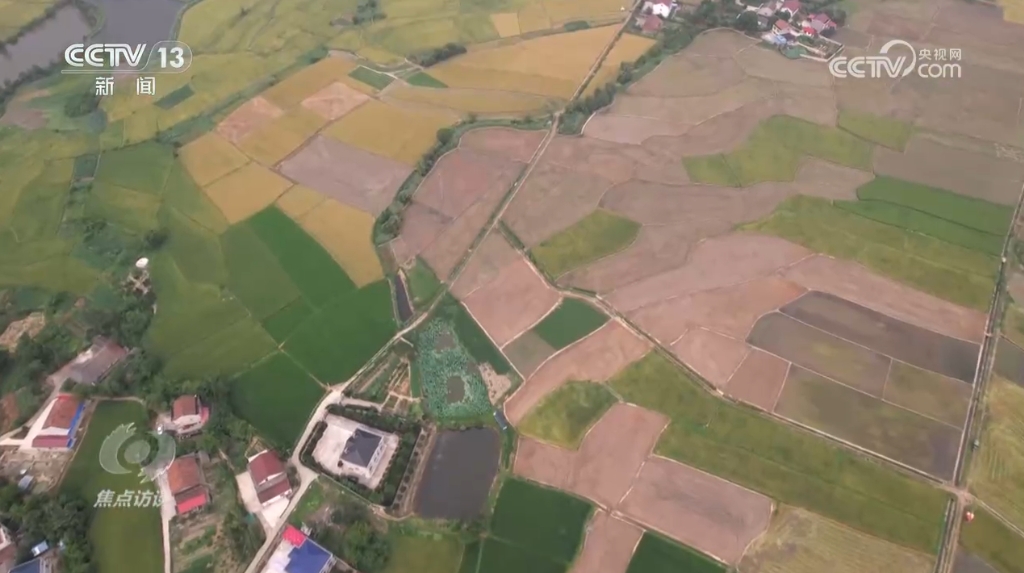
沉甸甸的收获——2025年夏季粮油收获一线观察
Xin Hua She· 2025-06-09 12:42
Core Insights - The article highlights the successful summer harvest of wheat and oilseed rape in China, emphasizing the resilience of farmers and the implementation of advanced agricultural practices to overcome challenges such as drought and extreme weather [1][5]. Group 1: Wheat Harvest - The wheat harvest is progressing well, with farmers reporting higher yields compared to last year, attributed to improved seed quality and agricultural practices [2][4]. - The Ministry of Agriculture has been promoting the integration of high-quality seeds, advanced farming techniques, and effective disaster prevention measures to enhance wheat production [3][4]. - In Hebei, the local agricultural department estimates an increase in summer grain production due to effective harvesting strategies and improved farming conditions [2][4]. Group 2: Oilseed Rape Harvest - Oilseed rape, which accounts for 40% of the annual oil supply, is also experiencing a successful harvest, with significant increases in planting area and yield [4]. - In Hubei, the oilseed rape planting area is over 19.1 million acres, with an average yield nearing 160 kg per acre, and total production expected to exceed 3 million tons this year [4]. - The article notes the importance of summer crops like wheat and oilseed rape for food security and economic stability in the face of domestic and international challenges [4]. Group 3: Agricultural Technology and Support - Advanced agricultural machinery, including over 1.7 million units, is being deployed to enhance harvesting efficiency, with smart technologies like the Beidou system being utilized for optimal operation [7][8]. - The government has established numerous service stations and streamlined processes to support farmers in accessing machinery and resources for the harvest [8]. - Training and monitoring initiatives are in place to minimize losses during the harvesting process, with significant efforts made in Jiangsu to promote low-loss harvesting techniques [8]. Group 4: Challenges and Resilience - The article discusses the severe challenges posed by extreme weather, including drought and strong winds, which have impacted crop yields [5][6]. - Government support has been crucial in mitigating these risks, with financial assistance and expert guidance provided to farmers facing adverse conditions [5][6]. - The resilience of farmers and the collaborative efforts of various departments have been pivotal in achieving a successful harvest despite these challenges [5][6].
首季中国经济观察|“四良”融合 粮油生产开局良好
Xin Hua She· 2025-04-28 03:30
Core Insights - The agricultural sector is experiencing a positive trend in spring planting, with nearly 20% of the national grain sowing progress completed by April 17, slightly ahead of last year [1] - The overall outlook for summer grain and oil production is favorable, with stable planting areas and good crop growth conditions reported [1] Group 1: Good Land - The foundation of grain production is quality arable land, with innovative practices being adopted in regions like Jilin Province to enhance soil protection and productivity [3][5] - The introduction of smart agriculture systems is enabling precise land management, improving efficiency and yield [5] Group 2: Quality Seeds - Quality seeds are likened to the "chip" of agriculture, with advancements in seed breeding in regions like Yunnan and Qinghai leading to increased production capabilities [6][7] - The annual seed production in Yuanmou County reaches 405 million pounds, with significant contributions to national crop planting [6] Group 3: Efficient Machinery - The integration of smart machinery, such as unmanned tractors and drones, is revolutionizing agricultural practices, allowing for precise operations and significant labor cost savings [13][16] - In Shandong Province, drone technology is enabling rapid pest control across large areas, enhancing efficiency and reducing chemical usage [18] Group 4: Advanced Techniques - Innovative agricultural techniques, such as the use of green manure and organic fertilizers, are improving soil quality and crop yields [20] - Agricultural experts are actively providing guidance to farmers during critical growth periods to ensure optimal conditions for crop development [20]