
反向敲出期权

Search documents
提前大选风险叠加日本央行决议在即,日元下一步拿了什么“剧本”?
第一财经· 2026-01-16 09:23
Core Viewpoint - The article discusses the volatility of the Japanese yen due to the upcoming Bank of Japan meeting and the uncertainty surrounding the early election, highlighting concerns over potential government intervention to support the currency [3][4]. Group 1: Yen Volatility and Government Intervention - The Japanese yen has depreciated to its lowest level against the US dollar in 18 months, reaching 159.45, with the dollar trading around 158.60 [8]. - Prime Minister Sanna Takashi's decision to dissolve the House of Representatives and call for early elections may strengthen her position and allow for increased government spending, contributing to yen depreciation [8]. - Analysts expect continued volatility in the yen, with potential intervention from Japanese authorities if the dollar-yen exchange rate approaches the 161-163 range [9]. Group 2: Market Reactions and Hedge Fund Strategies - Hedge funds are betting on further yen depreciation, with call options on the dollar-yen pair significantly outpacing put options, indicating strong bullish sentiment [11]. - The market is closely monitoring the psychological level of 160, with expectations that substantial intervention may occur if the exchange rate approaches 165 [11][12]. - The divergence between the yen's performance and the Nikkei 225 index, which recently hit a record high, suggests a disconnect between Asian equity markets and currency movements [12][13].


提前大选风险叠加日本央行决议在即,日元下一步拿了什么“剧本”?
Di Yi Cai Jing· 2026-01-16 09:12
Core Viewpoint - The Japanese yen is experiencing volatility due to a combination of factors, including the upcoming elections and potential monetary policy decisions by the Bank of Japan, leading to concerns about possible government intervention to support the currency [1][3][4]. Group 1: Currency Fluctuations - The yen has depreciated to its lowest level against the dollar in 18 months, reaching 159.45, with the dollar trading around 158.60 [3]. - Investors are increasingly worried about the volatility of the yen, especially with the potential for government intervention if the yen continues to weaken [4][5]. - The market is closely monitoring the psychological level of 160, as it may trigger intervention from Japanese authorities [4][6]. Group 2: Political and Economic Factors - Prime Minister Suga has announced the dissolution of the House of Representatives for early elections, which may strengthen his position and allow for increased government spending [3]. - The upcoming Bank of Japan meeting is expected to provide insights into the future path of interest rates, with speculation that the central bank may maintain its current rate [5]. - There is a notable divergence between the performance of the yen and the Nikkei 225 index, which recently reached a historical high, indicating a potential shift in investment strategies in the region [6][7]. Group 3: Market Sentiment and Investment Strategies - Hedge funds are betting on further depreciation of the yen, with a significant volume of call options indicating strong bullish sentiment towards the dollar-yen exchange rate [5][6]. - Structural investment demand for the dollar-yen remains robust, with traders anticipating intervention from the Bank of Japan if the exchange rate approaches the 160-165 range [6]. - The correlation between the MSCI Asia-Pacific index and the Bloomberg Asian Dollar Index has recently dropped below zero, suggesting a decoupling of stock market performance from currency movements in the region [7].

政坛巨震叠加央行议息:日元跌破159后,162“干预红线”再成焦点
智通财经网· 2026-01-16 01:17
Core Viewpoint - The Japanese yen is experiencing significant volatility due to rising uncertainty surrounding early elections and an upcoming Bank of Japan meeting, with traders on high alert for potential currency fluctuations [1][4]. Group 1: Currency Movements and Market Reactions - The yen fell to an 18-month low against the dollar earlier this week, driven by expectations that Prime Minister Fumio Kishida will call for elections to solidify his position and increase government spending [1]. - The yen briefly dropped to 159.45 and was around 158.65 on Friday morning, with the 160 level being a psychological threshold that the market is closely monitoring [4]. - The recent depreciation of the yen has raised concerns about potential market intervention by the Japanese government to support the currency, with officials focusing more on the magnitude and speed of fluctuations rather than specific levels [1][4]. Group 2: Central Bank and Policy Implications - Investors are keenly awaiting signals regarding interest rate hikes from Bank of Japan Governor Kazuo Ueda in the upcoming policy decision [1]. - The last interest rate hike by the Bank of Japan in December did not provide lasting support for the yen, and officials are increasingly concerned about the yen's impact on inflation, which may influence future rate decisions [4]. - The lack of hawkish comments from the central bank during the last press conference led to a significant weakening of the yen, indicating the market's sensitivity to the Bank's communications [4]. Group 3: Hedge Fund Activities and Market Sentiment - Hedge funds are aggressively buying call options for USD/JPY, betting on a depreciation of the yen to around 165, which they believe would trigger substantial market intervention by Japanese authorities [4][5]. - There is a sustained demand for investment in the high-end structure of USD/JPY, with notable direct option buying and leveraged trading strategies being deployed [5]. - Data from the Depository Trust & Clearing Corporation (DTCC) shows that the volume of call options traded was more than double that of put options, reflecting strong bullish sentiment towards USD/JPY [6].
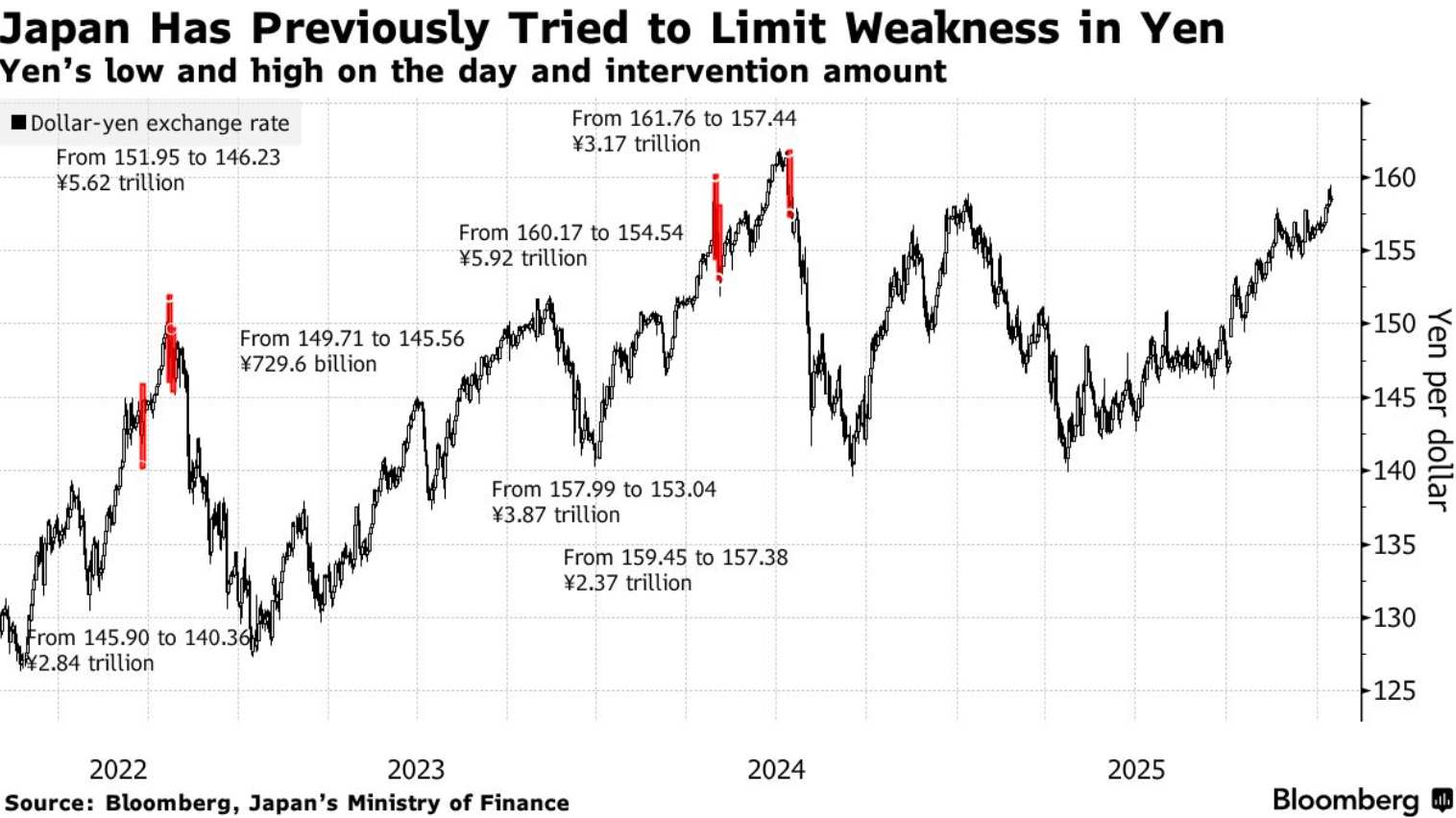
无视警告!对冲基金狂买美元兑日元看涨期权,豪赌日元贬值至165
智通财经网· 2026-01-15 04:21
Group 1 - Hedge funds are ignoring warnings from Japanese officials about currency intervention and continue to bet on the options market, believing that the yen must fall to around 165 against the dollar for substantial intervention to occur [1] - The yen reached an 18-month low against the dollar, prompting warnings from the finance minister and foreign exchange officials, while the economic security minister announced plans for an early election, reinforcing expectations of a continued rise in the dollar-yen exchange rate [1] - Nomura International's forex options trader noted sustained demand for high-structure investments in dollar-yen, with ongoing direct option buying and leveraged trading structures betting on intervention around the 160-165 exchange rate range [1] Group 2 - Data from the Depository Trust & Clearing Corporation (DTCC) indicated that the volume of call options traded was more than double that of put options for transactions of $100 million or more, reflecting strong bullish sentiment towards the dollar-yen exchange rate [2] - The current exchange rate has rebounded to a key level that was significant during the last intervention by the Japanese finance ministry in July 2024, creating a resonance between "policy intervention memory" and "current market bullish sentiment" [2] Group 3 - The rapid rise of the dollar against the yen and the threat of intervention from the Bank of Japan have led some investors to increase their holdings of put options for hedging or speculation [4] - Barclays' global forex options head noted that some investors are using options to hedge against potential risks of currency intervention due to the rising dollar-yen exchange rate [4]
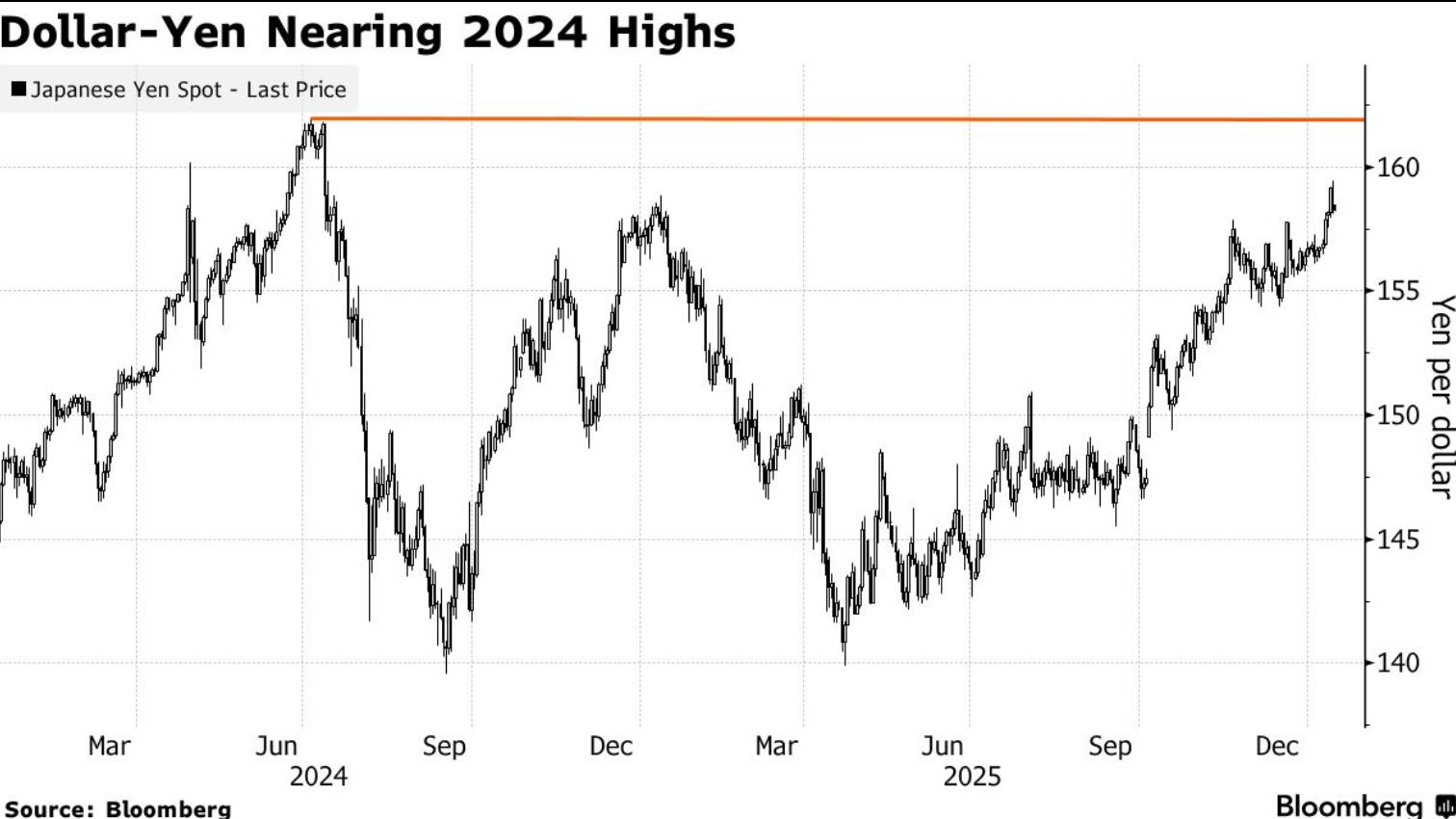
对冲基金借期权杠杆押注日元跌至165
Xin Hua Cai Jing· 2026-01-15 02:40
Core Viewpoint - Hedge funds are ignoring warnings from Japanese authorities and are betting on the Japanese yen potentially falling to around 165 against the US dollar before any intervention occurs [1] Group 1: Hedge Fund Activities - There is a sustained demand for bullish structures on the USD/JPY pair among hedge funds, with a continuous influx of direct option purchases and leveraged structured trades [1] - These positions anticipate that the Bank of Japan may intervene in the 160-165 range [1] Group 2: Trading Strategies - The leveraged structures mentioned include reverse knock-out options, which become worthless upon reaching specific price barriers but are more cost-effective than standard call options [1] - The rapid rise of the currency pair and the threat of intervention have prompted some investors to buy put options for hedging and speculative trading [1] Group 3: Market Sentiment - Concerns over potential intervention have led some investors to seek short-term downside protection [1]