外汇期权

Search documents
每周股票复盘:海目星(688559)拟开展外汇套期保值业务
Sou Hu Cai Jing· 2026-02-07 18:15
Core Viewpoint - The company, HaiMuxing Laser Technology Group Co., Ltd., is actively managing its financial strategies by engaging in asset transfer and foreign exchange hedging to mitigate risks and optimize financial performance [1][3]. Company Announcements - HaiMuxing's stock closed at 56.42 yuan on February 6, 2026, down 2.39% from the previous week, with a market capitalization of 13.979 billion yuan, ranking 23rd in the automation equipment sector [1]. - The company will hold its first extraordinary general meeting of 2026 on February 25, 2026, to discuss the foreign exchange hedging proposal [2][5]. - The board approved the sale of a 5% stake in Sichuan Huachuan Xingguang Medical Technology Co., Ltd. to former supervisor He Changtao for 1 yuan, reducing its ownership from 80% to 75% [3][5]. Foreign Exchange Hedging - The company plans to conduct foreign exchange hedging activities to mitigate currency fluctuation risks, with a maximum trading margin and premium limit of 300 million yuan and a maximum contract value of 1 billion yuan per trading day [2][3]. - The hedging strategy will include forward foreign exchange contracts, foreign exchange swaps, and foreign exchange options, funded by the company's own resources and not intended for speculative trading [2][3].

美元对冲属性失效,9.6万亿市场迎来剧烈波动!
Jin Shi Shu Ju· 2026-02-05 12:31
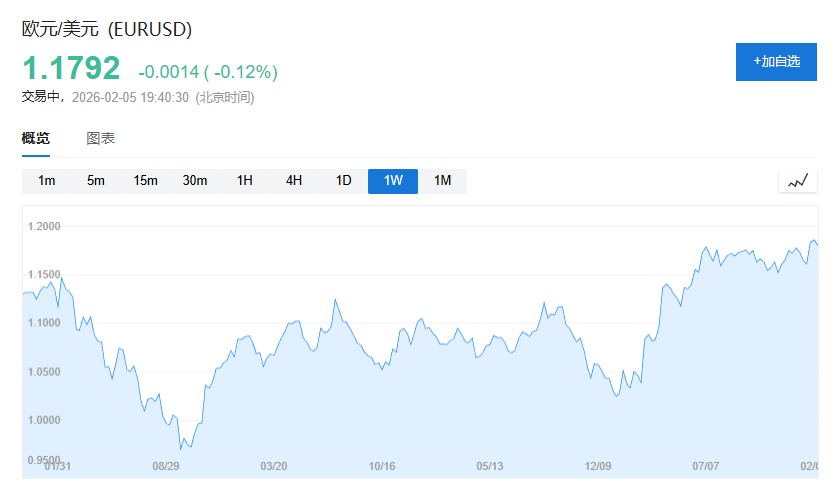
Core Insights - The global forex market, valued at $9.6 trillion, is experiencing significant volatility, marking the most intense fluctuations since April of the previous year, with the dollar hitting a four-year low and the euro reaching a five-year high [1] - Uncertainty in policy-making, including President Trump's threats and the ambiguous direction of the Federal Reserve, is eroding confidence in the dollar, leading to increased trading commissions for Wall Street banks [1] - The resurgence of volatility is prompting large corporations and hedge funds to hedge their positions, indicating a renewed interest in G10 currency trading [2] Market Dynamics - The options market is seeing a surge in bets on dollar volatility, reaching the highest levels since April of last year, driven by recent turmoil in the precious metals market [2] - The correlation between a weakening dollar and market volatility has reached historic highs, suggesting further increases in exchange rate fluctuations [2] - Major banks, such as Bank of America, anticipate further declines in the dollar and an increase in demand for foreign exchange hedging [2] Trading Activity - Daily trading volumes in January have increased by 80% compared to the second half of 2025, indicating heightened activity in the forex options market [3] - Historical data shows that the past week featured two of the most active trading days in forex options, reflecting a surge in hedging demand and speculative bets [3] - Clients are particularly interested in short positions on dollar pairs against the euro and yen, highlighting a shift in trading strategies [3] Volatility Trends - The recent resurgence in volatility follows a period of low volatility that reached its lowest levels since early 2022, attributed to structural changes in market dynamics rather than macroeconomic factors [5] - Systematic strategies employed by hedge funds, which involve shorting volatility, may contribute to a quicker return to low volatility levels [5] - Analysts suggest that the current volatility is sufficient to support a slight increase in forward volatility indicators [5]
2026年2月人民币汇率走势深度解读:把握波动逻辑,掘金市场机遇
Sou Hu Cai Jing· 2026-02-05 12:28
Core Viewpoint - The RMB exchange rate has become a focal point in the financial market amid significant global economic adjustments and geopolitical tensions in early 2026, with the offshore RMB/USD rate breaking the key 6.95 level, indicating strong market expectations for RMB appreciation [1][2]. Summary by Sections 1. RMB Exchange Rate Trends in February 2026 - The overall trend of the RMB against the USD in February 2026 is characterized by strong fluctuations within a range, making sustained unilateral movements unlikely [2]. - On February 3, the offshore RMB surged past the 6.95 resistance level, with a daily increase exceeding 350 basis points, reaching a high of 6.93, igniting market expectations for RMB appreciation [2][3]. - The core drivers supporting the RMB's strength include steady domestic economic recovery and resilient foreign trade, with a trade surplus of $1.2 trillion in 2025 providing solid fundamental support [2][3]. 2. Factors Limiting RMB Appreciation - The short-term stabilization of the USD index and hawkish signals from the new Federal Reserve chair candidate have dampened expectations for aggressive monetary easing, indirectly limiting RMB appreciation [3]. - The lack of a sustained favorable interest rate differential between China and the US and potential geopolitical risks could also exert short-term pressure on the RMB [3]. 3. Core Volatility Range and Institutional Divergence - Financial institutions have differing forecasts for the RMB exchange rate, with a consensus range of 6.90-7.05. Goldman Sachs predicts a more optimistic outlook, suggesting the RMB could reach 6.85 or even below 6.80, driven by expectations of a weaker USD index and continued inflows into RMB assets [4][5]. - Domestic brokerages like CITIC Securities are more cautious, suggesting a range of 6.92-7.05, emphasizing the need for stable exchange rate policies to avoid rapid appreciation that could impact export enterprises [5]. 4. Internal and External Factors Driving Exchange Rate Logic - Internal factors such as trade surplus and economic recovery are crucial for RMB stability, with the trade surplus of $1.2 trillion in 2025 providing a safety net [7]. - External variables, particularly the USD index, play a significant role in short-term fluctuations, with recent hawkish signals from the Federal Reserve limiting RMB appreciation potential [8]. 5. Divergence in Predictions Between Foreign and Domestic Institutions - Foreign investment banks like Goldman Sachs focus on external factors, predicting RMB appreciation due to a weaker USD and global capital inflows, while domestic brokerages emphasize internal economic balance and the potential risks of rapid RMB appreciation [11]. 6. Strategies for Individuals and Enterprises - For individual investors, the strategy should focus on avoiding speculation and adapting to the exchange rate fluctuations, such as gradually exchanging currency when the RMB approaches 6.90 [13]. - Export and import enterprises should utilize hedging tools and diversify settlement currencies to mitigate risks associated with exchange rate volatility [15].
汇市动荡加剧!特朗普“弱势美元”预期引发期权交易“返场”
Hua Er Jie Jian Wen· 2026-02-05 12:03
Core Insights - The global forex market, valued at $9.6 trillion, is experiencing a resurgence in volatility, providing trading opportunities for market participants [1] - The U.S. dollar has fallen to a four-year low, while the euro has surged to a five-year high, marking the most significant fluctuations in the currency market since April of the previous year [1] Group 1: Market Dynamics - The surge in volatility is primarily driven by unpredictable policy decisions, including Trump's threats and the confusion surrounding Federal Reserve policies, which are undermining confidence in the dollar [4] - The weakening dollar has led to the British pound reaching its highest level since 2021 and the Swiss franc hitting its strongest level since 2015 [4] - The correlation between the weakening dollar and volatility has reached record levels, indicating that further volatility may be on the horizon [8] Group 2: Trading Activity - Options betting on significant dollar fluctuations are at their highest level since April of the previous year, coinciding with market disruptions caused by Trump's tariffs [7] - Major corporations with forex exposure are likely seeking to hedge their positions, while hedge funds are becoming more active in profiting from volatility [7] - There has been a notable increase in trading volumes, with Optiver reporting an 80% rise in average daily trading volume compared to the second half of 2025 [9] Group 3: Market Sentiment - Investors are increasingly looking for alternatives to the dollar as a safe-haven asset, as its traditional role is diminishing [8] - The expectation of a weaker dollar is supported by Trump's advocacy for a weaker currency, contrasting with the historical preference for a strong dollar [8] - Some analysts express skepticism about the sustainability of increased trading volumes and volatility, citing past instances where volatility quickly subsided [10]

外贸企业外汇套保疾进
经济观察报· 2026-01-29 14:53
Core Viewpoint - The rapid growth of foreign exchange hedging in the past five years has become a crucial tool for companies to mitigate exchange rate risks, with a significant increase in the scale and adoption of such strategies among enterprises [3][4]. Group 1: Growth of Foreign Exchange Hedging - In 2025, the scale of enterprises using foreign exchange derivatives to manage exchange rate risks exceeded $1.9 trillion, nearly doubling since 2020 [3]. - The foreign exchange hedging ratio among enterprises reached 30%, an increase of 8 percentage points compared to 2020, indicating a stronger awareness and operational capability in managing exchange rate risks [3]. Group 2: Demand for Hedging - The demand for foreign exchange hedging remains robust, as many export enterprises face declining profit margins due to intense market competition, with some reporting export profit margins below 5% [4]. - Companies are increasingly concerned about rapid appreciation of the RMB against the USD, which could significantly reduce their foreign exchange earnings and profits [4][8]. Group 3: Changing Attitudes Towards Hedging - There has been a notable shift in the attitude of foreign trade enterprises towards foreign exchange hedging, with many now actively seeking hedging solutions rather than questioning their utility [8]. - In 2025, numerous foreign trade enterprises participated in promotional activities for foreign exchange hedging, reflecting a significant change from previous years when interest was minimal [8]. Group 4: Psychological Factors - Over 60% of enterprise leaders exhibit a "swinging psychology," recognizing the benefits of foreign exchange hedging while still holding onto a speculative mindset, hoping to time the market for better exchange rates [11]. - This speculative approach can lead to increased exposure to foreign exchange risks, as companies may gamble on favorable currency movements instead of securing stable rates through hedging [11][12]. Group 5: Cost Concerns - High costs associated with foreign exchange hedging are a significant barrier for many small and medium-sized enterprises, with some opting out of hedging when costs exceed 10% of their profits [16][17]. - The current interest rate differentials between China and the U.S. have pushed up the costs of hedging, making it less attractive for companies [19][20]. Group 6: Solutions and Strategies - To address the high costs of foreign exchange hedging, initiatives such as foreign exchange option fee subsidies are being implemented, which could reduce costs by up to 70% for small and medium-sized enterprises [20]. - Companies are encouraged to adopt a more systematic approach to hedging, focusing on long-term financial stability rather than short-term speculative gains [14][21].

高盛外汇交易员:下跌才刚刚开始,美元迎来新一轮贬值
Hua Er Jie Jian Wen· 2026-01-28 03:41
Group 1 - The core viewpoint is that the US dollar index has experienced a significant decline, dropping over 3% in the past six trading days, marking the largest six-day drop since April 2025. Goldman Sachs predicts that this depreciation is just beginning, with the dollar index potentially falling further to 92.75, a four-year low, in the coming months [1][2]. - Goldman Sachs' foreign exchange team highlights three main currencies—Yen, Renminbi, and Euro—that are moving in the direction of dollar depreciation. A key driver of this trend has been the New York Fed's inquiry into the dollar-to-yen exchange rate, signaling a stronger government involvement compared to previous years [1][2]. - The narrative of the "exceptionalism" of the US dollar is coming to an end, as various factors are aligning to prepare for the next round of declines. Reports of European pension funds reducing their exposure to US assets are increasing, contributing to the dollar index nearing a four-year low [3]. Group 2 - The US government's approach to the foreign exchange market is becoming more proactive, as indicated by the New York Fed's inquiry into the dollar-to-yen exchange rate, which reflects a heightened concern for exchange rate levels by the current administration [2]. - The weakening of the dollar is causing concerns about cross-asset correlations, which may lead investors to adjust their foreign exchange hedging ratios. Australian pension funds are currently at historical lows in their foreign exchange hedging ratios, prompting discussions about increasing these ratios [3].

上海耀皮玻璃集团股份有限公司关于使用部分暂时闲置募集资金进行现金管理的公告
Shang Hai Zheng Quan Bao· 2026-01-26 19:36
Group 1 - The company plans to use a maximum of RMB 280 million of temporarily idle raised funds for cash management, focusing on high-security, liquid investment products with a maturity of no more than 12 months [3][4][9] - The investment products include structured deposits, time deposits, agreement deposits, large certificates of deposit, and notice deposits from qualified financial institutions, and these funds will not be used for pledging or securities investment purposes [2][9] - The decision to use these funds was approved by the company's board of directors and does not require shareholder approval, as it falls within the board's authority [3][15] Group 2 - The company aims to enhance the efficiency and returns of the raised funds while ensuring that the investment does not affect the construction and use of the raised funds projects [4][20] - The funds for this cash management initiative come from the proceeds of a non-public offering of shares, which raised approximately RMB 295 million after deducting issuance costs [6][8] - The cash management products will be managed by a committee authorized by the board, ensuring compliance with relevant regulations and timely information disclosure [10][12][49] Group 3 - The company has established risk control measures to manage potential market risks associated with the cash management investments, including strict adherence to prudent investment principles and regular monitoring of investment performance [16][17][48] - The company will ensure that the cash management does not impact its daily operations or the normal progress of investment projects, thereby safeguarding the interests of the company and its shareholders [20][36] - The company’s sponsor has confirmed that the cash management initiative complies with relevant regulations and does not harm the interests of the company or its shareholders [21][36]

股市必读:英派斯(002899)1月16日主力资金净流出146.01万元
Sou Hu Cai Jing· 2026-01-18 20:20
Group 1 - The company reported a closing price of 32.3 yuan on January 16, 2026, with an increase of 2.9% and a turnover rate of 4.46% [1] - The company held its fourth board meeting on January 16, 2026, where several resolutions were passed, including expected daily related transactions with Taishan Sports Industry Group totaling no more than 20.75 million yuan [1][4] - The company plans to apply for a new comprehensive credit limit of up to 500 million yuan from financial institutions, with the chairman authorized to sign relevant documents [1][4] Group 2 - The company intends to conduct foreign exchange hedging business to mitigate exchange rate fluctuation risks, with a maximum contract value of 200 million yuan per trading day [2][3] - The foreign exchange hedging business will primarily involve forward foreign exchange settlements, swaps, and options, using the company's own funds without involving raised funds [2] - The company plans to use up to 500 million yuan of idle self-owned funds for cash management, investing in safe and liquid financial products, with a validity period of 12 months [3][4]

天原股份:关于公司及子公司开展外汇衍生品交易的公告
Zheng Quan Ri Bao· 2026-01-16 15:20
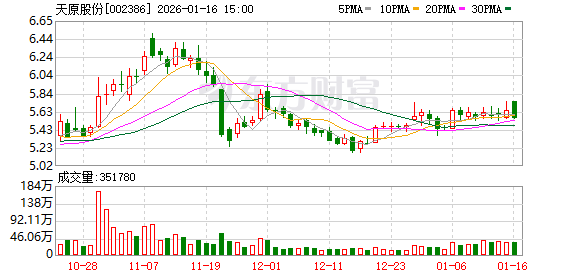
Core Viewpoint - Tianyuan Co., Ltd. announced the approval of a proposal to engage in foreign exchange derivative trading with a limit of up to 50 million USD for a duration of 12 months [2] Group 1: Company Announcement - The company will hold the 23rd meeting of the 9th Board of Directors on January 16, 2026, to review the proposal [2] - The types of foreign exchange derivative transactions include forward foreign exchange contracts, foreign exchange trading, foreign exchange options, currency swaps, and foreign exchange interest rate swaps, as well as combinations of these products [2]

日元遭疯狂做空!分析师警告:若跌破162,可能迅速跌向170
Hua Er Jie Jian Wen· 2026-01-15 06:23
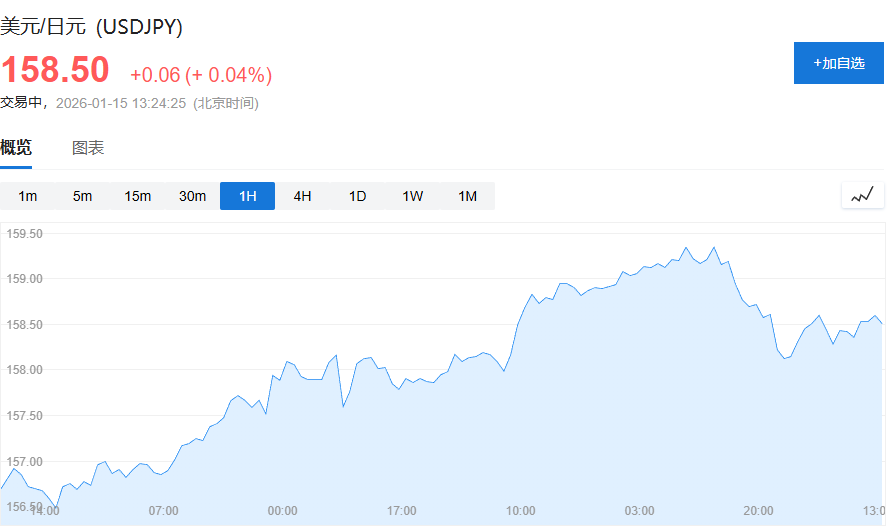
Core Viewpoint - The Japanese yen has fallen to an 18-month low, with hedge funds betting that the authorities will tolerate a decline towards 165, while analysts warn that if the key technical level of 162 is breached, the exchange rate could rapidly surge to 170, testing the effectiveness of government intervention [1][4]. Group 1: Market Sentiment and Positioning - The options market shows that the volume of call options betting on the dollar's rise is more than twice that of put options, indicating a strong market expectation for the yen to continue weakening [1][5]. - Hedge funds are ignoring intervention warnings and are betting on the yen falling to the 165 level, with a stable demand for higher dollar-yen structures observed [5]. - The imbalance in options trading, with call options being favored, highlights a bullish sentiment towards the dollar-yen exchange rate despite the current levels being similar to those seen during the last intervention in July 2024 [5]. Group 2: Technical Analysis and Risks - Analysts indicate that if the dollar-yen rate breaks through the 162 level, it could quickly rise to 170 due to concentrated options-related orders around that level [6]. - The weakening of the yen's safe-haven appeal is noted, as it continues to decline even amid heightened risk aversion triggered by geopolitical events [7]. - The current market environment differs significantly from 2024, with a neutral net position in yen futures indicating a lack of large short positions available for covering, which could limit potential rebounds [8][9]. Group 3: Political and Economic Factors - Political uncertainty surrounding Prime Minister Suga's early election plans is adding downward pressure on the yen, with expectations that a majority win for the ruling party would lead to continued expansionary policies [10]. - Deutsche Bank outlines three scenarios regarding potential election outcomes, suggesting that a failure to secure a majority could lead to market sell-offs and a strengthening of the yen, while a stable majority could weaken it further due to fiscal expansion expectations [10].