
咸菜

Search documents
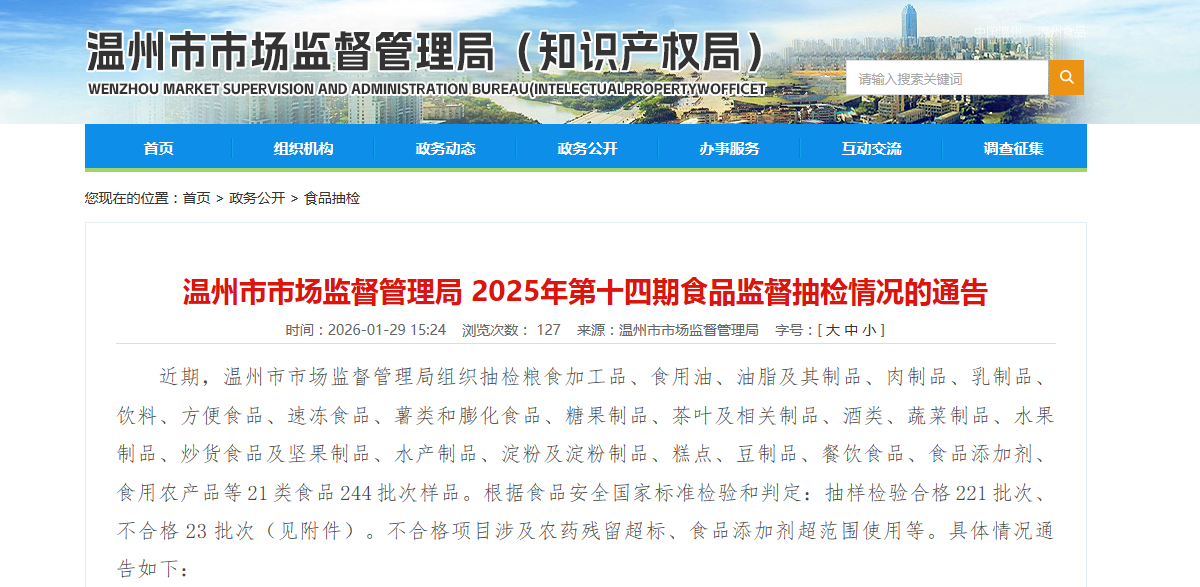
浙江省温州市市场监督管理局2025年第十四期食品监督抽检情况的通告
Zhong Guo Zhi Liang Xin Wen Wang· 2026-02-05 08:14
Core Viewpoint - The recent inspection by Wenzhou Market Supervision Administration revealed that out of 244 food samples tested, 221 passed while 23 failed to meet national food safety standards, primarily due to pesticide residue and excessive use of food additives [2][3][4][5][6]. Summary by Categories Non-compliant Food Items - Dried vegetables sold by Longgang City Lao Liang Dried Seafood Store contained lead (Pb) exceeding national safety standards [2]. - Snap peas sold by Wenzhou Vegetable Basket Wholesale Market Lin An Vegetable Store had acetamiprid levels not compliant with safety standards [3]. - Nut pudding sold online by Wenzhou Ouhai New Bridge Bang Ge E-commerce Store showed high levels of total bacterial count, coliforms, and molds [3]. - Water-boiled peanuts sold by Liu Liangsheng Delicacy Store in Yongjia County had sulfur dioxide residue exceeding safety limits [4]. Analysis of Non-compliance - Lead (Pb): The maximum allowable limit for lead in dried vegetables is 0.8 mg/kg, with potential contamination from environmental sources or production processes [7]. - Cadmium (Cd): The maximum allowable limit for cadmium in snap peas is 0.05 mg/kg, with contamination likely from soil or water [7]. - Pesticides: Various pesticides such as dichlorvos and carbofuran were found in excess, with maximum allowable limits set at 0.02 mg/kg for certain vegetables [8][9]. Regulatory Actions - The Wenzhou Market Supervision Administration has mandated local regulatory bodies to investigate and take corrective actions against the non-compliant products, including product recalls and risk control measures [16].

冬季腌腊食品上线 专家提醒民众:警惕过量摄入“隐性盐”损害健康
Zhong Guo Xin Wen Wang· 2026-01-12 12:24
Core Viewpoint - The article emphasizes the health risks associated with excessive consumption of "hidden salt" found in processed and cured foods during winter, highlighting the need for public awareness and dietary adjustments to mitigate these risks [1][2][3]. Group 1: Health Risks of Hidden Salt - "Hidden salt" refers to salt that is not easily detected in processed foods, leading to higher than recommended daily intake levels, which should not exceed 5 grams for adults [2]. - High salt intake can lead to acute hypertension, as evidenced by a case where an individual experienced a blood pressure spike to 160/100 mmHg due to excessive consumption of cured meats [1][2]. - Long-term high salt consumption can result in various health issues, including kidney damage, increased risk of cardiovascular diseases, and osteoporosis due to calcium loss [2][3]. Group 2: Seasonal Consumption Patterns - Winter is identified as a peak season for hidden salt intake, driven by increased consumption of cured meats, hot pot dishes, and other high-salt foods [3]. - The cold weather leads to reduced outdoor activity and a slower metabolism, which can result in unintentional overconsumption of salt [3]. Group 3: Recommendations for Dietary Changes - Experts recommend prioritizing fresh foods such as vegetables, fruits, and lean meats, which are lower in salt content [4]. - Suggested cooking methods include using natural flavor enhancers like vinegar and herbs instead of salt, and employing techniques like steaming and boiling to reduce salt usage [4]. - Increasing the intake of potassium-rich foods is advised, as potassium helps to balance sodium levels in the body [4].
警惕“趁热吃” 远离食管癌
Xin Lang Cai Jing· 2026-01-05 18:44
Core Viewpoint - The recent surge in discussions about esophageal cancer, particularly the alarming case of a doctor diagnosing 11 patients with the disease in one morning, highlights the critical need for awareness regarding dietary habits and cancer risks [1] Dietary Risks - Unhealthy dietary habits are linked to a significant number of early-stage digestive tract tumors, with a focus on avoiding "danger zones" in food choices [2] - Consuming hot foods, particularly those above 65°C, is a primary concern as they can damage the esophageal mucosa, increasing cancer risk; the WHO classifies such hot drinks as a Group 2A carcinogen [2] - Processed foods like cured meats and pickled vegetables are also high-risk due to their salt content, which can harm the mucosal barrier of the digestive tract [2] - Other foods such as barbecued items, high-temperature fried foods, and moldy products contain known carcinogens like nitrosamines and aflatoxins, which pose additional risks [2] Distinguishing Symptoms - Differentiating between esophageal cancer and pharyngitis is crucial to avoid misdiagnosis; symptoms such as the sensation of a foreign body and swallowing difficulties can overlap [3] - In chronic pharyngitis, the sensation is more pronounced at rest, while esophageal cancer symptoms worsen with swallowing, often accompanied by chest pain and a burning sensation [3] - Chronic pharyngitis is typically triggered by environmental factors and may respond to anti-inflammatory medications, whereas esophageal cancer results from long-term unhealthy habits and requires further diagnostic procedures [3] Prevention and Early Detection - High-risk groups for esophageal cancer include individuals over 45, those with a family history of esophageal tumors, and those with habits like smoking and consuming high-temperature or pickled foods [4] - Regular screenings, particularly endoscopies every five years for high-risk individuals, are recommended to catch early-stage esophageal cancer, which can be treated effectively with a high five-year survival rate of over 90% [4] - Lifestyle changes, such as quitting smoking, reducing alcohol intake, and improving dietary habits, are essential for cancer prevention [4] Practical Recommendations - Simple methods to avoid consuming hot foods include allowing dishes to cool before serving and controlling water temperature to avoid high heat [5] - Encouraging thorough chewing of food can prevent damage to the esophageal mucosa and reduce the risk of inflammation [6]
母亲的咸菜
Xin Lang Cai Jing· 2025-12-28 17:20
Core Viewpoint - The article reflects on the nostalgic memories associated with the preparation and consumption of pickled vegetables, particularly focusing on the mother's traditional methods and the emotional connections tied to these culinary practices [1][5][6] Group 1: Preparation of Pickled Vegetables - The mother begins the process of making pickled vegetables early in the morning, carefully selecting fresh ingredients and preparing them with patience and skill [1] - The meticulous steps include washing, drying, and salting the vegetables, which are then packed into jars, symbolizing the preservation of seasonal flavors and family traditions [1][2] Group 2: Seasonal Consumption - The pickled vegetables accompany various seasonal dishes throughout the year, enhancing flavors and providing comfort during meals [2][3] - In spring, they are combined with fresh ingredients like bamboo shoots, while in summer, they are used in refreshing soups, showcasing their versatility [2][3] Group 3: Emotional Connections - The act of preparing and sharing meals with pickled vegetables evokes strong emotional ties to family and childhood memories, particularly the warmth and care of the mother [4][5] - The narrative emphasizes that the true essence of these experiences lies not just in the taste of the food but in the memories and love associated with the preparation and sharing of meals [5][6]
皮肤干燥难耐?吃对就能水润过冬
Xin Lang Cai Jing· 2025-12-19 17:24
Core Viewpoint - The article emphasizes the importance of dietary adjustments to combat skin dryness during winter, highlighting the connection between skin health and the functions of the lungs and kidneys according to traditional Chinese medicine [1]. Group 1: Recommended Foods for Skin Hydration - Foods that promote lung moisture include tremella, lily bulb, pear, honey, and lotus root, which help to nourish the lungs and alleviate skin dryness [3]. - Foods that nourish the kidneys include black sesame, black beans, goji berries, mulberries, and walnuts, which contribute to skin smoothness and hydration [4]. - Foods that strengthen the spleen and nourish blood include yam, red dates, millet, pumpkin, and longan, which enhance nutrient absorption and improve skin appearance [5]. Group 2: Foods to Avoid - Spicy foods such as chili, pepper, and ginger should be minimized as they can deplete body fluids and worsen dryness [7]. - Fried and barbecued foods like fried chicken and skewers can create internal heat, negatively affecting skin metabolism [8]. - High-sugar and high-salt foods, including candies and pickles, can accelerate water loss in the body, leading to further skin dehydration [9]. Group 3: Additional Habits for Skin Health - Reducing late-night activities is advised, as staying up late can deplete vital fluids and exacerbate dryness, with a recommendation to sleep before 11 PM [11]. - Moderate exercise, such as Tai Chi and brisk walking, is encouraged to promote blood circulation and aid in the distribution of body fluids to the skin [12]. - Maintaining skin moisture through timely application of body lotion after bathing can help reduce water evaporation, enhancing overall skin hydration [13].
巍山县米君咸菜销售店(个体工商户)成立 注册资本10万人民币
Sou Hu Cai Jing· 2025-09-20 09:45
Core Viewpoint - A new individual business, Weishan County Mijun Pickle Sales Store, has been established with a registered capital of 100,000 RMB, focusing on food sales and related activities [1] Company Summary - The legal representative of the newly established business is Mijun [1] - The business operates under the license for food workshop operations and food sales, which requires approval from relevant authorities before commencing activities [1] - The general business scope includes online sales of pre-packaged food and retail of edible agricultural products, with the latter being conducted independently under the business license [1]