热饮

Search documents
湖南三线小城春节消费火爆,商场就餐排队两小时,部分物价堪比一线城市| 新春走基层
Hua Xia Shi Bao· 2026-02-23 23:32
Core Insights - The article highlights the vibrant consumer activity in Changde during the Spring Festival, driven by returning residents and festive spending [2][3][4] Group 1: Consumer Behavior - Changde's retail and dining sectors experienced significant foot traffic, with some restaurants reporting wait times exceeding two hours [3][4] - The local population's return during the holiday season has led to increased demand for dining and shopping, as many street-side restaurants closed for the holiday [3][4] - Coffee shops in Changde opted to remain open during the holiday, responding to high consumer demand, with some owners canceling planned vacations due to overwhelming inquiries [4][5] Group 2: Economic Indicators - The total retail sales of consumer goods in Changde are projected to reach 179.78 billion yuan by 2025, reflecting a year-on-year growth of 4.9% [2] - By 2025, urban residents in Changde are expected to have an average consumption expenditure of 33,638 yuan, while rural residents will average 23,871 yuan, indicating steady growth in consumer spending [2] - The per capita disposable income for urban residents is projected to be 45,683 yuan, and for rural residents, 25,495 yuan by 2025, with both figures showing year-on-year increases of 4.2% and 5.8% respectively [6] Group 3: Price Trends - Prices for certain consumer goods in Changde have risen to levels comparable to first-tier cities like Beijing and Shanghai, particularly in fresh produce and dining [6] - For instance, the price of strawberries reached around 40 yuan per jin, and a typical meal for two at a hotpot restaurant cost approximately 220 yuan, similar to prices in major cities [6] - The overall consumer price trend reflects a growing cost of living, with local residents noting that prices for dining and fresh produce have not significantly decreased during the holiday season [6]


垂杨柳医院工会“冬送温暖”活动为职工鼓干劲
Xin Lang Cai Jing· 2026-01-29 17:44
Core Viewpoint - The article highlights a "Winter Warmth" initiative by the Chaoyang District Medical and Health Workers' Union in Beijing, aimed at providing support and care for frontline medical staff during the cold weather [1] Group 1: Initiative Details - The initiative involved distributing warm supplies, hot drinks, and food to frontline workers, including those in emergency, pediatrics, outpatient guidance, security, and logistics [1] - The distribution of these items was intended to alleviate the harsh conditions faced by staff and to show appreciation for their hard work [1] Group 2: Impact on Staff - Medical staff expressed that the care received would motivate them to maintain high levels of enthusiasm and commitment to their roles, ensuring the safety and efficiency of winter medical services [1] - The union aims to enhance staff's sense of belonging, happiness, and professional honor through such initiatives, recognizing their contributions [1] Group 3: Future Plans - The hospital union plans to continue addressing staff needs and improve the regular care mechanism, focusing on urgent issues faced by employees [1] - There is a commitment to enhance the precision of services provided to staff, ensuring that warmth and support are consistently available [1]
冷空气再袭广东 低温天气催热“取暖”生意
Xin Lang Cai Jing· 2026-01-11 04:51
Weather Impact on Consumer Behavior - Guangdong province is experiencing a significant drop in temperatures, with some areas recording lows below 5°C and Guangzhou's lowest temperature at 1.2°C [1] - The cold weather has led to increased demand for winter clothing and heating appliances, with retailers in Guangzhou and Shenzhen offering discounts and promotions [1] - Hot beverage sales have surged in Guangzhou's Tianhe Road shopping district, with many stores reporting a noticeable increase in sales [1] Food Industry Response - The cold weather has boosted the sales of winter comfort foods, such as hot pot ingredients, with items like lamb, beef, and fresh tripe trending on delivery platforms [1] - Restaurants offering warming dishes like clay pot rice and lamb stew have also seen rapid business growth [1] Agricultural Impact - The cold snap is expected to have a significant impact on the livestock and aquaculture industries in Guangdong, necessitating protective measures [1]
警惕“趁热吃” 远离食管癌
Xin Lang Cai Jing· 2026-01-05 18:44
Core Viewpoint - The recent surge in discussions about esophageal cancer, particularly the alarming case of a doctor diagnosing 11 patients with the disease in one morning, highlights the critical need for awareness regarding dietary habits and cancer risks [1] Dietary Risks - Unhealthy dietary habits are linked to a significant number of early-stage digestive tract tumors, with a focus on avoiding "danger zones" in food choices [2] - Consuming hot foods, particularly those above 65°C, is a primary concern as they can damage the esophageal mucosa, increasing cancer risk; the WHO classifies such hot drinks as a Group 2A carcinogen [2] - Processed foods like cured meats and pickled vegetables are also high-risk due to their salt content, which can harm the mucosal barrier of the digestive tract [2] - Other foods such as barbecued items, high-temperature fried foods, and moldy products contain known carcinogens like nitrosamines and aflatoxins, which pose additional risks [2] Distinguishing Symptoms - Differentiating between esophageal cancer and pharyngitis is crucial to avoid misdiagnosis; symptoms such as the sensation of a foreign body and swallowing difficulties can overlap [3] - In chronic pharyngitis, the sensation is more pronounced at rest, while esophageal cancer symptoms worsen with swallowing, often accompanied by chest pain and a burning sensation [3] - Chronic pharyngitis is typically triggered by environmental factors and may respond to anti-inflammatory medications, whereas esophageal cancer results from long-term unhealthy habits and requires further diagnostic procedures [3] Prevention and Early Detection - High-risk groups for esophageal cancer include individuals over 45, those with a family history of esophageal tumors, and those with habits like smoking and consuming high-temperature or pickled foods [4] - Regular screenings, particularly endoscopies every five years for high-risk individuals, are recommended to catch early-stage esophageal cancer, which can be treated effectively with a high five-year survival rate of over 90% [4] - Lifestyle changes, such as quitting smoking, reducing alcohol intake, and improving dietary habits, are essential for cancer prevention [4] Practical Recommendations - Simple methods to avoid consuming hot foods include allowing dishes to cool before serving and controlling water temperature to avoid high heat [5] - Encouraging thorough chewing of food can prevent damage to the esophageal mucosa and reduce the risk of inflammation [6]
地铁通勤路,越走越鲜活
Xin Lang Cai Jing· 2025-12-22 20:23
Core Insights - The article highlights the transformation of Beijing's subway stations from mere transit points to multifunctional urban spaces that enhance convenience and quality of life for commuters [1][2][3] Group 1: Urban Development and Services - The Central Urban Work Conference emphasizes a shift in urban development focus from large-scale expansion to quality improvement and efficiency [1] - Subway stations are evolving to include various services such as convenience stores, breakfast vendors, and public spaces, reflecting a trend towards enhancing urban core value and providing efficient access to services [1][2] - The introduction of services like Meituan's "Food Machine" has reached over 100,000 users and processed nearly 170,000 orders since its launch in July [2] Group 2: Community and Leisure Spaces - New parks and recreational areas near subway stations, such as pocket parks with children's play facilities, are being developed to enhance community engagement and leisure opportunities [3] - The "Small Station Park" project exemplifies a transit-oriented development (TOD) model, creating vibrant spaces that connect living, working, and leisure activities [3] Group 3: Infrastructure and Accessibility - Improvements such as "fast lanes" at subway stations are being implemented to reduce commuting times and enhance user experience [4] - The optimization of existing subway stations is crucial for future urban development, focusing on meeting diverse commuter needs through tailored services [5] Group 4: Inclusivity and Human-Centric Design - Recommendations for enhancing subway services include the integration of facilities for vulnerable groups, such as accessible features and family-friendly amenities [6] - Small changes in infrastructure can lead to significant improvements in urban convenience and inclusivity, contributing to a warmer and more accommodating city environment [6]
中国烹饪协会:11月份餐饮市场稳中有进 “双11”线上线下联动拉动消费
智通财经网· 2025-12-15 13:36
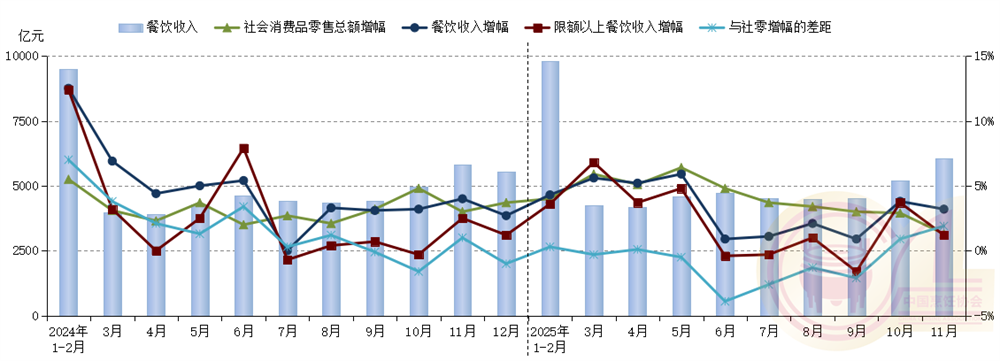
Group 1 - The overall operation of the restaurant market in November remained stable, continuing a trend of steady progress, but there are significant challenges due to a strong supply and weak demand [1] - The National Bureau of Statistics reported that in November 2025, national restaurant revenue reached 605.7 billion yuan, a year-on-year increase of 3.2%, while revenue from above-designated size units was 138 billion yuan, up 1.2% [1] - For the period from January to November 2025, national restaurant revenue totaled 522.45 billion yuan, with a year-on-year growth of 3.3%, and revenue from above-designated size units was 149.33 billion yuan, increasing by 2.3% [1] Group 2 - The China Cuisine Association noted a decline in the growth rate of national restaurant revenue and revenue from above-designated size units by 0.8 and 1.3 percentage points year-on-year, respectively [1] - The proportion of national restaurant revenue to total retail sales of consumer goods was 13.8%, an increase of 2.6 percentage points from the previous month, indicating that restaurant revenue growth outpaced the overall retail sales growth by 1.9 percentage points [1] - During the "Double 11" shopping festival, restaurant companies actively expanded their market through online pre-sales and live streaming, with significant increases in pre-sale orders for brands like Changsha Ju Wei Qu Ji and Shanghai Ha Ling Noodle House [2]

全球食界开年巨献:Gulfood 2026盛启双馆,联动万商
Zhong Guo Shi Pin Wang· 2025-12-08 08:25
Core Insights - The Gulfood 2026, recognized as a pivotal event in the global food industry, will take place from January 26 to 30, 2026, featuring a historic upgrade with a dual venue model at the Dubai Exhibition Centre and Dubai World Trade Centre, showcasing over 8,500 exhibitors from 195 countries [1] Group 1: Focus on Supply Sources - The Rice, Pulses, and Grains section will feature a variety of staple crops including Basmati rice, jasmine rice, lentils, chickpeas, and quinoa, highlighting global diversity and stable supply capabilities [3] - The Meat and Poultry section will cover all categories including beef, lamb, and poultry, gathering reliable bulk suppliers and professional exporters [3] - The Dairy section will present products from 60 countries, ranging from traditional cheeses to high-performance dairy ingredients [3] - The Fats and Oils section will showcase functional fats, sustainable alternatives, and customized fats, essential for the manufacturing industry [3] Group 2: Brands and Distribution - The Power Brands section will present leading brands and high-value products from the global food and beverage industry across the North Halls and Halls 1-8 of the Dubai World Trade Centre [6] - The Logistics and Grocery Trade sections will be co-located, featuring shipping companies, cold chain, warehousing, and packaging solutions, serving as a trade hub for grocery products [6] Group 3: Future Innovations - The Gulfood Fresh section will create a new market with growers and exporters, ensuring high-quality supply and year-round stability in the fresh food sector [9] - The Beverages section will offer a diverse range of drinks, including functional, craft, and health beverages, with a dedicated area for hot drinks [9] - The Startups & Tech section will gather over 250 startups and 150 investment firms, focusing on disruptive technologies such as AI, biotechnology, and precision fermentation, shaping the future of the food industry [9] Group 4: Early Bird Offers - Early bird tickets for Gulfood 2026 are now available, offering a 35% discount for online registration before the event, with a ticket price of 450 AED for access to both venues over five days [10] Group 5: Event Logistics - Most international travelers will arrive via Dubai International Airport, located approximately 15 minutes from the Dubai World Trade Centre, with efficient transportation plans in place to connect the two venues [12][14] - The Dubai Metro will enhance service during peak hours, and a rapid bus network will operate between the two venues to ensure smooth transportation for attendees [12][14] Group 6: Industry Insights - Gulfood 2026 will serve as a platform for deep dialogue and structural innovation in the global food industry, with Blooming Trade Data sharing insights on global trade flows and market signals to empower business decisions [15]

科尔尼发布饮料行业报告:企业已启动实质性脱碳举措,但转型速度与实施规模仍未达预期
科尔尼管理咨询· 2025-07-25 09:52
Core Viewpoint - The beverage industry faces significant challenges in translating sustainability commitments into quantifiable emission reductions, with current progress lagging behind the required pace to meet net-zero targets set for 2030 and 2050 [1][12]. Emission Tracking: Current Status - The beverage industry has shown a 10% improvement in carbon emissions compared to 2021 predictions, but the current compound annual reduction rate of -1.7% is far below the -7.8% needed to meet the 1.5°C temperature control target [2][3]. - If the current reduction pace continues, carbon emissions are projected to reach 1.2875 billion tons by 2030, exceeding the interim target of 1.25 billion tons by 3% [3]. - By 2050, emissions are expected to remain at 920 million tons, representing an 83% gap from the net-zero target of 160 million tons [3]. Sectoral Differences in Emission Reduction - Different beverage categories exhibit varying progress in emissions reduction, with wine leading at a 38.4% reduction, followed by beer and fruit wine at -26.4%, dairy and alternatives at -16.1%, ready-to-drink beverages at -8.3%, and hot drinks at -6.8% [5]. - Conversely, categories like spirits and soft drinks have seen increases in emissions by 94.6% and 10.5%, respectively, primarily due to improved reporting and increased production [5]. Decarbonization Strategies: Insights from CSOs - A survey of Chief Sustainability Officers (CSOs) from leading beverage companies revealed that only 17% are fully satisfied with their carbon reduction progress, while 66% are cautiously optimistic [7]. - Regarding net-zero targets, 40% of CSOs are confident in achieving their goals, while 60% express concerns about meeting certain benchmarks [7]. - The industry is actively pursuing decarbonization across the value chain, with 57% of CSOs adopting new agricultural practices and 71% implementing packaging reduction measures [8][10]. Investment and Structural Challenges - The beverage industry is characterized by gradual improvements rather than breakthrough changes, with key challenges including insufficient commercial value of decarbonization initiatives and low internal consensus [11]. - To overcome these barriers, companies need to integrate sustainability goals with core business strategies, enhance cross-departmental collaboration, and develop robust business case evaluations for long-term benefits [11][12]. Future Outlook - Despite the challenges, there is a positive momentum in the beverage industry towards achieving sustainability goals, with a focus on critical areas for investment and improvement [12]. - Companies are expected to increase decarbonization investments by 25% in 2025, reflecting a cautious yet optimistic approach to funding sustainability initiatives [10].

东莞便利店之王,狂飚540亿
创业邦· 2025-05-26 03:22
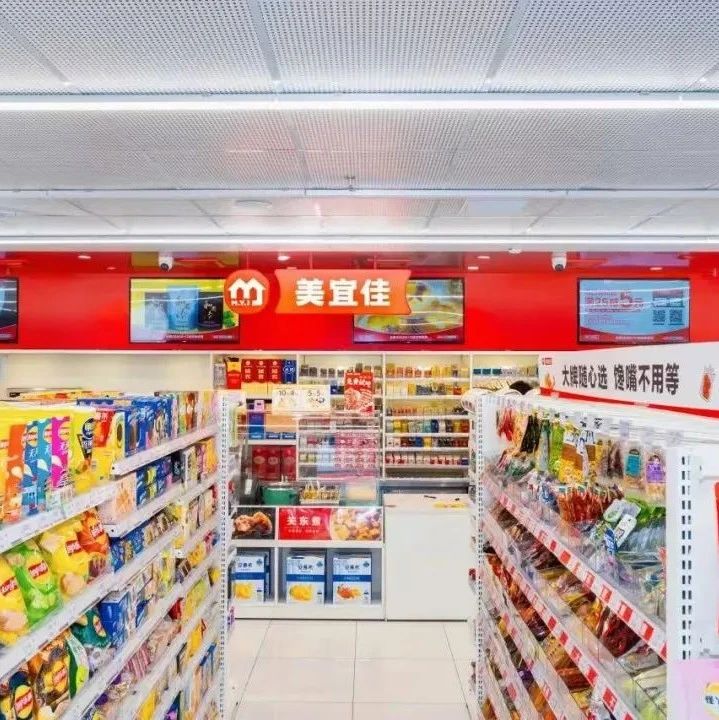
Core Viewpoint - Meiyijia, the leading convenience store chain in China, is aggressively expanding its store count and profitability, aiming for a target of 100,000 stores and 100 billion yuan in revenue by 2025 [3][4]. Group 1: Company Overview - Meiyijia has 37,943 stores, making it the largest convenience store chain in China, with a sales revenue of 54.2 billion yuan in 2023, reflecting a growth of over 20% [3][4]. - The company operates on a franchise model with low entry barriers, requiring a total investment of approximately 300,000 to 350,000 yuan for a 40-square-meter store [10][11]. Group 2: Business Strategy - Meiyijia's business model includes a focus on high-margin products, with an average gross margin of 25% on general merchandise, and a significant portion of revenue coming from franchise fees and supply chain profits [13][18]. - The company has been exploring new service models, such as "convenience store + community services," to attract more customers and enhance store traffic [11][16]. Group 3: Market Position and Challenges - Despite facing challenges from e-commerce and market saturation, Meiyijia has maintained steady growth, with annual sales growth in double digits since 2016 [14][16]. - The company is also adapting to market changes by introducing new store formats and digital technologies, such as smart temperature control and self-service cash registers, to improve operational efficiency [28]. Group 4: Future Outlook - Meiyijia's founder, Ye Zhijian, emphasizes a long-term vision of growth and innovation, encouraging franchisees to adapt to market demands and explore new opportunities [28].