
嘉实中证细分化工产业主题ETF

Search documents
全市场费率普降 年内500余只ETF托管费率“探底”
Zheng Quan Ri Bao· 2025-12-05 16:19
Group 1 - The core viewpoint of the article highlights the trend of decreasing ETF custody fees in the public fund industry, with Jia Shi Fund announcing a reduction in custody fees for specific ETFs from 0.10% to 0.05% [1] - As of December 5, the number of ETFs with the lowest custody fee of 0.05% has increased from 1286 at the beginning of the year to 1793, representing a growth of 507 ETFs [1] - The competitive landscape of the ETF market, with over 5800 ETFs and a total scale exceeding 5.5 trillion yuan, has made fee reduction a key strategy for institutions to differentiate themselves [1] Group 2 - The reduction in custody fees is seen as a response to the competitive pressures in the ETF market, where management and custody fees significantly impact the overall fee structure and tracking accuracy of ETFs [2] - The average custody fee across the market has decreased from 0.1393% to 0.1344%, while the average management fee has dropped from 0.7139% to 0.6899% as of December 5 [2] - The introduction of floating fee products, with 58 new floating management fee funds this year, indicates innovation in fee mechanisms within the industry [2] Group 3 - Lower fees are expected to directly reduce investor costs and enhance the attractiveness and competitiveness of products, reflecting the public fund industry's alignment with the trend of fee reduction and prioritizing investor interests [3]
“小阳春”!11月基金发行近千亿元
券商中国· 2025-12-01 02:01
Core Viewpoint - The public fund issuance market experienced a "small spring" in November, with a total new fund scale reaching 96.616 billion yuan, indicating strong investor enthusiasm for subscriptions [1][5]. Fund Issuance Overview - A total of 136 new funds were established in November, showcasing a positive trend in both volume and price, driven by increased year-end capital allocation needs [1][7]. - The top fund by issuance scale was E Fund's E Fund Ruiyi Ying'an 6-Month Holding A, with 5.848 billion yuan, followed by Great Wall Fund's Great Wall Yuanli A at 5.251 billion yuan [1][3]. Fund Types and Performance - Equity funds (stock and mixed types) remained the main force in the market, with stock fund issuance reaching 30.669 billion yuan, accounting for 32.43% of the total scale [5]. - Mixed funds followed with an issuance scale of 23.999 billion yuan, making the total for equity funds 54.669 billion yuan, which constituted 57.81% of the total issuance [5]. Popular Fund Products - Notable high-raising products included mixed equity funds like Fu Guo Xing He A (3 billion yuan) and Peng Hua Qi Hang Quantitative Stock Selection (2.982 billion yuan) [5]. - Passive index funds also gained traction, covering various sectors, with notable products like Wan Jia Zhong Zheng 800 Dividend Low Volatility Index A raising 1.723 billion yuan [5]. International Market Interest - Funds targeting overseas emerging markets, particularly two ETFs focused on Brazil, attracted significant interest, raising a total of 3 billion yuan, exceeding their initial fundraising cap by over seven times [6]. Stability and Growth in Fund Types - Bond funds raised 21.666 billion yuan, accounting for 22.91% of the issuance market, serving as an important stabilizer [6]. - Fund of Funds (FOF) also performed well, with an issuance scale of 16.975 billion yuan, reflecting investor preference for professional fund selection and risk diversification [6]. Market Sentiment and Future Outlook - Analysts noted that the concentration of fund establishment dates in November allowed new products to meet year-end capital allocation needs, indicating that public funds continue to attract incremental capital into the market [7][8]. - The issuance volume approaching 100 billion yuan is seen as a positive signal for market confidence and structural optimization for the upcoming year [7][8].


23只ETF公告上市,最高仓位54.00%
Zheng Quan Shi Bao Wang· 2025-11-24 02:41
Core Insights - Three stock ETFs have recently announced their listing, with varying stock positions, indicating a diverse investment strategy among these funds [1] - A total of 23 stock ETFs have announced listings in November, with an average stock position of 20.48%, highlighting a trend in ETF investment strategies [1] - Institutional investors hold an average of 10.17% of the shares in these ETFs, with some funds showing significantly higher institutional ownership [2] ETF Listings and Positions - The stock positions for the newly listed ETFs are as follows: - 华夏标普港股通低波红利ETF: 27.20% - 嘉实中证光伏产业ETF: 19.25% - 鹏华恒生生物科技ETF: 1.49% [1] - The highest stock position among the newly listed ETFs is held by 摩根恒生港股通50ETF at 54.00%, followed by 博时国证工业软件主题ETF at 46.74% [1] - The lowest stock positions are seen in 天弘中证农业主题ETF and 兴业中证金融科技ETF, both at 0.00% [1] Fundraising and Share Distribution - The average fundraising for the newly announced ETFs is 4.55 million shares, with the largest being 招商国证港股通科技ETF at 9.35 million shares [1] - The institutional ownership varies significantly, with 国联安港股通科技ETF having 31.99% held by institutions, while 天弘国证港股通科技ETF has only 0.59% [2]
11月以来公告上市股票型ETF平均仓位20.97%
Zheng Quan Shi Bao Wang· 2025-11-19 03:18
Core Insights - Two stock ETFs have announced their listing, with the highest stock position being 46.74% for the Bosera National Industrial Software Theme ETF [1] - A total of 17 stock ETFs have announced listings in November, with an average position of only 20.97% [1] - The average fundraising for the newly announced ETFs is 422 million shares, with the leading funds being the China Merchants National Hong Kong Stock Connect Technology ETF and others [1] ETF Positioning - The Bosera National Industrial Software Theme ETF has the highest stock position at 46.74%, followed by the Southern CSI Hong Kong Stock Connect Internet ETF at 45.33% and the China Merchants CSI 800 Free Cash Flow ETF at 44.72% [1] - The lowest positions are held by the Tianhong CSI Agricultural Theme ETF and the Industrial Technology ETF, both at 0.00% [1] Institutional Ownership - The average shareholding by institutional investors is 11.11%, with the highest being 31.99% for the Guolian An Hong Kong Stock Connect Technology ETF [2] - The Tianhong National Hong Kong Stock Connect Technology ETF has the lowest institutional ownership at 0.59% [2] Fundraising and Listing Dates - The newly established stock ETFs have varying fundraising sizes, with the Bosera National Industrial Software Theme ETF raising 613 million shares and the Tianhong CSI Agricultural Theme ETF raising 445 million shares [3] - Listing dates for these ETFs range from November 6 to November 24, 2025 [3]
新成立ETF不急于建仓 均衡配置成核心策略
Zhong Guo Zheng Quan Bao· 2025-11-13 20:04
Core Viewpoint - The recent cautious stance of ETF managers contrasts sharply with the heated market environment, indicating a shift towards a more prudent investment approach among institutional investors as they navigate market volatility and style rebalancing [1][5]. ETF Positioning - Several newly established ETFs are adopting a "low position" strategy, with some having equity positions as low as 10% or even close to zero, reflecting a wait-and-see approach before fully deploying capital [1][3]. - For instance, the Huaxia CSI Photovoltaic Industry ETF had an equity position of 33.19% as of November 11, which is below the required thresholds for investment in index components [2]. - Other ETFs, such as the Jiashi CSI Sub-Sector Chemical Industry Theme ETF and the Yifangda CSI Satellite Industry ETF, reported equity positions of 19.99% and 10.02%, respectively, as of early November [2]. Institutional Caution - The cautious behavior of ETFs is notable, as they typically aim to quickly align with their benchmark indices. However, recent listings show a significant delay in building positions, suggesting a more conservative approach from fund managers [4]. - Regulatory guidelines emphasize the need for fund managers to ensure compliance with investment ratios before listing, yet many funds are still in the process of building their portfolios, indicating a cautious market sentiment [4]. Market Dynamics - The Shanghai Composite Index has experienced volatility around the 4000-point mark, with a shift in market focus from technology stocks to sectors like new energy and cyclical stocks, which are showing improved performance [5]. - Institutional attitudes have shifted from aggressive to cautious, with passive funds slowing their pace of investment and actively managed funds also adopting a more conservative stance [5]. Investment Strategies - The concepts of "balanced allocation" and "barbell strategy" are regaining prominence among institutional investors, moving away from the previously favored growth-oriented strategies [6]. - Historical data suggests a tendency for a shift from growth to value styles in the fourth quarter, indicating a potential rebalancing rather than a complete style switch [6]. - Investment firms recommend a barbell strategy, combining high-dividend assets with a focus on quality growth assets, to navigate the current market conditions [6][7].
新成立ETF不急于建仓均衡配置成核心策略
Zhong Guo Zheng Quan Bao· 2025-11-13 20:02
Core Viewpoint - The recent cautious stance of newly established ETFs contrasts sharply with the heated market environment, indicating a more prudent attitude among institutional investors as they navigate market volatility and style rebalancing [1][5]. ETF Positioning - Several newly launched ETFs are adopting a "low position" strategy, with some having equity positions as low as 10% or even close to zero, reflecting a wait-and-see approach before fully deploying their capital [1][3]. - For instance, the Huaxia CSI Photovoltaic Industry ETF had an equity position of 33.19% as of November 11, which is below the required thresholds set by its fund contract [2]. - Other ETFs, such as the Jiashi CSI Sub-Sector Chemical Industry Theme ETF and the Yifangda CSI Satellite Industry ETF, reported equity positions of only 19.99% and 10.02%, respectively [2]. Market Dynamics - The cautious approach of ETFs comes amid a backdrop of the Shanghai Composite Index fluctuating around the 4000-point mark, with a notable shift in market styles as technology stocks face adjustments while new energy and cyclical sectors show improved performance [4][6]. - The market is currently experiencing a "rebalancing" rather than a complete "switch," with institutions returning to more balanced strategies after a period of aggressive growth-focused investments [6]. Investment Strategies - The "balanced allocation" and "barbell strategy" are re-emerging as core investment strategies among institutions, emphasizing a mix of dividend-paying assets and high-quality growth assets [5][6]. - Historical data suggests that after a strong performance in growth styles during the third quarter, a shift towards value styles in the fourth quarter is common, reinforcing the need for a balanced approach [6]. Recommendations - Fund managers are encouraged to consider increasing allocations to high-dividend stocks while maintaining a focus on quality growth assets, particularly in the context of the current market dynamics [7].
11月以来公告上市股票型ETF平均仓位21.03%
Zheng Quan Shi Bao Wang· 2025-11-13 02:54
Core Insights - The Huaxia CSI Photovoltaic Industry ETF is set to be listed on November 18, 2025, with a total trading share of 300 million [1] - As of November 11, 2025, the fund's asset allocation includes 66.77% in bank deposits and settlement reserves, and 33.19% in stock investments, indicating it is still in the accumulation phase [1] - In November, 13 stock ETFs have announced their listings, with an average position of only 21.03%, while the highest position is held by the Southern CSI Hong Kong Internet ETF at 45.33% [1] Fund Statistics - The average fundraising for newly announced ETFs in November is 424 million shares, with the top three being the Zhaoshang National Index Hong Kong Technology ETF (935 million shares), the Jiashi CSI Subdivided Chemical Industry Theme ETF (926 million shares), and the Tianhong National Index Hong Kong Technology ETF (645 million shares) [2] - Institutional investors hold an average of 12.72% of the shares across these ETFs, with the highest proportions in the Guolianan Hong Kong Technology ETF (31.99%), Huabao CSI Hong Kong Information Technology Comprehensive ETF (29.99%), and Ping An CSI General Aviation Theme ETF (18.60%) [2] Recent ETF Launches - The following ETFs have been launched recently with their respective details: - Huaxia CSI Photovoltaic Industry ETF: Established on November 6, 2025, with a fundraising scale of 300 million shares and a position of 33.19% as of November 11, 2025, listing on November 18, 2025 [2] - Jiashi CSI Subdivided Chemical Industry Theme ETF: Established on November 6, 2025, with a fundraising scale of 926 million shares and a position of 19.99%, listing on November 14, 2025 [2] - Yifangda CSI Satellite Industry ETF: Established on November 5, 2025, with a fundraising scale of 486 million shares and a position of 10.02%, listing on November 14, 2025 [2]
12只ETF公告上市,最高仓位45.33%
Zheng Quan Shi Bao Wang· 2025-11-11 03:00
Core Insights - Two stock ETFs have announced their listing, with Jiashi's ETF holding 19.99% and Yifangda's ETF holding 10.02% [1] - A total of 12 stock ETFs have announced listings in November, with an average holding of 20.01%, and the highest being 45.33% for Nanfang's ETF [1] - The average fundraising for the newly announced ETFs is 4.35 million shares, with the largest being 9.35 million shares for the Zhaoshang ETF [1][2] ETF Holdings - Institutional investors hold an average of 13.40% of the shares, with the highest being 31.99% for Guolianan's ETF [2] - The ETFs with the lowest institutional holdings include Tianhong's ETF at 0.59% and Yifangda's ETF at 3.54% [2] ETF Listing Details - Jiashi's ETF was established on November 6, 2025, with a fundraising of 9.26 million shares and a holding of 19.99% [2] - Nanfang's ETF was established on October 29, 2025, with a holding of 45.33% and a fundraising of 2.70 million shares [2] - The average holding for newly listed ETFs is 20.01%, with significant variations among different funds [1][2]
光伏ETF上周领涨,机构称产业链或迎价值重构丨ETF基金周报
2 1 Shi Ji Jing Ji Bao Dao· 2025-11-10 03:08
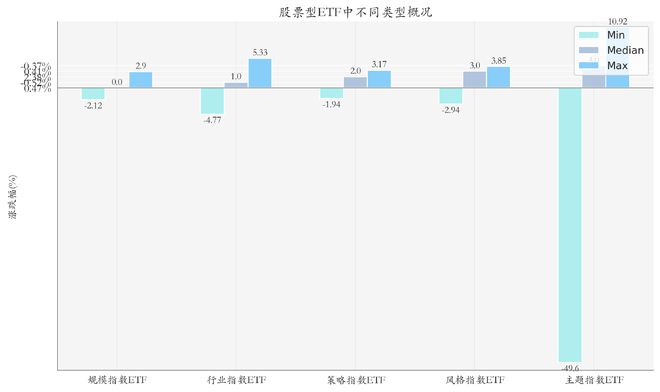
Market Performance - The Shanghai Composite Index rose by 1.08% last week, closing at 3997.56 points, with a peak of 4012.01 points [1] - The Shenzhen Component Index increased by 0.19%, closing at 13404.06 points, with a high of 13496.7 points [1] - The ChiNext Index saw a rise of 0.65%, ending at 3208.21 points, with a maximum of 3240.34 points [1] - In contrast, major global indices experienced declines, with the Nasdaq Composite down 3.04%, the Dow Jones Industrial Average down 1.21%, and the S&P 500 down 1.63% [1] ETF Market Performance - The median weekly return for stock ETFs was 0.31% [2] - The highest weekly return among scale index ETFs was 2.9% for the Penghua CSI 800 Free Cash Flow ETF [2] - The top-performing industry index ETF was the Southern CSI New Energy ETF, with a return of 5.33% [2] - The highest return in thematic index ETFs was 10.92% for the Huaxia CSI Electric Grid Equipment Thematic ETF [4] ETF Liquidity and Fund Flow - Average daily trading volume for stock ETFs decreased by 15.7%, while average daily trading volume increased by 9.3% [6] - The top five stock ETFs with the highest inflows included the Guotai CSI All-Share Securities Company ETF, which saw an inflow of 400 million yuan [9] - The top five stock ETFs with the largest outflows included the E Fund ChiNext ETF, which experienced an outflow of 290 million yuan [10] ETF Financing and Margin Trading - The financing balance for stock ETFs decreased from 49.1454 billion yuan to 47.9148 billion yuan [11] - The highest financing buy amount was 486 million yuan for the Huaxia SSE Sci-Tech 50 ETF [11] ETF Market Size and Composition - The total market size for ETFs reached 572.989 billion yuan, with stock ETFs accounting for 373.4058 billion yuan [14] - Stock ETFs represent 79.0% of the total number of ETFs and 65.2% of the total market size [16] New ETF Issuance - No new ETFs were issued last week, but eight new ETFs were established, including the Huaxia CSI Photovoltaic Industry ETF [17] Industry Insights - Industrial chain restructuring in the photovoltaic sector is anticipated, with Q3 showing a trend of reduced losses in the main chain [17] - The supply-demand relationship in the photovoltaic industry is expected to recover rapidly, driven by supply-side structural reforms and new technological changes [17]
公募基金加速上新 正向循环逐步形成
Zhong Guo Zheng Quan Bao· 2025-10-21 20:18
Group 1 - The recent surge in fund issuance indicates a recovery in market sentiment, providing incremental capital support for the equity market, creating a positive cycle of "hot issuance, capital inflow, and strong market" [1][2] - From October 20 to 24, 30 public funds were launched, with a significant majority being index and actively managed equity products, marking a peak in recent fund issuance [1][2] - The number of new funds issued has shown a clear upward trend since September 2024, with 66 new funds launched in September 2024 and 151 in September 2025, reflecting a growing interest in equity investments [2][3] Group 2 - The total fundraising scale for public funds reached a new high in September 2025, with a total of 152.1 billion yuan raised, a 26.99% increase month-on-month and a 90.62% increase year-on-year [3] - Index funds led the fundraising efforts, with 107.9 billion yuan raised, followed by mixed funds at 22.9 billion yuan and bond funds at 12.7 billion yuan [3] - The trend of early closure of fundraising periods has become common, with several funds announcing early termination of their fundraising due to meeting the necessary conditions ahead of schedule [4]