
地面光伏

Search documents
马斯克引爆光伏,产业链市值"回血"!太空光伏前景几何
Bei Jing Shang Bao· 2026-02-10 04:56
Core Viewpoint - The capital market is experiencing a surge in interest in the photovoltaic sector, particularly driven by Elon Musk's support for space photovoltaic technology, which has led to significant stock price increases in related companies [1][5][15]. Group 1: Market Dynamics - The photovoltaic sector saw a market capitalization recovery of over 200 billion yuan from January 23 to February 9, with leading companies like GCL-Poly and TCL Zhonghuan hitting their daily price limits [4][9]. - Following Musk's endorsement of space photovoltaic technology at the World Economic Forum on January 22, the A-share photovoltaic sector collectively surged [5][7]. - The market is witnessing a rotation of interest from traditional AI and chip sectors to the photovoltaic sector, particularly space photovoltaic concepts [1][2]. Group 2: Industry Challenges - The photovoltaic industry is currently facing an oversupply situation, with the China Photovoltaic Industry Association predicting a decline in new installed capacity in 2026 by 23.81% to 42.86% year-on-year [1][14]. - Many leading photovoltaic companies have reported significant expected losses for 2025, with 73.47% of the 49 companies that disclosed earnings forecasts predicting net losses [13]. - The industry is undergoing a deep adjustment phase, with many companies expressing concerns about the sustainability of stock price increases without corresponding performance improvements [12][13]. Group 3: Space Photovoltaic Technology - Space photovoltaic technology involves deploying large solar power stations in space to convert solar energy into electricity, which can then be transmitted back to Earth or used to power satellites and space stations [6][15]. - While space photovoltaic technology presents significant advantages over ground-based systems, such as uninterrupted sunlight and higher light intensity, it is still in the early stages of technological exploration and faces various challenges [2][15]. - The potential for space photovoltaic technology to become a new growth driver for the photovoltaic industry is acknowledged, but its realization will depend on overcoming technical, cost, and industry chain challenges [17].


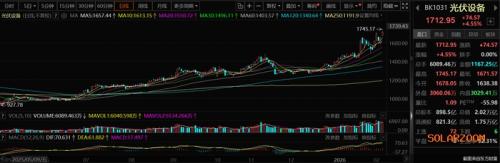
马斯克“带货” 光伏市值涨超2000亿元
Bei Jing Shang Bao· 2026-02-09 17:07
Core Viewpoint - The recent surge in the photovoltaic sector is significantly influenced by Elon Musk's support for space solar power, which has ignited investor interest and led to substantial gains in the A-share photovoltaic market [1][5][12]. Industry Overview - The photovoltaic industry is currently experiencing an oversupply, with the ground-mounted solar segment facing intense competition and a decline in growth prospects. The China Photovoltaic Industry Association projects a decrease in new installed capacity for 2023, estimating between 180-240 GW, a year-on-year decline of 23.81%-42.86% [1][11]. - The emergence of space solar power is seen as a potential solution to the industry's search for new growth avenues, driven by the expanding commercial space market [2][11]. Market Dynamics - Following Musk's endorsement of space solar power, the photovoltaic sector saw a collective market recovery of over 200 billion yuan from January 23 to February 9, with leading companies like GCL-Poly and TCL Zhonghuan experiencing significant stock price increases [1][4][6]. - As of February 9, the photovoltaic equipment sector showed strong performance, with multiple stocks hitting their daily price limits, indicating a clear profit-making trend among investors [4][6]. Corporate Developments - Tesla is reportedly evaluating locations in the U.S. to expand its solar cell manufacturing, which could open opportunities for Chinese equipment manufacturers to enter Tesla and SpaceX's supply chains [5][12]. - Companies like GCL-Poly and Trina Solar have confirmed that they are exploring technologies related to space solar power, although they have not yet secured any related orders [7][9]. Financial Performance - A significant portion of photovoltaic companies are forecasting losses for 2025, with 73.47% of the 49 companies that disclosed earnings predictions expecting net losses. Notable companies like TCL Zhonghuan and Trina Solar are projected to face substantial losses [9][10]. - The total market capitalization of 70 photovoltaic stocks increased from approximately 1.79 trillion yuan to about 1.99 trillion yuan during the recent surge, reflecting strong investor interest [6][9]. Future Outlook - While space solar power presents exciting possibilities, it remains in the early stages of technological exploration and faces challenges related to market conditions, policy, and technological development [2][12][14]. - Experts believe that advancements in commercial space technology and photovoltaic innovations could position space solar power as a new growth driver for the industry [14].




马斯克引爆光伏 产业链市值“回血”!太空光伏前景几何
Bei Jing Shang Bao· 2026-02-09 14:59
Core Viewpoint - The recent surge in the photovoltaic sector is significantly influenced by Elon Musk's support for space solar power, which has ignited interest and investment in this area, leading to substantial market movements in A-share photovoltaic stocks [1][4][5]. Industry Overview - The photovoltaic industry is currently experiencing an oversupply of capacity, with intense competition leading to a decline in future growth prospects. The China Photovoltaic Industry Association predicts a decrease in new installed capacity in 2026, estimating a range of 180-240 GW, which represents a year-on-year decline of 23.81%-42.86% [1][12]. - The emergence of space solar power is seen as a potential solution to the industry's search for new growth avenues, driven by the expanding demand from commercial space ventures [2][12]. Market Dynamics - Following Musk's endorsement of space solar power, the photovoltaic sector saw a significant market rally, with the total market capitalization of A-share photovoltaic stocks recovering over 200 billion yuan within a short period [3][5]. - On February 9, 2023, leading photovoltaic stocks such as Xiexin Integrated and TCL Zhonghuan reached their daily price limits, reflecting strong investor sentiment and profit-taking opportunities [3][5]. Technological and Developmental Insights - Space solar power involves deploying large solar power stations in space to convert solar energy into electricity, which can then be transmitted back to Earth or used to power satellites and space stations. This technology offers advantages over ground-based solar power, such as uninterrupted sunlight and higher intensity [4][12]. - However, the development of space solar power is still in its early exploratory stages, with various factors such as technological advancements, industry policies, and market conditions influencing its commercialization [2][12]. Company Responses and Market Sentiment - Several leading photovoltaic companies have issued statements regarding their current lack of involvement in space solar power projects, emphasizing that their primary business remains focused on ground-based solar power [9][10]. - Despite the excitement surrounding space solar power, companies express caution regarding the sustainability of stock price increases without corresponding improvements in operational performance [10][11]. Future Outlook - The potential for space solar power to become a significant component of the future energy system is acknowledged, with experts suggesting that it is moving beyond mere concept to the brink of large-scale deployment [13][14]. - The growth of space solar power is contingent upon advancements in technology, cost reductions, and the successful integration of commercial applications, which will require time to validate [14].

马斯克引爆光伏,产业链市值“回血”!太空光伏前景几何
Bei Jing Shang Bao· 2026-02-09 14:53
Core Viewpoint - The recent surge in the photovoltaic sector is significantly influenced by Elon Musk's support for space photovoltaic technology, which has ignited interest and investment in the Chinese capital market [1][2]. Group 1: Market Dynamics - From January 23 to February 9, the A-share photovoltaic sector regained over 200 billion yuan in market value [2][13]. - On February 9, the photovoltaic sector saw a substantial increase, with companies like GCL-Poly and TCL Zhonghuan hitting their daily price limits [4][11]. - The total market capitalization of 70 photovoltaic stocks reached approximately 1,994.06 billion yuan, up from about 1,791.88 billion yuan on January 22 [12][13]. Group 2: Industry Challenges and Opportunities - The photovoltaic industry is currently facing an oversupply situation, with a projected decline in new installations in 2026 by 23.81% to 42.86% compared to previous years [2][20]. - Space photovoltaic technology is emerging as a potential solution to the industry's growth challenges, driven by the increasing demand from commercial space ventures [2][20]. - Despite the excitement around space photovoltaic technology, it remains in the early stages of exploration, with various factors influencing its industrialization process [2][21]. Group 3: Corporate Developments - Tesla is reportedly evaluating locations in the U.S. to expand its solar battery manufacturing business, which could create opportunities for Chinese photovoltaic companies to enter its supply chain [5][6]. - Companies like GCL-Poly and Trina Solar have confirmed that they are exploring the space photovoltaic sector, although they currently do not have related orders impacting their financial performance [15][16]. - Many photovoltaic companies are cautious about the rapid stock price increases, with some issuing risk warnings to investors [14][15]. Group 4: Future Outlook - The Chinese Photovoltaic Industry Association forecasts that the domestic photovoltaic installation scale will rebound after a short-term adjustment, with a projected range of 180 to 240 GW in 2026 [20]. - The development of space photovoltaic technology is seen as a potential new growth area for the industry, although it requires time for technological validation and market acceptance [21][22]. - The successful deployment of low-orbit satellite constellations and advancements in launch capabilities are critical for the growth of space photovoltaic applications [22].
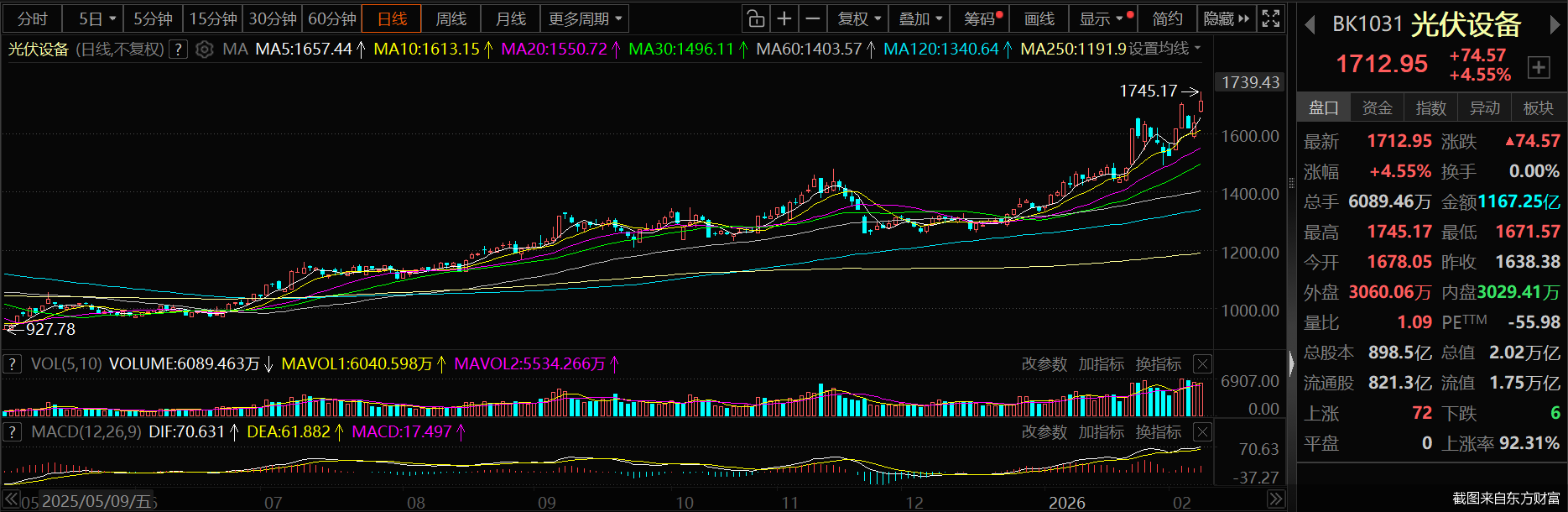
多家上市公司回应太空光伏相关业务布局
Zheng Quan Ri Bao· 2026-02-05 16:41
Core Viewpoint - The concept of "space photovoltaic" has gained significant attention in the capital market, leading to active performance of related stocks, although companies clarify their current lack of involvement in this area [1][2]. Group 1: Company Announcements - JinkoSolar announced that it experienced a stock price fluctuation with a cumulative increase of 30% over three trading days, but clarified that it has not engaged in any cooperation with Elon Musk's team or signed any agreements related to space photovoltaic [1][2]. - Guosheng Technology, Shuangliang Energy, and Gaoce Technology also issued announcements stating they do not currently engage in space photovoltaic business and have not signed any relevant agreements or generated related revenue [2]. Group 2: Technical Insights - Space photovoltaic technology is not merely an extension of ground photovoltaic systems; it involves significant differences in technology, cost, and application environments, with higher efficiency but also greater complexity and cost [3]. - The development of space photovoltaic technology is driven by the needs of commercial space development and artificial intelligence computing power, making it essential for low Earth orbit satellites and potential future space data centers [3]. Group 3: Future Outlook - The development of space photovoltaic technology is still in its early stages, with a conservative estimate of at least 10 years needed for large-scale application [4]. - With decreasing launch costs in commercial space and breakthroughs in battery technology, space photovoltaic is expected to gradually commercialize over the next 10 to 15 years [4].


一夜喧嚣后,太空光伏概念股进入“冷静期”
Xin Jing Bao· 2026-02-05 05:01
Group 1 - The recent market fluctuations in the space photovoltaic sector were triggered by Elon Musk's visit, leading to significant declines in several stocks, including JunDa Co., Ltd. and others [1] - Companies like GCL-Poly Energy Holdings and GCL-Integrated are experiencing stock price increases following Musk's team's interest in collaboration on silicon and perovskite technologies [1] - Multiple companies, rumored to be visited by Musk, issued announcements regarding their space photovoltaic business operations [1] Group 2 - JinkoSolar stated that space photovoltaic technology is still in the early exploration phase, with no impact on its current business performance as it focuses on terrestrial photovoltaic products [2] - Jingcheng Machinery expressed that the application scenarios for space photovoltaics are still being explored, and the industrialization process faces uncertainties [2] - The China Photovoltaic Industry Association emphasized that space photovoltaic technology is in the initial exploration and verification stage, making it premature to determine a clear technical direction [2] Group 3 - During a seminar held by the China Photovoltaic Industry Association, regulatory authorities reiterated the importance of addressing "involution" within the industry as a key focus for the year [3] - The Ministry of Industry and Information Technology highlighted that the photovoltaic industry is undergoing a significant adjustment period, with unresolved supply-demand mismatches posing challenges for companies [3] - The governance of industry involution is prioritized as a critical task for the current year [3]





马斯克团队考察光伏产业链?上市公司密集回应,板块走弱
Sou Hu Cai Jing· 2026-02-05 04:52
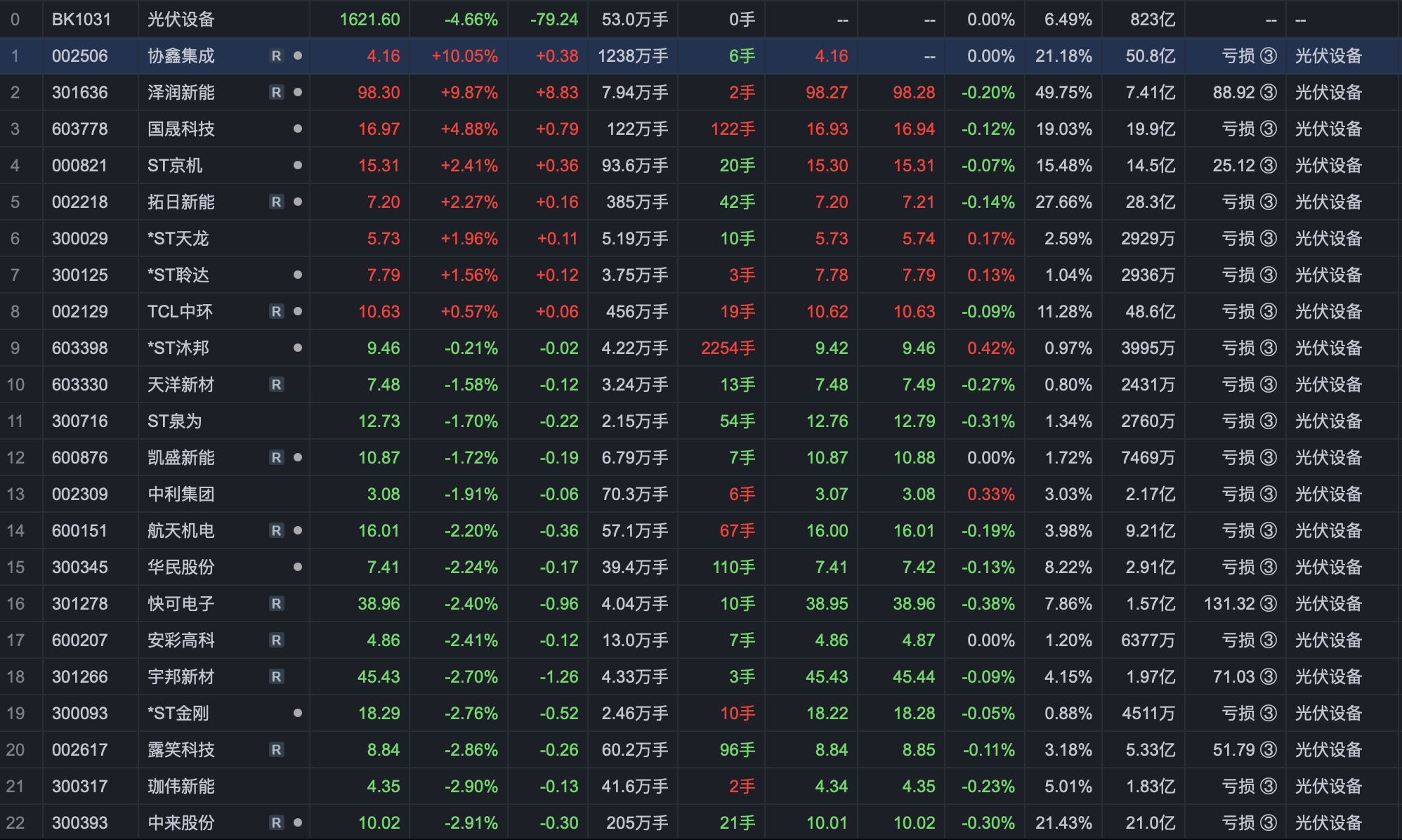
Core Viewpoint - Recent market rumors indicate that Elon Musk's team has visited several Chinese photovoltaic companies to explore projects related to equipment, silicon wafers, and battery components, with a focus on heterojunction and perovskite technology. However, companies have emphasized that no substantial cooperation has been established, and the concept of "space photovoltaics" remains in its early stages [1][3][4]. Company Responses - Companies such as JinkoSolar and GCL-Poly have confirmed that they have not entered into any formal agreements with Musk's team and that "space photovoltaics" is still in the exploratory phase, with no impact on their current business performance [3][4]. - JinkoSolar specifically noted that its main business remains focused on ground-based photovoltaic products and that it has not received any orders related to "space photovoltaics" [4]. Market Performance - As of February 5, the photovoltaic sector in the A-share market showed weakness, with most stocks, including JinkoSolar and Jinglong Technology, experiencing significant declines after previous gains [1][3]. - GCL-Poly was one of the few stocks to rise, increasing by 10.05% to 4.16 yuan, while other companies faced declines, reflecting the overall market sentiment [2]. Industry Challenges - The photovoltaic industry is currently undergoing a significant supply-demand imbalance, leading to substantial performance declines among many companies. JinkoSolar has projected a net loss of 5.9 to 6.9 billion yuan for 2025, while other companies like Longi Green Energy and Tongwei are also forecasting significant losses [5][6]. - The industry is in a low cycle, with many companies reporting losses, including Aiko Solar and TCL Zhonghuan, which are expected to face substantial financial challenges in the coming years [6][7]. Future Outlook - Elon Musk has expressed optimism about space photovoltaics, citing its advantages in extreme environments and its potential as a core energy source for satellites. He aims for SpaceX and Tesla to achieve an annual solar manufacturing capacity of 100 GW within three years [8].
光伏的逆袭-马斯克的光伏第一性原理
2026-01-26 15:54
Summary of Key Points from the Conference Call Industry Overview - The conference call focuses on the photovoltaic (PV) industry, particularly the developments in North America and the implications for Chinese companies involved in PV technology and manufacturing [1][5]. Core Insights and Arguments - **Expansion Plans**: Elon Musk announced that Tesla and SpaceX will each expand their PV capacity by 100GW over the next three years, marking the official start of self-built PV capacity plans in North America [1][5]. - **Chinese Companies' Advantages**: Chinese firms are leading in PV equipment supply, capacity construction, commissioning experience, and core material supply, positioning them to benefit from North America's expansion. Key players include: - **Dual Good Energy** in the polysilicon segment - **Jinglong Technology**, **Liancheng CNC**, and **Aotaiwei** in the silicon wafer segment - **Maiwei Co.** in the battery segment - **Aotaiwei** in the module segment [1][6]. - **Successful Deliveries**: Liancheng CNC has established a research, sales, and after-sales service center in North America and is the only company with successful delivery experience in the region [1][7]. - **Space PV Technology**: The mainstream technology for space PV is triple-junction gallium arsenide batteries, which hold over 95% market share. Future alternatives may include heterojunction or perovskite with crystalline silicon stacking, with heterojunction being the primary direction in the medium term [1][9]. Market Demand and Financial Implications - **Capital Expenditure**: The capital expenditure demand for ground PV in North America is projected to reach 100GW, with the entire ground PV segment's capital expenditure already in the trillion-dollar range [2][6]. - **Space PV Demand**: The demand for space PV is expected to be significant, with calculations indicating that for every watt of computing power, 1.5 to 2 watts of PV generation capacity is needed. This translates to a potential market space exceeding 12 trillion yuan based on Musk's annual demand for 100GW of space computing power [3][9]. Competitive Landscape - **Local Production and Brand Advantage**: Chinese companies such as **LONGi Green Energy**, **Trina Solar**, **JA Solar**, and **Canadian Solar** have established localized production and brand advantages in the U.S. market, positioning them to benefit from the expected surge in demand [4][14][15]. - **Emerging Players**: Companies like **Zhejiang Chint Electrics**, **LONGi Green Energy**, and **Oriental Sunrise** are noteworthy for their technological advancements and resource advantages in domestic space PV construction [4][16]. Equipment and Material Opportunities - **Equipment Companies**: The new expansion cycle in North America is expected to provide significant opportunities for equipment companies, with key players identified in various segments including silicon wafers, batteries, and modules [8][10]. - **Material Innovations**: The transition from traditional materials to advanced materials such as CPI films and UTG glass is underway, with companies like **Ruihua Tai** and **Vogt Optoelectronics** involved in these innovations [9][10]. Strategic Considerations - **Market Barriers**: The core barriers in both U.S. and domestic markets include first-mover advantages and the technical capabilities of companies, which will determine their ability to collaborate with downstream enterprises [18]. - **Policy Impact**: The Inflation Reduction Act (IRA) has accelerated the establishment of local production facilities by Chinese companies to secure subsidies and enhance competitiveness [11][12]. Conclusion - The developments in the North American PV market, driven by significant expansions and technological advancements, present substantial opportunities for Chinese companies. Their established capabilities and strategic positioning will be crucial in capitalizing on the anticipated demand surge in both ground and space PV applications [13][17].