
墙纸

Search documents
江西首列跨里海中欧班列鸣笛启程 时效缩至18天
Xin Lang Cai Jing· 2026-02-03 09:31
Core Viewpoint - The successful launch of the "Nanchang-Horgos-Azerbaijan" China-Europe freight train marks a significant development in logistics, providing a new transportation route for goods between central China and Eurasian countries [1] Summary by Categories Logistics and Transportation - The freight train departed from Nanchang International Dry Port, carrying goods such as marble products, cotton fabric, and wallpaper [1] - The route reduces transportation time from 50 days to 18 days, significantly enhancing efficiency [1] - Average logistics costs for enterprises are lowered by 15% to 20% [1] Regional Impact - This new route establishes a safe and fast transportation channel for goods between central China and Eurasian nations [1]
德国法兰克福国际家用及商用纺织品展览会(Heimtextil)
Sou Hu Cai Jing· 2026-01-15 07:44
Core Insights - The Heimtextil exhibition in Frankfurt, Germany, commenced on January 13, 2026, featuring over 3,000 exhibitors from 66 countries, setting the tone for the new season in the textile industry [1] - The exhibition showcased a comprehensive range of textile and non-textile indoor solutions, including decorative fabrics, furniture fabrics, bedding, towels, wallpapers, and carpets, presenting a complete industry chain panorama [1] Group 1: Chinese Exhibitors Performance - Chinese exhibitors demonstrated significant improvement, with a concentration in coastal manufacturing provinces: Zhejiang (48.4%), Jiangsu (21.1%), and Shandong (10.3%), collectively accounting for 79.8% of the exhibitors [3] - The number of exhibitors from Anhui increased from 8 to 32, while Tianjin saw 24 companies, mostly new entrants in the carpet and mat sector, indicating rapid growth in emerging exhibition areas and niche categories [4] Group 2: Exhibition Statistics - The total area of the Chinese pavilion reached 19,796 square meters, an increase of 893.5 square meters (4.7%) compared to 2025, setting a new record [6] - The number of participating companies exceeded 1,000, showing stable growth compared to 2025, reflecting sustained enthusiasm and market confidence [6] - Over 130 Chinese companies entered specialized product halls, marking an 18.2% year-on-year increase, highlighting a professional layout and competitive advantage in high-end niche markets [6] Group 3: Official Attention - Officials from the Chinese Embassy in Germany, including Minister Counsellor Zhai Qian and Counsellor Zhu Lin, visited the exhibition to engage with Chinese exhibitors and understand the latest developments and internationalization progress in the Chinese home textile industry [5]


临沂商城价格指数分析(10月16日—10月22日)
Zhong Guo Fa Zhan Wang· 2025-10-27 08:03
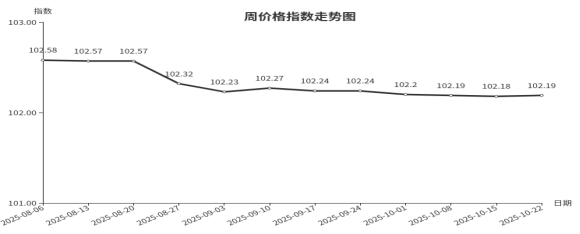
Core Viewpoint - The overall price index of Linyi Mall has slightly increased, indicating a mixed trend in various product categories with some experiencing price rises while others see declines [1][19]. Price Index Summary - The total price index for Linyi Mall this week is 102.19 points, reflecting a slight increase of 0.01 points or 0.01% compared to the previous week [1][19]. - Among 14 categories, 4 categories saw price increases, 6 remained stable, and 4 experienced declines [3]. Category-Specific Price Movements 1. Building and Decoration Materials - The price index for building and decoration materials rose to 105.53 points, up by 0.16 points. This increase is attributed to rising upstream raw material prices, leading manufacturers to raise their product prices [5][19]. 2. Board Materials - The board materials price index increased to 97.30 points, up by 0.07 points. The demand for density boards and aluminum-plastic boards has risen due to seasonal changes and increased construction activity [8][19]. 3. Grain, Oil, and Food - The price index for grain, oil, and food reached 95.25 points, with a slight increase of 0.02 points. Notable price increases were observed in dried fruits and seasonings, while other categories remained stable or saw minor declines [11][19]. 4. Steel - The steel price index decreased to 95.01 points, down by 0.04 points. The decline is attributed to insufficient demand from construction and infrastructure projects, leading to lower overall trading volumes [14][19]. 5. Home Appliances and Audio-Visual Equipment - The price index for home appliances and audio-visual equipment fell to 103.04 points, down by 0.04 points. The kitchen appliances segment saw significant price drops, while other categories experienced mixed performance [17][19]. 6. Clothing and Accessories - The clothing and accessories price index decreased to 103.79 points, down by 0.04 points. The clothing segment remained stable, but accessories saw a notable decline due to changes in market demand [18][19].
美国新关税冲击家居业与消费者:行业陷入“全面混乱”
Zhong Guo Xin Wen Wang· 2025-09-30 07:29
Group 1 - The new tariffs imposed by the U.S. government on home goods manufacturers are expected to significantly impact the home renovation and remodeling market, exacerbating existing challenges for consumers and the overall economy [1][2] - Tariffs include a 30% tax on soft furniture and a 50% tax on kitchen cabinets, bathroom cabinets, and related products, which may lead to increased costs and longer wait times for consumers [1] - Many consumers are already struggling with housing costs, as wage growth has not kept pace with real estate inflation and rising interest rates, leading to a stagnation in housing upgrades [1] Group 2 - The home goods industry is experiencing "total chaos" due to the tariffs, with many companies halting production or clearing inventory as sales decline and overseas partners face product backlogs [2] - Some companies are considering relocating production back to the U.S., but the high cost of necessary machinery and equipment makes this unfeasible in the short term [2] - The unpredictable nature of tariff implementation is causing businesses to hesitate on hiring and investment plans, creating an environment of uncertainty in the industry [2]
信贷跟着需求走
Jin Rong Shi Bao· 2025-08-08 07:55
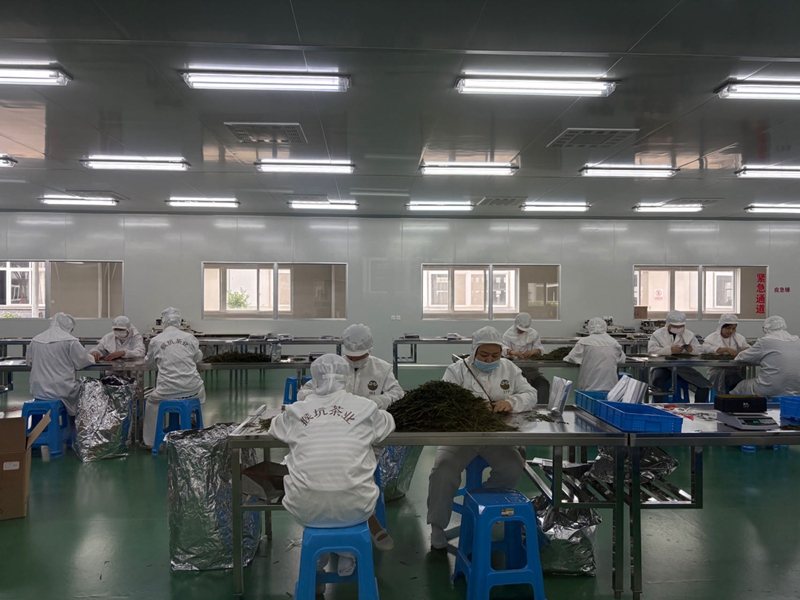
Core Viewpoint - The increasing external and internal economic pressures are leading to longer payment terms, inventory accumulation, and shrinking profits, which are challenging the cash flow of private small and micro enterprises [1][2]. Group 1: Industry Challenges - Economic downturn pressures are causing longer payment terms and inventory buildup, which are straining the cash flow of private small and micro enterprises [1][2]. - Companies are shifting from merely competing on price to exploring new markets and demands, changing their operational methods and production technologies to reduce costs and improve efficiency [1][2]. - The financial sector faces the challenge of adjusting its services to meet the changing funding needs of market entities in response to evolving business environments [1][2]. Group 2: Company Strategies - Yihua Decoration Materials Co., Ltd. has shifted from stockpiling PVC film to maintaining a safe inventory due to increased price volatility in petrochemical products [1][5]. - The company has experienced an extension of order payment cycles from one month to three months, increasing its financial pressure [5]. - Yihua is now looking to expand its market reach internationally while maintaining domestic partnerships to stabilize cash flow [5][8]. Group 3: Financial Support and Innovation - Local financial institutions have increased support for cash flow in tea processing companies, alleviating financial pressure and changing traditional payment practices with tea farmers [4]. - The Huizhou Rural Commercial Bank has implemented a green channel for loan renewals, allowing companies to access funds more easily amid financial pressures [7]. - Both Yihua and Benyu Auto Parts Co., Ltd. have successfully obtained loan renewals of approximately 10 million yuan, enabling them to explore new overseas order channels [8]. Group 4: Market Adaptation - Benyu Auto Parts Co., Ltd. has adapted its business model to focus on servicing 4S shops rather than directly supplying car manufacturers, which helps maintain healthier cash flow [6]. - The company is facing challenges due to the U.S.-China trade tensions, prompting it to seek new markets [7]. - The company has also encountered increased costs associated with developing new molds for different vehicle models, which impacts cash flow during the production process [6][7]. Group 5: Technological and Product Development - Meibang (Huangshan) Adhesive Co., Ltd. is facing pressure from extended payment terms and reduced profit margins, prompting a need for product line expansion and technological transformation [11][12]. - The company has partnered with universities to establish R&D centers to develop new products for construction materials and insulation, diversifying its offerings [12]. - Meibang has also improved its production efficiency through mechanization and has received long-term support from Huizhou Rural Commercial Bank, which has tailored financial solutions to its needs [12].
信贷跟着需求走 黄山市金融机构纾困民营小微企业侧记
Jin Rong Shi Bao· 2025-07-24 02:44
Group 1 - The economic downturn and external factors are causing extended payment terms, inventory buildup, and shrinking profits, which are testing the cash flow of private small and micro enterprises [1][2] - Some market players are attempting to break through the price competition by exploring new markets and demands, and changing their operational methods and production technologies to reduce costs and increase efficiency [1][2] - The changing characteristics of funding needs require financial institutions to adjust their service strategies based on the evolving business environment and demand [1][2] Group 2 - Yihua Decoration Materials primarily produces wallpaper and wall stickers, and has been affected by the adjustment in the real estate market, although the impact on orders has been mitigated by consistent product demand [3] - The company faces challenges with extended payment terms across the supply chain, leading to increased financial pressure as the order payment cycle has lengthened from one month to three months [3] - To maintain healthy cash flow and competitive advantage, Yihua is now looking towards international markets while stabilizing domestic partnerships [3] Group 3 - Benyu Automotive Parts has been exploring new markets due to the impact of the US-China trade war on its export orders, despite having a long-standing business model focused on maintaining stable cash flow [4][5] - The company’s operational model requires developing new molds for different vehicle models, which incurs significant costs and ties up capital, especially for overseas orders [4] - The financial support from local banks has been crucial for both Yihua and Benyu, enabling them to secure loans and maintain operational vitality amid challenging market conditions [6] Group 4 - Meibang (Huangshan) Adhesives has faced increased competition and reduced bargaining power, leading to extended payment terms from 60 days to 90 days, while also managing rising raw material costs [7][8] - The company is seeking to transform its product line and improve operational efficiency through partnerships with universities for R&D, while also addressing labor recruitment challenges [8][9] - Financial institutions are providing tailored support to Meibang, including favorable interest rates and extended credit terms, to help the company navigate its operational challenges [9]