
声学组件

Search documents
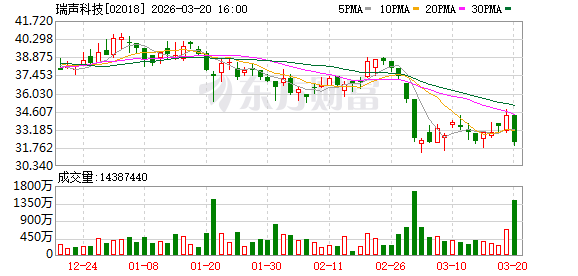
瑞声科技营收破300亿元,散热业务爆发式增长超400%
2 1 Shi Ji Jing Ji Bao Dao· 2026-03-20 10:19
3月19日,瑞声科技(2018.HK)发布2025年全年业绩报告,盈利能力与现金流表现均实现强劲增长。 财报显示,2025年全年公司实现营收318.2亿元,同比增长16.4%;净利润25.1亿元,同比增长39.8%; 经营性现金流71.8亿元,同比增长38.1%。同时,公司拟派发末期股息每股0.35港元,较上年增长 45.8%。 "集团对2026年全年实现稳健收入增长充满信心,预计增速将不低于2025年水平,毛利率将在2025年 22.1%的基础上稳中有升。"瑞声科技CFO郭丹展表示。 营收创新高,业务转型见效 成立于1996年的瑞声科技,是全球领先精密器件制造商与感知体验解决方案提供商、全球声学龙头。业 务覆盖声学、光学、电磁传动、精密结构件及传感器等,是iPhone、iPad、Mac、AirPods 的核心供应 商。 去年全年,瑞声科技营收同比增长16.4%至318.2亿元,创历史新高。公司表示,这一增幅得益于全球智 能手机出货量增长,实现质效双升。其中传感器与半导体、电磁传动与精密结构件、光学业务收入同比 增长103.1%、21.3%以及14.5%。 (2025年瑞声科技各分部营收情况) 随着AI产业的 ...

瑞声科技:管理层调研-均热板业务扩张;AI 眼镜与边缘 AI 设备崛起将驱动未来增长
2026-01-19 02:32
Summary of AAC (2018.HK) Conference Call Company Overview - **Company**: AAC Technologies Holdings Inc. (2018.HK) - **Industry**: Technology, specifically focusing on acoustics, haptics, and edge AI devices Key Points and Arguments Revenue Growth and Market Outlook - Management is optimistic about achieving double-digit revenue growth by 2026, driven primarily by major global smartphone brand customers and product cycle changes [1][3] - Rising memory costs may limit growth in the smartphone market, but improvements in cost control are expected to enhance margins [1] Catalysts for Future Growth - **Vapor Chamber Technology**: Increasing penetration in smartphones and notebooks is anticipated to drive growth [1][3] - **AI and AR Devices**: AAC is collaborating with leading global brands to develop components for AI glasses and innovative edge AI devices, which are expected to be significant growth drivers by 2027 [3] - **Diverse Production Sites**: The company's production facilities in Vietnam are positioned to better serve global customers amid geopolitical tensions [3] Product Innovations - AAC is focusing on components such as acoustics, haptics, and MEMS microphones for emerging edge AI devices, enhancing user interaction through voice commands [2][3] - The company is also developing optical waveguide lenses for AI glasses, aiming to penetrate critical components in this market [3] Financial Projections - **12-Month Price Target**: HK$68.6, representing a potential upside of 71.9% from the current price of HK$39.90 [4][8] - **Market Capitalization**: Approximately HK$46.8 billion (US$6.0 billion) [8] - **Revenue Forecasts**: Expected revenues of Rmb 27.33 billion in 2024, increasing to Rmb 38.13 billion by 2026 [8] Risks and Challenges - Key downside risks include: 1. Rapid expansion of low-margin camera modules [7] 2. Increased competition in handset lenses and existing product lines [7] 3. Weaker-than-expected smartphone demand post-COVID-19 [7] 4. Strategic shifts towards more modules and assembly business [7] Investment Rating - The company maintains a "Buy" rating, supported by its strong position in the acoustics market and the anticipated growth in edge AI devices [2][4] Additional Important Information - The report includes disclosures regarding potential conflicts of interest due to Goldman Sachs' investment banking relationships with AAC [4][17] - Analysts involved in the report have certified that their views reflect their personal opinions and are not influenced by compensation [10] This summary encapsulates the key insights from the conference call, highlighting AAC's growth prospects, product innovations, financial outlook, and associated risks.
均热板年产能加码1.5亿片,瑞声科技(02018.HK)锁定AI 散热"龙头"
Ge Long Hui· 2026-01-15 07:03
Core Insights - The core message highlights the strategic expansion of AAC Technologies, which plans to add 150 million units of ultra-thin VC heat sinks for smartphones, aiming to solidify its leadership in the AI device cooling market and enhance its position as a core supplier for AI infrastructure [1][4]. Group 1: Market Position and Growth - AAC Technologies currently holds over 50% market share in the domestic high-end smartphone VC market and is a key supplier for the iPhone 17 Pro series [1]. - The company anticipates its heat sink product shipments will reach 150 million units by 2025, doubling its scale advantage with the new capacity addition [1][9]. - The sales revenue from AAC's heat sink products is projected to exceed 1.2 billion yuan in 2025, representing a growth of over 300% within a year [4]. Group 2: Technological Advancements - AAC Technologies has developed several industry-standard products, including the first circular VC and the first dual-chamber 3D combination VC, which significantly enhance cooling efficiency [6][8]. - The company's proprietary flexible thermal materials and comprehensive manufacturing processes have established a competitive barrier, resulting in a product yield rate 15 percentage points higher than the industry average [8]. Group 3: Capacity Expansion and Market Strategy - The company plans to increase its annual production capacity to over 300 million units following the addition of 150 million units, with a compound annual growth rate of over 90% expected from 2020 to 2025 [9]. - AAC's collaboration with Apple has led to innovations in production efficiency and sustainability, such as the development of a new logistics system that reduces plastic waste [9]. Group 4: Future Market Opportunities - AAC Technologies is extending its product applications beyond consumer electronics to include AI infrastructure, such as AR/VR devices and smart automotive solutions, addressing the growing demand for effective thermal management in these sectors [12][15]. - The global cooling market is projected to exceed $26.1 billion by 2028, with demand shifting from consumer electronics to smart vehicles and robotics [15]. Group 5: Competitive Landscape - Despite its advantages, AAC Technologies faces strong competition from companies like Taiwan's Chi Mei, Japan's Nidec, and Suzhou Tianmai, each with unique technological strengths [16]. - The evolving technology landscape, particularly the rise of liquid cooling solutions in AI data centers, presents both challenges and opportunities for AAC as it seeks to integrate VC heat sinks into multi-layer cooling architectures [16].

均热板年产能加码1.5亿片,瑞声科技(02018)锁定AI 散热“龙头”
Xin Lang Cai Jing· 2026-01-15 02:40
Core Insights - 瑞声科技 is expanding its production capacity by adding 150 million units of ultra-thin VC heat spreaders, aiming to solidify its position in the high-end smartphone VC market, where it currently holds over 50% market share in China [1][4] - The company is strategically positioning itself as a leading supplier in the AI device cooling sector, reflecting its commitment to becoming a core supplier for AI infrastructure [1][3] Market Position and Growth - 瑞声科技's heat dissipation products are projected to achieve sales exceeding 300 million yuan in 2024 and are expected to surpass 1.2 billion yuan in 2025, indicating a growth rate of over 300% within a year [4] - The compound annual growth rate (CAGR) for VC heat spreader shipments from 2020 to 2025 is expected to exceed 90%, with shipments reaching 150 million units by 2025 [7][9] Technological Advancements - The company has developed several industry-standard products, including the first circular VC and the first dual-chamber 3D combination VC, which significantly enhance heat dissipation efficiency [6][4] - 瑞声科技's proprietary flexible thermal materials and comprehensive manufacturing processes have established a competitive barrier, resulting in a product yield that is 15 percentage points higher than the industry average [6][4] Production Capacity and Client Relationships - Following the expansion, 瑞声科技's annual planned production capacity will exceed 300 million units, creating a positive feedback loop with major clients [7][9] - The collaboration with Apple has led to innovations in production efficiency and sustainability, such as the development of a new logistics system that reduces plastic waste [7][9] Market Expansion and Future Prospects - The company is extending its product applications beyond smartphones to include AR/VR devices, humanoid robots, and smart automotive sectors, addressing the growing demand for effective heat dissipation solutions [11][12] - The global heat dissipation market is projected to exceed $26.1 billion by 2028, with demand shifting from consumer electronics to sectors like smart automotive and data centers [11][12] Competitive Landscape - Despite its advantages, 瑞声科技 faces strong competition from companies like Taiwan's Chi Mei, Japan's Nidec, and Suzhou Tianmai, each with unique technological strengths [12] - The evolving technology landscape, particularly the increasing heat flow density in AI servers, presents challenges and opportunities for 瑞声科技 to innovate in liquid cooling technologies [12]

中美关税合理化,科技硬件估值修复
Haitong Securities International· 2025-05-13 07:00
Investment Rating - The report provides an overall positive outlook for the technology hardware sector, indicating a recovery in valuations due to tariff easing between China and the U.S. [1] Core Insights - The easing of tariffs is expected to stabilize costs for key components in the consumer electronics supply chain, particularly benefiting companies in the Apple supply chain [2][8] - The semiconductor sector will experience short-term cost relief, but domestic replacements in China are anticipated to grow, impacting market shares of U.S. companies like Texas Instruments and Intel in the long run [2][9] - Data center hardware costs are projected to decrease, enhancing profit margins for companies involved in AI server production and data center construction [2][11] - The tariff policy is moving towards a more rational level, reducing the risk of further escalation, although long-term uncertainties remain [2][12] Consumer Electronics - Supply chain pressures are expected to ease, with most products under a 90-day tariff exemption, leading to a stabilization of costs for iPhone and other hardware components [2][8] - Companies such as Sunny Optical, Q Tech, and Luxshare are likely to see margins recover to pre-tariff levels, with stable order flows from assemblers [2][8] Semiconductors - U.S. semiconductor companies will benefit from reduced export costs due to tariff cuts, particularly Texas Instruments and Analog Devices, which have significant sales in China [2][9] - Despite short-term benefits, the market share of U.S. chipmakers is expected to decline as domestic Chinese manufacturers continue to grow [2][10] Data Centers - The reduction in tariffs on GPU servers and optical modules will lower BOM costs, positively impacting profit margins for AI server manufacturers [2][11] - The overall construction costs for data centers in the U.S. are expected to decrease, potentially accelerating the construction timeline [2][11] Policy Outlook - The report suggests that tariff policies are trending towards rationalization, with ongoing negotiations expected to address various trade issues [2][12] - Future discussions may include topics such as fentanyl control and export restrictions on advanced technologies [2][12]