
多光谱无人机

Search documents
星火成炬|在中国 看见未来
Yang Shi Wang· 2025-11-08 06:43
Core Insights - The development of technology serves as a driving force for economic growth and addresses the needs of over 1.4 billion people, indicating a strong potential for future innovations [1] Group 1 - The use of robots for traffic management highlights advancements in automation and smart city initiatives [1] - Mind-controlled exoskeletons represent significant progress in human-machine interaction and assistive technologies [1] - Multispectral drones for agricultural monitoring demonstrate the application of technology in enhancing productivity and efficiency in farming [1]


科技赋能农业生产“加速跑” 希望的田野描绘多彩丰收图景
Yang Shi Wang· 2025-05-14 08:57
Core Viewpoint - The article highlights the ongoing agricultural activities in China, focusing on the harvesting of winter wheat and the management of summer crops, emphasizing the use of technology and best practices to ensure stable production and increased yields. Group 1: Wheat Harvesting - In Shandong Zaozhuang, farmers are actively engaged in the "one spray, three defenses" operation to combat pests and diseases, ensuring stable wheat production [4][9] - Zaozhuang has 2.14 million acres of wheat entering the filling stage, with agricultural departments organizing efforts to support production [4] - In Anhui's Dongzhi County, 120,000 acres of winter wheat are being harvested, with farmers utilizing favorable weather for efficient collection [5][7] Group 2: Rice Cultivation - In Jiangxi, early rice has entered the tillering stage, with increased use of technology for field management to promote stable yields [11] - A smart monitoring system covering over 50,000 acres has been established in Jiangxi to assist farmers in managing rice fields through real-time data [13] - In Sichuan, over 850,000 acres of rice are entering the transplanting phase, with the promotion of smart agricultural equipment enhancing efficiency [15][18] Group 3: Innovative Techniques - In Chongqing's Xiushan County, the introduction of the "pot seedling" technology is aimed at improving rice production quality and efficiency, with plans to cultivate 279,000 acres [19][21] - The use of automated production lines for seedling preparation is being implemented to streamline the process and enhance productivity [19][21] - The mechanization rate for rice planting in Sichuan has reached 92%, with significant progress in transplanting expected to be completed by late May [18]
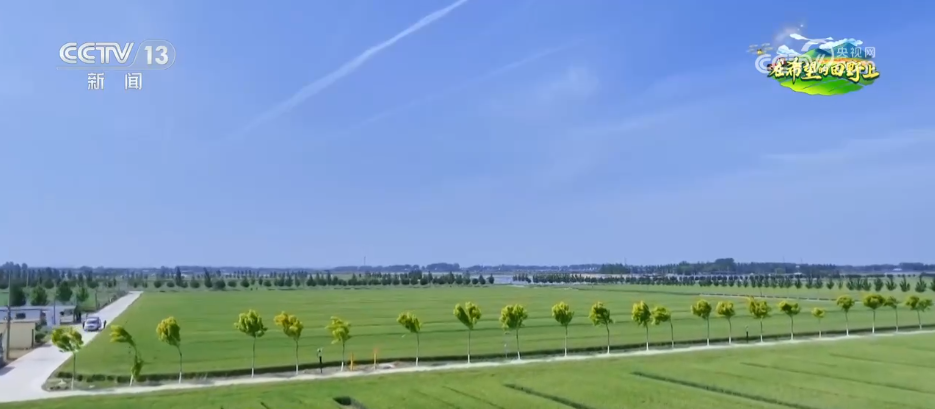
全国春播迎高峰 智能化装备助各地粮食生产
Yang Shi Xin Wen· 2025-05-07 23:23
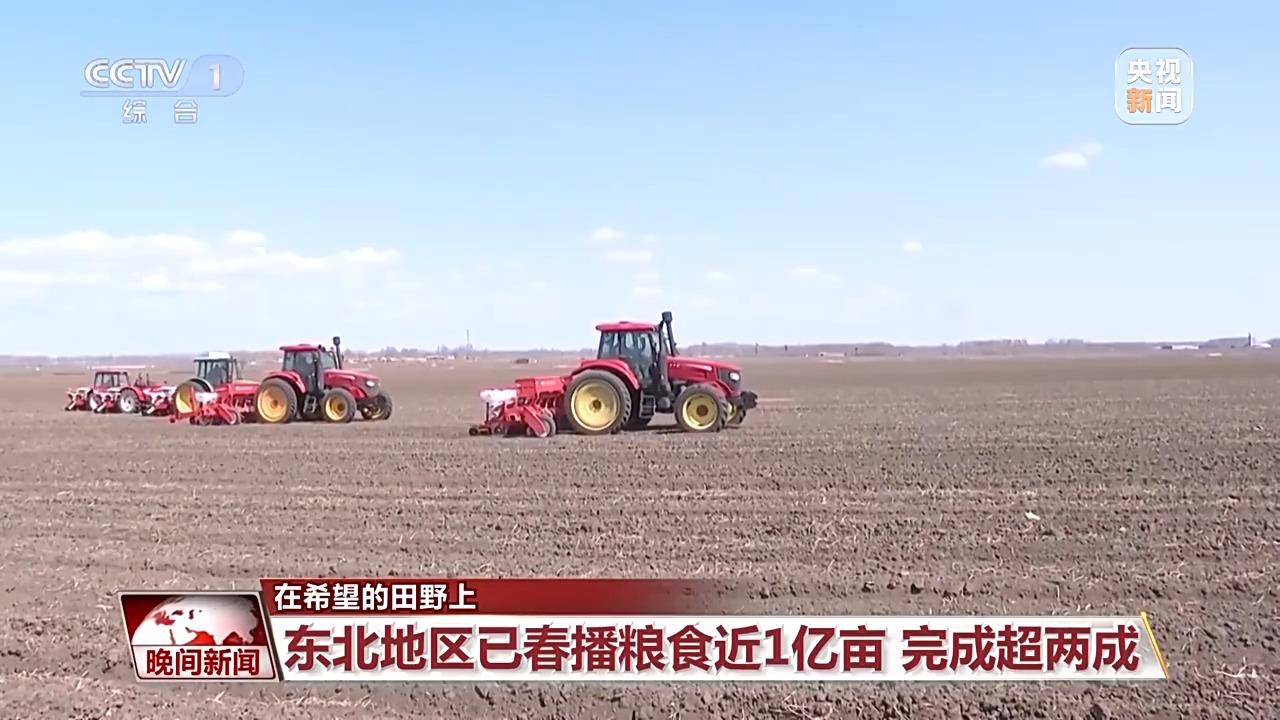
Group 1 - The spring sowing season is at its peak nationwide, and summer grain is entering a critical period for yield formation [1] - The Northeast region has completed over 20% of its spring sowing, covering nearly 10 million acres [2][4] - Heilongjiang is promoting high-performance precision sowing machines, adding nearly 10 million acres of operational area for these machines [4] Group 2 - The Huang-Huai-Hai region's winter wheat is entering a critical yield formation period, with Anhui province experiencing only 172 millimeters of rainfall this year, half of the normal level [6] - Local efforts include increasing water sources and setting up temporary drought resistance equipment for irrigation [6] - In Henan, 85 million acres of wheat are entering the filling stage, requiring significant water and fertilizer [6] Group 3 - Hebei's central and southern regions have seen reduced rainfall, leading to insufficient soil moisture, which could affect pesticide and fertilizer application [8] - Digital monitoring devices have been installed to ensure reliable irrigation power supply, with a 24-hour monitoring system in place [8] - AI technology is being utilized to enhance the efficiency of identifying equipment defects in irrigation systems [10] Group 4 - Early rice production in southern regions is accelerating, with over 18 million acres of early rice in Hunan having completed transplanting [12] - In Yiyang, agricultural departments are using predictive measures for pest control and coordinating the use of plant protection drones for unified pest management [12]
从减一亩到增一亩 智慧农业种出“弹性田”
He Nan Ri Bao· 2025-05-06 23:12
Core Insights - The article highlights the transformation in agricultural practices through the use of advanced technologies such as drones and smart farming equipment, leading to increased efficiency and reduced costs in crop management [1][2] Group 1: Efficiency Improvements - The use of drones for pest control has significantly increased operational efficiency, allowing for the spraying of 1,000 acres in a single day compared to 30 acres manually [1] - Smart agricultural technologies have enabled a shift from manual to data-driven control, enhancing precision in farming practices [2] Group 2: Cost Reduction - The implementation of multi-spectral drones has resulted in a cost saving of at least 1 acre of pest control for every 100 acres managed [1] - New smart seeding systems reduce seed waste and improve yield rates, potentially increasing profits by at least 1 acre for every 100 acres planted [2] Group 3: Technological Integration - The integration of multi-spectral monitoring, drone-assisted pest control, and smart seeding systems illustrates a comprehensive approach to modern agriculture, enhancing productivity while minimizing costs [2]

聚力攻坚 协同发力
Ren Min Ri Bao· 2025-04-26 21:58
Core Viewpoint - The article highlights China's economic resilience and growth in the face of external challenges, emphasizing the importance of high-quality development and innovation in various sectors [1]. Group 1: Agricultural Innovation - The use of drones in agriculture has significantly improved efficiency, with one drone capable of covering 100 acres in a day, compared to just 5 acres previously [3]. - Agricultural technology's contribution to productivity has surpassed 63%, positioning China among the world's leaders in agricultural innovation [4]. - The government aims to enhance agricultural productivity through technology, ensuring food security and sustainable growth [4]. Group 2: Infrastructure Development - The construction of the world's longest underwater highway tunnel in Qingdao is progressing, with the shield machine "Deep Blue" advancing at a rate of 10 meters per day [6]. - The project involves significant excavation work, with over 600 million cubic meters of earth being moved, contributing to regional integration and infrastructure expansion [6][8]. - Infrastructure investment in China has increased by 5.8% year-on-year in the first quarter, indicating a robust commitment to enhancing economic foundations [8]. Group 3: Consumer Electronics and Subsidies - The introduction of national subsidies for consumer electronics has led to a nearly 100% increase in sales of mobile devices in March [9][11]. - The subsidy program has expanded to include a wider range of products, encouraging consumers to upgrade their devices [9][10]. - Retail sales of consumer goods reached 12.467 trillion yuan in the first quarter, reflecting a 4.6% year-on-year growth [11]. Group 4: Robotics and Automation - The deployment of humanoid robots in manufacturing has shown significant improvements in efficiency and productivity, with robots capable of performing multiple tasks [12][13]. - The integration of advanced technologies in robotics is expected to enhance operational capabilities across various industries [14]. - The anticipated introduction of 400 humanoid robots into industrial and commercial settings this year indicates a growing trend towards automation [13]. Group 5: Drone Delivery Services - The launch of drone delivery services by Meituan in Shanghai represents a significant innovation in logistics, allowing for timely deliveries even during peak traffic [15][16]. - The company has established multiple drone delivery routes across various cities, completing over 450,000 orders, showcasing the potential for growth in low-altitude logistics [16]. - The expansion of drone services aligns with broader trends in technology and consumer demand, positioning Meituan for future growth [16][17].
AI模型、“北斗”、物联网……智慧农业成为田间地头新常态
Yang Shi Wang· 2025-04-23 07:46
Group 1: Agricultural Innovations in Heilongjiang - The spring plowing in Heilongjiang is fully underway, with dry land sowing area reaching 774,000 acres as of April 21 [1] - Advanced planting technology is being utilized, including high-tech seeders equipped with Beidou navigation, allowing for precise seed placement and consistent planting density of approximately 6,500 plants per acre [3][5] - The introduction of a water and fertilizer integration system has been implemented on 200,000 acres, optimizing water usage and nutrient supply for corn cultivation [5][7] - The corn planting area in Zhaodong City is planned to be 3.05 million acres, with sowing expected to be completed by mid-May [9] Group 2: Automation and Smart Agriculture - In the Qixing Farm of Heilongjiang, new intelligent agricultural machinery is being used for unmanned land preparation in rice fields, integrating multiple functions for efficiency [11][13] - The establishment of an agricultural big data monitoring network covering 1.26 million acres supports smart farming initiatives [13] Group 3: Cotton and Rice Cultivation in Other Regions - In Cheng'an County, Hebei, cotton planting is in full swing, with a focus on high-quality seeds and water-fertilizer integration technology to enhance yield [15][19] - The cotton planting area is approximately 42,000 acres, with sowing expected to be completed before May Day [21] Group 4: Agricultural Management Reforms in Jiangxi - Jiangxi's Ganzhou is promoting "large-scale management" services to address fragmented land issues, enhancing agricultural efficiency [22][24] - The "small fields into large fields" model has been implemented in 1,225 pilot villages, transforming 446,800 acres and increasing farmers' income by over 300 yuan per acre [28] Group 5: Low-altitude Economy and Smart Agriculture in Hubei - The integration of low-altitude economy with agriculture is becoming a new norm in Hubei, with increased use of drones for various agricultural tasks [29][31] - Hubei has introduced subsidies for agricultural drones, with a 25% increase in drone usage this spring, enhancing operational efficiency [31][33]
