
多层PCB

Search documents
【行业深度】一文洞察2026年中国汽车PCB行业发展前景及投资趋势研究报告
Sou Hu Cai Jing· 2026-01-13 02:52
Core Insights - The automotive PCB industry is experiencing significant growth, with the global market size projected to increase from $6.457 billion in 2020 to $9.195 billion by 2024, representing a compound annual growth rate (CAGR) of 9.2% [2] - China, as the largest automotive producer and consumer, is expected to see its automotive PCB market reach approximately 22.27 billion yuan in 2024, growing by 4.3% year-on-year, driven by the rapid advancement of electric vehicles and smart automotive technologies [2] Industry Overview - Printed Circuit Boards (PCBs) are essential components in various sectors, including automotive, consumer electronics, industrial, medical, and military applications [4] - In the automotive sector, PCBs must exhibit excellent electrical performance and reliability, with rigorous testing for high-temperature aging, low-temperature shock, and thermal cycling [8] - The automotive PCB market is characterized by a shift towards high-end products, with increasing demand for advanced technologies such as ADAS and electric vehicle components [2][4] Market Dynamics - The automotive PCB market is expected to expand further, reaching $9.712 billion in 2025, with a year-on-year growth of 5.6% [2] - The competitive landscape is evolving, with a tiered structure where international giants dominate high-end markets while Chinese companies focus on mid-range segments [2] - Key competitors in the automotive PCB space include companies like Huada Technology, Shennan Circuit, and Jinko Electronics, with market shares of 3.7%, 2.3%, and 4.1% respectively in 2024 [2][3] Application and Characteristics - Automotive PCBs are categorized into flexible PCBs, rigid PCBs, thick copper PCBs, multilayer PCBs, and HDI boards, each serving different applications based on their material properties [5] - Key features required for automotive PCBs include durability, lightweight design, high current carrying capacity, and thermal resistance, which are critical for various automotive applications such as battery management systems and electronic control units [5][8] Industry Supply Chain - The automotive PCB supply chain consists of upstream raw materials (electrolytic copper, wood pulp, fiberglass, synthetic resins), midstream manufacturing, and downstream applications in traditional and electric vehicles [6][7] - The manufacturing process is capital and technology-intensive, with high barriers to entry due to the lengthy certification processes required by automotive manufacturers [6]




景旺电子:营收规模超百亿VS短期盈利增长承压,PCB龙头冲刺“A+H”仍可期?
Zhi Tong Cai Jing· 2026-01-08 13:30
Core Viewpoint - The ongoing "A+H" listing trend is exemplified by Jingwang Electronics' application for a Hong Kong IPO, aiming to transition from a domestic leader to a global player in the PCB industry [1][2]. Group 1: Company Overview - Jingwang Electronics, founded in 1993, is a leading global manufacturer of PCB products, particularly in the automotive electronics sector and AI computing infrastructure [1][2]. - The company has expanded its market from consumer electronics and industrial control to automotive electronics and advanced technologies like AI and robotics, forming a diversified business model [2][3]. Group 2: Financial Performance - In 2023, 2024, and the first three quarters of 2025, Jingwang Electronics reported revenues of 10.757 billion, 12.659 billion, and 11.083 billion yuan, respectively, with year-on-year growth rates of 17.68% and 22% for 2024 and 2025 [3]. - The automotive electronics segment remains the primary revenue source, contributing 50.66 billion yuan, or 45.7%, in Q3 2025 [3]. Group 3: Profitability Challenges - The company faced pressure on short-term profit growth, with net profits of 0.911 billion, 1.160 billion, and 0.961 billion yuan from 2023 to the first three quarters of 2025, showing a slowdown in profit growth [4]. - The gross margin has declined from 23.2% in 2023 to 21.6% in the first three quarters of 2025, attributed to high raw material prices and strategic investments [4][5]. Group 4: Market Trends and Opportunities - The PCB industry is experiencing structural growth driven by AI and automotive electronics, with the global PCB market expected to grow from $75 billion in 2024 to $105.2 billion by 2030, at a CAGR of 5.8% [7]. - The AI server PCB market is projected to grow from $3.5 billion in 2024 to $10.8 billion by 2030, with a CAGR of 20.7% [7]. - Jingwang Electronics is well-positioned in the automotive electronics sector and is one of the few suppliers for global AI computing infrastructure, indicating strong growth potential [7][8].
2025年全球及中国汽车PCB行业产业链、发展背景、市场规模、企业格局及发展趋势研判:在汽车电动化、智能化趋势下,行业迎来重大发展机遇[图]
Chan Ye Xin Xi Wang· 2025-12-31 01:51
Core Viewpoint - The automotive PCB industry is experiencing significant growth driven by the increasing demand for electric and smart vehicles, with a projected market size increase from $6.457 billion in 2020 to $9.195 billion in 2024, reflecting a compound annual growth rate (CAGR) of 9.2% [8][9]. Group 1: Automotive PCB Industry Overview - PCBs are essential in various sectors, including automotive, consumer electronics, industrial, medical, and military applications, with automotive PCBs playing a crucial role [1][3]. - Automotive PCBs must exhibit excellent electrical performance and reliability, requiring rigorous testing under extreme conditions [1][6]. - The automotive PCB market is characterized by a competitive landscape where international giants dominate high-end segments while Chinese companies focus on mid-range markets [9][10]. Group 2: Market Dynamics - The global automotive PCB market is expected to grow to $9.712 billion by 2025, with a year-on-year increase of 5.6% [8]. - In China, the automotive PCB market is projected to reach approximately 22.27 billion yuan in 2024, marking a 4.3% year-on-year growth [8]. - The rise of electric vehicles (EVs) is significantly increasing the PCB usage per vehicle, with the value of PCBs in EVs exceeding 2,000 yuan per vehicle due to additional components like BMS and MCU [8][9]. Group 3: Competitive Landscape - Major competitors in the automotive PCB sector include companies such as Chaoying Electronics, Shennan Circuit, Jingwang Electronics, and Huitian Technology, with market shares of 3.7%, 2.3%, and 4.1% for Huitian Technology, Jinlu Electronics, and Chaoying Electronics respectively in 2024 [9][10]. - The industry is witnessing a shift where local companies are making breakthroughs in core application scenarios, challenging the dominance of international firms in high-frequency PCB segments [9][10]. Group 4: Industry Trends - The demand for automotive PCBs is expected to grow steadily, driven by the increasing penetration of electric vehicles and advancements in automotive electrification, intelligence, and connectivity [10]. - There is a trend towards upgrading from traditional six-layer PCBs to more complex HDI and high-temperature resistant boards, reflecting the rising complexity and performance requirements in automotive applications [10].

行业聚焦:全球AI服务器PCB市场头部企业份额调研(附Top10 厂商名单)
QYResearch· 2025-09-17 04:03
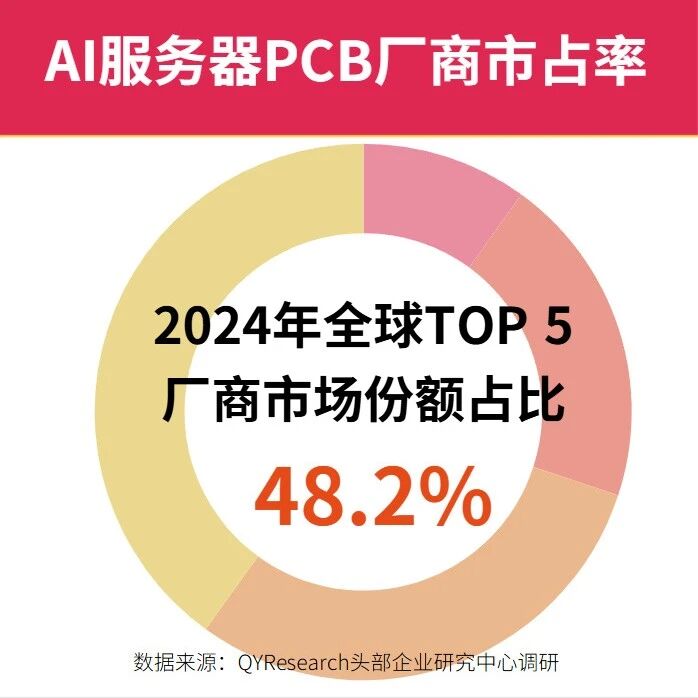
Core Viewpoint - The global AI server PCB market is projected to reach $12.08 billion by 2031, with a compound annual growth rate (CAGR) of 6.7% in the coming years [1]. Market Overview - The AI server PCB market is primarily driven by the surge in demand for AI-optimized servers and the rapid expansion of data centers and cloud infrastructure [11]. - The top five manufacturers hold approximately 48.2% of the market share, with major players including Guanghe Technology, Jianding Technology, and Jinxiang Electronics [6][16]. Product Type Segmentation - Multi-layer PCBs dominate the market, accounting for about 58.4% of the total share [8]. - High-density interconnect (HDI) boards are also significant in the product mix [16]. Application Segmentation - Data centers and cloud computing represent the largest downstream market, capturing approximately 49.5% of the demand for AI server PCBs [9]. Industry Drivers and Challenges - The explosive growth of generative AI and AI-driven workloads is a key driver for unprecedented demand for AI servers [11]. - Challenges include maintaining signal integrity for high-speed interconnections and the high costs associated with materials and manufacturing processes [11]. Industry Opportunities - The need for high-speed interconnections presents opportunities for advanced PCB technologies, such as HDI, SLP, and mSAP, which meet the requirements for high layer counts and low-loss materials [12]. Industry Chain Structure - The industry chain consists of upstream raw materials (e.g., copper-clad laminates, copper foil), midstream PCB manufacturers focusing on high-performance products, and downstream applications in AI server manufacturers and cloud computing [15].
清远上市“军团”势与机
Sou Hu Cai Jing· 2025-06-13 00:36
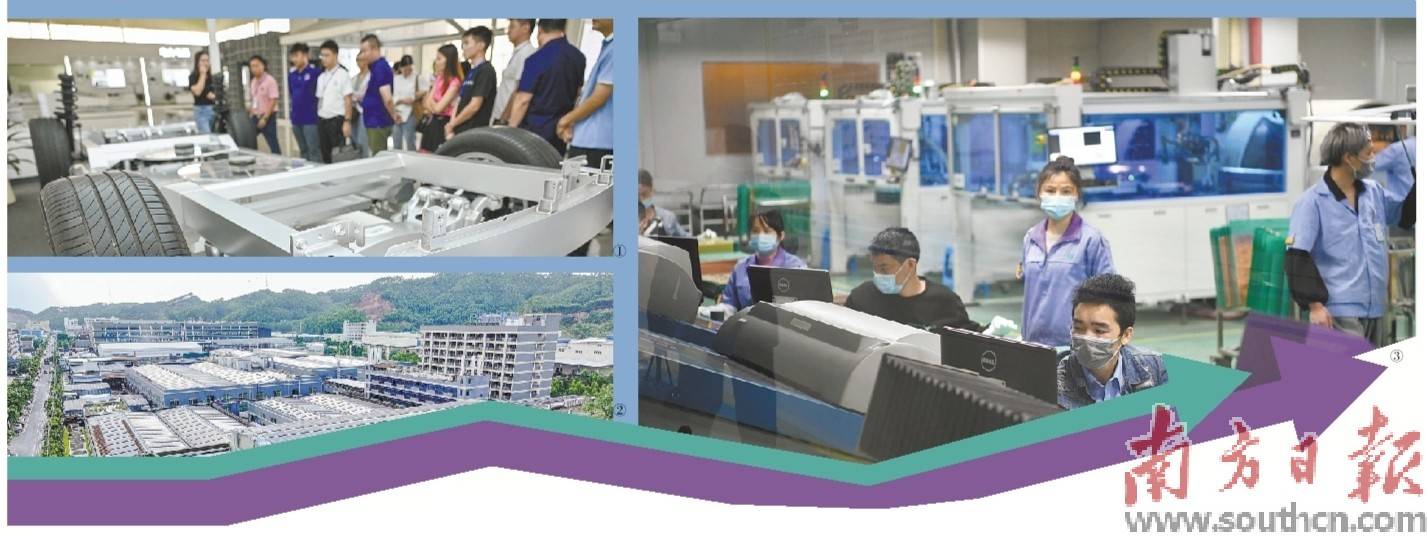
Core Viewpoint - The report highlights the performance and strategic developments of various companies in the Qingyuan region, emphasizing the resilience and transformation of traditional industries alongside the growth of emerging sectors. Group 1: Company Performance - Haomei New Materials achieved a revenue of 6.672 billion yuan, accounting for nearly 30% of the total revenue of Qingyuan A-share listed companies [8] - Jinlu Electronics led with a revenue growth rate of 20.24% and a net profit increase of 89.09%, while Guokang Biochemical reported a revenue increase of 46.15% [7][10] - Dongpeng Holdings experienced a revenue decline of 16.77% and a net profit drop of 54.41%, reflecting challenges in the construction ceramics industry [8][9] Group 2: Industry Trends - The construction ceramics industry, where Dongpeng Holdings operates, remains fragmented with low market concentration and intense competition [4] - The Qingyuan region has seen a rise in A-share listed companies, with a total of 8 companies now, indicating diversification into electronics, new materials, and cables [6][17] - The overall revenue of Qingyuan's 7 A-share companies reached 23.131 billion yuan in 2024, a year-on-year increase of 0.82%, surpassing the national average decline of 0.23% [6] Group 3: Strategic Initiatives - Dongpeng Holdings is exploring low-carbon circular materials and has launched a series of eco-friendly products to adapt to market changes [9] - Haomei New Materials is focusing on green building materials, with its Becklo system windows reducing air conditioning energy consumption by over 20% [10] - Jinlu Electronics is adjusting its order structure, with multi-layer PCB revenue making up 72.66% of its main business income, reflecting a strategic shift towards smart driving applications [10][12] Group 4: R&D and Innovation - Qingyuan companies collectively increased R&D spending, with Guokang Biochemical's R&D expenses rising by 43.46% in 2024 [11] - Dongpeng Holdings invested 233 million yuan in R&D in 2024, maintaining a strong patent portfolio with 1,447 effective patents [12] - Digital transformation is a key focus, with Jinlu Electronics implementing various digital systems that contributed to its significant profit growth [13][14] Group 5: Financial Support and Growth - Qingyuan's financial initiatives include promoting loans for specialized and innovative enterprises, with a 159.68% year-on-year increase in loans for "specialized, refined, and new" small and medium-sized enterprises [20][21] - The local government is actively facilitating financing and support for companies aiming for public listings, enhancing market confidence [20]
建滔积层板(01888):港股公司信息更新报告:2025H1业绩有望回升,2025H2持续性仍需跟踪
KAIYUAN SECURITIES· 2025-04-09 07:44
Investment Rating - The investment rating for the company is "Buy" (maintained) [1] Core Views - The company is expected to benefit from a rebound in performance in H1 2025, driven by both volume and price increases, while the sustainability of performance in H2 2025 remains to be monitored [4][5] - The forecast for net profit for 2025-2026 has been revised down from HKD 27.0 billion and HKD 29.0 billion to HKD 19.8 billion and HKD 22.1 billion respectively, with a new forecast for 2027 at HKD 30.3 billion, representing year-on-year growth of 48.3%, 11.8%, and 36.9% [4] - The current market capitalization corresponds to a PE ratio of 11.3, 10.2, and 7.4 for 2025-2027 [4] Financial Summary and Valuation Metrics - Revenue (million HKD): 2023A: 16,750, 2024A: 18,541, 2025E: 20,261, 2026E: 21,112, 2027E: 23,916 with year-on-year growth rates of -25.1%, 10.7%, 9.3%, 4.2%, and 13.3% respectively [7] - Net Profit (million HKD): 2023A: 907, 2024A: 1,326, 2025E: 1,977, 2026E: 2,210, 2027E: 3,027 with year-on-year growth rates of -64.5%, 45.5%, 48.3%, 11.8%, and 36.9% respectively [7] - Gross Margin (%): 2023A: 16.0, 2024A: 15.7, 2025E: 19.8, 2026E: 20.5, 2027E: 22.5 [7] - Net Margin (%): 2023A: 5.4, 2024A: 7.2, 2025E: 9.8, 2026E: 10.5, 2027E: 12.7 [7] - ROE (%): 2023A: 6.1, 2024A: 8.7, 2025E: 14.0, 2026E: 15.0, 2027E: 19.4 [7] - EPS (diluted/HKD): 2023A: 0.29, 2024A: 0.43, 2025E: 0.63, 2026E: 0.71, 2027E: 0.97 [7] - P/E (times): 2023A: 24.7, 2024A: 16.9, 2025E: 11.3, 2026E: 10.2, 2027E: 7.4 [7]