太空AI数据中心

Search documents
受中国刺激了?马斯克公司申请发射100万颗卫星打造“太空大脑”
Sou Hu Cai Jing· 2026-02-05 12:35
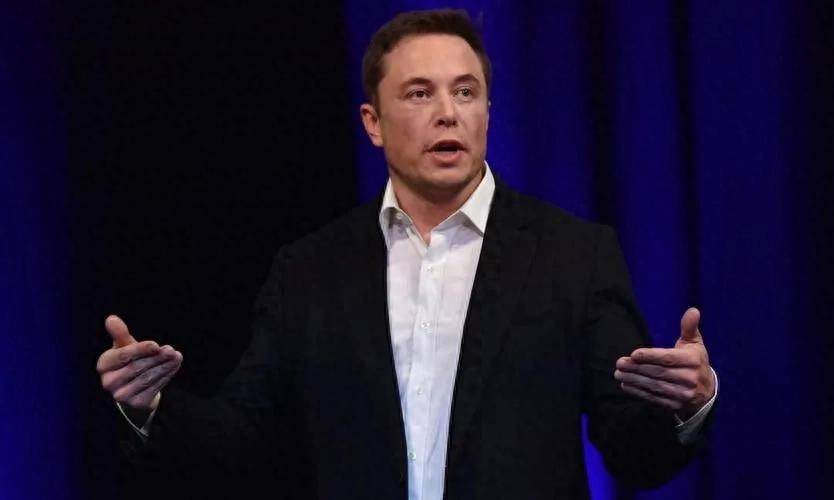
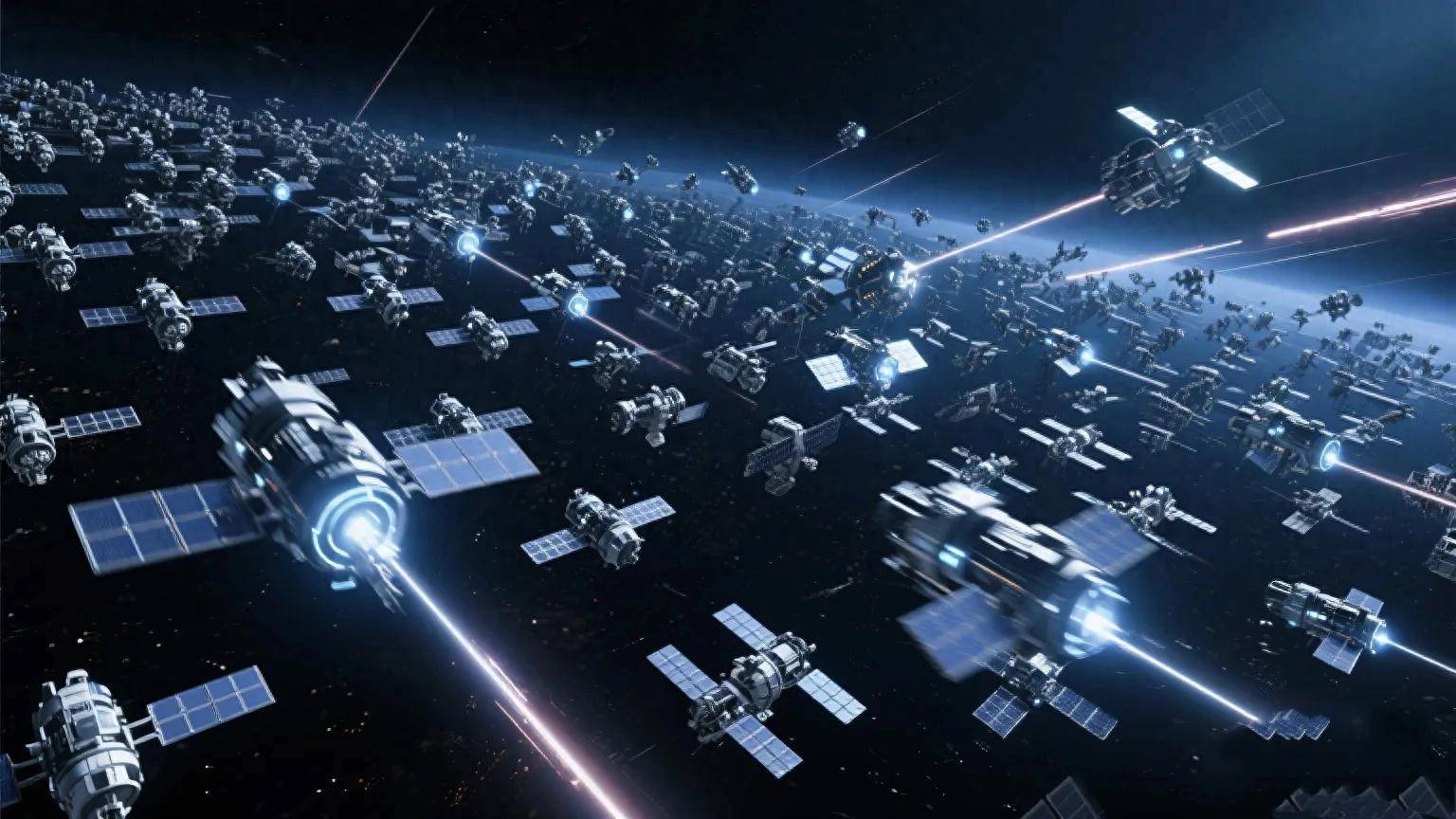
Core Viewpoint - The competition between the US and China in space resources and future computing power is intensifying, marked by a "satellite quantity race" as both countries aim to establish dominance in low Earth orbit satellite deployment [1][3][18]. Group 1: SpaceX's Strategy - SpaceX, led by Elon Musk, has submitted an application to the FCC to deploy up to 1 million satellites, aiming to create an "orbital data center" to support global AI computing needs [1][3]. - The satellites are planned to be deployed in orbits between 500-2000 kilometers, utilizing solar power and laser links, with the goal of advancing towards a "Kardashev Type II civilization" [3][5]. - The aggressive nature of SpaceX's application is seen as a strategic response to China's recent submission of 203,000 low Earth orbit satellites, which disrupted SpaceX's previous dominance in satellite deployment [10][12]. Group 2: China's Approach - China's submission of 203,000 low Earth orbit satellites is a strategic move to secure resources under international rules, ensuring that they can develop their satellite capabilities without facing space constraints in the future [5][7]. - The Chinese plan includes a focus on building a space AI data center by 2030, with significant satellite deployment goals, indicating a clear intention to compete in the space computing arena [12][16]. - China's satellite manufacturing has achieved mass production, significantly reducing costs and improving deployment capabilities, which positions it favorably in the competition [16][19]. Group 3: Challenges and Opportunities - Both SpaceX and China face significant technical and commercial challenges in realizing their ambitious satellite deployment plans, including the need for advanced technology and substantial financial investment [14][16]. - The competition is not just about satellite numbers but also about establishing fair space governance and rules, with China advocating for a "shared governance" approach in contrast to SpaceX's more monopolistic tendencies [18][21]. - The advancements in satellite technology and the potential for new AI services supported by space computing could lead to significant industry opportunities, benefiting various sectors and driving technological progress [19][21].

SpaceX向美国FCC申请发射运行百万颗卫星,建设太空AI数据中心
Xin Lang Cai Jing· 2026-01-31 09:11
Core Viewpoint - SpaceX has submitted an application to the FCC to launch and operate up to one million satellites, which will serve as orbital data centers for large-scale AI reasoning and training [1] Group 1: Satellite Operations - The satellites will operate at altitudes ranging from 500 kilometers to 2000 kilometers to meet global demand [1] - The system will rely on solar power, which is expected to reduce operational costs and environmental impact compared to ground data centers [1] Group 2: Strategic Asset Integration - Elon Musk is considering integrating his assets to advance the space computing layout, potentially merging SpaceX with his AI company xAI or Tesla [1] - The plan for deploying AI data centers in space may be realized through these mergers, with SpaceX's orbital data centers providing significant computing power to xAI [1] - Tesla's capability in manufacturing energy storage systems could assist SpaceX in utilizing solar energy for operating these data centers in space [1]
从SpaceX发展史看商业航天投资机会
2026-01-04 15:35
Summary of SpaceX Conference Call Company Overview - **Company**: SpaceX - **Industry**: Commercial Space Industry - **Founded**: 2002 by Elon Musk - **Current Valuation**: Estimated at $800 billion by the end of 2025, with a target of $1.5 trillion post-IPO in 2026 Key Points Development Stages - SpaceX's development can be divided into three phases: 1. **Reusable Rocket Technology**: Focus on reducing launch costs and achieving scalable rocket and satellite launches 2. **Mars Colonization**: Utilizing satellite launch capabilities to advance human colonization of Mars 3. **Space AI Data Center**: Recent plans for large-scale construction of AI data centers in space [2][4] Revenue Sources - **Current Revenue**: Approximately $9 billion in 2023, with a pre-tax profit of about $3 billion - **Projected Revenue**: Expected to reach $13.1 billion in 2024, with Starlink contributing over 60% [5] - **Future Projections**: Anticipated revenue of $22-24 billion in 2026, with Starlink contributing around $11 billion [5][6] Starlink Service - **User Base**: Over 8 million users by the end of 2025, covering more than 150 countries [10] - **Subscription Pricing**: - Personal Home: ~$85/month - Business: ~$500/month - Maritime: ~$780/month - Aviation: ~$25,000/month - **Hardware Costs**: Approximately $300 for personal setups and $2,000 for business setups [9] Cost Reduction and Technology Innovation - **Launch Cost**: Falcon 9 rocket costs about $50 million, with reused costs dropping to $15 million [6] - **Reusability Success**: Over 384 successful re-flights of first-stage boosters and 307 successful recoveries of fairings [6] Future Plans and IPO - **IPO Plans**: Scheduled for the second half of 2026, aiming to raise over $30 billion [4] - **Funding Utilization**: Proceeds will be directed towards rocket launches, AI data center development, and Mars missions [4] Starlink Market Potential - **Market Segmentation**: - Household: 62% - Government: 28% - Maritime: 8% - Aviation: 2% [7][8] - **Growth Drivers**: Expected to be a significant growth driver, with hardware sales potentially decreasing as technology advances [8] New Business Developments - **Starship and AI Data Centers**: New rocket designs with enhanced payload capabilities and plans for AI data centers in space [14][15] - **Launch Frequency**: Plans to launch 60 Starlink V3 satellites annually starting in 2026, integrating AI computing loads [14] Advantages of Space AI Data Centers - **Cost Efficiency**: Near-zero electricity costs due to continuous solar power and reduced cooling costs in space [15] Additional Insights - **Investor Confidence**: Major investors include Founders Fund, Google, Fidelity, A16Z, and Sequoia Capital [4] - **Technological Advancements**: Upgrades in satellite technology to enhance communication capabilities and network coverage [12]
彭博:IPO倒计时!SpaceX正式启动上市“静默期”,估值或破1.5万亿美元
美股IPO· 2025-12-17 09:55
Core Viewpoint - SpaceX is preparing for a potential IPO in 2026, aiming to raise over $30 billion with a target valuation of approximately $1.5 trillion, which could become the largest IPO in history [1][3][6]. Group 1: IPO Preparation - SpaceX has officially entered a "quiet period," requiring employees to comply with SEC regulations and refrain from discussing the IPO plans publicly [3][4]. - The company has communicated to its employees the importance of avoiding any actions that could artificially inflate interest in the IPO, including discussing growth prospects or potential valuations [4][5]. - The specific timing and valuation of the IPO remain uncertain, as the company may adjust its plans based on market conditions or strategic considerations [7][8]. Group 2: Fund Utilization - The funds raised from the IPO are intended to support a "crazy flight frequency" for the developing Starship rocket, as well as to finance ambitious projects such as an AI data center in space and the construction of a lunar base [6].
马斯克离万亿富翁只差最后一跃,6770 亿身家背后的九股力量
Sou Hu Cai Jing· 2025-12-16 09:59
Core Insights - Elon Musk has reached a net worth of $677 billion, becoming the first person in history to surpass the $600 billion mark, with the potential to become a trillionaire soon [2][19] - This wealth surge is attributed to a synergistic explosion across Musk's technology empire, which spans space, automotive, and artificial intelligence sectors [2] Group 1: SpaceX - SpaceX's valuation has doubled to $800 billion in December from $400 billion in August, making it the largest unicorn globally [4] - Musk's 42% stake in SpaceX has contributed $168 billion to his wealth, serving as a core engine for this wealth increase [4] - The company is accelerating its IPO plans for 2026, with a potential valuation of $1 trillion, which could significantly boost Musk's net worth [4][5] Group 2: Tesla - Tesla's ambitious compensation plan aims to increase the company's market value to $8.5 trillion and achieve significant production and subscription targets by 2035 [6] - Despite a 39% year-on-year decline in EU sales, analysts remain optimistic about Tesla's growth potential, particularly in autonomous driving and robotics [6][7] - The rollout of fully autonomous driving (FSD) is seen as a key variable for Tesla's valuation, with plans for nationwide expansion of Robotaxi services [6][8] Group 3: xAI and Other Ventures - xAI has recently completed a $6 billion Series C funding round, with its valuation rising to $40-50 billion, supported by top-tier investors [10] - Musk's 53% stake in xAI is valued at $60 billion, with significant growth potential as AI technologies commercialize [10] - Starlink, SpaceX's satellite internet service, is projected to generate substantial revenue, contributing to the company's valuation and providing stable cash flow [11][13] Group 4: Future Growth and Market Position - Tesla's upcoming products, Cybercab and Optimus robots, are expected to launch in 2026, marking a shift from an automotive manufacturer to a technology platform [14][16] - The integration of X (formerly Twitter) and Neuralink into Musk's ecosystem is seen as a strategic advantage, despite their current lack of significant revenue [16] - Musk's wealth growth has outpaced that of other billionaires, with a staggering increase from $24.6 billion in March 2020 to $677 billion by December 2025 [19][17]