奇迹童颜2.0

Search documents
新氧殊死一搏?信息与预定业务持续低迷 医美诊疗服务“破价”获客被厂商拉黑断供、利润亏损扩大
Xin Lang Cai Jing· 2026-01-20 09:26
Core Insights - The core business of the internet medical beauty platform, SoYoung, is struggling, with record high losses and continuous attempts at cross-industry transformation failing to reverse the downward trend in performance [1][10][11] Business Performance - In 2024, SoYoung's revenue from its core information and booking services decreased by 19.3% year-on-year to 9.29 billion yuan, accounting for 63.4% of total revenue, down from 76.8% in 2023 [4][12] - The company reported a total revenue of 14.67 billion yuan in 2024, a decline of 2.1% year-on-year, with a net loss of 5.87 billion yuan, the highest in four years [11][12] - For the first three quarters of 2025, revenue from information and booking services continued to decline, with year-on-year decreases of 34.1%, 35.6%, and 34.5% respectively [4][12] Business Diversification - SoYoung has attempted to diversify its business by expanding into medical beauty equipment, exclusive agency for hyaluronic acid, and opening medical beauty institutions, but these efforts have not improved profitability [5][13] - The newly launched light medical beauty chain, "SoYoung Youth Clinic," aims to provide affordable and accessible anti-aging solutions, marking a significant shift in the company's revenue structure [6][15] Revenue Growth in New Segments - The light medical beauty service segment has shown significant growth, with revenue increasing by 305% year-on-year to 1.84 billion yuan in Q3 2025, accounting for approximately 47.5% of total revenue [1][15] - The self-operated medical beauty services have become the largest source of income for SoYoung, surpassing traditional online information and booking services for the first time in Q2 2025 [7][15] Pricing Strategy and Risks - SoYoung's low-price strategy has rapidly opened up the market but poses significant risks to sustainable profitability, leading to strained relationships with upstream suppliers and potential supply disruptions [2][8][17] - The company's aggressive pricing has resulted in a drastic reduction in customer spending per transaction while fixed costs remain high, putting pressure on overall profit margins [17] - The shift to a heavy asset model by opening medical beauty institutions requires substantial upfront investment, which may exacerbate financial pressures amid declining core business revenues [17]
童颜针949元拼团价惹厂商抵制 新氧回应称挤价格泡沫
Zhong Guo Jing Ji Wang· 2025-12-17 06:52
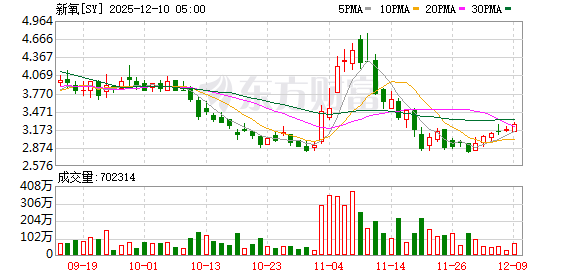
Core Viewpoint - The pricing power battle in the medical aesthetics industry is intensifying, with New Oxygen (SY.O) challenging upstream manufacturers over the pricing of its "youthful needle" products, leading to significant price reductions and disputes regarding product sourcing and compliance [1][2][3]. Group 1: Pricing Strategy and Market Dynamics - New Oxygen launched its "Miracle Youth 1.0" at a price of 4,999 yuan per unit, marking the first time the market price for youthful needles reached the 5,000 yuan range, while the manufacturer's price was 16,800 yuan per unit [1]. - In June, New Oxygen introduced "Miracle Youth 2.0" at 5,999 yuan per unit, using a product from Saint Boma, which has a market average price of approximately 18,800 yuan per unit [1]. - On December 15, New Oxygen's youth clinics offered a group purchase price as low as 949 yuan per unit, representing a drastic reduction of about 95% compared to the manufacturer's controlled price of 16,800-18,800 yuan per unit [2]. Group 2: Manufacturer Responses and Industry Implications - Multiple upstream manufacturers have publicly distanced themselves from New Oxygen, with Fiman Bio announcing it ceased supplying products to New Oxygen and its clinics, warning that continued sales could indicate non-compliance or counterfeit products [2]. - New Oxygen argues that the ongoing pricing battle reflects a structural shift in the medical aesthetics market from a "seller's market" to a "buyer's market," driven by the approval of more products like youthful needles and hyaluronic acid [2]. - The company believes that a rational price return will benefit both upstream and downstream players, allowing for stable orders that can reduce production and R&D costs, while also fostering healthier customer acquisition and repurchase models [3].
万元童颜针卖2999元 新氧对峙上游供应商 自营转型陷亏损困局
Xi Niu Cai Jing· 2025-12-16 11:24
Core Viewpoint - The conflict between medical beauty platform Xinyang (SY.US) and upstream supplier of regenerative materials has escalated, with accusations regarding product sourcing and training practices [2][3] Pricing Strategy and Supply Chain Conflict - In April 2025, Xinyang launched "Miracle Youth 1.0," pricing the product at 4,999 yuan per unit, significantly lower than the supplier's guidance price of 16,800 yuan [3] - In June 2025, Xinyang's "Miracle Youth 2.0" used a product from Saint Boma, priced at 5,999 yuan, while the market average was approximately 18,800 yuan, leading to accusations of unauthorized procurement [3] Company Response and Compliance - Xinyang stated that all medical devices are sourced from legally qualified suppliers with complete traceable purchase documentation, and all clinics are legally established medical institutions [5] - The company emphasized that the era of market monopoly through registration certificate scarcity and excessive price control has ended, attributing low prices to value return through large-scale procurement and reduced marketing costs [5] Financial Performance and Transition Challenges - Xinyang, as the "first internet medical beauty stock," faces strong competition from platforms like Douyin, Xiaohongshu, and Meituan, resulting in a 19.3% year-on-year decline in information and appointment service revenue in 2024 [6] - In the first three quarters of 2025, Xinyang's revenue reached 1.063 billion yuan, a decrease of 3.36% year-on-year, with a net loss of 133 million yuan, marking a shift from profit to loss [6] - The company's offline beauty treatment services generated 427 million yuan, a 385.05% increase year-on-year, becoming the largest revenue source, surpassing traditional business for the first time [6] Industry Competition and Business Model Changes - Xinyang's aggressive pricing strategy has led to a significant reduction in profit margins, with offline service gross margins dropping to 24%, well below the industry average of over 50% [7] - In September 2025, Xinyang launched a customized version of "Plastic Beauty" (Miracle Youth 3.0) at a price of 2,999 yuan, with a core ingredient PLLA content of 75mg, only half of that in mainstream products [7] - The company's "low-price revolution" and aggressive transformation have fundamentally changed its business model, raising concerns about balancing price competitiveness with supply chain relationships and ensuring medical safety and service quality [7]


定价权大战升级!新氧2999元童颜针硬刚上游厂商
Xin Lang Cai Jing· 2025-12-15 10:02
Core Viewpoint - The ongoing conflict between the medical beauty platform company New Oxygen and its suppliers highlights a significant pricing power struggle in the industry, particularly regarding the pricing of the "童颜针" (youthful needle) product, which New Oxygen has drastically reduced from market prices to attract consumers [2][3][4]. Group 1: Pricing Conflict - New Oxygen has been publicly accused by suppliers, including Purity and Saint Boma, of sourcing products through unauthorized channels and has faced scrutiny over the legitimacy of its clinics [3][25]. - The core of the conflict revolves around New Oxygen's aggressive pricing strategy, which has seen the price of the "童颜针" drop from approximately 10,000 yuan to 2,999 yuan, representing a nearly 70% reduction [4][26]. - New Oxygen claims that its low pricing strategy is based on "value return," achieved through large-scale procurement and reduced marketing costs [4][26]. Group 2: Financial Performance - In the first three quarters of 2024, New Oxygen reported total revenue of 1.063 billion yuan, a year-on-year decline of 3.36%, with a net loss of 133 million yuan, a shift from a profit of 20.78 million yuan in the same period last year [14][36]. - The company's gross profit margin for the same period was 49.21%, down 13.02 percentage points year-on-year, primarily due to lower margins from offline services compared to traditional information services [16][38]. - The rapid expansion of offline beauty treatment services has led to a significant increase in revenue, with a 385.05% year-on-year growth to 427 million yuan, now accounting for 40.16% of total revenue [15][37]. Group 3: Operational Challenges - New Oxygen's shift to a heavy asset model has increased operational costs, with total operating costs reaching 540 million yuan, representing 50.8% of revenue, significantly higher than the traditional platform model [16][39]. - The company faces challenges in maintaining service quality due to a lack of a stable and experienced medical team, which is crucial for the quality of medical beauty services [39]. - Regulatory risks have increased as offline medical practices are subject to stringent oversight from multiple regulatory bodies, raising concerns about compliance and potential public relations crises [39].
新氧对峙普丽妍,谁的童颜针定价权
Bei Jing Shang Bao· 2025-12-10 09:42
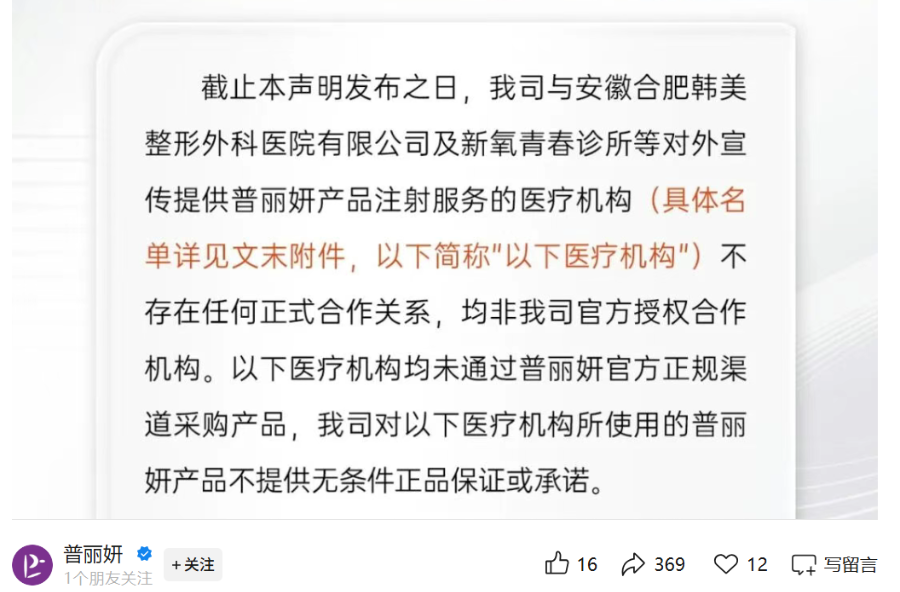
Core Viewpoint - The price war surrounding "童颜针" (Youthful Needle) is not only challenging the pricing system of the medical beauty industry but also testing the transformation path of So-Young, which is attempting to regain pricing autonomy through aggressive pricing strategies and self-built clinics [2][15]. Group 1: Price War and Market Dynamics - The recent conflict escalated when the manufacturer, 普丽妍, publicly named 79 "non-official cooperative medical institutions," including 46 So-Young clinics, questioning their product sources and doctor qualifications [3][5]. - So-Young has significantly reduced the price of "童颜针" from over 10,000 RMB to 2,999 RMB, aiming to establish its pricing power through the launch of customized products in collaboration with 西宏生物 [2][10]. - The price reduction of approximately 70% is seen as a challenge to the traditional profit distribution model in the medical beauty industry, where high prices were previously justified by perceived quality [6][7]. Group 2: Transformation Challenges - So-Young's transition from a platform to a direct participant in the medical beauty industry has led to conflicts with traditional partners, resulting in a significant decline in its platform service revenue, which dropped by 34.5% year-on-year [15][16]. - The company's aggressive expansion into self-operated clinics has resulted in increased operational costs, with a reported 333.2% rise in medical treatment service costs [16][18]. - Despite the challenges, So-Young's medical treatment service revenue surged by 304.6% year-on-year, indicating potential for growth in its new business model [17]. Group 3: Financial Performance and Cost Structure - So-Young's gross profit margin for medical treatment services was reported at 24.25% in Q3 2025, significantly lower than the industry average, indicating pressure on profitability [8][18]. - The company has faced continuous losses, with a net loss of 64.8 million RMB in Q3 2025, attributed to heavy investments in its offline expansion strategy [16][17]. - The overall revenue for So-Young in Q3 2025 was 386.67 million RMB, with aesthetic treatment services contributing significantly to this figure [17]. Group 4: Regulatory and Compliance Issues - So-Young has encountered regulatory scrutiny, with multiple complaints regarding service quality and compliance issues, including fines for not adhering to national standards [18][19]. - The company emphasizes that its low pricing strategy does not compromise medical quality and is committed to addressing feedback from third-party platforms to improve service [18][20].
万元童颜针价格被打至4999元,医美巨头遭上游厂商拉黑
2 1 Shi Ji Jing Ji Bao Dao· 2025-11-28 06:31
Core Viewpoint - The ongoing conflict between upstream manufacturers and downstream medical beauty institutions highlights issues of product authorization and market competition in the rapidly expanding medical beauty industry in China [2][5][12]. Group 1: Conflict Overview - Puli Yan accused several medical institutions, including Anhui Hefei Hanmei Plastic Surgery Hospital and Xinyang Youth Clinic, of being "unauthorized cooperation institutions," warning of potential health risks for consumers due to unverified product sourcing [1][2]. - Xinyang responded by asserting that all Puli Yan products used are sourced from legally qualified suppliers and emphasized compliance with ISO 37301 management standards [1][2]. Group 2: Market Dynamics - The medical beauty market, particularly the "童颜针" (youthful needle) segment, has seen rapid growth, with market size increasing from over 1 billion yuan in 2021 to an estimated 30 billion yuan last year, projected to reach 100 billion yuan in five years [5][6]. - Xinyang's introduction of lower-priced products, such as the "奇迹童颜" series, has disrupted the pricing structure established by upstream manufacturers, leading to tensions and demands for product removal from the market [5][6]. Group 3: Compliance and Regulation - Concerns have been raised regarding Xinyang's compliance with regulations, as some manufacturers claim that Xinyang has used products without proper authorization, potentially jeopardizing consumer safety [8][9]. - Legal experts emphasize that medical institutions must procure products from authorized sources to ensure traceability and compliance with regulations, highlighting the risks associated with unauthorized procurement [9][12]. Group 4: Industry Challenges - The medical beauty industry faces significant challenges, including the prevalence of unauthorized sales and counterfeit products, which threaten consumer safety and complicate regulatory enforcement [12][13]. - The need for a collaborative approach among manufacturers, medical institutions, and regulatory bodies is critical to establish a sustainable and compliant industry ecosystem [14].