奇迹童颜3.0

Search documents
从“宣战”到“同盟”:新氧与锦波们的“大和解”
Hua Er Jie Jian Wen· 2026-01-31 07:13
Core Viewpoint - The article discusses the significant shift in the medical aesthetics industry, highlighting the transition from conflict to collaboration between companies like Jinjing Biological and platforms like New Oxygen, reflecting changes in market dynamics and pricing power [1][3][5]. Group 1: Industry Dynamics - In 2024, Jinjing Biological publicly criticized New Oxygen for low-price promotions of its core product, Wei Yimei, indicating a struggle to maintain pricing power [1][4]. - New Oxygen has transformed from a platform to a physical clinic model, establishing 50 stores across 16 cities, which enhances its bargaining power with upstream manufacturers [3][11]. - The monopoly of Jinjing Biological in the collagen product market has been disrupted by competitors like Juzhi Biological and Chuangjian Biological, leading to a loss of pricing authority for upstream manufacturers [3][10]. Group 2: Strategic Alliances - The formation of the "Youth Selection Alliance" by New Oxygen and 14 upstream manufacturers, including Jinjing Biological, marks a shift towards collaboration in areas like pricing and product traceability [2][5]. - Jinjing Biological's previous confrontations with platforms like Meituan have also turned into strategic partnerships, indicating a broader trend of upstream manufacturers adapting to market realities [7][10]. Group 3: Evolving Business Models - The article outlines three emerging strategies for upstream manufacturers in response to shifting market dynamics: 1. The rise of the ODM model, where companies like Xihong Biological provide products without interfering with downstream pricing [14]. 2. Maintaining product scarcity through innovation or acquisitions to capture market share during competitive gaps [15]. 3. Expanding internationally to seek new growth opportunities, as seen with companies like Aimeike and Binhai Medical [15][16]. Group 4: Market Trends - The medical aesthetics market is experiencing a significant increase in product offerings, with over 50 new medical device approvals in 2025, leading to intensified competition [11]. - The shift in pricing power from manufacturers to distribution channels reflects a broader trend of market "demystification" and value reassessment in the medical aesthetics sector [16].


拒绝上游指导价之后,新氧低价从何而来
经济观察报· 2026-01-31 04:01
Core Viewpoint - The medical beauty industry is experiencing a shift from supply scarcity to abundance, allowing institutions to negotiate better prices and providing more options for consumers [2][3][9]. Group 1: Market Dynamics - New Oxygen's "Miracle Youth" project has seen continuous sales growth for three months since its launch, despite pricing disputes with upstream suppliers [2]. - The price of "Miracle Youth" products is significantly lower than the manufacturer's suggested retail price, with some products priced at 60% less than the official price [2][5]. - The increase in the number of products available in the market has provided institutions with more choices, reducing reliance on single suppliers [3][9]. Group 2: Competitive Landscape - The market for "Miracle Youth" products, specifically the PLLA facial filler, has seen multiple companies approved for production, increasing competition [5]. - New Oxygen's pricing strategy has led to conflicts with suppliers, who are concerned about the disruption of established pricing structures [6]. - The number of approved products in the PLLA category is expected to grow, with 11 products already approved and nearly 20 more in the pipeline [9]. Group 3: Business Strategy - New Oxygen aims to leverage its scale by expanding its number of clinics and increasing treatment volumes, which enhances its negotiating power with suppliers [6][7]. - The company plans to open at least 35 new clinics by 2026, with a target of increasing the number of doctors and nursing staff significantly [7]. - Despite ongoing losses due to expansion, New Oxygen's strategy focuses on achieving profitability by optimizing operations and offering a wider range of products at different price points [11].

拒绝上游指导价之后,新氧低价从何而来
Jing Ji Guan Cha Wang· 2026-01-30 13:18
Core Viewpoint - New Oxygen Group is successfully transitioning from an online medical beauty platform to a chain of offline medical beauty clinics, with its flagship product, the Miracle Youth Needle, showing significant sales growth despite pricing disputes with upstream suppliers [2][5]. Group 1: Business Model and Pricing Strategy - New Oxygen's business model focuses on large-scale procurement and low-margin sales, allowing it to offer prices significantly below manufacturer guidance, such as 5,999 yuan for a product with a manufacturer price of 16,800 yuan [2][4]. - The company has expanded its clinic presence to 50 locations across 16 cities, leveraging its scale to negotiate better prices with suppliers [3][6]. - The Miracle Youth Needle series has seen treatment volumes exceed 8,600 by December 2025, a threefold increase since September [5]. Group 2: Market Dynamics and Supplier Relations - The medical beauty industry is shifting from a supply-scarce to a supply-abundant phase, providing institutions with more options and negotiating power against suppliers [3][8]. - New Oxygen's pricing strategy has led to tensions with suppliers, who are concerned about the disruption of established pricing structures [5][6]. - The company maintains that its low prices do not come at the expense of upstream profits, as it aims for mutually beneficial relationships with suppliers [6][9]. Group 3: Future Plans and Financial Goals - New Oxygen plans to open at least 35 new clinics in 2026, with an increase in medical staff to 500 doctors and 1,000 nursing personnel by the end of the year [7]. - The company aims to achieve overall profitability by 2026 through improved operational efficiency and a diversified product offering [9][10]. - Despite ongoing losses due to expansion, New Oxygen is focused on optimizing its business model to enhance gross margins while continuing to provide competitive pricing [9].

天猫医美向美团开出了第一枪
Hua Er Jie Jian Wen· 2026-01-21 16:18
Group 1 - Meituan's medical beauty sector is facing aggressive price competition from Alibaba's e-commerce platform, Tmall, which has introduced significant discounts [1][2] - Tmall's "百亿补贴" (100 billion subsidy) strategy has led to the price of the "童颜针" (Aivilan, 84mg) dropping to 1399 yuan per unit, with potential discounts bringing it down to as low as 999 yuan [1][2] - In contrast, Meituan's pricing for the same product remains around 4000 yuan in the Beijing area, indicating a direct challenge to Meituan's market position [2] Group 2 - Meituan has established a strong market presence with nearly 9,500 new medical beauty institutions opened by August 2025, and over 200 upstream brands have joined its platform [3] - Tmall's strategy to attract users through subsidies is a response to the significant barriers Meituan has built with its extensive offline supply network [4] - The medical beauty market has already seen a price war initiated by competitors, such as New Oxygen, which introduced a product priced at 2999 yuan, significantly lower than the market average of 13,000 to 24,000 yuan [5]



新氧殊死一搏?信息与预定业务持续低迷 医美诊疗服务“破价”获客被厂商拉黑断供、利润亏损扩大
Xin Lang Cai Jing· 2026-01-20 09:26
Core Insights - The core business of the internet medical beauty platform, SoYoung, is struggling, with record high losses and continuous attempts at cross-industry transformation failing to reverse the downward trend in performance [1][10][11] Business Performance - In 2024, SoYoung's revenue from its core information and booking services decreased by 19.3% year-on-year to 9.29 billion yuan, accounting for 63.4% of total revenue, down from 76.8% in 2023 [4][12] - The company reported a total revenue of 14.67 billion yuan in 2024, a decline of 2.1% year-on-year, with a net loss of 5.87 billion yuan, the highest in four years [11][12] - For the first three quarters of 2025, revenue from information and booking services continued to decline, with year-on-year decreases of 34.1%, 35.6%, and 34.5% respectively [4][12] Business Diversification - SoYoung has attempted to diversify its business by expanding into medical beauty equipment, exclusive agency for hyaluronic acid, and opening medical beauty institutions, but these efforts have not improved profitability [5][13] - The newly launched light medical beauty chain, "SoYoung Youth Clinic," aims to provide affordable and accessible anti-aging solutions, marking a significant shift in the company's revenue structure [6][15] Revenue Growth in New Segments - The light medical beauty service segment has shown significant growth, with revenue increasing by 305% year-on-year to 1.84 billion yuan in Q3 2025, accounting for approximately 47.5% of total revenue [1][15] - The self-operated medical beauty services have become the largest source of income for SoYoung, surpassing traditional online information and booking services for the first time in Q2 2025 [7][15] Pricing Strategy and Risks - SoYoung's low-price strategy has rapidly opened up the market but poses significant risks to sustainable profitability, leading to strained relationships with upstream suppliers and potential supply disruptions [2][8][17] - The company's aggressive pricing has resulted in a drastic reduction in customer spending per transaction while fixed costs remain high, putting pressure on overall profit margins [17] - The shift to a heavy asset model by opening medical beauty institutions requires substantial upfront investment, which may exacerbate financial pressures amid declining core business revenues [17]
上万元的“童颜针”现在只卖900多元 背后原因揭秘
Zhong Guo Neng Yuan Wang· 2025-12-16 23:37
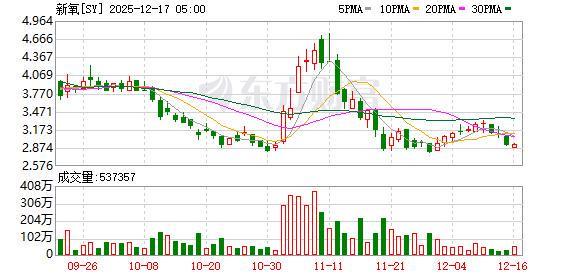
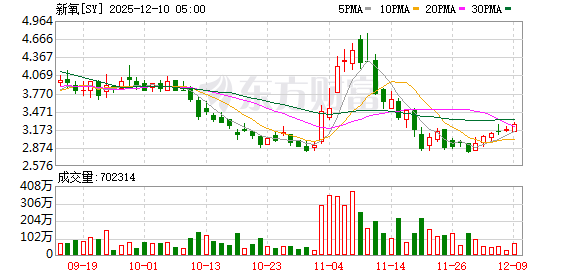
Core Viewpoint - The low-price strategy of the medical beauty company New Oxygen has intensified conflicts with upstream suppliers, leading to resistance from multiple vendors and a significant drop in its stock price [2][3]. Group 1: Supplier Conflicts - On December 11, the collagen filler manufacturer Faiman Biotech announced it had stopped supplying products to New Oxygen since October 1, claiming that continued sales would imply products were obtained from non-compliant channels or were counterfeit [2]. - Another manufacturer, Puliyan, listed over 40 New Oxygen clinics as "non-official cooperative medical institutions," while Saint Boma stated that New Oxygen's sales of its product "Aivilan" were through non-compliant channels [2][3]. - In response to supplier pushback, New Oxygen's clinic issued a statement accusing suppliers of maintaining a high-price system that undermines the pricing autonomy of medical institutions [2]. Group 2: Pricing Strategy - New Oxygen's pricing strategy has led to significant price reductions, with its own brand "Miracle Youth 3.0" priced at 999 yuan for the basic version and 2999 yuan for the upgraded version, while similar products from major brands are priced above 10,000 yuan [3][4]. - The company has been able to sell products at prices significantly lower than the original manufacturers by eliminating middlemen and utilizing lower-cost contract manufacturing [4]. - A recent promotion on New Oxygen's platform offered a product originally priced at 1999 yuan for as low as 949 yuan, resulting in over 22,000 units sold by December 15 [4]. Group 3: Market Dynamics - The medical beauty industry is experiencing a competitive landscape where New Oxygen's low-price model is seen as a survival strategy amid fierce competition [5]. - The products sold by New Oxygen are classified as approved Class III medical devices, but concerns remain regarding the quality control and long-term safety of newer domestic brands compared to established international ones [5]. - The ongoing conflict between New Oxygen and its suppliers is expected to have limited deep-seated impacts on the manufacturers, serving primarily to delineate boundaries publicly [5].
上万元的“童颜针”现在只卖900多元,背后原因是→
第一财经· 2025-12-16 11:42
Core Viewpoint - The article discusses the recent conflicts between medical beauty company New Oxygen and its upstream suppliers due to New Oxygen's low pricing strategy, which has led to a significant drop in its stock price and supplier resistance [3][6]. Summary by Sections Supplier Conflicts - New Oxygen's low pricing strategy has intensified conflicts with suppliers, leading to several suppliers, including Faiman Bio, ceasing to supply products to New Oxygen since October 1 [3][4]. - Suppliers claim that New Oxygen's pricing disrupts the market's pricing system, resulting in a "supply cut" from multiple manufacturers [5][6]. Pricing Strategy - New Oxygen offers its own brand of "童颜针" (youthful needle) products at significantly lower prices compared to the market, with prices as low as 999 yuan for the basic version and 2999 yuan for the upgraded version [5]. - The article highlights that while major brands price their products above 10,000 yuan, New Oxygen's pricing strategy allows it to sell similar products for much lower prices, attracting a large customer base [5][6]. Business Model - New Oxygen's business model is characterized by using low prices as a customer acquisition strategy, collaborating with upstream manufacturers to eliminate middlemen and reduce costs [6][7]. - The company reportedly utilizes lower-cost OEM production methods, allowing it to maintain high profit margins despite lower retail prices [6][7]. Market Impact - The ongoing conflict between New Oxygen and its suppliers is expected to have limited long-term effects on the overall market, with the public disputes serving to clarify positions among the involved parties [8].

上万元“童颜针”为何能卖到千元以内?新氧低价模式激化医美商战
Di Yi Cai Jing· 2025-12-16 11:19
Core Viewpoint - The low-price strategy of the medical beauty company New Oxygen has intensified conflicts with upstream suppliers, leading to resistance from multiple vendors and a significant drop in its stock price [1][3]. Group 1: Pricing Strategy and Market Impact - New Oxygen's model involves attracting customers through low prices by collaborating with upstream manufacturers of "童颜针" (youthful needle) and eliminating intermediaries to significantly reduce product costs and achieve higher profits [1][4]. - The company's pricing for "童颜针" products is substantially lower than the market average, with some products priced at 4999 yuan and 5999 yuan, compared to official prices exceeding 10,000 yuan [3][4]. - New Oxygen's aggressive pricing strategy has disrupted the market's pricing system, prompting suppliers to cut off supplies [4]. Group 2: Supplier Relations and Compliance Issues - Suppliers, including斐缦生物 and 普丽妍, have publicly declared New Oxygen as a non-compliant partner, halting supplies and labeling its sales as potentially involving counterfeit products [1][3]. - Despite supplier claims, New Oxygen continues to sell certain products, asserting that they are traceable through official channels [3]. - The compliance of New Oxygen's products is under scrutiny, as newer domestic brands may lack the long-term safety data compared to established international brands [5]. Group 3: Business Model and Industry Context - New Oxygen's business model is seen as a survival strategy in a competitive medical beauty market, leveraging excess production capacity from smaller brands to offer low-priced products [5]. - The industry comparison to smartphone branding illustrates how lower-priced products can still maintain profitability despite significant price differences from premium brands [4][5]. - The ongoing conflict with suppliers is expected to have limited deep impacts on the overall market, serving primarily to clarify positions among the involved parties [5].
新氧对峙普丽妍,谁的童颜针定价权
Bei Jing Shang Bao· 2025-12-10 09:42
Core Viewpoint - The price war surrounding "童颜针" (Youthful Needle) is not only challenging the pricing system of the medical beauty industry but also testing the transformation path of So-Young, which is attempting to regain pricing autonomy through aggressive pricing strategies and self-built clinics [2][15]. Group 1: Price War and Market Dynamics - The recent conflict escalated when the manufacturer, 普丽妍, publicly named 79 "non-official cooperative medical institutions," including 46 So-Young clinics, questioning their product sources and doctor qualifications [3][5]. - So-Young has significantly reduced the price of "童颜针" from over 10,000 RMB to 2,999 RMB, aiming to establish its pricing power through the launch of customized products in collaboration with 西宏生物 [2][10]. - The price reduction of approximately 70% is seen as a challenge to the traditional profit distribution model in the medical beauty industry, where high prices were previously justified by perceived quality [6][7]. Group 2: Transformation Challenges - So-Young's transition from a platform to a direct participant in the medical beauty industry has led to conflicts with traditional partners, resulting in a significant decline in its platform service revenue, which dropped by 34.5% year-on-year [15][16]. - The company's aggressive expansion into self-operated clinics has resulted in increased operational costs, with a reported 333.2% rise in medical treatment service costs [16][18]. - Despite the challenges, So-Young's medical treatment service revenue surged by 304.6% year-on-year, indicating potential for growth in its new business model [17]. Group 3: Financial Performance and Cost Structure - So-Young's gross profit margin for medical treatment services was reported at 24.25% in Q3 2025, significantly lower than the industry average, indicating pressure on profitability [8][18]. - The company has faced continuous losses, with a net loss of 64.8 million RMB in Q3 2025, attributed to heavy investments in its offline expansion strategy [16][17]. - The overall revenue for So-Young in Q3 2025 was 386.67 million RMB, with aesthetic treatment services contributing significantly to this figure [17]. Group 4: Regulatory and Compliance Issues - So-Young has encountered regulatory scrutiny, with multiple complaints regarding service quality and compliance issues, including fines for not adhering to national standards [18][19]. - The company emphasizes that its low pricing strategy does not compromise medical quality and is committed to addressing feedback from third-party platforms to improve service [18][20].
万元童颜针价格被打至4999元,医美巨头遭上游厂商拉黑
2 1 Shi Ji Jing Ji Bao Dao· 2025-11-28 06:31
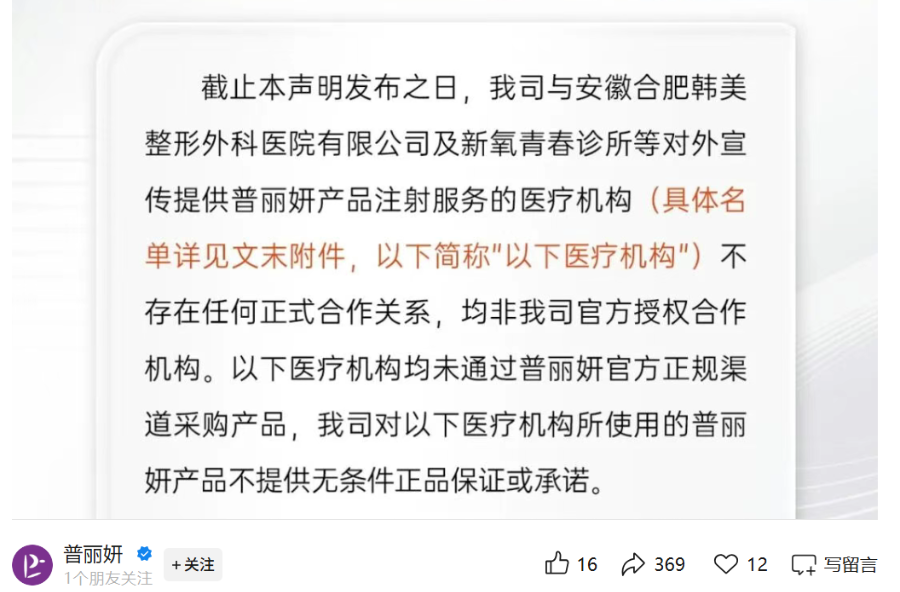
Core Viewpoint - The ongoing conflict between upstream manufacturers and downstream medical beauty institutions highlights issues of product authorization and market competition in the rapidly expanding medical beauty industry in China [2][5][12]. Group 1: Conflict Overview - Puli Yan accused several medical institutions, including Anhui Hefei Hanmei Plastic Surgery Hospital and Xinyang Youth Clinic, of being "unauthorized cooperation institutions," warning of potential health risks for consumers due to unverified product sourcing [1][2]. - Xinyang responded by asserting that all Puli Yan products used are sourced from legally qualified suppliers and emphasized compliance with ISO 37301 management standards [1][2]. Group 2: Market Dynamics - The medical beauty market, particularly the "童颜针" (youthful needle) segment, has seen rapid growth, with market size increasing from over 1 billion yuan in 2021 to an estimated 30 billion yuan last year, projected to reach 100 billion yuan in five years [5][6]. - Xinyang's introduction of lower-priced products, such as the "奇迹童颜" series, has disrupted the pricing structure established by upstream manufacturers, leading to tensions and demands for product removal from the market [5][6]. Group 3: Compliance and Regulation - Concerns have been raised regarding Xinyang's compliance with regulations, as some manufacturers claim that Xinyang has used products without proper authorization, potentially jeopardizing consumer safety [8][9]. - Legal experts emphasize that medical institutions must procure products from authorized sources to ensure traceability and compliance with regulations, highlighting the risks associated with unauthorized procurement [9][12]. Group 4: Industry Challenges - The medical beauty industry faces significant challenges, including the prevalence of unauthorized sales and counterfeit products, which threaten consumer safety and complicate regulatory enforcement [12][13]. - The need for a collaborative approach among manufacturers, medical institutions, and regulatory bodies is critical to establish a sustainable and compliant industry ecosystem [14].