
宝马6系

Search documents
大摩:宝马中国下调建议零售价最多两成 料经销商短期受惠
智通财经网· 2026-01-06 06:57
Core Viewpoint - Morgan Stanley reports that BMW China has reduced suggested retail prices by 10% to 20% for certain imported models, including the 7 Series, 6 Series, M Series, and i-series electric vehicles, effective from January 1 this year [1] Group 1: Price Adjustment Impact - The price reduction is not aimed at initiating price competition, as BMW dealers have been offering discounts significantly below the suggested retail prices for some time [1] - Despite the suggested retail price decrease, actual transaction prices are expected to remain largely unchanged [1] Group 2: Dealer Implications - Dealers such as Yongda Automobile (03669), Zhongsheng Holdings (00881), and Meidong Automobile (01268) are anticipated to benefit slightly from the price adjustments [1] - The lower suggested retail prices will allow dealers to enjoy reduced procurement costs, potentially enhancing their new car sales gross margins [1] - However, future rebates received by dealers may decrease, as the rebate amounts are determined by the manufacturer [1]
港股异动 | 汽车经销商集体上扬 宝马中国下调建议零售价10%至20% 大摩料经销商将短期受惠
智通财经网· 2026-01-06 06:22
Group 1 - Automotive dealers collectively saw an increase in stock prices, with Yongda Automobile rising by 2.96% to HKD 1.74, Harmony Auto up by 1.96% to HKD 1.04, Zhongsheng Holdings increasing by 3.88% to HKD 12.33, and Meidong Auto gaining 3.25% to HKD 1.27 [1] - Morgan Stanley's report indicates that BMW China will reduce suggested retail prices by 10% to 20% starting January 1, primarily affecting imported models such as the 7 Series, 6 Series, M Series, and i-series electric vehicles [1] - The price reduction is not aimed at initiating price competition, as BMW dealers have been offering discounts significantly below the suggested retail prices for some time [1] Group 2 - The price adjustments are expected to benefit dealers like Yongda Automobile, Zhongsheng Holdings, and Meidong Auto slightly, as lower suggested retail prices will lead to reduced procurement costs and potentially increase new car sales margins [1] - However, future rebates received by dealers may decrease, as the amount of rebates is determined by the manufacturer [1]

汽车经销商集体上扬 宝马中国下调建议零售价10%至20% 大摩料经销商将短期受惠
Zhi Tong Cai Jing· 2026-01-06 06:22
Group 1 - Automotive dealers collectively saw stock price increases, with Yongda Automobile rising by 2.96% to HKD 1.74, Harmony Auto up by 1.96% to HKD 1.04, Zhongsheng Holdings increasing by 3.88% to HKD 12.33, and Meidong Auto gaining 3.25% to HKD 1.27 [1] - Morgan Stanley's report indicates that BMW China will reduce suggested retail prices by 10% to 20% starting January 1, primarily affecting imported models such as the 7 Series, 6 Series, M Series, and i-series electric vehicles [1] - The price reduction is not aimed at initiating price competition, as BMW dealers have been offering discounts significantly below the suggested retail prices for some time [1] Group 2 - The expected outcome of the price reduction is that actual transaction prices will likely remain stable despite the suggested retail price decrease [1] - Dealers such as Yongda Automobile, Zhongsheng Holdings, and Meidong Auto are anticipated to benefit slightly from the lower wholesale costs, which could enhance their new car sales margins [1] - However, future rebates received by dealers may decrease, as the rebate amounts are determined by the manufacturer [1]
大行评级|大摩:宝马中国下调建议零售价 经销商短期将轻微受惠
Ge Long Hui· 2026-01-05 08:17
Core Viewpoint - Morgan Stanley's research report indicates that BMW China will reduce suggested retail prices by 10% to 20% for certain imported models starting January 1, 2023, primarily affecting the 7 Series, 6 Series, M Series, and i Series electric vehicles [1] Group 1: Price Adjustment Impact - The price reduction is not aimed at initiating price competition, as BMW China's dealers have been offering discounts significantly below the suggested retail prices for some time [1] - Despite the suggested retail price decrease, actual transaction prices are expected to remain largely unchanged [1] Group 2: Dealer Benefits - Dealers such as Yongda Automotive, Zhongsheng Holdings, and Meidong Automotive are anticipated to benefit slightly from the price adjustments [1] - The lower suggested retail prices will allow dealers to enjoy reduced procurement costs, potentially enhancing their gross margins on new car sales [1] - However, future rebates received by dealers may decrease, as the rebate amounts are determined by the manufacturer [1]
宝马、大众、福特召回汽车超过14万辆
Guan Cha Zhe Wang· 2025-11-16 13:05
Core Points - BMW China, Brilliance BMW, FAW-Volkswagen, and Ford China have filed recall plans with the State Administration for Market Regulation, totaling over 140,000 vehicles due to issues with components such as relays, airbags, seat belts, and batteries [1][4][8] Group 1: BMW Recall - BMW is recalling vehicles due to poor waterproof performance of the starter relay, which may lead to water ingress, circuit corrosion, and potential electrical short circuits, posing a fire risk [4] - The recall includes specific models and production dates, with a total of 58,533 domestic 3 Series vehicles and various imported models, including 604 units of the 4 Series and 27,950 units of the X5 [2][4] Group 2: FAW-Volkswagen Recall - FAW-Volkswagen is recalling 187 units of the ID.7 VIZZION due to a size deviation in the passenger airbag gas generator's filter, which may prevent the airbag from deploying correctly in an accident, increasing the risk of injury [5][7] Group 3: Ford Recall - Ford is recalling 3,357 units of the Lincoln Navigator due to insufficient welding in the pre-tensioner of the front seat belt retractor, which may cause unexpected deployment and safety hazards [8][10] - Additionally, Ford is recalling 58 units of the 2020 Lincoln Navigator for issues related to the battery junction box, which may corrode and pose a fire risk [10]


宝马召回超14万辆车
财联社· 2025-11-14 08:41
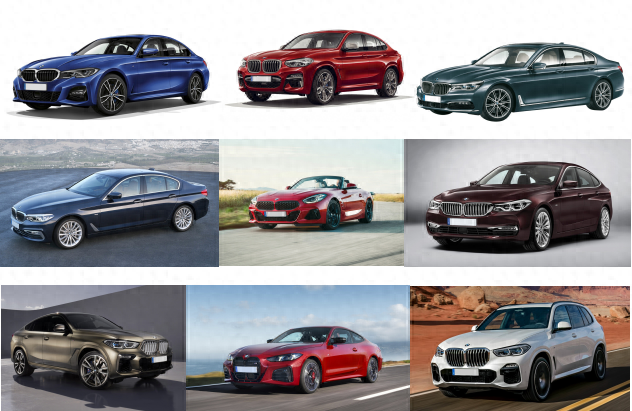
Recall Information - BMW (China) Automotive Trade Co., Ltd. and Brilliance BMW Automotive Ltd. have filed a recall plan with the State Administration for Market Regulation according to the regulations on defective automotive products [1] - Recall number S2025M0175V will take effect from November 14, 2025, involving a total of 60,604 vehicles across various models including the 4 Series, 5 Series, 6 Series, 7 Series, X4, X5, X6, and Z4, with production dates ranging from June 16, 2020, to December 15, 2020 [1] - Recall number S2025M0176V will also take effect from November 14, 2025, involving 58,533 domestically produced 3 Series vehicles manufactured between October 9, 2018, and May 14, 2020 [2]
上半年乘用车进口量延续负增长
Zhong Guo Chan Ye Jing Ji Xin Xi Wang· 2025-08-27 00:53
Group 1 - The core viewpoint is that the import car market in China continues to shrink, with a significant decline in both import volume and sales of passenger vehicles in the first half of the year [1][2] - In the first half of the year, cumulative imports of passenger cars reached 221,000 units, a year-on-year decrease of 32.1%, while cumulative sales were 277,000 units, down 14.5% [1] - The decline is attributed to the rising competitiveness of domestic new energy vehicles and accelerated localization of imported cars, leading to weakened expectations among import car manufacturers [1] Group 2 - The sales structure shows that all three major vehicle categories—sedans, SUVs, and MPVs—experienced double-digit declines, with MPVs facing the largest drop [1] - In terms of vehicle classification, mid-to-large cars continue to dominate the import car market, maintaining a share of over 60%, with a 3.3 percentage point increase in share for mid-to-large cars in the first half of 2024 [1] - Luxury brands remain the absolute sales leaders, accounting for 91% of total sales, despite a year-on-year decline across non-luxury, luxury, and ultra-luxury segments [2] Group 3 - The top three sales regions are Guangdong, Jiangsu, and Zhejiang, all showing year-on-year declines in sales, with Zhejiang experiencing the largest drop of 19.2% [2] - Guangdong's sales decline was the smallest at 3.1%, supported by growth in models like Lexus RX and ES, while sales of models such as Audi A5 and BMW 6 Series contributed to the decline in Zhejiang [2]