小米昆仑N3

Search documents
全世界都在抢的车,中国却开始嫌弃
汽车商业评论· 2026-02-04 23:06
Core Viewpoint - The article discusses the significant decline in the growth rate of plug-in hybrid vehicles (PHEVs) in the Chinese automotive market, highlighting the competitive pressure from pure electric vehicles (EVs) and the changing consumer preferences that have led to this shift [4][6][7]. Group 1: Market Trends - In 2025, the growth rate of PHEVs dropped to 8.8%, with range-extended vehicles seeing a mere 6% increase, marking the first instance of consecutive monthly declines in this segment [6][7]. - The penetration rate of PHEVs in the new energy vehicle market surged from 17% in 2021 to 40% in 2024, but the market dynamics shifted dramatically in 2025 [4][6]. - The average price of pure electric vehicles fell by 15% from 168,000 yuan in 2024 to 143,000 yuan in 2025, while mainstream PHEVs remained in the 150,000 to 180,000 yuan range, erasing the price advantage previously held by PHEVs [11]. Group 2: Consumer Behavior - The average range of pure electric vehicles exceeded 528 kilometers in 2025, with many mainstream models surpassing 600 kilometers, significantly reducing consumer anxiety regarding range [15]. - The rapid development of charging infrastructure, with a car-to-charging station ratio of 2.5:1 and a total of 20.09 million charging facilities by the end of 2025, has made pure electric vehicles a more reliable choice for consumers [15]. - Consumers are increasingly viewing pure electric vehicles as a dependable option, leading to a decline in the perceived necessity of PHEVs, which were initially chosen to alleviate range anxiety [15][19]. Group 3: Technological Shifts - PHEVs are experiencing a shift towards larger battery capacities and faster charging solutions, with many manufacturers adopting battery sizes exceeding 60 kWh to enhance their appeal [27][29]. - The introduction of 800V high-voltage platforms and ultra-fast charging technologies is becoming standard, allowing for significant improvements in charging efficiency [15][27]. - The trend of integrating larger batteries into PHEVs is raising production costs, which could undermine their competitive pricing advantage [32][35]. Group 4: Regulatory Environment - New regulations set to take effect in 2026 will tighten the eligibility criteria for tax exemptions for PHEVs, making it more challenging for lower-end models to compete [39][40]. - The shift from a "universal" tax exemption policy to one that favors stronger models will further complicate the market landscape for PHEVs [37][41]. Group 5: Future Outlook - Despite the current challenges, the article suggests that PHEVs will maintain a significant market share, with a projected penetration rate of 36% in 2025, corresponding to 4.669 million units [51]. - The global market for PHEVs is expected to grow, with predictions indicating that their growth rates will surpass those of pure electric vehicles in the coming years [60][66]. - The unique energy structure and market conditions in China suggest that PHEVs will continue to play a crucial role in the automotive landscape, particularly in regions with less developed charging infrastructure [52][54].



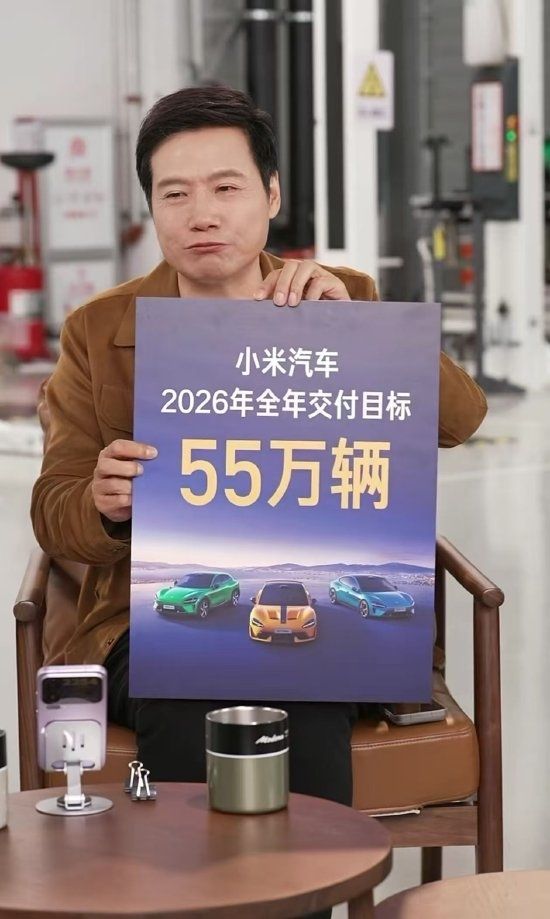
雷军放大招!小米6款新车曝光,55万辆目标真能成?
Xin Lang Cai Jing· 2026-01-29 11:34
Core Viewpoint - Xiaomi aims to launch six new car models in 2026, targeting a sales goal of 550,000 units, representing a year-on-year growth of approximately 34% after achieving a record 411,837 vehicle deliveries in 2025, which was a 200.9% increase year-on-year [2][14]. Group 1: Sales Performance - In 2025, Xiaomi's automotive division delivered 411,837 vehicles, exceeding its annual target and marking a significant year-on-year increase of 200.9% [2]. - The ambitious sales target for 2026 is set at 550,000 units, which translates to a growth rate of about 34% compared to 2025 [2][14]. Group 2: New Models and Features - Xiaomi plans to introduce six new models, including the next-generation Xiaomi SU7, YU9 (a large six or seven-seat range-extended SUV), and the extended version of SU7, among others, to cater to various market segments [5][10]. - The new generation SU7 has already begun accepting pre-orders, featuring upgrades such as standard lidar and high-performance computing platforms [8][10]. Group 3: Market Strategy - The strategy behind launching multiple models is to cover a wide range of customer needs, from performance to family use, thereby supporting the ambitious sales target [14]. - The introduction of different models aims to create a diverse product line, although it poses challenges in terms of development, testing, and marketing clarity for consumers [14].

小米第三款车“昆仑”大曝光,这配置真绝了!
猿大侠· 2025-07-22 03:33
Group 1: Xiaomi Automotive Developments - Xiaomi's third vehicle, codenamed "Kunlun," is a large range-extended SUV aimed at the family market, featuring a three-row seating layout [2][4] - The YU 7 model has entered a stable delivery phase, with production capacity expected to meet demand [1] - The new SUV is anticipated to exceed 5.1 meters in length and have a wheelbase of 3100mm, with design elements consistent with Xiaomi's family style [4][6] Group 2: Xiaomi Smartphone Updates - The upcoming Xiaomi 16 smartphone is expected to feature a 6.3-inch flagship flat screen with ultra-narrow bezels, maintaining a 1.5K resolution for standard versions [7] - The device will debut with the second-generation Snapdragon 8 chipset, likely launching in September, a month earlier than previous models [8] - The main camera will continue to use a 1-inch large sensor, with enhancements in the Pro version for long-range capabilities [9]