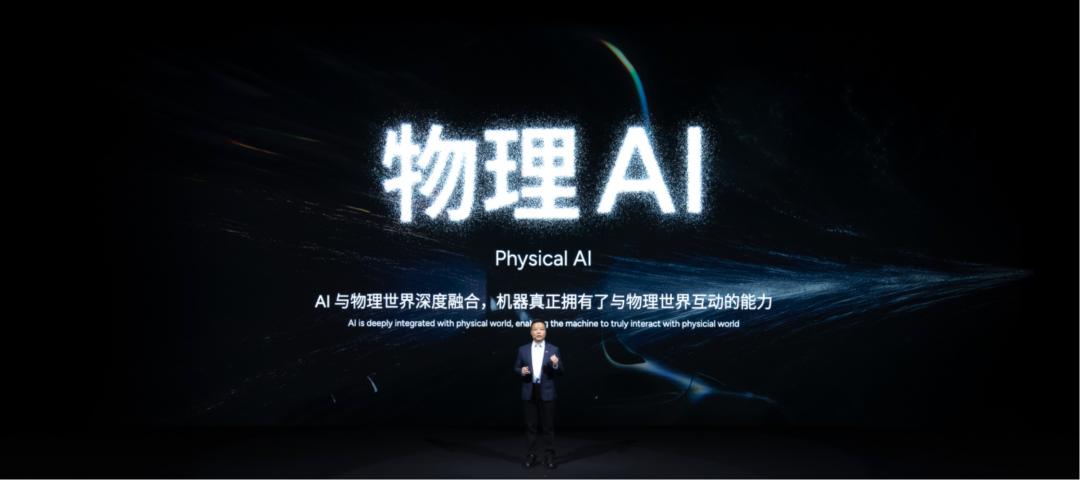
小鹏第二代VLA系统

Search documents
何小鹏开年信:今年将是产品大年,冲刺高阶人形机器人量产
Xin Lang Cai Jing· 2026-02-24 11:16
Core Insights - Xiaopeng Motors is poised for mass production of several key products in 2026, marking a significant transition from technology exploration to large-scale manufacturing [2][3] Group 1: 2025 Achievements - In 2025, Xiaopeng Motors achieved a milestone by being the first new electric vehicle manufacturer to produce one million vehicles, with total deliveries reaching 429,400 units, a year-on-year increase of 126% [2] - The company deepened its strategic partnership with Volkswagen, integrating the Turing AI chip into its vehicles and launching multiple new products under the "dual-energy" strategy [2] Group 2: 2026 Strategic Focus - 2026 is defined as an unprecedented product year for Xiaopeng Motors, with plans to launch three super-range products in the first quarter and introduce at least four new vehicles to overseas markets [4] - The P7+ model has completed trial production in Austria and is set for delivery across 25 countries in Europe, expanding the business to over 60 countries and regions globally [4] Group 3: AI and Robotics Initiatives - The company plans to start mass production of the next-generation IRON humanoid robot by the end of 2026, aiming to be the first to achieve large-scale production of advanced humanoid robots [4] - Xiaopeng aims to achieve simultaneous mass production of three cutting-edge AI businesses: robots, flying cars, and Robotaxi in 2026, with Robotaxi trials commencing within the year [4] Group 4: Global Expansion Plans - Xiaopeng Motors targets to double its overseas sales in 2026, with a long-term goal of reaching one million units by 2030, contributing over 70% of profits [5] - The market strategy focuses on five key benchmark markets: Israel, Germany, Norway, Thailand, and France, with plans to double the number of channel outlets to 680 [5] Group 5: Workforce and Operational Enhancements - To support its strategic initiatives, Xiaopeng plans to hire an additional 8,000 employees in 2026, including 5,000 through campus recruitment [5] - The company will implement AI Agent across all business processes to enhance quality systems and global supply chain capabilities, ensuring steady progress in its physical AI and globalization strategies [5]


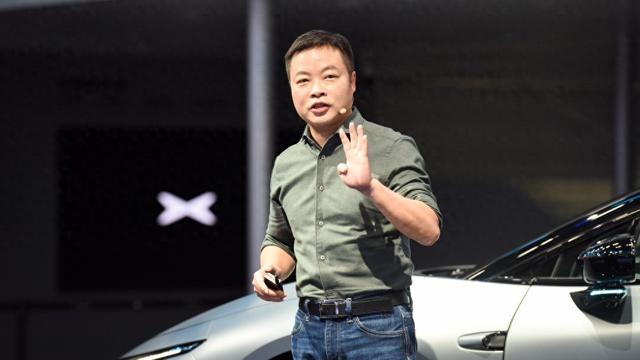
搭载第二代VLA系统 小鹏汽车全球首发四款新品
Yang Shi Wang· 2026-01-09 09:41
Core Insights - XPeng Motors officially launched the 2026 models including P7+, G7 Super Range, G6, and G9 at the global product launch event on January 8, 2026, with prices starting from 186,800 RMB for P7+ [1] - The new models feature the second-generation VLA developed by XPeng, which is the first in the industry to achieve L4 initial capabilities, enabling direct generation of action commands from visual signals [1][3] - XPeng's AIOS 6.0 system was introduced, marking a significant upgrade from passive response to proactive service in smart cabins, and will be equipped in the newly launched vehicles [7] Model Specifications - The 2026 P7+ offers a dual energy solution with a pure electric range of 430 km and a comprehensive CLTC range of 1550 km, featuring a space utilization rate of 88% [9] - The G7 Super Range model includes a 55.8 kWh battery and a 60L fuel tank, achieving a CLTC comprehensive range of 1704 km and a pure electric range of 430 km, with a spacious trunk capacity of 779 liters [9] - The G6 is priced from 176,800 RMB, while the G9 starts at 248,800 RMB, showcasing XPeng's diverse product offerings [1] Market Expansion - XPeng achieved a cumulative global delivery of 429,445 units in 2025, representing a 126% year-on-year growth, with products available in 60 countries and regions [7] - The global launch of the 2026 P7+ took place in Brussels, Belgium, on January 9, 2026, as part of XPeng's AI technology manufacturing journey [11]
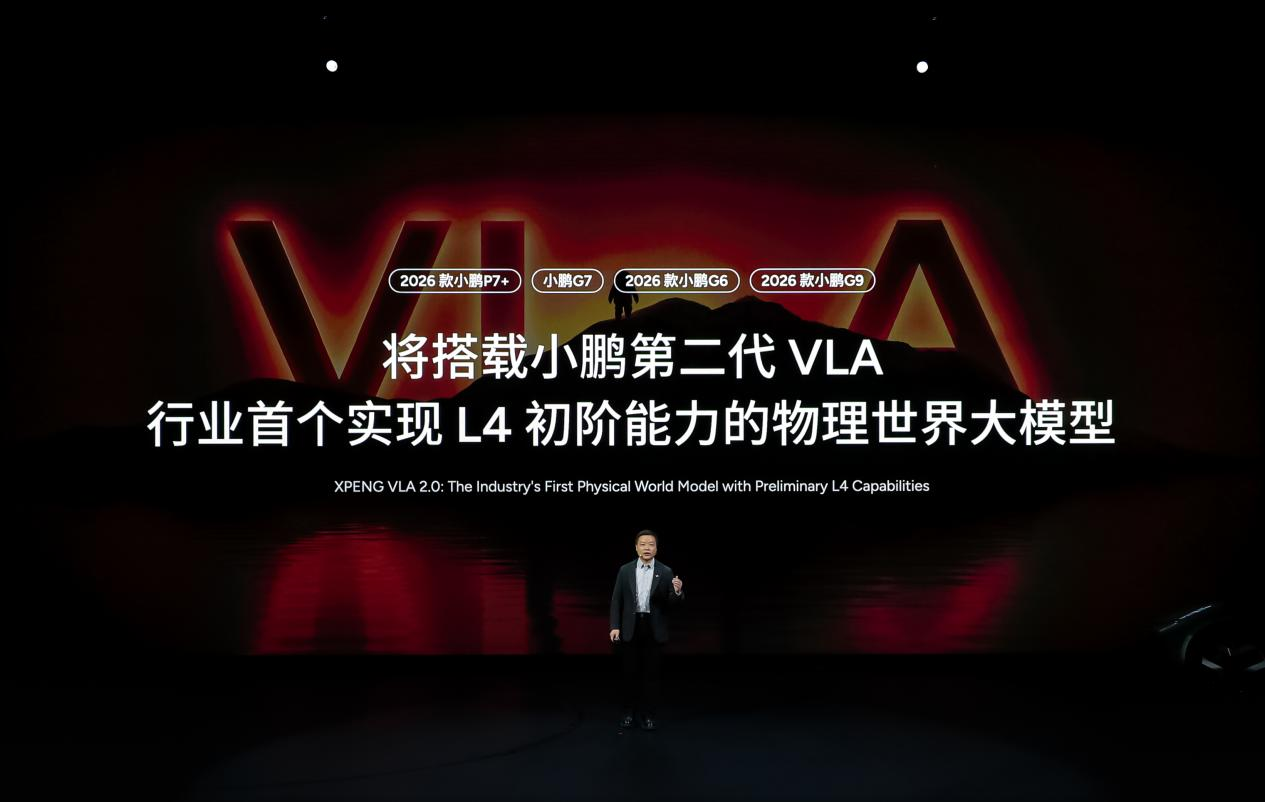
小鹏机器人太像人被网友「打假」,何小鹏回应了:感谢认可
3 6 Ke· 2025-11-06 10:31
Core Insights - The article discusses the advancements made by Xiaopeng Motors in the field of physical AI, particularly focusing on their self-developed multimodal large model and its applications in autonomous driving and robotics [1][9][48] Group 1: Autonomous Driving Developments - Xiaopeng has achieved significant progress in mass-producing vehicles with Level 4 (L4) autonomous driving capabilities, surpassing traditional assistance systems [7][10] - The second-generation Vehicle Learning Architecture (VLA) has improved the average takeover mileage by 13 times and enhanced urban navigation capabilities by 10 times, while highway assistance safety has increased by 100 times [10][12] - The new VLA is designed to understand and process various driving scenarios autonomously, eliminating the need for extensive coding and allowing for a more human-like interaction with the environment [12][14] Group 2: Technological Innovations - Xiaopeng's latest VLA is based on a physical world model rather than relying on large language models, which allows for more efficient decision-making and reduced information loss [14][16] - The training of the second-generation VLA utilized nearly 100 million video clips, simulating extensive driving experiences to prepare for corner cases [16][17] - The company plans to introduce Robotaxi models by 2026, which will share the same underlying architecture as their mass-produced vehicles, ensuring consistency in technology and performance [23][27] Group 3: Robotics Advancements - Xiaopeng's humanoid robot, IRON, has undergone significant improvements, including enhanced physical capabilities and AI-driven decision-making processes [28][34] - The robot is designed to perform various tasks such as guiding customers in retail environments and conducting security patrols, showcasing its commercial viability [36][38] - The company has established partnerships, such as with Baosteel, to explore complex industrial applications for its robots [38] Group 4: Future Outlook - Xiaopeng is set to launch a flying car, with 7,000 units already sold, and plans to establish a global network of flying car service centers [39][45] - The company aims to redefine the standards of smart vehicles, moving beyond traditional automotive metrics to encompass a broader range of intelligent applications [52]