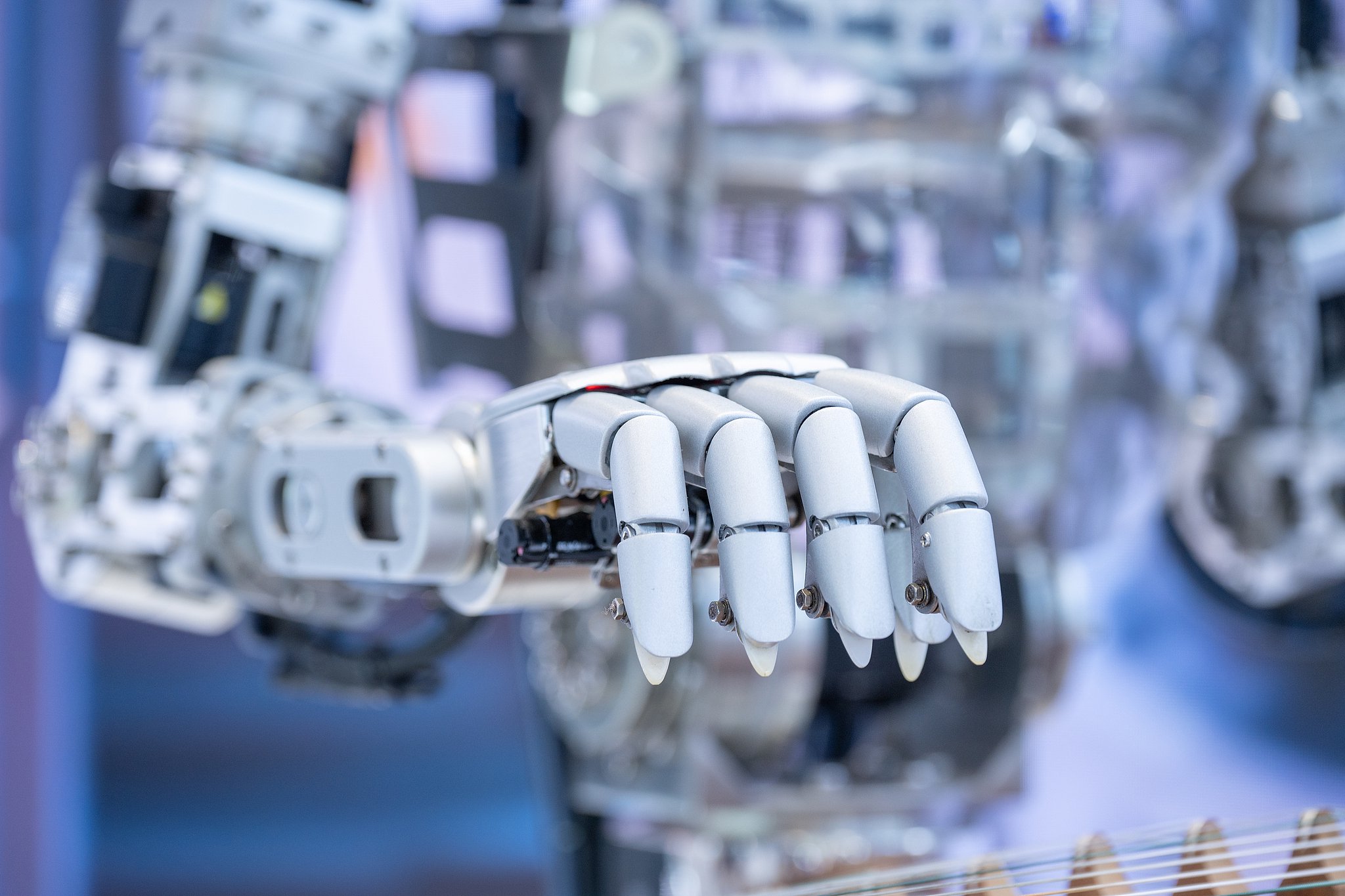
小鹏高阶人形机器人IRON

Search documents
周观点 | 静待板块需求好转 北美缺电链迎来高增【国联民生汽车 崔琰团队】
汽车琰究· 2026-03-01 16:21
Market Performance - The automotive sector underperformed the market this week, with A-share automotive index rising by 0.72%, ranking 22nd among Shenwan sub-industries, compared to the CSI 300's increase of 0.43% [2] - Within sub-sectors, automotive services, automotive parts, and motorcycles rose by 1.96%, 1.62%, and 0.97% respectively, while passenger cars, commercial cargo vehicles, and commercial passenger vehicles fell by -0.65%, -1.62%, and -4.89% [2] Investment Recommendations - The core investment focus for the month includes companies such as Geely Automobile, Xpeng Motors, BYD, Bertley, Top Group, New Spring Co., Chuanfeng Power, Weichai Power, China National Heavy Duty Truck Group, and Kingood [3] AI Computing Demand and Power Supply - The demand for AI computing power is growing rapidly, with a significant increase in data center projects in the U.S. since 2023, leading to a non-linear growth in AIDC power demand [4][10] - This surge in demand is expected to create a larger power supply gap, benefiting supply chains such as gas turbines and fuel cell power generation units [4][10] Automotive Sales Outlook - The automotive sales are expected to stabilize and rebound due to the introduction of local subsidies and the bottoming out of demand [6][11] - BYD has announced the large-scale construction of a megawatt-level fast-charging system, marking a significant advancement in ultra-high power charging technology [11] - The January sales of passenger cars were weak, attributed to the delay in local subsidies and a lack of new model launches, but improvements are anticipated with the rollout of new vehicles post-Spring Festival [11][14] Electric Vehicle Subsidy Policies - Local governments are gradually implementing the 2026 vehicle replacement subsidy policies, which are expected to stimulate domestic demand [12][14] - The subsidy structure has been adjusted to improve the model mix, with new energy vehicles receiving a subsidy of up to 20,000 yuan and fuel vehicles up to 15,000 yuan [13][46] Robotics and Automation - Xpeng Motors has proposed a full-chain production base for humanoid robots, aiming for mass production by the end of 2026, which could catalyze significant developments in the sector [5][10] - The focus on intelligent driving and robotics is expected to reshape the competitive landscape, with significant potential in hardware segments such as dexterous hands and lightweight materials [10][18] Motorcycle Market Trends - The motorcycle market is seeing growth in mid-to-large displacement models, with January sales of 250cc and above motorcycles reaching 64,000 units, a year-on-year increase of 8.2% [24][27] - Leading companies in this segment include Chuanfeng Power and Longxin General, which are expected to benefit from the expanding market [27] Heavy Truck Market Dynamics - The heavy truck market in China saw sales of approximately 105,000 units in January, a year-on-year increase of about 46%, driven by policies supporting the replacement of older vehicles [28][30] - The continuation of subsidy policies is expected to accelerate the replacement pace and boost domestic demand [30]


原生龙头缺位,广州具身智能拿什么追赶?
Xin Lang Cai Jing· 2026-02-28 02:15
Core Insights - The city of Guangzhou is focusing on the development of the embodied intelligence industry as a core priority for its high-quality development strategy, aiming to create new pillar industries by 2035 [1] - The competition in embodied intelligence is fundamentally a struggle for local leadership, with cities like Beijing, Shanghai, Shenzhen, and Hangzhou already establishing strong local players [1] - Guangzhou faces challenges due to the absence of leading local enterprises in the embodied intelligence sector, which hinders its industrial advancement [1] Group 1: Industry Development - Guangzhou's humanoid robot sector is characterized by a "cross-industry collaboration" with automotive companies, exemplified by the establishment of a humanoid robot production base in Tianhe District in partnership with XPeng Motors [3] - XPeng Motors has been developing humanoid robots for seven years, with plans to achieve mass production of its advanced humanoid robot, IRON, by the end of 2026 [3] - GAC Group also plans to begin small-scale production of humanoid robots this year, targeting sales of 300 to 500 units, with expectations to reach over 1,000 units in the following year [4] Group 2: Technological Integration - GAC Group's humanoid robot project benefits from synergies with its automotive technology, with 40%-50% of the supply chain overlapping with electric vehicles [7] - The industry is experiencing rapid advancements due to improvements in key components such as motors, algorithms, and battery technology, with significant cost reductions of approximately 15% annually [8][7] - Companies like Jiechuang Intelligent are focusing on niche markets, such as security applications for their AI-powered robotic products [12] Group 3: Market Positioning - Guangzhou is not establishing a first-mover advantage in the general embodied intelligence market, leading to a strategic focus on vertical markets to differentiate itself [9] - GAC Group's humanoid robots are designed to address specific industry applications, particularly in security, with plans to expand into automotive aftermarket and healthcare sectors in the future [9] - Jiechuang Intelligent is also targeting vertical segments, emphasizing tailored solutions for specific clients rather than broad applications [12] Group 4: Investment and Infrastructure - GAC Group is investing 200 million yuan to develop a headquarters for its robotics projects, which will support the establishment of a new company focused on embodied intelligence [14] - The city of Guangzhou aims to become a leader in "scene innovation," with various districts opening up application scenarios for AI and robotics [14] - The Super Robot Research Institute is collaborating with local universities to foster innovation in robotics, having already incubated several related companies [18] Group 5: Certification and Standards - The certification industry is evolving to support the robotics sector, with companies like China Automotive Testing Technology & Research Center providing essential testing and certification services for new technologies [19] - The establishment of testing platforms for industrial robots and humanoid robots is expected to enhance quality and safety standards in the industry [19]

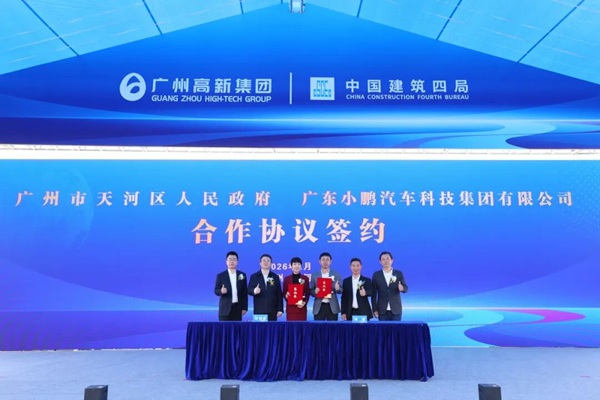
小鹏:人形机器人全链条量产基地正式提报 广棠科创城相关项目同步开工
Zhong Guo Qi Che Bao Wang· 2026-02-26 09:48
Core Viewpoint - The establishment of Xiaopeng's humanoid robot mass production base is a significant step towards achieving the goal of mass-producing advanced humanoid robots by 2026, supported by strategic partnerships and a robust AI development framework [1][5]. Group 1: Project Overview - Xiaopeng's humanoid robot mass production base will be located in the Guangtang Science and Technology Innovation City, covering a total construction area of approximately 110,000 square meters [3]. - The project aims to meet the spatial needs of companies in the embodied intelligence sector, facilitating research, small-batch production, and large-scale manufacturing [3]. - The first phase of the industrial park will focus on constructing high-standard robot factories and related facilities to support the industrialization of Xiaopeng's advanced humanoid robots [3]. Group 2: Technological Advancements - Xiaopeng has been developing its robotics capabilities for seven years, evolving from quadrupedal forms to humanoid robots, achieving rapid breakthroughs in both form and intelligence [3][4]. - The new generation humanoid robot, IRON, features a highly human-like appearance and advanced capabilities, powered by three Turing AI chips with a total computing power of 2250 TOPS [3][4]. - The robot incorporates Xiaopeng's second-generation VLA model, enabling high-level intelligent functions such as dialogue, walking, and complex interactions through a combination of VLT, VLA, and VLM technologies [3]. Group 3: Industry Challenges and Competitive Edge - The humanoid robot industry faces two main challenges: a shortage of high-quality training data and difficulties in achieving large-scale production due to the immature supply chain [4]. - Xiaopeng's unique competitive advantage lies in its fully self-developed physical AI system and its synergy with core technologies from smart vehicles, positioning it to lead in the mass production of advanced humanoid robots [4]. - The CEO of Xiaopeng has set a target for the company to become the first in the world to achieve large-scale production of advanced humanoid robots by the end of 2026 [4].