岩棉板

Search documents
市场监管总局通报2025年童鞋等21种产品质量国家监督抽查情况
Yang Shi Wang· 2026-02-04 09:59
Core Viewpoint - The recent quality supervision inspection by the State Administration for Market Regulation revealed that out of 2107 batches of 21 product types tested, 282 batches were found to be non-compliant, indicating significant quality issues in various consumer products [1][11]. Group 1: Inspection Overview - A total of 2107 batches were inspected across 21 product types, with 282 batches identified as non-compliant [1]. - The inspection covered 14 platforms and 544 sales units, as well as 19 provinces involving 173 sales units and 29 provinces with 1289 production units [1]. Group 2: Non-compliance Details - Among the 282 non-compliant batches, 4 batches were illegal products, including 2 children's watches and 1 range hood [1]. - The majority of non-compliant products were related to safety standards, including children's shoes, travel bags, and various electrical appliances [1][3][4][5][6]. Group 3: Specific Product Findings - Children's shoes had 25 non-compliant batches, primarily due to issues with phthalates, heavy metals, and formaldehyde [3]. - Travel bags showed 19 non-compliant batches, all related to impact performance [3]. - For children's watches, 3 batches were non-compliant, with 2 batches lacking the required CCC certification [3]. - The inspection of range hoods revealed 18 non-compliant batches, with issues related to electrical safety and energy efficiency [4]. - Other products like reading lamps, skin and hair care devices, and electric water heaters also had significant non-compliance rates [5][6]. Group 4: Follow-up Actions - The market regulatory authorities have taken measures against non-compliant products, including removal from shelves and strict enforcement of corrective actions for manufacturers [11]. - Continuous non-compliance will lead to severe penalties, including legal actions against violators [11].
柬埔寨下调多项进口商品税率 助力产业升级与民生改善
Shang Wu Bu Wang Zhan· 2025-12-24 12:30
Core Insights - Cambodia's government is implementing strategic adjustments to import tariffs and special taxes on certain goods, effective January 1, 2026, aimed at reducing import costs for key materials and enhancing the business environment [1] Group 1: Tax Adjustments - Multiple goods will see a "zero tariff" policy, including live poultry, computers and related peripherals, antenna equipment, laboratory instruments, and related testing equipment, with tariffs reduced from 15% or 7% to 0% [1] - Significant reductions in tariffs for daily consumer and industrial goods, such as sanitary napkins, diapers, rice cookers, fruit blenders, and luxury cars, with tariffs dropping from 15% to 7% and from 35% to 7% respectively [1] Group 2: Green Energy and Technology Incentives - Special tax reductions for electric vehicle (EV) components, with the special tax rate for electric vehicle motors, vacuum cleaners, and audio equipment reduced from 10% to 0%, and for electric vehicle batteries from 10% to 5% [1] Group 3: Economic Impact - The tax reforms reflect the Cambodian government's policy direction of benefiting the public, promoting production, and advocating for environmental protection, which is expected to lower retail prices, alleviate inflation, and improve living standards [2] - The zero tariff policy on computers and laboratory equipment will significantly lower the barriers for corporate research and digital transformation [2] - The reduction in tax rates for core components of electric vehicles will accelerate the green transition of transportation in Cambodia and attract more investments in the new energy sector [2]
香港大火背后,是中国楼市难以言说的痛
Sou Hu Cai Jing· 2025-11-29 17:15
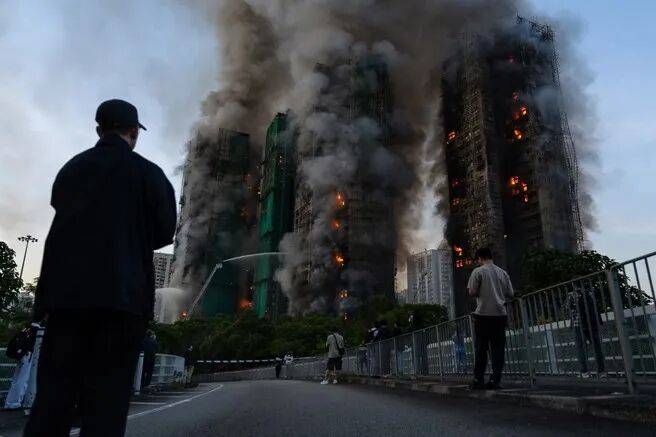
Core Viewpoint - The tragic fire at Hong Kong's Hong Fu Court serves as a severe warning for the mainland real estate market, highlighting potential common issues and risks associated with aging high-rise buildings [1][11]. Group 1: Fire Incident and Causes - The fire was exacerbated by the use of polyurethane foam, which acted as a rapid fire spreader, indicating significant safety vulnerabilities in older high-rise buildings [1][10]. - Many residents reported that their windows were glued shut with foam, creating a major safety hazard during the fire [4]. Group 2: Aging High-Rise Issues - A large number of high-rise residential buildings in mainland China, constructed between the 1990s and 2010s, are now facing similar aging issues, including deteriorating exterior insulation, waterproofing failures, and structural problems [3][6]. - The reliance on inexpensive and quick fixes, such as foam, instead of comprehensive repairs, reflects a broader trend of prioritizing cost over safety in building maintenance [3][6]. Group 3: Material Concerns - The use of foam boards, particularly EPS (expanded polystyrene), in exterior insulation poses significant fire risks, especially when exposed to flames during renovations or maintenance [10]. - Although rock wool boards, introduced as a safer alternative, have been adopted since 2017, compliance with safety standards remains questionable, and many buildings still utilize older materials [7][8]. Group 4: Systemic Issues in Property Management - Property management often opts for superficial repairs rather than thorough maintenance, leading to a reliance on foam as a temporary solution for persistent issues [6]. - The misallocation of maintenance funds and the lack of financial resources hinder the ability to address the systemic problems associated with aging high-rises [6][11]. Group 5: Future Implications - The ongoing safety issues in aging high-rise buildings will persist unless addressed, with the Hong Fu Court incident potentially being just the beginning of a larger trend if no action is taken [11].