
左旋多巴

Search documents
Nature:刘河生团队等重新定义帕金森病,并提出治疗新策略
生物世界· 2026-02-05 04:15
Core Viewpoint - Parkinson's disease (PD) is identified as a somato-cognitive action network disorder, suggesting that targeting the specific neural regulation of the somato-cognitive action network (SCAN) may improve treatment outcomes for PD symptoms [3][12]. Group 1: Research Findings - A study published in Nature reveals the key abnormal mechanisms of Parkinson's disease, highlighting it as a disorder of the somato-cognitive action network [3]. - The research team constructed a large clinical imaging dataset (n=863) to explore the role of SCAN in the pathophysiology and treatment of Parkinson's disease [8]. - Effective treatments, including deep brain stimulation (DBS) and transcranial magnetic stimulation (TMS), showed a reduction in the hyperconnectivity of SCAN to subcortical structures [10][12]. Group 2: Treatment Implications - Targeting SCAN rather than effector-specific regions significantly enhances the effectiveness of TMS treatment, with results showing a twofold improvement [10]. - The study indicates that the alleviation of SCAN hyperconnectivity is a core aspect of the pathophysiology of Parkinson's disease and a marker of successful neuroregulatory treatment [12]. - New non-invasive or minimally invasive neuroregulatory approaches targeting cortical SCAN nodes may improve existing therapies like DBS and MRgFUS [12].


浙江震元:百年老字号焕发新活力
Shang Hai Zheng Quan Bao· 2026-01-22 18:37
Core Viewpoint - Zhejiang Zhenyuan, a century-old brand, combines traditional Chinese medicine culture with modern innovation to achieve high-quality development and explore new growth areas in synthetic biology [1][4]. Group 1: Company Background and Heritage - Zhejiang Zhenyuan originated from a small pharmacy in 1752 and has evolved into a modern enterprise integrating pharmaceutical manufacturing, commerce, and health services [1]. - The company is deeply rooted in the rich cultural heritage of the Yue region, which has significantly influenced its development and the establishment of the "Yue Medicine" system [2]. - Zhenyuan Tang, the company's predecessor, has maintained its commitment to authenticity and quality for over 270 years, making it a representative of Yue medicine culture [2][3]. Group 2: Business Evolution and Achievements - After the reform and opening-up, Zhenyuan Tang was among the first to complete a shareholding reform and became one of the first "Chinese Time-honored Brands" in 1996 [3]. - The company was listed on the Shenzhen Stock Exchange in 1997, marking it as the first listed company recommended by the National Administration of Traditional Chinese Medicine [3]. - Zhenyuan has expanded its business into various sectors, including pharmaceutical manufacturing, retail, and health services, establishing a complete industrial chain [3]. Group 3: Innovation and New Ventures - In 2022, Zhejiang Zhenyuan entered the synthetic biology sector by establishing a wholly-owned subsidiary and investing over 1.1 billion yuan in an industrialization project [4]. - The company has developed a diverse product system focusing on amino acids and has established partnerships with top research institutions for collaborative innovation [4][5]. - Zhenyuan has achieved significant breakthroughs, including the establishment of the first large-scale industrialization facility for histidine synthesis in China [5]. Group 4: Modernization of Traditional Medicine - Zhejiang Zhenyuan is innovating traditional medicinal recipes into convenient products, such as the "Zhenyuan Yue Meal" series, making traditional health solutions more accessible [6]. - The company is actively involved in setting international standards for toxic herbal materials, aiming to integrate traditional Chinese medicine with global practices [6]. - Zhenyuan is exploring the development of health products that combine food and medicine, enhancing the daily integration of traditional medicine into consumers' lives [6]. Group 5: Future Outlook - The company aims to strengthen its pharmaceutical manufacturing while positioning synthetic biology as a core growth area [7]. - It plans to expand its retail operations and enhance the quality of pharmaceutical services, focusing on the refinement of traditional Chinese medicine and the development of health and wellness industries [7].

研判2025!中国左旋多巴行业发展历程、产业链、发展现状、企业分析及发展趋势分析:帕金森病治疗需求为主,多场景应用进一步拓宽市场空间[图]
Chan Ye Xin Xi Wang· 2025-10-23 01:26
Core Insights - Levodopa is a key medication for treating Parkinson's disease, alleviating symptoms such as muscle stiffness, tremors, and slow movement. It also shows potential for treating Alzheimer's disease, chronic pain, and constipation, with broad applications in biomedical and materials science fields [1][3][4]. Industry Overview - The levodopa market has seen continuous growth in demand due to an aging population and increasing Parkinson's disease cases. The market was negatively impacted by the pandemic from 2020 to 2022, but sales began to recover in 2023, reaching 31.83 million yuan in 2024 [1][7][8]. Industry Chain - The levodopa industry chain consists of upstream suppliers of chemical raw materials and excipients, midstream research and manufacturing processes, and downstream applications in medical institutions, pharmacies, and patients. The number of Parkinson's patients significantly influences the industry's development, with over 3 million patients aged 65 and above in China [6][7]. Competitive Landscape - The global levodopa market is dominated by a few large pharmaceutical companies, such as Merck & Co. and Pfizer, while domestic companies primarily focus on generic drugs. Key players in China include Shandong Xinhua Pharmaceutical Co., Zhejiang Huahai Pharmaceutical Co., and others [8][9]. Industry Development Trends - Market demand for levodopa is expected to continue increasing due to the rising incidence of Parkinson's disease and improvements in healthcare systems in emerging countries [10]. - Technological advancements in biopharmaceuticals are likely to enhance levodopa production processes, leading to improved efficiency and product quality. Companies are expected to develop various formulations, such as sustained-release and controlled-release preparations, to enhance patient experience [11]. - The globalization of the levodopa industry presents opportunities for companies to expand into international markets, increasing brand recognition and competitiveness [12].


浙江震元终止4.95亿元定增,自筹资金续建合成生物项目基地
Bei Ke Cai Jing· 2025-10-22 14:01
Core Viewpoint - Zhejiang Zhenyuan Co., Ltd. has announced the termination of its plan to issue shares to specific investors, citing a continuous decline in revenue and a strategic shift towards synthetic biology projects [1][4]. Group 1: Financial Performance - The company's revenue has been on a downward trend, with reported figures of 4.145 billion, 4.106 billion, 3.741 billion, and 1.283 billion yuan for the years 2022 to 2025 (first half), reflecting year-on-year changes of -14.77%, -0.94%, -8.91%, and -34.49% respectively [6]. - The net profit attributable to shareholders has also fluctuated, with figures of 77.91 million, 81.64 million, 34.73 million, and 56.26 million yuan for the same periods, showing year-on-year changes of 0.79%, 4.79%, -57.46%, and 29.27% respectively [6]. - The company has acknowledged that its revenue and net profit growth rates are below industry averages due to increased competition and regulatory changes in the pharmaceutical sector [6]. Group 2: Strategic Initiatives - Zhejiang Zhenyuan is focusing on the synthetic biology sector, planning to establish a production base for various synthetic biological products, including 2,400 tons of histidine and 1,000 tons each of L-DOPA and tyrosine [7]. - The company has undertaken structural optimization through acquisitions and strategic investments, including the integration of its pharmaceutical wholesale business and the introduction of China Resources Pharmaceutical Group as a strategic investor [8]. Group 3: Fundraising and Project Development - The company initially planned to raise 3 billion yuan through a private placement to fund its synthetic biology projects but later decided to utilize its own and self-raised funds for project implementation after terminating the fundraising plan [1][4]. - The total investment for the synthetic biology projects is estimated at 1.068 billion yuan, with the company planning to use up to 495 million yuan from the fundraising efforts, which accounts for approximately 46.34% of the total investment [2].
合成生物概念股浙江震元终止定增计划 将以自有自筹资金保障募投项目推进
Mei Ri Jing Ji Xin Wen· 2025-10-22 10:41
Core Viewpoint - Zhejiang Zhenyuan has decided to terminate its plan for a private placement of shares originally intended to raise 495 million yuan due to the current capital market environment and the company's overall development strategy [1][4]. Group 1: Fundraising and Project Details - The company initially aimed to raise 495 million yuan to focus on core pharmaceutical industrial projects, including the raw material drug aggregation enhancement project and the Shangyu industrialization base project [2]. - The raw material drug aggregation enhancement project has a total investment of 481 million yuan, with 195 million yuan planned to be raised from the issuance. It is designed to have an annual production capacity of 436 tons and is expected to generate annual sales revenue of 565 million yuan and a net profit of 124 million yuan upon full production [2][3]. - The Shangyu industrialization base project has a total investment of 587 million yuan, with 300 million yuan planned to be raised. It aims to produce 2,400 tons of histidine and other products, with expected annual sales revenue of 624 million yuan and a net profit of 179 million yuan upon completion [3]. Group 2: Project Progress and Financial Status - Both projects are currently under construction and have not been affected by the termination of the share issuance. The raw material drug aggregation enhancement project has a construction progress of 40%, while the Shangyu industrialization base project has reached 95% completion [4][5]. - As of June 30, the company reported a cash balance of 513 million yuan, indicating sufficient liquidity despite a slight decrease from the end of 2024. The overall debt level remains manageable, with short-term borrowings of 20.08 million yuan and long-term borrowings of 169 million yuan [4].
浙江震元终止不超4.95亿定增 去年定增被股东大会否决
Zhong Guo Jing Ji Wang· 2025-10-22 06:49
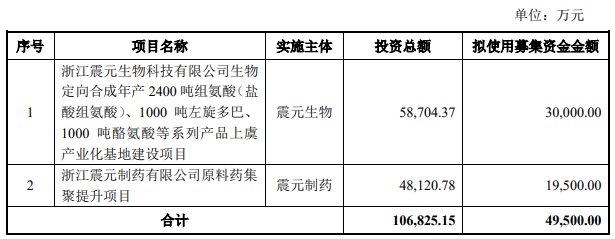
Core Viewpoint - Zhejiang Zhenyuan has decided to terminate its plan to issue shares to specific investors and has withdrawn its application due to considerations of the current capital market environment and the company's overall development strategy [1][2]. Group 1: Termination of Share Issuance - The company held a board meeting on October 21, 2025, where it approved the decision to terminate the share issuance and withdraw the application [1]. - The termination decision was made after thorough communication and analysis with relevant parties, considering the current capital market conditions [2]. Group 2: Financial Implications - The company stated that the termination of the share issuance will not adversely affect its normal production and operations, nor will it harm the interests of shareholders, especially minority shareholders [2]. - The planned fundraising amount was up to 49,500 million CNY, intended for specific projects including the construction of a production base for various biochemical products and an enhancement project for raw materials [2][3]. Group 3: Project Details - The projects intended for the raised funds included: 1. Construction of a production base for 2,400 tons of histidine, 1,000 tons of levodopa, and 1,000 tons of tyrosine, with a total investment of approximately 58.70 million CNY and planned fundraising of 30 million CNY [3]. 2. A project for enhancing raw material production with a total investment of about 48.12 million CNY and planned fundraising of 19.50 million CNY [3]. - The total investment for both projects was approximately 106.83 million CNY, with a total planned fundraising of 49.50 million CNY [3].
没有手抖,也可能是帕金森?
Hu Xiu· 2025-10-16 08:12
Core Viewpoint - The prevalence of Parkinson's disease is increasing, closely linked to population aging and the rise of neurodegenerative diseases like Alzheimer's and Parkinson's [1][3]. Group 1: Understanding Parkinson's Disease - The understanding of Parkinson's disease has evolved significantly over the past 31 years, particularly with the introduction of PET imaging agents that allow for the visualization of dopamine transporters in the brain [3][4]. - The core issue in Parkinson's disease is the loss of dopamine neurons, which leads to symptoms such as tremors, slowness, and stiffness [3][15]. - Tremors are commonly associated with Parkinson's disease, but not all patients exhibit this symptom; slowness is considered the most critical feature for diagnosis [6][8]. Group 2: Diagnosis and Symptoms - Objective tests, particularly PET imaging, are emphasized for accurate diagnosis, as Parkinson's disease symptoms can be subtle and difficult to assess [4][5]. - Key symptoms include slowness, stiffness, and tremors, with slowness being a necessary condition for diagnosis [7][8]. - Distinguishing between age-related slowness and slowness due to Parkinson's is crucial, as they present differently [10][13]. Group 3: Treatment Options - Standard treatment primarily involves medication, particularly dopamine precursors like levodopa, which can improve symptoms significantly [18][19]. - Long-term use of medication may lead to diminished effectiveness, but it is essential for maintaining quality of life [20][22]. - Surgical options, such as Deep Brain Stimulation (DBS), are available for patients who do not respond adequately to medication [23][24]. Group 4: Research and Future Directions - Research is ongoing into the role of alpha-synuclein protein aggregation in Parkinson's disease, with new imaging agents being developed to monitor this process [15][17]. - There is potential for stem cell therapy, but it remains in the clinical trial phase and requires careful evaluation [27][28]. - Preventive measures include lifestyle changes such as exercise and dietary adjustments, which may help reduce the risk of developing Parkinson's disease [32].
震元生物上虞基地正式投产!建成全国首个千吨级组氨酸生物合成产业化装置
合成生物学与绿色生物制造· 2025-09-04 01:44
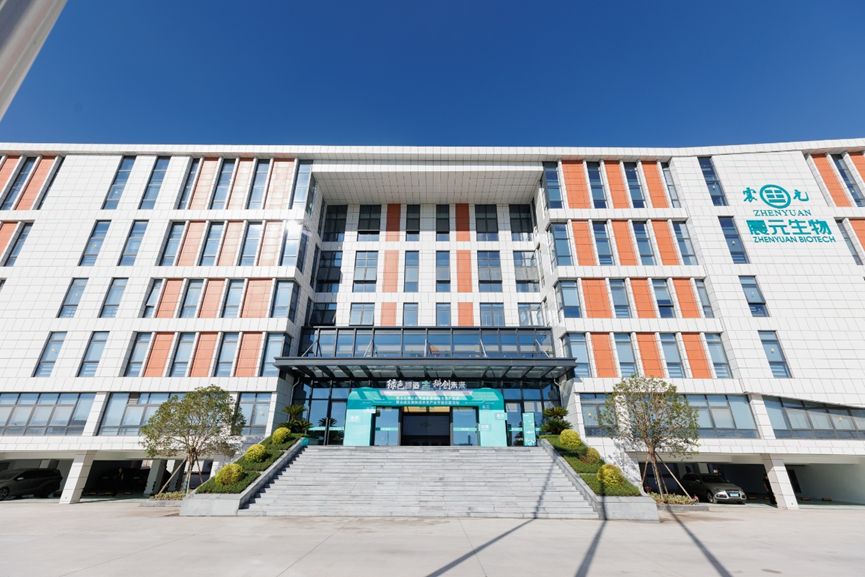
Core Viewpoint - The article highlights the launch of the Zhejiang Zhenyuan Biological Industrialization Base, emphasizing its significance in the synthetic biology sector and its role in promoting high-quality economic development in Shaoxing [3][5]. Company Progress - Zhejiang Zhenyuan officially inaugurated its biological industrialization base on August 30, marking a key milestone in the development of synthetic biology and the production of high-end amino acids [3][5]. - The base is the first in China to feature a thousand-ton-level industrialization facility for the biosynthesis of histidine, showcasing advanced synthetic biology and fermentation engineering technologies [5][6]. - The project has received recognition as a major industrial project in Zhejiang and is part of the national green low-carbon advanced technology demonstration projects [5][6]. Financial Performance - In the first half of 2025, Zhejiang Zhenyuan reported a revenue of 1.283 billion yuan, a decrease of 34.49% year-on-year, while net profit attributable to shareholders increased by 29.27% to 56.26 million yuan [6][7]. - The company’s net profit, excluding non-recurring gains and losses, was 30.12 million yuan, down 20.32% compared to the previous year [6][7]. - The company’s total assets decreased by 13.55% to approximately 2.955 billion yuan, while net assets attributable to shareholders increased by 2.62% [7]. Industry Context - The synthetic biology sector is recognized as a core component of the "third biological technology revolution," with significant support from local government policies and funding exceeding 10 billion yuan [5][6]. - The base aims to replace traditional high-pollution and high-energy consumption processes with green technologies, contributing to the development of a sustainable industrial ecosystem [6][8]. - The project aligns with national strategies for the innovation and development of non-grain biomass materials, focusing on clean energy and material systems [10].
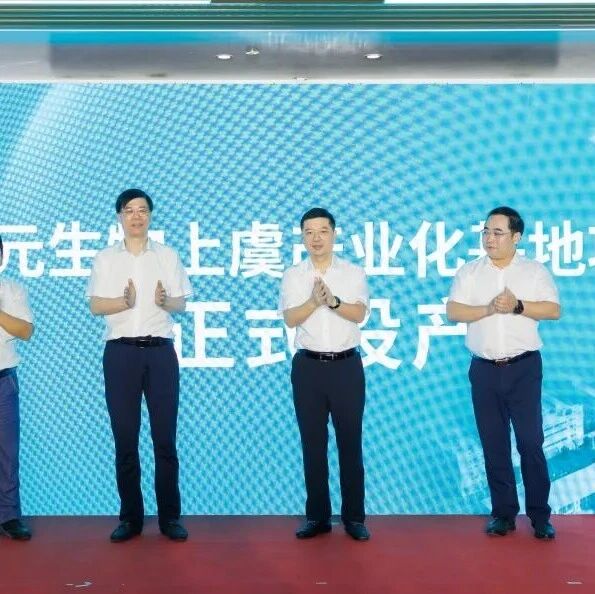
震元生物上虞产业化基地正式投产 聚力合成生物新赛道赋能高质量发展
Zheng Quan Shi Bao Wang· 2025-08-30 04:56
Core Viewpoint - The establishment of the Zhenyuan Biological Industrialization Base in Shaoxing marks a significant step in the development of synthetic biology, aiming to drive high-quality economic growth in the region [1][3][4]. Group 1: Project Overview - The Zhenyuan Biological Industrialization Base, a key project in the synthetic biology field, commenced construction in February 2023 and has now been officially launched [3]. - The project utilizes advanced synthetic biology and fermentation engineering technologies to create the first large-scale (thousand-ton level) histidine biosynthesis industrialization facility in China [3]. - The base aims to produce high-end amino acid products using green processes to replace traditional high-pollution and high-energy consumption methods [5]. Group 2: Government Support and Strategic Importance - The Shaoxing municipal government has identified synthetic biology as a core area for fostering new productive forces and promoting high-quality development [4]. - The local government has implemented various policies and established funds exceeding 10 billion yuan to support the growth of high-energy innovation platforms [4]. - The project has been recognized as a significant industrial project in Zhejiang Province and is part of the first batch of "green low-carbon advanced technology demonstration projects" by the National Development and Reform Commission [3][5]. Group 3: Collaboration and Future Prospects - The base has established partnerships with top domestic research institutions to enhance innovation and industrial integration [4]. - The first phase of production is planned to yield 2,400 tons of hydrochloric acid histidine, 1,000 tons of levodopa, and 1,000 tons of tyrosine annually, which is expected to create significant economic benefits [6]. - The project is seen as a model for the development of the synthetic biology manufacturing industry in Shaoxing and Zhejiang, contributing to the region's economic transformation [5].
脑内药物递送技术研发进入快车道
Ke Ji Ri Bao· 2025-06-23 01:20
Core Insights - The blood-brain barrier (BBB) presents significant challenges for delivering drugs to the central nervous system, particularly for neurodegenerative diseases and brain cancers [1][2] - Scientists are developing "shuttles" that can effectively transport biological drugs, such as antibodies and gene therapies, across the BBB [1][3] Group 1: Blood-Brain Barrier Challenges - The BBB acts as a protective barrier between the bloodstream and brain tissue, preventing harmful substances from entering the brain [2] - Small, lipophilic molecules can cross the BBB, but large biological drugs face significant obstacles, with less than 0.1% of certain antibody drugs reaching the brain after intravenous injection [2][3] - High doses of drugs are often required due to the low penetration rate, leading to potential waste and severe side effects [2] Group 2: Advances in Drug Delivery Technologies - Recent advancements in drug delivery systems are inspired by the brain's iron supply system, utilizing transferrin receptors to facilitate the transport of large molecules across the BBB [3][4] - Clinical projects are underway, with notable successes such as the enzyme replacement therapy for Hunter syndrome and the trontinemab antibody for Alzheimer's disease, which showed a threefold increase in amyloid clearance efficiency [3][4] - The range of deliverable "cargo" is expanding, including oligonucleotides for gene expression regulation and engineered viruses for gene therapy [4][5] Group 3: Future Prospects - The development of exosomes as natural "nanopackages" for delivering gene editing tools like CRISPR-Cas9 is gaining traction, indicating a promising future for brain-targeted therapies [5] - These innovative delivery technologies are expected to transform the medical landscape, offering new hope for patients with previously untreatable conditions [5]