
干散货航运服务

Search documents
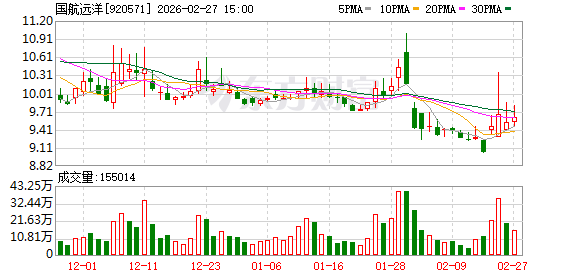
国航远洋:2025年公司营业收入与净利润均实现稳健增长
Zheng Quan Ri Bao· 2026-02-27 13:39
Core Viewpoint - The company anticipates steady growth in both revenue and net profit by 2025, driven by a favorable market environment, improved industry dynamics, and enhanced operational management capabilities [2] Financial Performance - In the latest performance report, the company achieved an annual revenue of 996,593,670.79 yuan, representing a year-on-year increase of 6.42% [2] - The net profit attributable to shareholders was 28,338,020.97 yuan, reflecting a year-on-year growth of 25.04% [2] Future Outlook - For 2026, the company plans to deliver 6 new ships and 1 Capesize bulk carrier, adding over 600,000 deadweight tons of capacity [2] - The company is expected to achieve further operational performance breakthroughs in the context of a steadily growing dry bulk shipping market [2] - However, the company's 2026 performance may face uncertainties due to macroeconomic factors and fluctuations in the international dry bulk shipping market [2]

国航远洋:2026年干散货航运将呈稳定增长态势
Zheng Quan Ri Bao· 2026-02-27 13:39
Core Viewpoint - The dry bulk shipping industry is expected to experience stable growth by 2026, driven by structural development benefits due to the restructuring of global trade patterns and challenges such as fleet aging and stricter regulatory policies from the International Maritime Organization (IMO) [2] Industry Summary - The dry bulk shipping sector is poised for growth as the global trade landscape undergoes significant changes, creating opportunities for structural development [2] - The aging fleet in the dry bulk industry is becoming increasingly prominent, which, along with the tightening of IMO efficiency regulations, is contributing to a slowdown in the release of new shipping capacity [2] - These dual factors are expected to enhance the overall market conditions for shipping, laying a solid foundation for future growth [2]
兴业证券:供需具有利好因素 看好干散货航运未来上行空间
Zhi Tong Cai Jing· 2025-12-24 03:29
Core Viewpoint - The dry bulk shipping sector is expected to enter a new upward cycle due to various favorable demand factors and limited supply growth, with a gradual increase in freight rates anticipated as demand for shipping volume and distance rises [1] Demand Analysis - The demand for dry bulk shipping is supported by coal, grain, and other commodities, with significant contributions from Guinea's Simandou iron ore shipments and alumina exports, as well as post-war reconstruction efforts in Ukraine and Israel [1] - The Federal Reserve's new interest rate cut cycle is likely to boost global economic recovery and dry bulk demand, with China maintaining a dominant position in iron ore imports, projected to reach 1.238 billion tons in 2024, accounting for 77.5% of global imports [2] - The iron ore supply landscape is shifting, with Guinea's Simandou project expected to ramp up production to 120 million tons per year by 2026-2032, potentially increasing shipping distances due to longer routes compared to traditional suppliers [2] Coal Market - China is the largest coal importer globally, with imports projected at 421 million tons in 2024, representing 30.6% of global imports; however, demand faces pressure due to structural adjustments in supply and competition from domestic coal [3] - Indonesia and Australia dominate coal exports, with Indonesia's CAGR from 2000 to 2024 expected to reach 9.93%, indicating a significant structural shift in the market [3] Grain Market - Global grain shipping volume is projected to grow at a CAGR of 4.84% from 2000 to 2024, with soybeans showing a higher CAGR of 5.67%, reflecting changing dietary preferences and increased protein consumption [4] - China's grain imports are stabilizing, while demand from other developing countries continues to rise, leading to a more dispersed geographical demand structure [4] Minor Bulk Cargo Market - The minor bulk cargo sector, which includes various industries such as agriculture and construction, is expected to grow alongside the global economy, with alumina imports in China showing a remarkable CAGR of 29.65% from 2004 to 2024 [5][6] Supply Analysis - The dry bulk fleet capacity has grown from 267 million deadweight tons to 1.064 billion deadweight tons since 2000, with an average fleet age of 12.84 years projected by the end of 2025, indicating a trend towards fleet aging [7] - High ship prices and long order backlogs are expected to limit future supply growth, with the current order book for dry bulk vessels at only 11.04% of the fleet, significantly below the 20-year average [7] Valuation - The dry bulk shipping market is characterized by high volatility and asset intensity, with companies' performance during upturns reflected in their price-to-earnings (PE) ratios, while their resilience during downturns is indicated by price-to-book (PB) ratios [8] - Current valuations show that U.S. shipping companies have higher PE ratios compared to their A-share and Hong Kong counterparts, while A-share companies exhibit higher PB ratios, suggesting potential for valuation recovery in U.S. and Hong Kong shipping stocks as the market enters a recovery phase [8]

港股异动丨港口及海运股大跌 太平洋航运跌超7% BDI指数创近2周新低
Ge Long Hui· 2025-12-10 03:07
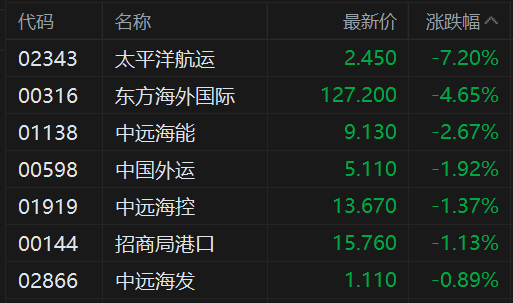
Group 1 - The Hong Kong port and shipping stocks experienced significant declines, with Pacific Basin Shipping falling over 7%, Orient Overseas International down 4.6%, and China Cosco Shipping Energy down 2.67% [1] - The Baltic Dry Index (BDI) dropped to a near two-week low, influenced by declines across all vessel types. The BDI fell by 137 points, or 5.09%, closing at 2557 points, marking the lowest level since November 27 [1] - Analysts suggest that the recent drop in the BDI reflects short-term fluctuations or weakening demand for global bulk shipping, indicating reduced freight rates for shipowners and negatively impacting expectations for future quarterly earnings [1] Group 2 - Specific stock performance includes: Pacific Basin Shipping at 2.450 with a decline of 7.20%, Orient Overseas International at 127.200 down 4.65%, and China Cosco Shipping Energy at 9.130 down 2.67% [2] - Other notable declines include China National Offshore Oil Corporation at 5.110 down 1.92%, China Cosco Shipping Holdings at 13.670 down 1.37%, China Merchants Port at 15.760 down 1.13%, and China Cosco Shipping Development at 1.110 down 0.89% [2]



智通港股早知道 因大宗商品供应线路被扰乱 航运价格飙升467%
Jin Rong Jie· 2025-12-05 00:08
Group 1: Shipping Industry - The Baltic Dry Index (BDI) reached 2845 points on December 3, marking a new high since December 6, 2023, with a daily increase of 9.42%, the largest single-day increase in nearly two months [1] - The BDI has risen for 15 consecutive trading days, with a cumulative increase of 46% over the past month, indicating a strong recovery in the dry bulk shipping market [1] - Due to disruptions in global supply lines caused by conflicts, sanctions, and production surges, freight rates for commodities have surged, with oil freight rates increasing by 467%, and liquefied natural gas and iron ore rates rising by over threefold and more than double, respectively [1] - The container shipping market is also showing signs of recovery, with a price increase on the Asia-Europe route since November, as major shipping companies like CMA CGM, Hapag-Lloyd, and Mediterranean Shipping Company announced price hikes [1] Group 2: Real Estate Market - A luxury property project in Shenzhen, developed by China Resources Land and China Overseas Land, achieved sales of approximately 13 billion yuan in a single day, setting a new record for new home sales in China this year [10] Group 3: Debt Restructuring - Longfor Group announced that it has received debt restructuring offers for bonds with a total face value of 13.66 billion yuan, with over 62% of the remaining principal amount of 21 publicly issued bonds being addressed [11] - Country Garden's debt restructuring plan for several domestic bonds has been approved by relevant bondholders, with adjustments to the repayment arrangements for nine bonds [12] Group 4: Clinical Trials and Partnerships - China National Pharmaceutical Group announced that its innovative drug TQF3250, an oral GLP-1 receptor agonist, has received clinical trial approval from both the NMPA and FDA [14] - Kelong Biotechnology has established a strategic partnership with Crescent Biopharma to jointly develop and commercialize cancer treatment methods, involving two candidate drugs currently in development [19][20]
洲际船务更替六份造船合約 总代价约1230万美元
Zhi Tong Cai Jing· 2025-12-01 00:43
Group 1 - The company announced a replacement agreement for shipbuilding contracts with Jiangsu Dajin Heavy Industry Co., Ltd., involving the transfer of all rights and obligations under the contracts for six vessels, with a total consideration of approximately $12.3 million [1] - The replacement aligns with the company's ongoing strategy to maintain a balanced fleet composition, optimizing its fleet and improving working capital and liquidity [1] - The board believes this replacement presents an opportunity to acquire shipbuilding contracts at a reasonable price, which will enhance the company's financial position and provide funds for fleet optimization [1] Group 2 - Additionally, the company's indirect wholly-owned subsidiary, SG XINDE INVESTMENT (HK) LIMITED, has contracted to acquire a 40% stake in CIMC Xinde Leasing (Shenzhen) Co., Ltd., which is wholly owned by the buyer [2] - Through the replacement of shipbuilding contracts, the buyer's dry bulk transportation capacity will increase, allowing better fulfillment of market demand for dry bulk shipping services, expected to generate additional economic benefits for the group [2] - The company will continue to monitor the current market conditions in the shipping industry and adjust its fleet composition as necessary [2]
洲际船务(02409)更替六份造船合約 总代价约1230万美元
智通财经网· 2025-12-01 00:39
Group 1 - The company, Intercontinental Shipping (02409), announced a replacement agreement on November 28, 2025, where the previous buyer agreed to transfer all rights and obligations under the shipbuilding contracts to the new buyer, Jiangsu Dajin Heavy Industry Co., Ltd. The total consideration for the replacement is approximately $12.3 million, which reflects the total amount paid by the previous buyer up to the date of the replacement agreements [1] - The replacement aligns with the company's ongoing strategy to maintain a balanced fleet composition, optimizing its fleet. The board believes this replacement presents an opportunity to acquire shipbuilding contracts at a reasonable price, improving the company's working capital and liquidity, and providing funds for vessel acquisitions to optimize the fleet [1] Group 2 - Additionally, on September 29, 2025, the company's indirect wholly-owned subsidiary, SG XINDE INVESTMENT (HK) LIMITED, entered into an agreement to acquire a 40% stake in China International Marine Containers (Shenzhen) Co., Ltd., which is wholly owned by the buyer. This replacement of shipbuilding contracts will increase the dry bulk transportation capacity of the buyer, enabling better fulfillment of market demand for dry bulk shipping services, and is expected to generate additional economic benefits for the group [2] - The company will continue to monitor the current market conditions in the shipping industry and adjust its fleet composition as necessary [2]
海通发展20251017
2025-10-19 15:58
Summary of Haileong Development Conference Call Company Overview - **Company**: Haileong Development - **Industry**: Dry Bulk Shipping Key Financial Performance - **Q3 2025 Revenue**: 12.09 billion CNY, up 34.27% YoY - **Q3 2025 Net Profit**: 1.66 billion CNY, down 1.49% YoY - **YTD Revenue**: 30.09 billion CNY, up 16.32% YoY - **YTD Net Profit**: 2.53 billion CNY, down 38.47% YoY, primarily due to increased repair costs, especially for CAPE vessels [2][3] Cost Management and Repair Expenses - **Repair Costs**: Increased due to higher maintenance expenses, particularly for CAPE vessels, but controlled through enhanced supervision and self-repair initiatives [2][4] - **Average Daily Repair Cost**: Approximately 1,000 USD per vessel, with overall repair costs not significantly increasing despite a 20% rise in industry average [5] Market Dynamics and Regulatory Impact - **Impact of China's Countermeasures**: China's response to the US 301 investigation has benefited Chinese dry bulk shipping companies by reducing the presence of US-flagged vessels and increasing freight rates [2][6][7] - **Market Sentiment**: Positive sentiment in the market, with Cape market rates experiencing a significant spike [7] Expansion Plans - **Capacity Expansion**: The "Bai Chuan Plan" aims to expand the fleet to 100 vessels by 2028-2029, with annual capital expenditures of 10-15 billion CNY [2][8] - **Acquisition Strategy**: Plans to purchase approximately 15 second-hand ultra-flexible vessels annually, with funding primarily from self-owned funds and bank loans [8] Diversification and New Business Lines - **Multi-Purpose Vessel Acquisition**: The company is acquiring multi-purpose vessels (heavy-lift ships) to meet diversified global industry demands and support the "Belt and Road" initiative [9][10] - **Current Fleet**: 4 heavy-lift vessels acquired, with plans to purchase 2 more next year [10] Future Market Outlook - **West Simandou Mine**: Expected to start shipments in November, with a production target of 120 million tons by 2028, potentially impacting the dry bulk shipping market by replacing Australian or low-grade domestic ores [2][11] - **Q4 Market Sentiment**: Optimistic outlook for Q4 due to increased demand from countermeasures and rising alumina shipments [11] Industry Trends - **Freight Rate Expectations**: Positive outlook for freight rates, with CAPE rates projected to remain between 26,000 to 28,000 USD per day [19] - **Supply and Demand Dynamics**: Tight supply due to low newbuilding orders and aging fleet, coupled with demand increases from new mining projects, suggests a favorable market environment [19] Conclusion - Haileong Development is navigating a challenging environment with increased repair costs but is strategically positioned for growth through fleet expansion and diversification into new vessel types. The company's proactive measures in response to regulatory changes and market dynamics indicate a strong potential for future profitability.

海通发展20250925
2025-09-26 02:28
Summary of Haitong Development Conference Call Company Overview - Haitong Development is a leading dry bulk shipping company in China, controlling nearly 5 million deadweight tons of capacity, ranking high in global ultra-flexible vessel capacity [2][4] - The company has expanded from domestic to international trade since its establishment in 2009 and has been listed on the Shanghai Stock Exchange since March 2023 [4] Industry Insights - The dry bulk shipping market includes the transportation of commodities such as iron ore, coal, and grain, with vessel types categorized by size [4] - The Baltic Dry Index (BDI) experienced significant fluctuations due to external factors like U.S. tariffs, Australian hurricanes, and Brazilian rainfall, leading to a substantial decline in the first half of 2025 [2][5] - Since June, the BDI has rebounded to around 2000, a year-on-year increase of over 10%, driven by increased shipments from Australian and Brazilian mines and seasonal demand for coal [2][5][6] Key Points and Arguments - The company has implemented measures such as route selection, flexible capacity allocation, and concentrated repairs to mitigate the impact of market volatility [5] - Future quarters are expected to benefit from the Federal Reserve's interest rate cuts and an upstream mining production cycle, which will positively influence dry bulk shipping demand [7] - The West Simandou project is anticipated to provide a stable growth point, with initial shipments expected before the Double Eleven shopping festival [7][8] Supply and Demand Dynamics - The current dry bulk fleet is aging, with a historically low number of orders, creating a tight supply situation that favors existing operators [9][10] - The average age of vessels is around 15 years, with about 30% being over 15 years old, which could lead to significant industry changes if older vessels are retired [10] Future Plans - The company plans to expand its fleet to 100 vessels by 2028-2029, primarily through self-funding and bank loans, while also purchasing second-hand vessels for cost efficiency [3][14] - The company has established a marketing department to strengthen ties with upstream miners and has signed a strategic cooperation agreement with Xiamen Xiangyu to explore business opportunities [8][24] Environmental Considerations - The company is adapting to stricter environmental regulations, with measures in place to manage carbon emissions and improve compliance ratings [12] - The impact of carbon emission regulations is manageable, as costs can be passed on to charterers [12] Financial Outlook - The company expects improved profitability in the second half of the year, with high freight rates anticipated to persist [13] - Despite a significant decline in performance in the first half due to lower rates and repair costs, the outlook for the third and fourth quarters remains optimistic [13] Market Positioning - The company is focusing on its core dry bulk shipping business and does not plan to diversify into container or cruise shipping sectors [21] - The recent addition of three oil tankers is aimed at supporting internal trade operations, with limited impact on overall performance [22] Conclusion - Haitong Development is well-positioned in the dry bulk shipping market, with strategic plans for fleet expansion and partnerships that leverage market opportunities while navigating environmental challenges and fluctuating demand dynamics [2][7][8][13]
海通发展(603162):2022中报点评报告:经营alpha显著,船队扩张与行业复苏有望同步
ZHESHANG SECURITIES· 2025-08-28 11:52
Investment Rating - The investment rating for the company is "Accumulate" [8] Core Views - The company reported a revenue of 1.8 billion yuan for the first half of 2025, representing a year-on-year increase of 6.74%, while the net profit attributable to shareholders was 87 million yuan, down 64.14% year-on-year. The decline in performance is primarily due to a significant drop in dry bulk shipping market rates and increased costs from ship maintenance and environmental upgrades [1][2] - Despite short-term performance pressures, the company is expected to improve its performance in the second half of the year as the market recovers and the benefits of new capacity come into play [1][5] - The company has shown strong operational resilience by selecting high-margin shipping routes and flexible global vessel scheduling, achieving an average TCE of 12,258 USD per day for its self-operated ultra-flexible vessels, which is approximately 33% higher than the market average [3] - The company is expanding its capacity against the market trend, having added 12 vessels in the first half of 2025, bringing its total controlled capacity to 4.84 million deadweight tons [4] Financial Summary - The company expects net profits for 2025-2027 to be 360 million, 790 million, and 1.14 billion yuan, respectively, with corresponding EPS of 0.39, 0.87, and 1.24 yuan [5][7] - The projected revenue for 2025 is 4.129 billion yuan, reflecting a 13% increase from the previous year [7] - The company maintains a strong cost advantage and operational capability, which is expected to release higher profit elasticity as capacity expansion aligns with market recovery [5]