广发全球精选股票(QDII)

Search documents
银行理财到期后怎么投?一个自建多元资产配置实例
雪球· 2026-02-06 13:01
Core Viewpoint - The article discusses a customized investment strategy aimed at achieving an annualized return of 8%-12% through a diversified asset allocation model tailored to the specific financial profile and risk tolerance of an individual investor [4][9]. Group 1: Investment Strategy Overview - The investment strategy is based on a "60/30/10" model, allocating 60% to equities, 30% to bonds, and 10% to commodities [10][11]. - Historical data indicates that when the holding period exceeds three years, the probability of achieving positive returns from equity assets exceeds 85% [13]. Group 2: Asset Allocation Breakdown - The equity portion (60%) is divided into three pillars: global technology growth (30%), A-share "barbell strategy" (30%), and a defensive component (10%) in gold [14][15]. - The global technology growth pillar includes QDII funds focused on U.S. and Hong Kong tech stocks, specifically selecting two funds: Franklin Global Technology Internet Fund and GF Global Select Equity Fund [16][17]. - The A-share component employs a "dividend + quantitative" strategy, utilizing various funds to balance stability and market volatility [19][20]. Group 3: Fixed Income and Commodities - The fixed income portion (30%) serves as a "safety cushion," providing liquidity and positive returns regardless of market fluctuations [25]. - The gold allocation (10%) is justified as a hedge against currency devaluation and extreme risks, supported by ongoing central bank purchases and geopolitical tensions [29]. Group 4: Performance Management - The strategy emphasizes the importance of managing expectations, acknowledging potential drawdowns of 15%-20% in extreme market conditions [36]. - The investment approach includes regular portfolio reviews to ensure performance aligns with benchmarks and to make necessary adjustments [36]. Group 5: Conclusion - The article concludes that the key to successful investing lies not in predicting market movements but in establishing a resilient investment framework that diversifies across asset classes and geographies [38].


1月份公募“打新”获配超12亿元;白银基金估值方法重大调整
Sou Hu Cai Jing· 2026-02-03 07:11
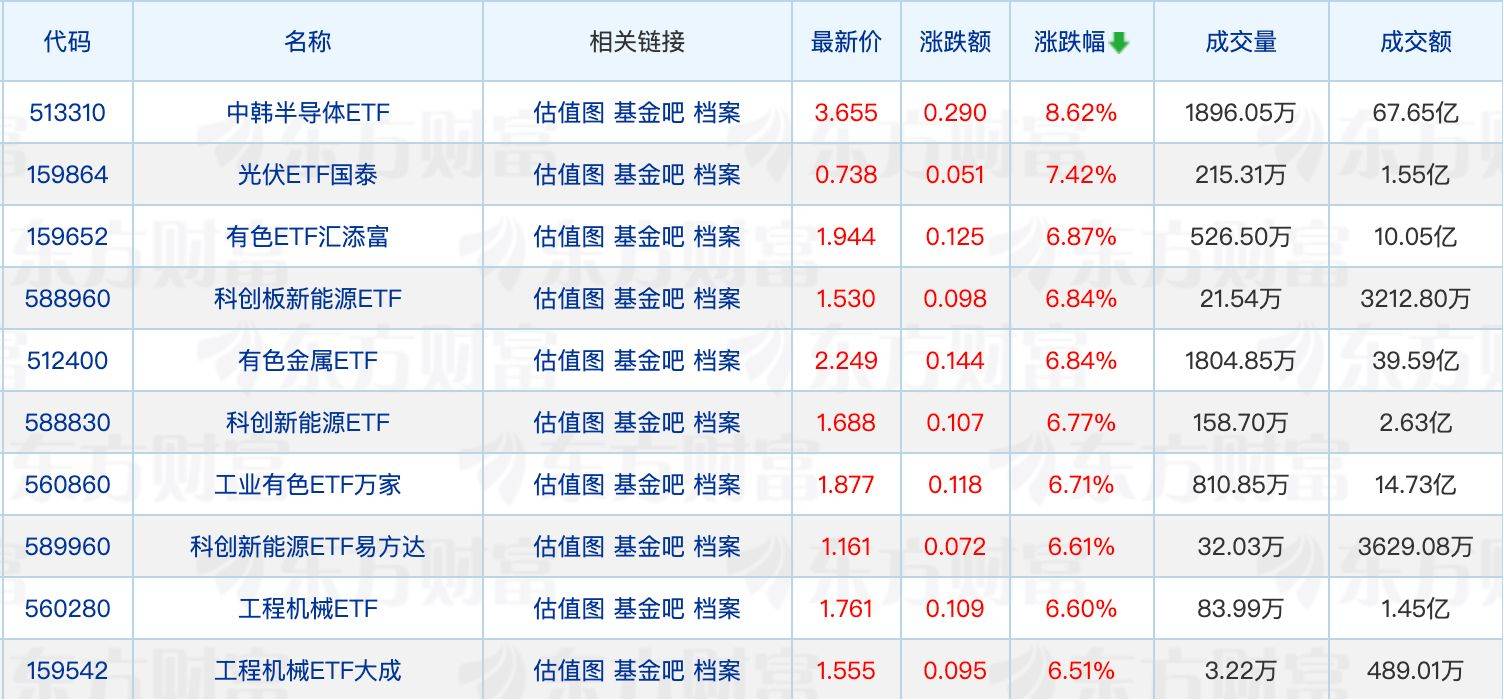
Group 1 - Major adjustment in silver fund valuation method announced by Guotai Asset Management, allowing the fund to bypass the 10% limit on price fluctuations and the 17% theoretical maximum decline in domestic silver futures contracts, pricing based on international market prices [1] - In January, public funds participated in the offline allocation of 5 new stocks, with a total allocation of 60.22 million shares and an investment amount of 1.25 billion yuan [2] - Change in major shareholders of Jiangxin Fund, with Guosheng Financial Holdings set to absorb Guosheng Securities, which previously invested 54 million yuan in Jiangxin Fund, representing 30% of its registered capital [3] Group 2 - Adjustment of subscription limits for QDII fund managed by Li Yaozhu, with new limits set at 5,000 yuan for A-class and 700 USD for C-class shares starting February 4 [4] - Market review shows a rebound with the Shanghai Composite Index rising by 1.29%, Shenzhen Component Index by 2.19%, and ChiNext Index by 1.86%, with total trading volume at 2.54 trillion yuan, down 40.5 billion yuan from the previous trading day [5] - The leading ETFs included the China-Korea Semiconductor ETF, which rose by 8.62%, and the Guotai Photovoltaic ETF, which increased by over 7% [6] Group 3 - The National Development and Reform Commission and the National Energy Administration issued a notice to improve the capacity price mechanism on the generation side, aiming to establish a reliable capacity compensation mechanism that reflects the peak contribution of different units, highlighting opportunities in the renewable energy sector [9]
全球资产迎来配置窗口期,为何你需要一只QDII基金?
Sou Hu Cai Jing· 2025-11-26 11:29
Core Insights - Understanding the interconnected mechanisms between different markets and constructing a scientifically diversified cross-market asset portfolio is becoming an important path for investors to cope with market volatility and achieve stable allocation [1] - The increasing popularity of QDII funds among investors for global allocation reflects the need to address market uncertainties, with the total scale of QDII funds reaching 910.6 billion yuan, a 49% increase compared to the end of 2024 [1][3] Group 1: Current Market Conditions - The current economic cycle, technological revolution, and valuation patterns are driving significant opportunities for global asset allocation [5] - Major global economies are at different stages of the economic cycle, providing a favorable macro window for cross-market allocation [6] - The technological revolution, exemplified by AI advancements, is shifting capital focus from hardware to application ecosystems, creating opportunities for QDII funds to participate in this innovation wave [7] Group 2: Valuation Disparities - As of Q3 2025, valuation levels in the Hong Kong stock market are lower than in other major global markets, while U.S. tech stocks have returned to reasonable valuation levels [8] - The structural valuation differences across global markets provide diverse choices for cross-border asset allocation and potential opportunities for QDII funds to achieve excess returns [9] Group 3: Performance of QDII Funds - The performance of QDII funds, particularly the Guangfa Global Select Stock (QDII), has been impressive, with a return of 147.77% from the end of 2022 to Q3 2023, and an increase in scale from 2.045 billion yuan to 9.256 billion yuan [3][10] - Guangfa Global Select QDII is one of only two actively managed QDII funds with over 500% cumulative returns since inception, showcasing its long-term performance [12] Group 4: Investment Strategy - The fund manager has demonstrated a keen ability to navigate global investment opportunities, adjusting allocations based on market conditions, such as reducing exposure to high-valued U.S. tech stocks while increasing positions in European and Hong Kong stocks [12][14] - The fund's portfolio includes significant investments in U.S. tech giants, reflecting a strong belief in their long-term growth potential [16] Group 5: Future Outlook - The fund manager anticipates continued investment opportunities in AI and related sectors, driven by ongoing collaborations between major chip manufacturers and AI companies [24] - The structural upgrade of China's industry is seen as a certain trend, with a focus on sectors like semiconductors and cloud computing [24]
【晨星潜力基金系列】:盘点四只值得关注的QDII基金
Morningstar晨星· 2025-08-21 01:05
Core Viewpoint - Morningstar Fund Research emphasizes independence and prioritizes investor interests by analyzing fund research teams and investment processes to help investors make informed decisions in fund selection [1] Group 1: Fund Overview - The fund "Guangfa Global Select Equity (QDII)" is categorized under Morningstar's QDII Global Equity Fund, with a performance benchmark of 60% RMB-denominated MSCI Global Index and 40% RMB-denominated Hang Seng Index. The fund manager primarily focuses on opportunities in US, European, and Hong Kong stocks [2] - The fund "Fuguo Blue Chip Select Equity (QDII)" is classified as a QDII Greater China Equity Fund, mainly investing in blue-chip stocks represented by the MSCI China Index, with a flexible allocation between Hong Kong, A-shares, and US stocks [6] - The "E Fund Short-Term USD Bond Fund (QDII)" focuses on short-term investment-grade USD bonds, implementing a refined investment operation with a clear investment process [10] - The "Bank of China USD Bond Fund (QDII)" employs a strategy based on Chinese USD credit bonds, supplemented by US interest rate bonds to enhance returns, providing stable risk-adjusted returns over the medium to long term [14] Group 2: Fund Potential - Fund manager Li Yaozhu has been managing "Guangfa Global Select Equity" since April 2021, with 14 years of securities experience and 9 years in investment, successfully capturing growth stock opportunities like Nvidia and TSMC, achieving an outstanding performance ranking in the top 8% of its category [3] - Fund manager Ning Jun, managing "Fuguo Blue Chip Select Equity" since August 2019, has demonstrated strong stock-picking ability across various sectors, focusing on companies with competitive advantages and growth potential [7][8] - Fund manager Qi Guangdong has led the "E Fund Short-Term USD Bond Fund" since June 2019, delivering excellent returns through a well-resourced international fixed income team [11] - The "Bank of China USD Bond Fund" is co-managed by Zheng Tao and Xing Ke, with a focus on short-duration Chinese USD credit bonds and dynamic adjustments based on market conditions to optimize returns [15][16]

大赚超3850亿元!
中国基金报· 2025-07-21 15:12
Core Viewpoint - In the second quarter of 2025, public funds in China achieved a total profit of 3850.98 billion yuan, marking a continued trend of profitability following previous quarters, driven by the recovery in equity and bond fund performances [2][4][15]. Fund Performance Summary - The overall profit for public funds in the first half of 2025 reached 6368.45 billion yuan, with equity funds being the primary contributors [15][17]. - In Q2, stock funds generated profits of 1204.79 billion yuan, while bond funds contributed 1029.64 billion yuan, making them the main profit drivers [5][6]. - Mixed funds also contributed over 16% of the total profits in Q2 [2]. Fund Management Companies - Among the 162 fund management companies, 150 reported profits, with 11 companies exceeding 100 billion yuan in profits [9][16]. - Leading companies in profitability included Huaxia, E Fund, and GF Fund, with profits of 300.92 billion yuan, 276.13 billion yuan, and 249.77 billion yuan respectively [10][12]. - The top-performing funds were primarily equity funds, with significant contributions from products tracking major indices like the CSI 300 and the SSE 50 [13]. Market Environment - The market experienced a significant rebound after initial declines due to tariff issues, positively impacting both equity and bond markets [4][7]. - The overall positive market conditions contributed to the enhanced profitability of public funds in Q2 [4][7].