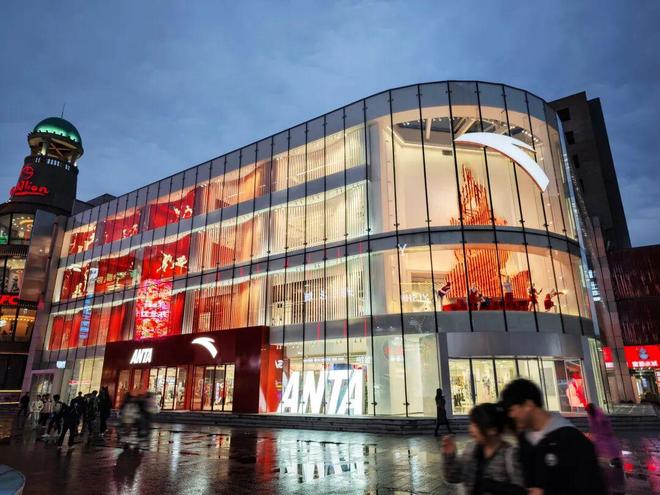
彪马(PUMA)

Search documents
安踏集团15亿欧元收购彪马29.06%股权
YOUNG财经 漾财经· 2026-01-27 11:20
Core Viewpoint - Anta Group has finalized a significant acquisition by purchasing 29.06% of Puma SE for €1.5 billion (approximately ¥12.39 billion), marking a strategic move to enhance its global presence in the sportswear market [4]. Group 1: Acquisition Details - The acquisition agreement was reached with Groupe Artémis, the investment company of the Pinault family, and is expected to be completed by the end of 2026, pending regulatory approvals [4]. - The funding for this acquisition will come entirely from Anta Group's internal cash reserves [4]. - Anta Group's Chairman, Ding Shizhong, emphasized that becoming the largest shareholder of Puma is a milestone in the company's strategy of "single focus, multi-brand, globalization" [4]. Group 2: Strategic Implications - Post-acquisition, Anta Group, along with Amer Sports and Puma, is projected to have global revenues that could rival Adidas [5]. - Anta has a history of strategic acquisitions, including FILA in 2009, DESCENTE in 2016, Kolon Sport in 2017, and Amer Sports in 2019, which have contributed to its multi-brand development strategy [5]. - The company has also recently acquired MAIA ACTIVE and plans to acquire Jack Wolfskin in 2025, further diversifying its brand portfolio [5]. Group 3: Historical Context and Challenges - Anta's previous acquisitions, such as FILA, faced financial challenges initially, with FILA operating at a loss of over ¥32 million before Anta turned it profitable after five years [6]. - The opening of the MUSINSA STANDARD flagship store in Shanghai, a result of a partnership with Anta, highlights the company's ongoing efforts to expand its market presence [6]. - The industry recognizes that while Anta's acquisition strategy allows for rapid market coverage and internationalization, it also presents challenges in post-merger integration and sustaining growth for large brands [6].

安踏新年第一单:120亿买了彪马
3 6 Ke· 2026-01-27 04:16
Core Viewpoint - Anta Group has reached an agreement to acquire 29.06% of Puma SE from the Pinault family's investment company Groupe Artémis for €1.5 billion (approximately ¥12 billion), marking a significant milestone in Anta's globalization strategy and creating the first cross-border merger case for a Chinese company by 2026 [1][4]. Group 1: Strategic Considerations - Anta values Puma's long-term brand potential and believes that Puma's recent stock price does not reflect its inherent value [2]. - The acquisition will enhance Anta's presence in various sports categories such as football, basketball, and athletics, while also complementing its existing product styles with Puma's streetwear appeal [2]. - Puma will benefit from Anta's extensive global resources, multi-brand experience, and strong direct-to-consumer (DTC) capabilities [2]. Group 2: Historical Context - Puma was founded in 1948 by Rudolf Dassler after a split from his brother Adolf, who established Adidas, leading to decades of competition [3]. - The brand has faced challenges, including strategic conservatism and declining sales, leading to multiple ownership changes, including a significant acquisition by Kering Group in 2007 [3]. Group 3: Anta's Acquisition Strategy - Anta's acquisition of Puma is part of a broader strategy that includes previous successful acquisitions such as FILA, Amer Sports, and others, demonstrating a consistent focus on the sports apparel sector [5][6]. - The company has a track record of revitalizing struggling brands through strategic management and operational improvements, as seen with FILA's transformation from losses to significant profitability [5][6]. Group 4: Operational Excellence - Anta emphasizes a "no management change" policy post-acquisition, trusting existing management teams to maintain brand identity while fostering collaboration [10]. - The company has developed a robust operational management methodology that supports the growth of acquired brands, contributing to a thriving multi-brand ecosystem [10][11]. Group 5: Industry Impact - Anta's approach has influenced the broader sports apparel industry, encouraging other Chinese brands to adopt multi-brand strategies and DTC models, thus enhancing the overall market dynamics [10][11]. - The company's success in globalizing its operations serves as a case study for other Chinese firms aiming to expand internationally [12].

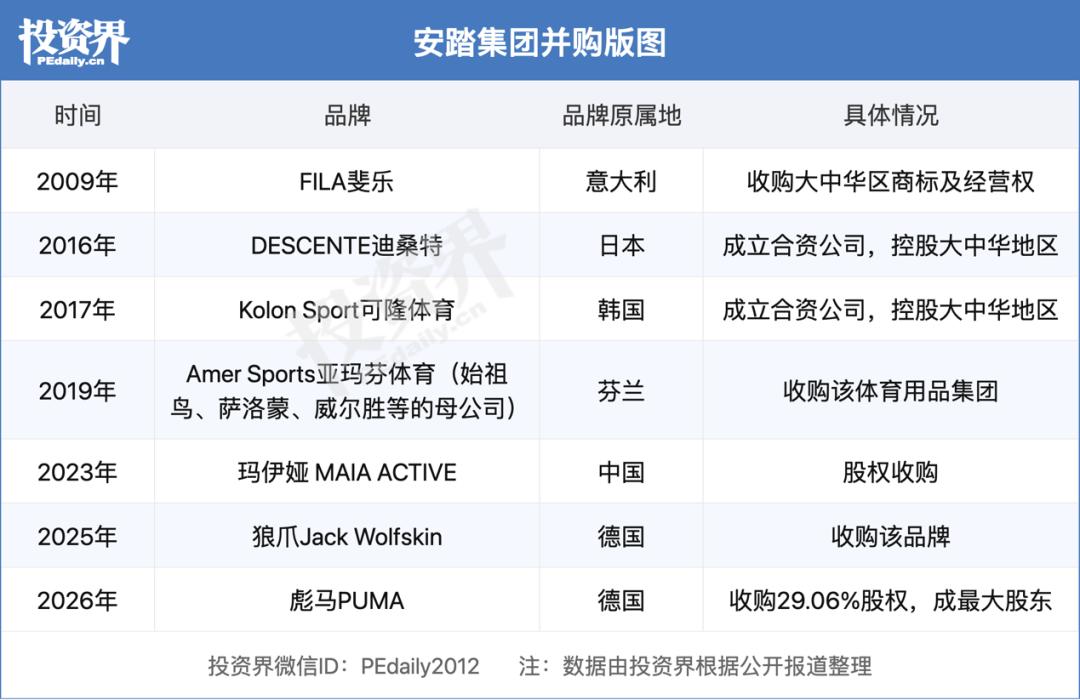
安踏集团15亿欧元收购彪马29.06%股权
Di Yi Cai Jing Zi Xun· 2026-01-27 03:18
Group 1 - Anta Sports Products Co., Ltd. has announced the acquisition of a 29.06% stake in Puma SE from Groupe Artémis for €1.5 billion (approximately ¥12.39 billion), marking a significant step in its globalization strategy [2] - The acquisition is expected to enhance Anta's influence, visibility, and competitiveness in the global sports goods market, with completion anticipated by the end of 2026, pending regulatory approvals [2] - Anta's Chairman, Ding Shizhong, emphasized that becoming the largest shareholder of Puma is a milestone in the company's "single focus, multi-brand, globalization" development strategy [2] Group 2 - Following the acquisition, Anta will become Puma's largest shareholder, and the combined global revenue of Anta, Amer Sports, and Puma is expected to approach that of Adidas [3] - Anta has a history of strategic acquisitions, including the purchase of the FILA brand in 2009, which marked the beginning of its multi-brand development path [4] - The company has faced challenges in integrating acquired brands, as seen with FILA, which took five years to become profitable after its acquisition [4][5]