征程2

Search documents
地平线要把智驾做到售价 7 万元的车上|最前线
3 6 Ke· 2025-12-12 04:38
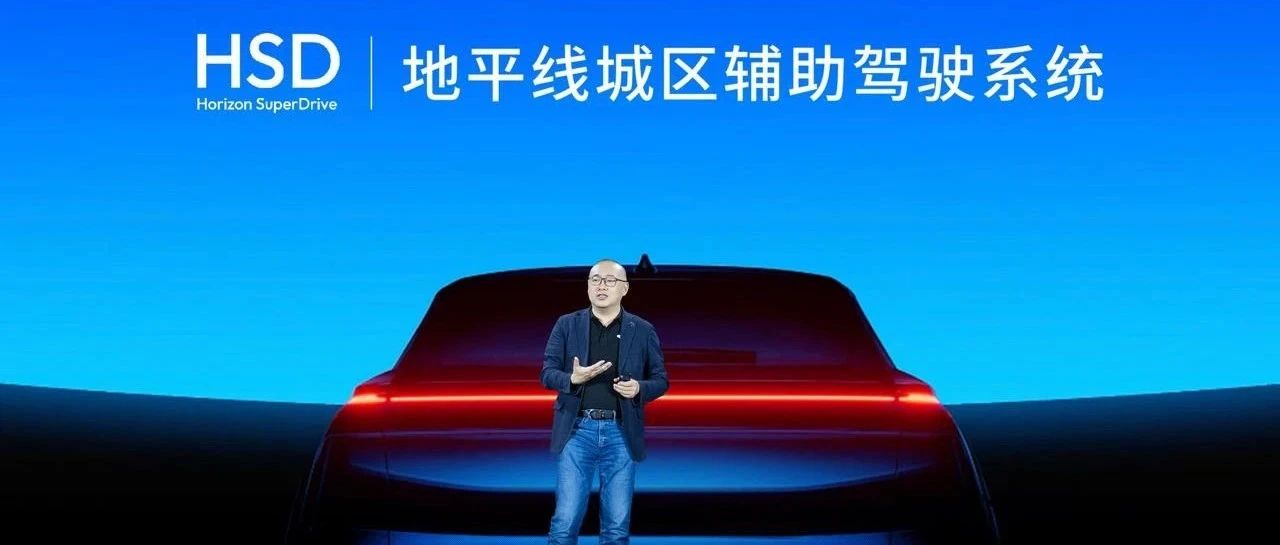
Core Insights - Horizon is attempting to create a "new ecosystem" to expand its business and attract more participants [3] - The CEO of Horizon, Yu Kai, stated that smart driving has not yet truly entered the mass market, with vehicles priced above 200,000 yuan accounting for 30% of the market share, while those below 130,000 yuan make up 50%, but the latter generally lack urban auxiliary driving capabilities [3] - Horizon's smart driving solution, HSD, has been integrated into vehicles priced at 130,000 yuan this year, with plans to extend urban auxiliary driving solutions to vehicles priced as low as 70,000 yuan next year [3] Business Model Evolution - Horizon has introduced a new business model called "HSD Together," transitioning from selling chips and solutions to selling algorithms and capabilities [4] - The previous mainstream business model included selling chips, toolchains, basic software, hardware reference designs, chip IP licensing, and algorithm IP licensing [4] - Horizon has partnered with companies like Denso and the joint venture CARIZON to implement the HSD Together model, while HCT has restructured to focus on Tier 2 solutions based on the 6M platform [4] Industry Dynamics - Horizon views smart driving as the "automatic transmission" of the new era, where functionality will converge, and differentiation will stem from branding rather than significant differences in underlying capabilities [5] - To support the evolution of smart driving capabilities, Horizon announced the development of the fourth-generation BPU architecture, Riemann, which increases the number of high-precision operators by over ten times and enhances efficiency [6] - The Riemann architecture will be integrated into the entire Journey 7 family and is set to launch alongside Tesla's next-generation AI5 chip [6] Ecosystem Challenges - Horizon aims to reshape the collaboration paradigm within the smart driving supply chain by adopting a more open and cooperative approach, inviting more Tier 1 and Tier 2 participants [6] - However, this new ecosystem introduces complexities, as the boundaries between Horizon and its partners are becoming blurred, creating both a community of interests and competitive dynamics [6] - The ability to maintain a healthy ecological tension between "co-building" and "competition" will determine the longevity of this model and Horizon's success in making smart driving mainstream [6]

地平线的“无人区”突围
Hua Er Jie Jian Wen· 2025-07-22 12:06
Core Insights - The Chinese automotive market in 2025 is experiencing an intense "arms race" in smart driving technology, with leading players believing that smart driving is the "soul" of the car and must be developed in-house [2][5] - Yu Kai, founder of Horizon Robotics, presents a contrarian view, suggesting that smart driving will become a standardized "functional value" product, similar to the communication "baseband" in smartphones, leading most car manufacturers to abandon in-house development in favor of purchasing mature solutions [2][5] - Horizon's latest computing solution, the "Journey 6" series, has been adopted by major automakers like Li Auto, BYD, and Chery, validating Yu's "baseband theory" [2][5][16] Industry Dynamics - The automotive industry is at a crossroads, questioning whether a "vertical empire" or an "open alliance" model will be more sustainable in the second half of the smart vehicle era [3] - Horizon Robotics aims to be an indispensable "arms dealer" in the industry rather than competing for the "soul" of the vehicle [6][12] Strategic Positioning - Horizon's strategy focuses on providing a high cost-performance and deeply integrated service platform through parallel development of software and hardware [7] - Yu Kai's philosophy emphasizes that the future of car manufacturers should focus on creating "emotional value" rather than duplicating standardized technologies [5][12] Historical Context - Yu Kai's journey into deep learning and his decision to focus on chip development over software during the founding of Horizon Robotics reflect his contrarian approach [9][10] - The company's initial struggles and subsequent strategic pivot to focus solely on the automotive sector were crucial for its survival and growth [10][11] Future Outlook - Horizon Robotics aims to become a reliable "baseband" supplier in the autonomous driving field, with a roadmap predicting significant advancements in automation over the next decade [12][13] - The ultimate goal is to create an open, integrated computing platform that empowers various robotic applications beyond just automotive [14][15] - The success of Horizon's "baseband" strategy will depend on its ability to establish itself as an industry standard amidst competition from top chip suppliers and tech giants [16]
地平线余凯提出的五大「反共识」,可以成为智驾行业的「共识」
雷峰网· 2025-04-21 13:25
Core Viewpoint - The article emphasizes that Horizon Robotics is not merely a chip company but aims to become a software company, focusing on integrated hardware-software systems for autonomous driving, particularly in urban environments [2][4][5]. Group 1: Company Background and Development - Horizon Robotics was founded in 2015, and its founder, Yu Kai, recognized the nearing end of the mobile internet boom, leading the company to focus on robotics chips instead of algorithms [7]. - The company faced significant challenges in 2019, including a reduction in workforce by one-third, but pivoted to focus solely on the automotive sector [7][8]. - Collaborations with major automotive manufacturers like Changan and Li Auto have been pivotal in establishing trust and achieving market penetration [8][10]. Group 2: Market Position and Achievements - Horizon Robotics has achieved over 8 million units of front-mounted production and has a market share of 33.97% in the L2 autonomous driving computing solutions market for domestic brands [13]. - The company claims that one in three smart vehicles is equipped with its technology, projecting rapid growth towards 10 million units [14]. Group 3: Future Vision and Strategy - Horizon Robotics aims to redefine the essence of smart driving, focusing on both functional and emotional value, similar to how smartphones evolved beyond basic communication [15]. - The company plans to transition from L2 to L3 and L5 autonomous driving capabilities, requiring significant computational power and extensive real-world data [18][21]. - The introduction of the Horizon Smart Driving (HSD) system, featuring the Journey 6P chip, is set to enhance urban autonomous driving capabilities and is expected to be launched in 2025 [24][28]. Group 4: Technological Approach and Innovation - The HSD system utilizes a one-piece end-to-end technology architecture, ensuring high performance and efficiency in data processing [24]. - Horizon Robotics emphasizes the importance of a robust software-hardware integration strategy, akin to successful models like Apple and NVIDIA, to maintain a competitive edge [23]. Group 5: Market Dynamics and Competitive Landscape - The article discusses the competitive landscape, highlighting that while other companies may have launched similar technologies earlier, Horizon Robotics prioritizes product quality over timing [30]. - The company is aware of the potential pitfalls of technological advancements leading to homogenization in the market and focuses on building a sustainable competitive advantage through consistent R&D efforts [20].