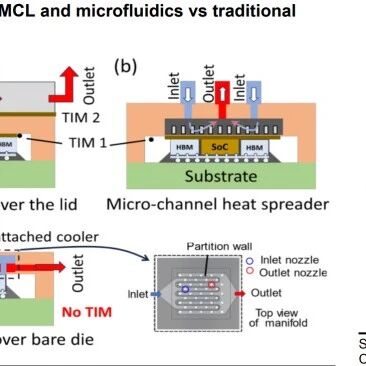
微通道盖板(MCL)

Search documents
AI数据中心进入液冷时代 国产供应链正加速入局
Hua Er Jie Jian Wen· 2025-12-08 05:24
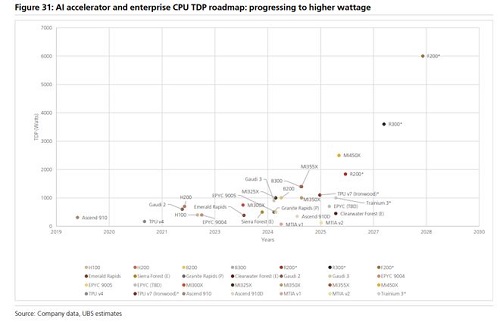
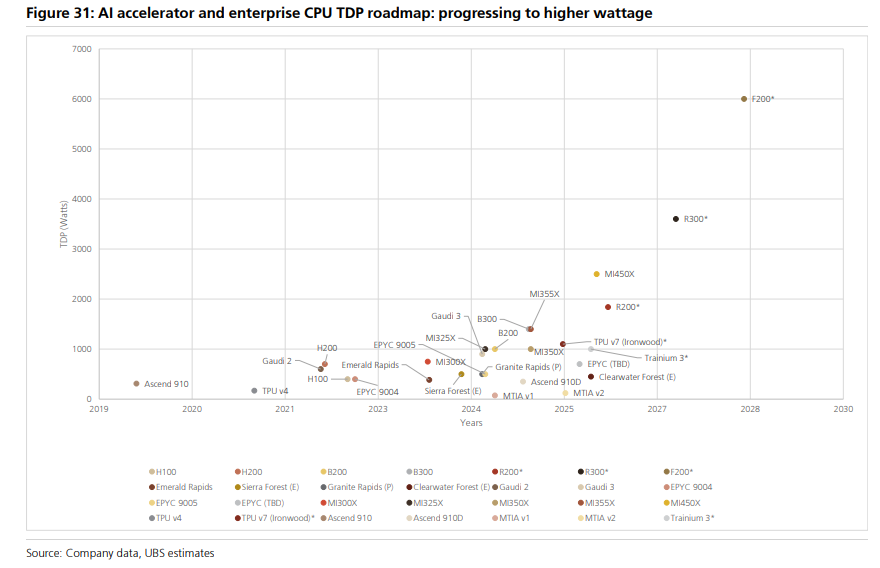
Core Insights - The transition to liquid cooling in data centers is becoming essential due to the rising power consumption of AI chips, marking a significant structural change in the industry [1][2][4] - The global market for direct liquid cooling (DLC) is projected to grow from $1.138 billion in 2024 to $31.599 billion by 2030, driven by the doubling of liquid cooling value per rack [12] Group 1: Market Dynamics - The shift to liquid cooling is not just a hardware upgrade but a strategic necessity driven by intense competition in AI chip development [1] - The liquid cooling market is expected to experience a super cycle worth $31.191 billion, reshaping the global supply chain and opening opportunities for domestic manufacturers [1][12] - The efficiency of traditional air cooling systems diminishes significantly when cabinet power density exceeds 30-40 kW, making liquid cooling a more viable option [5][4] Group 2: Technological Advancements - AI accelerators are pushing thermal design power (TDP) to unprecedented levels, with NVIDIA's GPUs projected to reach up to 7000W in the future [2][10] - Cold plate technology remains dominant for applications below 3500W, while micro-channel lid (MCL) technology is expected to become standard for higher power chips [9][10] - Liquid cooling technology can achieve a cooling capacity 4-9 times greater than air cooling, making it a more effective solution for modern data centers [7] Group 3: Supply Chain Evolution - NVIDIA is shifting its supply chain strategy from a closed model to an open ecosystem, allowing more manufacturers to enter its supply chain [14][16] - This change enables domestic suppliers to either enter as secondary suppliers or potentially become primary suppliers as their technologies mature [16] - The market for liquid cooling systems required for ASIC chips is projected to reach 35.3 billion RMB by 2026, with NVIDIA's platform requiring even more [16]


AI进入“液冷时代”,市场低估了“转变力度”,国产供应链正加速入局
Hua Er Jie Jian Wen· 2025-12-08 03:07
Core Insights - The transition to liquid cooling in data centers is becoming essential due to the rising power consumption of AI chips, marking a significant structural shift in the industry [1][2][4] - The global market for direct liquid cooling (DLC) is projected to grow from $1.138 billion in 2024 to $31.191 billion by 2030, with a compound annual growth rate (CAGR) of 51% [14][16] - The shift towards liquid cooling is driven by the need to meet stringent energy efficiency standards and the increasing power density of server cabinets [7][10] Market Dynamics - AI accelerator thermal design power (TDP) is rapidly increasing, with NVIDIA's GPUs expected to reach power levels between 1,800W to 7,000W in the coming years [2][4] - Traditional air cooling methods are becoming inadequate as cabinet power density exceeds 30-40kW, necessitating a shift to liquid cooling solutions [5][10] - Liquid cooling technology can reduce Power Usage Effectiveness (PUE) to below 1.2, making it a favorable option for meeting regulatory requirements [7] Technology Trends - The liquid cooling market is bifurcating into two main technology segments: Cold Plate technology for applications below 3,500W and Micro-Channel Lid (MCL) technology for higher power applications [10][12] - Cold Plate technology is expected to remain dominant for lower power applications, while MCL technology is anticipated to become mainstream for high-performance chips by 2026 [11][12] - The value of liquid cooling per rack is expected to quadruple by 2030, indicating a significant increase in market value [15] Supply Chain Evolution - NVIDIA is shifting its supply chain strategy from a "closed delivery" model to an "open ecosystem," allowing more suppliers to enter its supply chain [17][19] - This change provides opportunities for domestic suppliers to become either secondary suppliers through ODMs or primary suppliers as their technologies mature [17][19] - The estimated market for liquid cooling systems required for ASIC chips is projected to reach 35.3 billion RMB by 2026, with NVIDIA's platform requiring even more [19]
深入分析下一代 AI 芯片的散热革命
傅里叶的猫· 2025-10-19 14:11
Core Insights - The report from Nomura Securities highlights the urgent need for advanced cooling solutions in AI chips due to rapidly increasing thermal design power (TDP) levels, with projections indicating that TDP for mainstream AI chips will rise from 600-700W in 2023 to potentially over 3500W by 2027 [3][4][10]. AI Chip Cooling Demand - The TDP of AI chips is expected to escalate significantly, with Nvidia's Blackwell series reaching 1000-1400W by 2025 and the Rubin series potentially hitting 2300W in 2026, and 3500W in 2027 [3][4]. - Traditional single-phase liquid cooling solutions are nearing their limits, necessitating new technological breakthroughs to handle TDPs above 2000-3000W [4]. Microchannel Cold Plates (MCL) - MCL is identified as the most practical solution for cooling chips exceeding 3000W post-2027, integrating heat spreaders and cold plates to reduce thermal resistance [5][7]. - MCL maintains compatibility with existing supply chains, utilizing current cooling fluids and components, unlike two-phase liquid cooling which requires extensive redesign [7]. - There are three main challenges to MCL mass production: design precision of microchannels, manufacturing capabilities, and supply chain coordination [8][9][10]. Thermal Interface Materials (TIM) - Upgrading TIM is crucial, with current materials like graphite films being insufficient for future TDPs; alternatives like indium TIM show promise but face challenges in assembly and interface treatment [10][11]. Other Technologies - Emerging technologies such as TSMC's Si integrated microcoolers and Microsoft's embedded microfluidics are considered less likely to be implemented in the short term due to scalability issues [11]. Market Opportunities for Traditional Cooling Manufacturers - Traditional cooling manufacturers like AVC and Auras are expected to see growth due to overlooked liquid cooling demands for non-core chips and the overall acceleration of liquid cooling adoption in AI servers [12][13]. - The market for liquid cooling components in AI servers is projected to grow from $1.2 billion to $3.5 billion between 2025 and 2027, with a compound annual growth rate exceeding 60% [12]. Investment Targets - Jentech is highlighted as a leading player in the microchannel market, with expected revenue from MCL contributing significantly to its overall earnings by 2028 [15]. - AVC and Auras are also recommended for investment, with AVC being a key supplier for Nvidia and Auras having advantages in manifold components [15].