
快贷

Search documents
金融活水润南粤 消费赋能启新程
Sou Hu Cai Jing· 2026-02-24 02:52
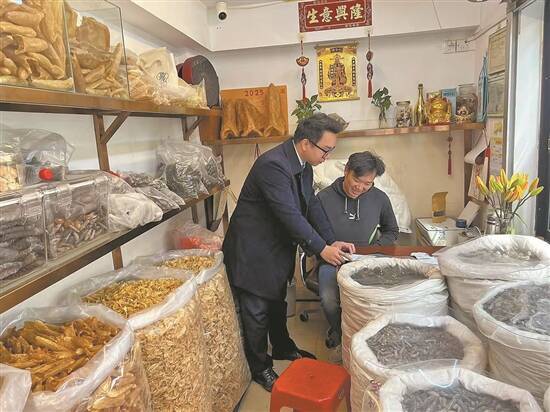
Core Viewpoint - The Construction Bank of Guangdong Province is actively enhancing consumer finance services to stimulate consumption and support high-quality economic development in Guangdong, aligning with the goals of the 14th Five-Year Plan [2][11]. Group 1: Consumer Finance Initiatives - The bank has implemented a "CCB Yue Huan Xin" brand to promote consumer finance, focusing on precise policy implementation and innovative financial services [2][11]. - Over 100,000 customers have signed subsidy agreements, with a total subsidized consumption amount exceeding 680 million yuan, directly driving consumption by over 5.6 billion yuan [3][12]. - The bank has launched various promotional activities during the Spring Festival, including digital currency red envelopes and discounts, to enhance consumer spending [3][12]. Group 2: Integration of Financial Services and Local Economy - The bank is integrating financial services into local consumer scenarios, enhancing accessibility and convenience for consumers [4][13]. - In Foshan, the bank upgraded POS systems for nearly 220 merchants, facilitating international card payments and offering discounts for consumers [5][13]. - In Zhanjiang, the bank collaborated with local government to distribute consumption vouchers, revitalizing traditional markets and boosting consumer activity [5][13]. Group 3: Support for Small and Micro Enterprises - The bank focuses on the financing needs of small and micro enterprises, providing tailored loan products to address their urgent financial requirements [6][14]. - Quick loans have been issued to businesses facing cash flow challenges, such as a seafood merchant in Guangzhou who received 500,000 yuan within three days to meet increased demand [6][14]. - A food processing company received 5 million yuan to support its production line upgrade, significantly increasing its capacity [6][14]. Group 4: Building a Comprehensive Consumption Ecosystem - The bank has developed a consumption subsidy platform that integrates government subsidies, corporate discounts, and financial services, enhancing the consumer ecosystem [7][15]. - The platform has facilitated financing for over 32.49 billion yuan in consumer transactions, significantly boosting overall consumption [7][15]. - The bank is expanding its merchant network, aiming to onboard over 110,000 new merchants by 2025, allowing small businesses to benefit from the growing consumer market [7][15]. Group 5: Future Outlook - The bank plans to continue its efforts in consumer finance, focusing on precise policy implementation and enriching service offerings to stimulate market vitality [8][16]. - The bank aims to embed financial services into various aspects of daily life, including housing and healthcare, to create a more comprehensive consumer ecosystem [8][16]. - The bank's commitment to enhancing consumer finance is expected to contribute significantly to Guangdong's economic development and modernization efforts [8][16].

“赛事经济”点燃消费热潮
Jin Rong Shi Bao· 2026-02-10 02:05
Core Insights - The 2025 Hunan Provincial Football League ("Xiangchao") has successfully stimulated consumer spending, with a total of 105 billion yuan in loans supporting the "event economy," attracting over 2.3 million attendees and generating 12.149 billion yuan in consumption [1][2]. Financial Support and Policy Collaboration - The People's Bank of China Hunan Branch has initiated a collaborative financial ecosystem for the "event economy," encouraging banks to proactively engage with local sports events for tailored financial solutions [2][3]. - A comprehensive support system has been established, involving multiple departments to enhance policy transmission efficiency and promote financial services to sports enterprises [3]. Innovative Financial Services - Financial institutions are innovating service models to support the integration of finance and tourism, with banks providing tailored loans and financial products to meet diverse market needs [5][6]. - The introduction of "carbon ticket" transactions at events exemplifies the integration of finance, green initiatives, and sports, promoting eco-friendly practices among attendees [4]. Consumer Engagement and Experience - Banks are implementing "street-sweeping" services to support local businesses near event venues, facilitating quick loans to help them meet increased demand during events [5][6]. - Various promotional activities, such as food vouchers and discounts, have been launched to enhance consumer engagement and stimulate spending during the events [5][8]. Comprehensive Financial Support System - A multi-layered financial support system has been developed to address the entire lifecycle of the "event economy," including innovative credit products and flexible financing options for different stakeholders [8][9]. - Customized insurance products have been created for participants and attendees, ensuring comprehensive coverage and enhancing the overall event experience [9].
【攻略】如何“钱生钱”?薪享通为您规划
中国建设银行· 2026-02-06 06:18
Core Viewpoint - The article promotes the "薪享通" (Salary Enjoyment) service offered by China Construction Bank, which aims to help customers manage their salaries effectively and maximize the value of their earnings through various financial products and services [1][10]. Group 1: Salary Management Services - The "薪享通" service provides a dedicated platform for salary management, allowing users to easily track and manage their monthly salaries [2][10]. - Users can access a variety of financial products, including savings accounts, exclusive investment options, and funds, to enhance their financial growth [2][3]. - The service emphasizes a user-friendly experience, enabling customers to search for salary-related services directly within the bank's app [8][10]. Group 2: Financial Products and Offers - The article highlights several financial products available through the "薪享通" service, such as low-risk fixed-income products with annualized returns of 2.38% and 2.85% [3]. - There are also consumer loan products available, including flexible installment plans and cash advances, aimed at improving financial liquidity for users [4][5]. - Special promotions and exclusive benefits are offered to users, including rewards for referrals and customized services for salary deposit clients [6]. Group 3: User Engagement and Accessibility - The article encourages users to engage with the "薪享通" service by providing easy access through the China Construction Bank app, where they can check their salaries, manage funds, and claim benefits [10]. - The service is designed to be intuitive, allowing users to navigate through various features seamlessly [8].

个人消费贷“国补”政策加码,实际利率跌入2字头
2 1 Shi Ji Jing Ji Bao Dao· 2026-01-23 10:49
Group 1 - The Ministry of Finance, the People's Bank of China, and the Financial Regulatory Administration have extended the personal consumption loan interest subsidy policy until the end of 2026, indicating a reinforcement of the "national subsidy" policy for personal consumption loans [1] - Major state-owned banks, including ICBC, ABC, BOC, CCB, BOCOM, and PSBC, have announced the implementation of the optimized personal consumption loan subsidy policy, which includes extending the policy deadline, expanding the support scope, and raising the subsidy standards [1][2] - The actual interest rates for high-quality customers benefiting from the subsidy can drop to around 2%, which is lower than the current housing loan rates, with annualized rates for consumer loans generally remaining around 3% [2] Group 2 - Ant Consumer Finance has also extended its subsidy policy until the end of 2026, removing the previous limit on single transaction subsidies and supporting diverse consumer needs [3] - Various banks are actively launching promotional measures, such as increasing loan limits and maintaining low interest rates, to stimulate consumer spending, especially in response to the upcoming Spring Festival [4] - The combination of fiscal subsidies and financial incentives from banks aims to lower consumer financing costs and enhance customer loyalty, effectively driving consumption [4]






经营贷利率下探至“2字头”
Di Yi Cai Jing Zi Xun· 2026-01-19 14:06
Core Viewpoint - The State Council has implemented a package of policies to promote domestic demand through financial and fiscal collaboration, focusing on optimizing service industry loans and personal consumption loan interest subsidies to lower financing costs and stimulate consumer spending [2] Group 1: Business Loan Market - Business loan interest rates have generally decreased to the "20s" range, with increased flexibility in terms of limits, duration, and product offerings, becoming a key focus for bank credit allocation [2] - State-owned banks maintain stable pricing for business loans, with rates around 3%, while collateralized loans can be as low as 2.5% for qualified clients [3] - Joint-stock banks offer more flexible product structures, with some collateralized loans having rates as low as 2.3%, depending on property evaluations [3][4] - City commercial banks are actively competing, with some offering business loans at rates as low as 2.2% and various repayment options to meet different cash flow needs [4] Group 2: Consumer Loan Market - Personal consumption loan rates have stabilized around 3%, with limited room for further decreases, as products with rates below 3% have largely exited the market [5] - Major state-owned banks have consumer loan rates generally between 3.0% and 4.5%, with specific products like ICBC's "Rong e Borrow" offering rates around 3.5% to 3.65% [5] - Joint-stock and city commercial banks are also active in the consumer loan market, with some offering interest subsidies to enhance product attractiveness [6] Group 3: Risk Management and Market Dynamics - Despite ongoing financial policies to promote consumption, demand for consumer loans remains weak, with significant declines in both short-term and long-term consumer loans reported [7] - Banks are tightening risk controls, with stricter audits on the use of consumer loan funds and customer eligibility to prevent misuse of low-cost funds [7][8] - The asset quality of consumer loans is under scrutiny, with projections indicating a potential increase in non-performing loan rates in 2026 [9]
经营贷利率下探至“2字头”
第一财经· 2026-01-19 13:44
Core Viewpoint - The article discusses the recent implementation of a package of policies by the State Council to promote domestic demand through financial and fiscal collaboration, focusing on optimizing loans for service industry entities and personal consumption loans to lower financing costs and stimulate consumer spending [3]. Group 1: Business Loan Market - Business loan interest rates have generally decreased to the "2" range, with banks increasing loan amounts, terms, and product flexibility, making it a key focus for credit allocation [3][5]. - State-owned banks maintain stable pricing for business loans, with rates around 3%, while collateralized loans can be as low as 2.5% for qualified clients [5]. - Joint-stock banks offer more flexible product structures, with some collateralized loans having rates as low as 2.3%, depending on property evaluations [5][6]. - City commercial banks are competitive, with some offering collateralized business loans at rates as low as 2.2% and flexible repayment options [5]. Group 2: Consumer Loan Market - Consumer loan interest rates have stabilized around 3%, with limited room for further decreases, as products with rates below 3% have largely exited the market [8][9]. - Major state-owned banks have consumer loan rates ranging from 3.0% to 4.5%, with specific products like ICBC's "融e借" averaging 3.5% to 3.65% [8]. - Joint-stock and city commercial banks are also active in the consumer loan market, with some offering interest subsidies to enhance product attractiveness [9]. Group 3: Credit Demand and Risk Control - Despite ongoing financial policies to boost consumption, demand for consumer loans remains weak, with significant declines in both short-term and long-term consumer loans reported [10]. - The tightening of risk controls by banks is evident, with stricter scrutiny on the use of consumer loan funds and customer eligibility to prevent misuse [10][11]. - The asset quality of consumer loans is under observation, with projections indicating a slight increase in the non-performing loan rate for 2026 [11].

利率下探至“2字头” 经营贷成银行新宠
Di Yi Cai Jing· 2026-01-19 13:34
Core Insights - The State Council has implemented a package of fiscal and financial policies to stimulate domestic demand, focusing on optimizing service industry loans and personal consumption loan interest subsidies to lower financing costs and boost consumer spending [1] Group 1: Business Loan Trends - Business loan interest rates have generally decreased to the "2% range," with increased flexibility in terms of limits, duration, and product offerings, becoming a key focus for bank credit allocation [1] - State-owned banks maintain stable pricing for business loans, with rates around 3%, while collateralized loans can be as low as 2.5% for qualified clients [2] - Regional banks are more competitive, with some offering business loans at rates as low as 2.2% and flexible repayment options to meet various cash flow needs [2][3] Group 2: Consumer Loan Trends - Personal consumption loan rates have stabilized around 3%, with limited room for further decreases, as most products now fall within the 3% to 4.5% range [4] - Major banks like ICBC and CCB offer consumer loans with rates between 3.0% and 3.65%, while lower rates below 3% have largely disappeared from the market [4][5] - Some regional banks are enhancing product appeal through interest subsidies for specific consumer categories, such as education and healthcare [5] Group 3: Risk Management and Market Dynamics - Despite ongoing financial policies to promote consumption, demand for consumer loans remains weak, with significant declines in both short-term and long-term consumer loans reported [6] - Banks are tightening risk controls, with stricter scrutiny on the use of consumer loan funds and customer eligibility to prevent misuse of low-cost funds [6][7] - The asset quality of consumer loans is under observation, with projections indicating a potential increase in non-performing loan rates due to stricter regulations and market conditions [7]
利率下探至“2字头”,经营贷成银行新宠
Di Yi Cai Jing· 2026-01-19 12:52
Core Viewpoint - The recent government policies aim to lower financing costs and stimulate consumer spending, leading to a divergence in bank credit allocation, with operational loan rates dropping to the "2s" and consumer loan rates stabilizing around 3% [1][2][4]. Group 1: Operational Loan Rates - Operational loan rates have generally decreased to the "2s," with banks increasing credit limits, terms, and product flexibility [1][2]. - State-owned banks maintain operational loan rates around 3%, with collateralized loans potentially as low as 2.5% for qualified clients [2]. - Some joint-stock banks offer more flexible product structures, with collateralized loans' rates dynamically adjusted based on property evaluations, with some rates dropping to 2.3% [2]. - City commercial banks are aggressively competing, with some offering collateralized operational loans at rates as low as 2.2% and credit limits up to 20 million yuan [2]. Group 2: Consumer Loan Rates - Consumer loan rates have stabilized around 3%, with limited downward movement expected [4][5]. - Major state-owned banks' consumer loan rates range from 3.0% to 4.5%, with specific products like ICBC's "融e借" averaging between 3.5% and 3.65% [4][5]. - Joint-stock and city commercial banks are also active in the consumer loan market, with some offering interest rate subsidies to enhance product appeal [5]. Group 3: Credit Demand and Risk Control - Despite ongoing financial policies to promote consumption, demand for consumer loans remains weak, with significant declines in both short-term and long-term consumer loans reported [6]. - Banks are tightening risk controls, with stricter scrutiny on the use of consumer loan funds and customer eligibility to prevent misuse [6][7]. - The asset quality of consumer loans is under observation, with projections indicating a potential increase in non-performing loan rates in 2026 [7].
双轮驱动焕新美好生活 深圳建行:筑牢外贸“压舱石” 点燃消费“主引擎”
Sou Hu Cai Jing· 2025-12-09 02:40
Core Viewpoint - Consumption is emphasized as the main engine for economic growth and a direct reflection of people's quality of life, with a strong call to boost consumption through financial services supporting the real economy [1] Group 1: Financial Services for Trade and Consumption - Shenzhen Construction Bank (CCB) is actively responding to national calls to stabilize foreign trade and promote consumption by enhancing financial services for enterprises and citizens [3] - The bank has provided international settlement services amounting to $106 billion from January to October 2025, marking a 16% year-on-year increase, and trade financing support of 34.3 billion yuan, a significant 44% increase [4] - CCB has introduced innovative payment tools like "Cross-border Easy Payment" to enhance cross-border payment experiences, reducing average remittance time to real-time in 14 countries and regions [5] Group 2: Support for Emerging Business Models - The bank has strengthened financial support for emerging business models such as cross-border e-commerce, with service scale exceeding 4.2 billion yuan, a sixfold increase year-on-year [6] - CCB has promoted cross-border supply chain financing, with over 5.7 billion yuan disbursed, a 171% increase, and has upgraded its "Cross-border Quick Loan" products to provide low-cost financing for small and micro foreign trade enterprises [6] Group 3: Consumer Financial Services - CCB has launched various financial initiatives to enhance consumer welfare, focusing on upgrading consumption and quality of life for citizens [7] - The bank has provided over 5 billion yuan in credit card installment services for consumers, with nearly 2 billion yuan specifically for new energy vehicles, leading in market coverage and customer numbers [7] - CCB has reduced average consumer loan interest rates by over 30 basis points and served over 400,000 consumer loan clients, providing support exceeding 30 billion yuan, a 21% year-on-year increase [8] Group 4: Building New Consumption Ecosystems - CCB is constructing a comprehensive financial service ecosystem for the new energy vehicle sector, collaborating with leading brands to streamline the financing process for consumers [9] - The bank has engaged in deep cooperation with major consumption scene operators, enhancing consumer engagement through joint marketing activities, attracting over 250,000 participants and significantly increasing transaction volumes [10] - CCB aims to continuously optimize financial supply and deepen service innovation to support foreign trade enterprises and enhance citizens' quality of life [10]

建设银行青岛市分行:创造服务价值激活高质量发展新动能
Xin Lang Cai Jing· 2025-11-18 02:23
Core Viewpoint - The financial industry is tasked with a new historical mission to support high-quality development, focusing on enhancing financing accessibility and improving financial product services by 2027 [1] Group 1: Financial Industry Development - The State Council has issued guidelines for the financial sector to achieve significant results in five key areas by 2027, including improving financing accessibility and enhancing the inclusiveness of financial services [1] - Financial institutions are increasingly adopting a "value creation" approach to support high-quality development, integrating their growth with national strategic goals [2] Group 2: Inclusive Finance - The Qingdao branch of the Construction Bank emphasizes serving small and micro enterprises as a core aspect of inclusive finance, utilizing digital technology to enhance credit services [3] - The "Jianhang Huidongni" platform has been developed to provide a comprehensive digital inclusive finance model, streamlining the loan process and addressing the "first loan difficulty" for small businesses [3] - As of August this year, the inclusive finance loan balance at the Qingdao branch reached 35 billion yuan, with an increase of 3.05 billion yuan since the beginning of the year [4] Group 3: Pension Finance - The Qingdao branch is actively implementing national pension finance strategies, focusing on building a comprehensive pension service system to support the aging population [5] - The bank has introduced the "Anxiang" series of financial products designed for the elderly, emphasizing stability and low volatility to alleviate economic burdens [5][6] Group 4: Consumer Finance - The bank is responding to the trend of consumption upgrades by offering diverse and personalized consumer credit products to stimulate market potential [7] - In August, a new fiscal subsidy policy for personal consumer loans was launched, aimed at reducing financing costs for residents and enhancing consumption [8] - The bank has implemented a new online service for personal loans, providing 24/7 access and streamlining the application process for various consumer credit products [8] Group 5: Future Outlook - The Qingdao branch plans to continue its focus on inclusive finance, pension finance, and consumer finance, aiming to enhance service quality and contribute to the development of a modern socialist metropolis [9]