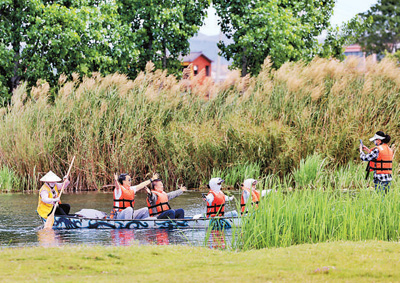
户外露营

Search documents
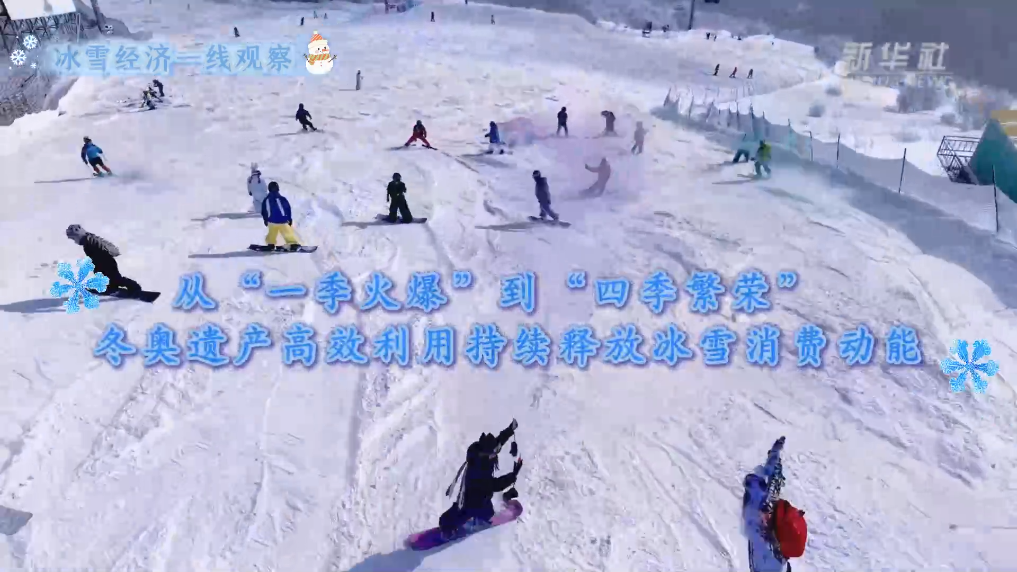
冰雪经济一线观察丨从“一季火爆”到“四季繁荣” 冬奥遗产高效利用持续释放冰雪消费动能
Xin Hua Wang· 2026-02-20 13:28
Core Insights - The ice and snow industry in Zhangjiakou, Hebei Province, is developing towards a full industry chain focusing on ice and snow sports events, cultural tourism, and modern services after the 2022 Beijing Winter Olympics [1] - Zhangjiakou aims to receive over 10 million tourists and achieve over 10 billion yuan in tourism consumption by 2025, leveraging Winter Olympic heritage [1] Group 1 - Zhangjiakou is innovating ice and snow tourism products and integrating "ice and snow+" business models to enhance visitor experiences [1] - The city plans to host over 800 cultural and sports events, establishing a professional event support system to ensure seamless year-round activities [1] - The focus is on expanding the cultural and tourism industry boundaries through "Winter Olympics+" and "ice and snow+" initiatives [1] Group 2 - In winter, Zhangjiakou will host various international and national events at top venues like "Xue Ruyi" and Yunding Ski Resort, offering diverse products such as wild snow trails and family-friendly parks [1] - During summer and autumn, the region will capitalize on its cool climate and beautiful forests to develop mountain biking, hiking, and outdoor camping projects [1] - Future plans include deepening the utilization of Winter Olympic heritage and integrating ice and snow sports with health tourism, educational travel, cultural performances, and conferences [1]

车田村获评贵州省甲级乡村旅游村寨
Xin Lang Cai Jing· 2025-12-29 19:18
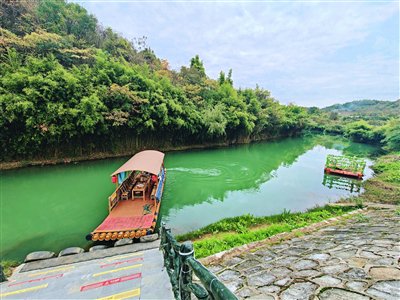
Core Insights - The article highlights the recognition of Chetian Village in Guizhou Province as a Class A rural tourism village, emphasizing its unique natural scenery, rich historical culture, and thriving rural tourism industry [1] Group 1: Tourism Development - Chetian Village, located in the easternmost part of Gui'an New District, has a history of approximately 200 years and features unique landscapes formed by the convergence of Chetian River, Lengfan River, and Sancha River [1] - The village has shifted from relying on natural resources to developing tourism projects such as boat rides, bamboo rafting, and outdoor camping, enhancing the collective economy [1] Group 2: Ecological and Cultural Initiatives - Chetian Village implements the concept of "lucid waters and lush mountains are invaluable assets" by conducting ecological governance of rivers and lakes, improving sewage collection, and establishing waste classification systems [2] - The village has introduced mechanisms like "civilization points supermarket" and "environmental hygiene red and black list" to encourage community participation in environmental maintenance [2] Group 3: Innovative Projects - In 2024, Chetian Village partnered with Guizhou Benniu Geng Tourism Development Co., Ltd. to create the "Wenxian Valley" project, which integrates natural landscapes with Xianxia culture, targeting family micro-vacations and leisure [2] - The village is fostering an open entrepreneurial ecosystem to attract young talents and professional teams, supporting initiatives like coffee cultivation and developing water-based tourism products [2]
在供需“双向奔赴”中找到消费的新惊喜
Sou Hu Cai Jing· 2025-12-06 07:32
Group 1 - The core viewpoint of the article emphasizes that the relationship between supply and demand is evolving, particularly with the influence of young consumers who prioritize emotional value and cultural aspects in their purchasing decisions [4][7][11] - The article highlights the need for a professional intermediary to bridge the gap between supply and demand, as recent government initiatives aim to enhance this relationship [5][8] - It discusses the dynamic co-creation of modern consumption, where new supply can stimulate latent demand, and vice versa, particularly in areas like outdoor camping, smart cleaning, and AI assistants [6][8] Group 2 - The article identifies key barriers to effective supply-demand matching, including information asymmetry, innovation delays, and industry barriers, which hinder market communication [8] - Proposed solutions include improving standard systems to ensure quality pricing, leveraging AI for consumer insights, promoting flexible manufacturing for personalized products, and optimizing the consumer environment for better feedback mechanisms [8][9] - The article concludes that when supply and demand engage in a smarter and higher-quality interaction, it will lead to increased market vitality and a more resilient Chinese economy [9][10]

当户外不再小众,我们准备好了吗
Jing Ji Guan Cha Bao· 2025-10-16 10:37
Core Viewpoint - The increasing popularity of outdoor activities such as hiking and camping is leading to environmental issues and safety concerns, highlighting the need for better preparation and responsibility among individuals and institutions [1][2][3]. Group 1: Environmental Impact - The surge in outdoor activities has resulted in significant littering in popular hiking areas, with reports of garbage accumulation in places like Zhangjiakou and uninhabited islands in Fujian [1][2]. - The influx of tourists has caused ecological damage, such as the destruction of grassland ecosystems and increased incidents of mountain rescues due to overcrowding [2]. Group 2: Safety Concerns - There have been multiple safety incidents during outdoor activities, including severe altitude sickness and fatalities, underscoring the risks associated with unpreparedness [2][3]. - Individuals are encouraged to take personal responsibility for their safety by understanding the routes and preparing adequately before embarking on outdoor adventures [3][4]. Group 3: Individual Responsibility - The concept of "Leave No Trace" is emphasized, urging individuals to minimize their environmental impact by carrying out their trash and making sustainable choices [3]. - The need for awareness regarding the carrying capacity of natural areas is highlighted, as overcrowding can lead to significant ecological stress [3]. Group 4: Regulatory and Cultural Development - There is a call for the government and relevant authorities to develop regulations that balance access to outdoor spaces with environmental protection [4][6]. - Examples from other countries, such as the U.S. and Switzerland, illustrate the benefits of structured outdoor management, which could serve as a model for developing similar systems in China [4][6]. Group 5: Progress in Local Initiatives - Some regions in China are beginning to implement structured hiking trails and safety measures, such as in Shenzhen and Jiangxi, to better manage outdoor activities and ensure visitor safety [5][6]. - These initiatives represent a significant step towards integrating outdoor enthusiasm into a more regulated framework, promoting both safety and environmental stewardship [6].
浙江正特20250716
2025-07-16 15:25
Summary of Zhejiang Zhengte Conference Call Company Overview - **Company**: Zhejiang Zhengte - **Industry**: Outdoor products, specifically focusing on outdoor furniture and storage solutions Key Points Financial Performance - **Significant Growth**: In the first half of 2025, Zhejiang Zhengte reported a net profit increase of 30% to 80%, with a median growth of approximately 50% [3][2] - **Revenue Drivers**: Growth attributed to market expansion, particularly the strategic product "Starry Canopy" performing well in Costco, and an increase in the proportion of high-margin products [2][3] Strategic Initiatives - **Market Expansion**: The company has entered major retail channels such as Costco, Sams, and Walmart, and is developing new KA channels [4][2] - **Product Development**: Focus on three new product categories: outdoor furniture, outdoor storage, and outdoor camping, with positive initial market responses [16][4] Long-term Strategy - **Growth Target**: The company aims to double its scale in approximately three years, targeting a compound annual growth rate (CAGR) of 26% [2][6] - **Operational Efficiency**: Emphasis on digital transformation and internal management optimization to enhance operational efficiency and reduce costs [8][11] Tariff Impact - **Tariff Reduction in Indonesia**: The reduction of tariffs from 32% to 19% is seen as beneficial, alleviating cost pressures and enhancing competitiveness [7][10] - **Production Base in Indonesia**: Establishment of a production base in Indonesia to address global supply chain challenges and U.S. tariff uncertainties [7][10] Product Performance - **Starry Canopy Sales**: Currently accounts for over 50% of total revenue, with optimistic sales trends and significant growth potential in both U.S. and European markets [13][14] - **Profit Margins**: The gross margin for the Starry Canopy is approximately 30-35%, higher than the overall company margin of 25-28% [14][2] E-commerce and Sales Channels - **E-commerce Performance**: Cross-border e-commerce accounts for about 20% of total sales, with strong performance across both online and offline channels [18][17] - **Sales Team Structure**: The sales team is strategically located in key markets in the U.S. and Europe, with local personnel and support from domestic employees [21][22] R&D and Innovation - **R&D Expansion**: The company has established multiple R&D centers in Shanghai, Shenzhen, and North America, focusing on product innovation and design collaboration with international design firms [22][16] Supply Chain Considerations - **Supply Chain Differences**: Domestic operations benefit from a mature supply chain, while the Indonesian facility is still developing its processes [20][19] Customer Communication - **Stable Pricing Strategy**: The company maintains stable pricing with customers through DDP services, ensuring that tariff fluctuations do not affect end prices [12][2] Additional Insights - **Future Product Development**: The company is actively exploring new product categories to meet market demands and drive business growth [15][2] - **Market Potential**: The outdoor furniture and storage markets are expected to grow significantly, with the company well-positioned to capitalize on these trends [16][2]
露天矿坑变度假胜地
Jing Ji Ri Bao· 2025-05-14 22:09
Core Viewpoint - The transformation of the former Yue Stone Mine into the Qingshan Xiuhu Resort demonstrates successful ecological restoration and innovative tourism development, achieving significant environmental and economic benefits [1][2][4]. Group 1: Ecological Restoration - The Yue Stone Mine, which was a wastewater pit with a depth of over 40 meters and a water area of approximately 550 acres, underwent a complex remediation process due to its severe pollution [1]. - After 27 months and three rounds of continuous treatment, the water quality improved significantly, achieving an average pH value of 7 and a pollution reduction rate of 97% [2]. Group 2: Tourism Development - The resort now features unique tourism projects such as off-road experiences, outdoor camping, and ecological dining, attracting many outdoor enthusiasts and becoming a new city landmark for Laixi [3][4]. - The resort includes four space capsule accommodations for about 10 people and a dining area that can host around 80 guests, with a total investment of 1.2 billion yuan for the first phase of the project [3]. Group 3: Future Plans - The local government plans to continue ecological restoration of abandoned industrial sites, focusing on sustainable development and integration of ecological protection with industrial growth [4].
走!到云南旅居去
Ren Min Ri Bao Hai Wai Ban· 2025-04-29 22:47
Core Viewpoint - The tourism market in Yunnan Province is experiencing significant growth, with an increasing trend towards "living tourism" where visitors stay longer and engage more deeply with local culture and environment [8][14][16]. Group 1: Tourism Growth and Economic Impact - In the first quarter of this year, Yunnan Province received a total of 190 million tourists, generating a tourism revenue of 326.18 billion yuan, with 2.2881 million people participating in living tourism [8]. - The total tourism expenditure in Yunnan Province reached 1.14 trillion yuan in 2024, with a 168% increase in overnight international visitors and a 20.7% growth in living tourism participants [14][16]. - The shift from superficial sightseeing to immersive experiences is transforming the tourism industry, necessitating higher standards for cultural and tourism products and services [14]. Group 2: Development of Living Tourism - The "living tourism" trend is particularly evident in areas like Chuxiong Yi Autonomous Prefecture, where local tourism industries are evolving to offer diverse products such as lakeside tourism, outdoor camping, and eco-tourism [15]. - Villages like Liulang have developed wellness tourism, leveraging their rich forest resources and unique medicinal herb industries to create attractions like the Liulang Stone Herb Ecological Park [12][13]. - The local government is actively promoting the development of living tourism by enhancing infrastructure, organizing cultural events, and improving the environment to support sustainable tourism growth [15][16]. Group 3: Community Engagement and Cultural Integration - Many visitors, such as retirees, are choosing to stay longer in Yunnan, engaging with local communities and participating in cultural activities, which enhances their overall experience [10][11][16]. - Local residents are increasingly involved in the tourism industry, with many starting businesses like homestays, which not only provide income but also foster cultural exchange [12][13]. - The integration of traditional culture and modern tourism practices is creating a unique experience for visitors, making Yunnan a desirable destination for those seeking a slower pace of life [10][11].