
技术研发应用综合保险

Search documents
让保险更好护航 高水平科技自立自强
Jin Rong Shi Bao· 2025-12-24 03:00
Group 1 - The core viewpoint emphasizes the need for insurance to address the funding and risk challenges faced by technology innovation enterprises, particularly in the context of the "14th Five-Year Plan" which advocates for high-level technological self-reliance and innovation [1] - Insurance is positioned as a crucial financial tool to alleviate the "reluctance to invest" dilemma faced by tech companies, providing a certainty mechanism to mitigate risks associated with high uncertainty in technology innovation [1][2] - The current risk landscape in technology innovation has expanded beyond traditional R&D to include mid-stage transformation and applications in emerging fields, necessitating innovative insurance products to cover the entire innovation cycle [1] Group 2 - Local practices show that comprehensive insurance for mid-stage trials has successfully bridged the gap between risk protection and credit empowerment, effectively reducing innovation costs and trial-and-error expenses for enterprises [2] - The establishment of specialized co-insurance bodies in fields like integrated circuits and commercial aerospace has effectively diversified the risk concentration of major technology projects, enhancing the willingness and capacity of the insurance industry to underwrite high-risk, high-investment tech projects [2] - Insurance not only provides risk coverage but also injects long-term stable financial resources into tech innovation enterprises, aligning with their need for patient capital [2] Group 3 - From a policy perspective, initiatives to support insurance funds in venture capital and promote long-term investment reforms aim to align insurance capital with the cycles of technological innovation, facilitating "long money for long investment" [3] - As of the end of 2024, the insurance industry's support for technological self-reliance reached 880 billion yuan, a year-on-year increase of 107%, with direct equity investments in tech sectors amounting to 42.593 billion yuan by mid-2025, indicating steady growth [3] - Maximizing the effectiveness of insurance in empowering technology innovation requires collaborative efforts between policy and market forces to address current practical challenges, such as the difficulty in accurately assessing risks in cutting-edge fields like AI and quantum technology [3] Group 4 - To overcome existing challenges, a deep collaborative mechanism of "policy guidance + market leadership" should be established, enhancing incentive policies like premium subsidies and risk compensation to provide replicable practices for insurance empowerment in tech innovation [4] - Insurance institutions are encouraged to accelerate digital transformation, utilizing big data and intelligent assessment technologies to improve risk identification and product pricing capabilities, while extending service chains to enhance professionalism and comprehensiveness [4] - A successful collaboration should create a virtuous interaction where policy mechanisms address pain points and market services improve precision, ultimately breaking down barriers between insurance and technology innovation [4]
人保财险广东分公司:保险护航科技创新的湾区探索与实践
2 1 Shi Ji Jing Ji Bao Dao· 2025-12-04 22:40
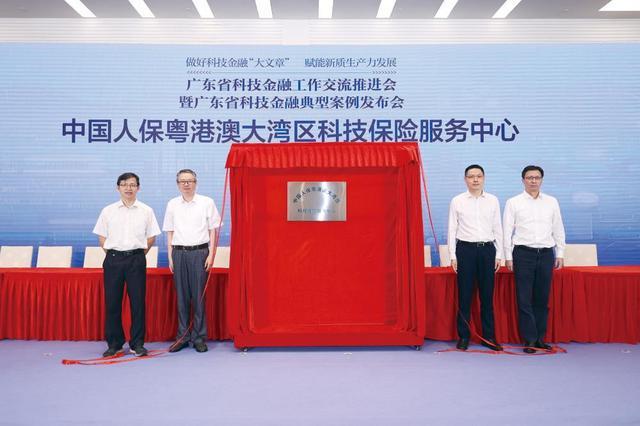
Core Viewpoint - The development of technology insurance is essential for supporting China's technological innovation strategy, requiring both long-term investment and comprehensive risk management [1][4]. Group 1: Policy and Strategic Importance - The central financial work conference has prioritized technology finance, emphasizing the need for a robust technology insurance policy framework to support major technological breakthroughs [1][3]. - The Guangdong branch of PICC recognizes that developing technology insurance is not only a political responsibility but also a strategic choice to seize industrial transformation opportunities [1][4]. Group 2: Product Development and Innovation - PICC Guangdong has established a technology insurance center and set up branches in 12 innovation hubs, focusing on key industries such as electronic information and artificial intelligence [4]. - The company has developed a comprehensive product system combining standardized products with customized solutions to provide tailored risk protection for various stages of innovation [4][6]. Group 3: Achievements and Impact - Since the beginning of 2024, PICC Guangdong has provided risk coverage exceeding 850 billion yuan for various technology activities in the Guangdong-Hong Kong-Macao Greater Bay Area, with a growth rate of over 34% [4]. - The coverage rates for high-tech enterprises and specialized new enterprises have reached 27.93% and 40.16%, respectively, contributing to the deepening of technology finance practices in Guangdong and nationwide [4]. Group 4: Risk Management and Support Services - The company has launched the first "comprehensive insurance for pilot testing" in the province, covering risks from laboratory to pilot testing stages, including public health emergencies and policy changes [6]. - PICC Guangdong has introduced the first "low-altitude aircraft comprehensive insurance" in the country, addressing unique risks associated with new flying vehicles [5]. Group 5: Digital Transformation and Ecosystem Building - The company is embracing digital transformation by developing various risk management platforms, enhancing the technological content of its insurance services [8]. - PICC Guangdong is leading the establishment of a technology insurance service center in the Greater Bay Area, aiming to create a comprehensive service platform that integrates insurance protection, resource matching, and data sharing [10][11].

广东在多个产业领域取得突破性进展
Shen Zhen Shang Bao· 2025-08-17 22:43
Group 1 - Guangdong is promoting a "Shenzhen model" for intellectual property securitization and is focusing on the early layout of next-generation advanced chips in the automotive intelligence sector [1] - The province has established a high-level multi-layer laboratory system, including 24 provincial laboratories and 26 national key laboratories, supported by major scientific infrastructure [1] - Guangdong has over 77,000 high-tech enterprises, ranking first in the country for nine consecutive years, and has seen significant growth in strategic industrial clusters, with nine clusters exceeding 1 trillion yuan in revenue [1] Group 2 - Guangdong has made breakthroughs in various industries, including domestic chip commercialization in 5G base stations, advancements in artificial intelligence, and the development of innovative biopharmaceuticals [2] - The province is focusing on collaborative innovation in the new energy vehicle sector, addressing key issues related to chips, intelligent driving, and the "three electrics" (battery, motor, and electronic control) [2] - A development plan for quantum technology in the Guangdong-Hong Kong-Macao Greater Bay Area has been established, emphasizing quantum computing and materials [2] Group 3 - Guangdong is enhancing the integration of technology and finance by optimizing the management of provincial innovation and entrepreneurship funds, achieving a leverage of 8.75 times on fiscal funds [3] - The province has invested over 32 billion yuan in 778 projects through its innovation and entrepreneurship fund as of June this year [3] - Initiatives include the establishment of a national platform for venture capital institutions and the introduction of a comprehensive insurance for technology research and development applications [3]
保障护航+资金接力 保险业为科技创新 注入“双动能”
Jin Rong Shi Bao· 2025-08-08 07:25
Core Insights - China Life Insurance has provided risk protection for strategic emerging industries amounting to nearly 40 trillion yuan and has served over 9,600 national-level specialized and innovative "little giant" enterprises this year [1] - The core topic of the Lujiazui Forum this year is how to promote technological innovation through financial means, emphasizing the need for institutional and service innovation in the insurance industry to provide comprehensive risk protection and development support for technological innovation [1] Group 1: Technological Insurance Development - There is an increasing demand for comprehensive financial services from technology enterprises, prompting China Life to leverage its integrated financial advantages to provide full lifecycle financial services [2] - China Life is focusing on enhancing risk protection for technological innovation and continuously innovating technology insurance products to cover all aspects of technology research and development, transformation, and application [2] - The insurance industry is expected to provide approximately 9 trillion yuan in technology insurance protection and invest over 600 billion yuan in technology enterprises by the end of 2024 [2] Group 2: Policy and Regulatory Support - The development of technology insurance has accelerated this year, with clearer policy guidance from regulatory bodies [3] - Various departments have issued policies to support the construction of a technology financial system, emphasizing the role of technology insurance as a stabilizer for innovation [3] Group 3: Innovation in Insurance Products - The introduction of new technology insurance products has accelerated, including the first large-scale research equipment sharing insurance and the first comprehensive insurance for technology achievement transformation [4] - The scope of technology insurance has expanded to cover various aspects of technological innovation, providing a comprehensive risk shield and development engine [4] Group 4: Investment Strategies - Technology enterprises require not only risk protection but also the support of patient capital represented by insurance funds for their long-term development [5] - China Life has innovated a relay investment model using private equity secondary market funds (S Funds) to support strategic emerging industries and facilitate their growth from initial stages to maturity [5] - Recent investments include a 11.8 billion yuan investment in the Shanghai integrated circuit industry investment fund and a 5 billion yuan investment in the Beijing technology innovation fund [6] Group 5: Future Directions - The S Fund model is expected to be promoted further, with a focus on collaboration with various sectors to support the development of new productive forces [7]
